Episode Transcript
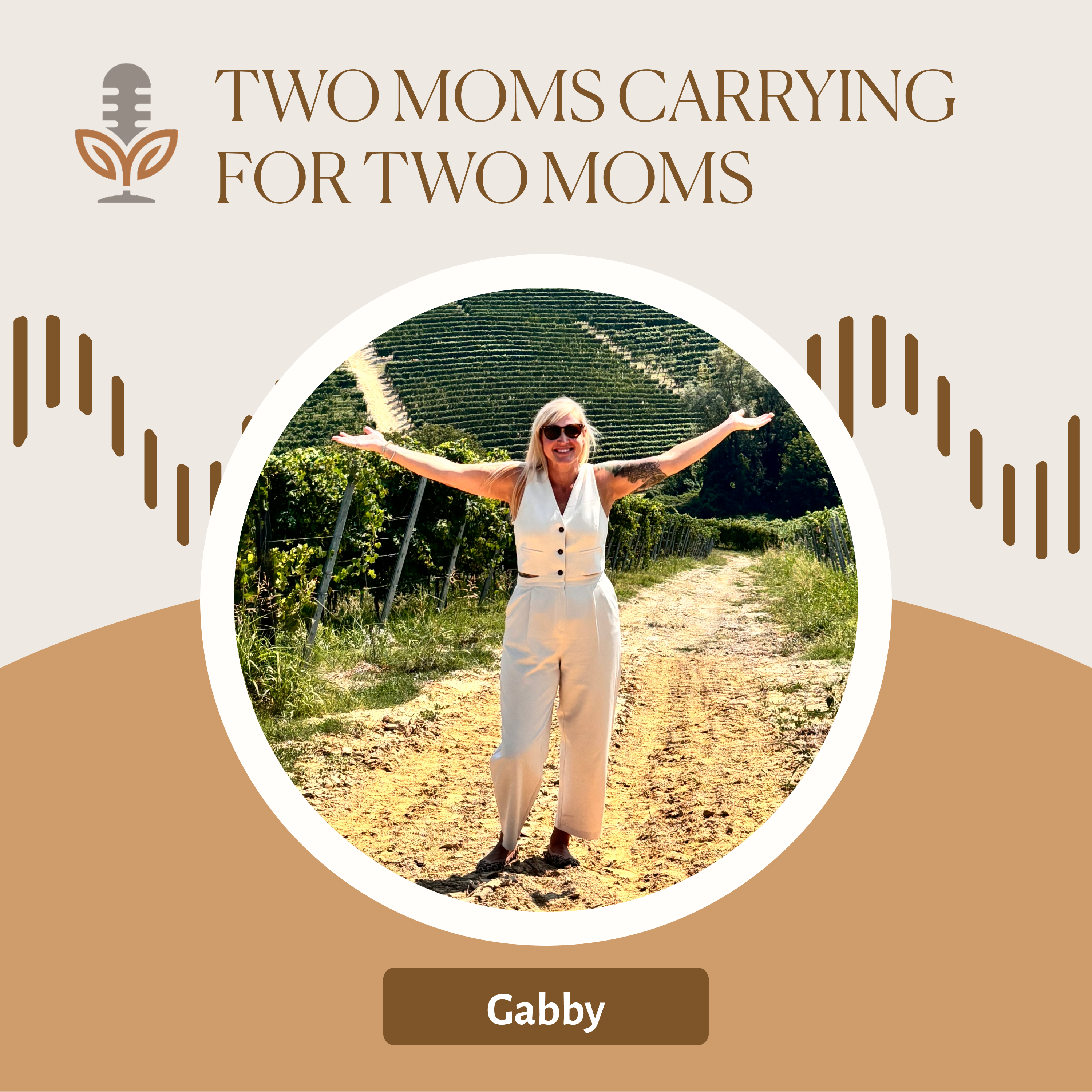
[00:00:00] Speaker A: A surrogate spends the better part of a year carrying a child she will hand to someone else. People focus on that moment, the handing over. They miss everything that comes before it and everything that comes after. The decisions, the trust it takes, the people who end up in your life because of it. That is the story you only hear from someone who has lived it. Hey, welcome to the Surrogate series. I'm Eloise Drain. I'm so excited for you to be here with me today. My guest today is Gabrielle. She's a district manager, a wife and a mom of two who spends most weekends at her son's sporting events or out by the pool with her family. When she's not working, she's usually reading, playing softball, or with the people she loves. Today, she's here to share her experience as a surrogate and some of the connections that came out of that she never saw coming. All right, well, Gabby, thank you for joining me. I appreciate it.
[00:00:49] Speaker B: Yes, ma'. Am. Thank you for having me.
[00:00:51] Speaker A: So first, why don't you share a little bit about your own pregnancies before we jump into, like, surgery, surrogacy pregnancies.
[00:00:59] Speaker B: So my situation is. Is interesting, a little different.
So I am married to a woman and she's a little bit older than me. So when we decided we wanted to have a family and she decided that she wanted to carry, she needed to go first.
So we went through a fertility doctor and were able to get pregnant through iui. So had had a little, you know, that was our first taste into the fertility world and we have a beautiful son from her and then we wanted another. So it was my turn to carry and again went through the same process. We used the same donor and I got pregnant through iui and then we decided our family was complete with two beautiful boys.
But I really enjoyed being pregnant and surrogacy has just always been a thing on in my mind and something I was interested in.
And I went for it because I am also getting a bit older and starting to age out of carrying babies. And here we are today.
[00:02:08] Speaker A: So do you remember how you first learned about surrogacy?
[00:02:11] Speaker B: It's funny, so many people have asked me that question and I don't it. I remember knowing about it and what it was since I was a teenager, but I truly do not remember how I learned that knowledge. And just I. I always remember thinking it was something very special and something just really amazing that people did for families and something that I was interested in. That seed was planted somewhere and it continued to grow.
[00:02:47] Speaker A: So how did the conversation go with your wife when you first told her, like, yeah, I want to do this again, but for a stranger.
[00:02:57] Speaker B: So it, it did not come to us as a surprise to her early on. She and I have now been together for 17 years, so we've been together most of my adult life. And she always knew that it was something that I was fond of and interested in.
So when the conversation happened that, okay, I really want to do this. I'm ready.
We. Neither of us was 100% sure that we were done with our family.
So we had a conversation one night and we said, okay, let's really think about this in our family and let's talk about this again in a year. And in a year we're going to make a decision if we're done for us.
And then we talk about surrogacy. And the reminder popped up in our calendar a year later. We had the discussion and, and truly we were both at peace that we were done with having children for ourselves.
And she said, go for it. You know, let's do it for surrogacy.
[00:04:00] Speaker A: Really put a reminder in your calendar.
[00:04:02] Speaker B: Yes.
Yes, we did. We both did for a year later to decide a hundred percent if we were done with our family. And because it would be me caring if we had another child for us. And, you know, we're happy with. With two children, we decided we didn't want any more for us. But I definitely wanted to experience pregnancy again and then also just. Just do something amazing for another family because we know the joy and love that being parents, you know, bring, it just enhances our lives.
[00:04:40] Speaker A: Yeah, definitely. So how did you go about. Okay, you've decided to be a surrogate. Then what?
[00:04:46] Speaker B: Then what?
So this is also kind of interesting. Most people that I talk to now have never known a surrogate personally. I know three. I actually graduated high school with now three women that have been surrogates.
And one of those women used to work for Family Inceptions.
So I reached out to her and, and just kind of started asking some questions about her experience and where she worked. And I also reached out to. To another, the second. The second of third.
And her second journey was with Family Inceptions. And so that made it a very. That was a very easy decision on which agency that I go with. And so I, I filled out the necessary paperwork and, and started the process.
[00:05:43] Speaker A: How was the process for you? I mean, obviously, I know we have a.
A long screening. Not a long screening process, but more of a very thorough screening process.
How was that for You. And what do you think of that thorough process?
[00:06:01] Speaker B: So it definitely was more in depth than I expected.
I'm not really sure what I expected since it was my first time, but there are a lot of steps and I appreciate how thorough it is, actually, because I, everyone should not be a surrogate, honestly. And, and being a parent, I would want to make sure that whoever was going to carry my child was really in it for the right reasons and, you know, their mental health was intact, that their home environment was sustainable for, for a healthy pregnancy as well.
So I, I appreciate, appreciated how thorough it was and was happy to do all of those steps.
[00:06:57] Speaker A: Yeah. And I, you know, oftentimes I don't think that people realize the magnitude of the decision and the fact that where I'm just meeting you for the first time and I'm going to come to you and I'm going to say, gabby, let me take your son for the next nine months. And you can't tell me how to treat him. You can't tell me how to take care of him. You can't tell me what to feed him, you can't tell me what to do with him. You can't tell me anything. Just trust me. I'll bring him, him back to you in nine months, healthy and whole.
[00:07:27] Speaker B: Right.
[00:07:29] Speaker A: I mean, that is what people are actually doing.
[00:07:32] Speaker B: Right. I mean, it's, it's a huge trust you're trusting this person with, for a lot of intended parents, their hopes and dreams.
[00:07:43] Speaker A: Yeah.
[00:07:44] Speaker B: And, and they're trusting someone that they don't know really well. So I, I do think it's very important to have this thorough process.
And it also gives the surrogate time to, to bow out gracefully if they decide, you know, over whatever period of time that maybe this isn't for me, maybe I'm not ready for whatever reason, maybe it's not. Not the right time in my life.
There's a lot of, of time to just again, gracefully bow out and, and say, you know, I'm going to put this on pause or it's just really not for me.
[00:08:19] Speaker A: Yeah. Yeah, definitely. So when you were considering the, you know, the kind of intended parents you wanted to carry for going into it, did you already have the type of parents you wanted to carry forward? Did you already have like a, a vision in mind of, like, this is what I want to do and who I want to do it for a little bit?
[00:08:41] Speaker B: My vision was I knew that I really wanted to carry for a family that could not caring for themselves, that, that was number one of Course.
And then I wanted a family that had some sort of moral compass, if you will. You know, I wanted them to be Christian or have some sort of kind of religious guiding light.
I, I'm a Christian and I, I think that's important for me to carry a, a child for someone that just had again, just a moral compass of, of, of goodness, you know.
And beyond that, you know, there wasn't much. And as we got deeper into the process and I answered questions, hard questions on what I would be okay with or not okay with during the pregnancy, if there were any complications or any diagnosis to the, to the child, you know, then of course that got my wheels turning a little more and I wanted to make sure that my beliefs aligned with the intended parents beliefs as well.
[00:09:58] Speaker A: So what was it like when you first got on that match call?
[00:10:04] Speaker B: Oh my gosh, it, it was like first date jitters honestly, meeting them for the first time.
You know, we, of course we had read their bio and it just, it made my heart explode. And I knew just, my wife and I both knew just from reading, reading who they were, what they believed in and why they were going this route to find a surrogate.
I had it. We both, my wife and I both had a feeling like this, these are, these are, this is our family.
[00:10:41] Speaker A: Yeah.
[00:10:42] Speaker B: And as we got on the call and chatted our conversation, despite being nervous on both sides, it just, it, it flowed so naturally and we seemed very like minded and they seem like the type of people that we would have been friends with naturally had we just met in the wild.
And one thing that was important for my wife and I for a couple as well is that we didn't, we did not want it to feel transactional in any way. We really hoped that a natural friendship would form and that is something that they wanted as well. Of course we didn't want to force anything, but it just, it felt so right on that match call that both parties, we, we both said yes on the call. We didn't need to hang up and talk to our spouse and think about it or sleep on it. We didn't need that. We knew that this was the right decision.
[00:11:41] Speaker A: Yeah. And it's always awesome when like it clicks just that quickly, you know. And that is I think so important. Like, you know, people decide to become surrogates but don't really necessarily. Some people don't want to have a relationship at all, which is totally fine.
[00:12:01] Speaker B: Absolutely.
[00:12:02] Speaker A: Some definitely want to have a relationship and have a, you know, a continuing relationship, which is definitely okay as well.
But when you get on that call or when you're seeing each other's profile, you still want some, some kind of connection there because you're going to be in the most intimate piece, parts of somebody's life for a year upwards, sometimes even longer. And so, you know, to not be able to just connect on some kind of level is like, for me, that's too difficult.
[00:12:39] Speaker B: Sure, yeah. I mean, I definitely, in my opinion, think that that's very important. There's got to be some sort of connection because you're right, you're going to be communicating with, you know, one or both of the intended parents for a year plus, plus sometimes.
And if you can't, you've got to have that communication to make, to make this process work.
[00:13:03] Speaker A: Definitely.
So walk me through how the. You got matched, obviously, and now going through the screening process. How was that with, you know, having to go to the, the doctors and the ultrasounds and the blood work and all of the things that have to get done before transfer day
[00:13:25] Speaker B: takes some sacrifice on the surrogate's part?
You know, I am lucky that in my job, my job is a bit flexible, but I, I had all of this in mind as I was going to these appointments that people that have, you know, nine to five specific hours, you know, you've got to, you've got to wake up a little earlier and get to the clinic or make these really early morning appointments, lose a little sleep. I mean, it, it is a lot and it is intense.
I was happy to do it because I had this, you know, this goal in mind, this wonderful, beautiful goal. So it wasn't a burden for me, but I could see how it could be for some people. Honestly, it's, it was, you know, every week or every other week you have another appointment, blood work or whatever it may be.
[00:14:19] Speaker A: And then how was it for you on transfer day?
[00:14:22] Speaker B: So exciting. So, so exciting. So we, my intended parents live in a different state than we do. So we traveled to them, of course, for transfer day.
And it was, it, it was, it was just. We were all just busting with excitement and some anxiety and such as that. And it was in. It was really emotional for one of the intended mothers because this was her giving me, her child to, to trust, to. To tr. She was trusting me and for me to nail love and nurture and make. Make the right choices with my body and what I do with her child.
So it was, it was really special.
[00:15:12] Speaker A: Yeah.
[00:15:13] Speaker B: And so we did the transfer. We went and got McDonald's french fries, as you do and then, and then, you know, we just, we were able to hang out with them for a couple days as I just rested, which was great to spend time in person with them. And, you know, it was emotional again when it was time for us to leave and she, you know, she's. She's hugging me and she was like, gosh, it's so crazy to think that you're leaving with my baby.
That is really, really crazy to think that. And that really is profound, you know?
[00:15:50] Speaker A: You know, to think about where you're literally like, you're walking away with somebody's child, you know, now, and, And. And nobody knows the outcome. I mean, none of us sure say, God, you know, you transfer that embryo and you hope and pray that everything works, but at the end of the day, yeah, that is exactly what the surrogate is doing when you leave that fertility clinic and leave that instead of intended parents or intended parent doesn't have to be a couple.
[00:16:20] Speaker B: Exactly, exactly.
[00:16:22] Speaker A: You're walking away with their child.
Mm.
Yeah.
[00:16:26] Speaker B: That's it is it. It's what a moment as a, as a surrogate to, wow, this is happening. And now. Now it's up to me to do all of the right things, you know, with, with my body that, that the mother or the parent would do to just help this little baby grow.
[00:16:52] Speaker A: Yeah. Yeah.
[00:16:53] Speaker B: Cool.
[00:16:54] Speaker A: It's big.
[00:16:54] Speaker B: It's a lot. Yeah.
[00:16:56] Speaker A: Oh, yeah. So how was that two week wait time and, you know, then having to finally go get the blood work and waiting for them to get back with you on what, the longest two weeks of my life. Yeah.
[00:17:09] Speaker B: Oh, my gosh. It was. Maybe it. It felt even longer than with our own children. Really?
Of course you're supposed to wait and get the blood work to. To decide if you're pregnant or not. But I didn't. I. I had the home pregnancy test and the. And I. The first one I took, I knew that it was too early to test. I knew this logically, and it. There was no bond. I was like, that doesn't mean anything. I just kept telling myself, that doesn't mean anything.
And when I finally got the line, it was bright and early in the morning. My wife was still asleep. And I'm.
Get in here. Wake up.
She comes running. And we.
It was so emotional for me to see the line. I'm not typically an emotional person with tears, but I cried, we hugged. It was. It was amazing. But then there's the decision of, what do you tell the intended parents?
Because we, we had not talked about that. If, you know If I test early, do you want to know the results one way or the other?
So then we. We had to think about that and make that decision. And I ended up texting one of the intended mothers.
I don't know how to differentiate the two, but for this. But I said, if I test early, would you want to know?
And they said yes. I was like, okay. So I called. It's like, well, tested early and, you know, and. And this was the results and everything. So then I start the progression and sending the photos, and everybody's excited. And, man, when we got that blood work and it was real.
What a celebration.
[00:19:00] Speaker A: How. How much of a celebration was it when you had the heartbeat?
[00:19:06] Speaker B: Everybody cried. Just everyone. I mean, this whole process was so, so happy and emotional. And so my intended parents, without sharing too, too much about them, they had a lot of loss before me. And there was. Their hearts were still healing, I think, for a lot of this. And although they were extremely happy for what was happening with me and for their baby, they were always holding their breath for something bad for. For a negative call to happen.
And so that was also something that I didn't consider going into being a surrogate about whatever past history these parents may have and the reason that they need a surrogate.
And so it was important for me, I think, to be really empathetic and give grace to them. If I were over the moon, excited, and they were still hesitant because they were protecting themselves in their hearts. I needed to give them grace and be really considerate of their situation.
I mean, surrogacy is. Is. Is happy when you're pregnant and everything's going right, but, you know, in the background, they're dealing with a lot.
A lot of other emotions and a lot of fears.
[00:20:43] Speaker A: Oh, yeah. So was it for you because you knew that they had that loss? Did you have any hesitation to share with them, to be open with them? Like, during the pregnancy, was there anything like, I don't know if I should or.
[00:21:07] Speaker B: So yes and no. For any of the happy, really happy, positive things, there was no hesitation to share those things with them, with, you know, if I felt a flutter or just whatever. Whatever positive thing, I always shared that stuff I was hesitant to share.
For example, if I had not felt the baby kick in an hour or two, you know, I wouldn't share think little things like that because I didn't want to send them into a spiral or have them worry about something that wasn't worth worrying about.
But something. Something did come up. It was.
It was after 20 weeks I'm not. I don't remember the exact week, but it had been some time since I had felt the baby. And so I go to my wife. I was like, okay, I've tried X, Y, and Z.
I'm not really feeling the baby moving in the natural way that. That she does.
What do you think I should do? She was like, oh, I think you got to go in. And I said, man, I really don't want to. If this were. If this were my baby, I would not go in yet. And she said, but it's not your baby. It's their baby, so you need to go in. And I said, you know what? Thank you. She is. She is always my voice of reason.
And I said, you know what? You're right. So I went in, and everything was just fine.
But you know, that. That she was right. It's not my baby. And when I'm.
They're trusting me to do everything I can to take care of the baby. And this was the right step. So after I got to the hospital, after we heard the heartbeat, I called the intended mom. I said, hey, everything's fine. Gotta let you know this. And she did panic a bit, even though she could hear the heartbeat in the background. But it was just, you know, that. And after she.
After they, you know, kind of processed what happened, what I did, the baby was perfectly fine and healthy. They thanked me. Thank you so much for doing this, for going in and just making sure, you know, because this is my job. This is my job as a surrogate to do this.
So. So in that sense, yes, I was hesitant to say anything to him because I didn't want to create any heartache or stress on them.
[00:23:44] Speaker A: Yeah. And I think the biggest thing, you know, that I got out of that, too, of what you just said, is that realizing it is not your baby and you can't make the same decisions that you would for your own because you're doing this on behalf of somebody else.
[00:24:03] Speaker B: Correct?
That is 100% right, yeah.
[00:24:08] Speaker A: So how was your relationship with them, though, throughout the entire pregnancy?
[00:24:14] Speaker B: You know, we couldn't have been matched with a more wonderful couple, honestly. We knew they were special on from the match call. But as our relationship grew, I mean, they have become some of our very dearest friends and family.
Even now, our friendship just. It grew throughout the whole pregnancy. We became closer.
They have a daughter who is as old as my youngest. Our youngest.
So our children play well together. They love each other. We. We took a trip up.
They took a trip down to spend time with Us a few times, actually.
Maybe I'm getting ahead of myself, but we were able to spend Mother's Day with them this year and with. With the Surrey baby. And while we were there, they asked me to be her godmother.
[00:25:08] Speaker A: Oh, that is so sweet.
[00:25:11] Speaker B: Isn't it? Isn't it? Oh, so special.
[00:25:15] Speaker A: Yes. So obviously, you know, things were great during the pregnancy. You got pregnant on the first attempt?
[00:25:23] Speaker B: I did.
[00:25:25] Speaker A: No complications, no issues. I mean, did anything come up that there was a problem or you guys didn't agree with, or there was things that you disagreed with or was it just really. No, we were able to figure it all out and really didn't have any situations.
[00:25:42] Speaker B: So there, there were a few things that we didn't agree on 100%.
So is life. Right? But we, we were able to have such open communication and talk, talk different things through and, and come out with a compromise even at the end. So, you know, there was a small thing at first in the contract that there, there. It was a dos and don'ts section, basically. And one of the don'ts was no manicures or pedicures.
And for my work, I get manicures and pedicures.
And so I was like, huh, that's odd. So I, so I called the intended mother and I said, hey, I noticed this in the contract.
Is this real? Is there a real reason? And. And she said, I put that in there because. And she told me a story about one of her pregnancies and a trigger in her mind about this.
And I said, oh, I under. Okay, that makes sense. I understand.
No problem.
And I decided that her. She had a fear surrounding it and me getting a manny and petty.
I cannot do that for her to alleviate this fear. Right, no problem. This is a small sacrifice.
A bigger issue that came up then. This was at the very end of pregnancy, I really wanted to have a natural birth. I did not want to be induced. I wanted my water to break on its own because up until this point, my pregnancy has been perfectly healthy. And at the very end, I had a little bit too much in amniotic fluid and it was just, gosh, right there on that borderline. And my OB recommended an induction.
She gave us the, the pros and cons, the risk, the benefits, laid all of this out. My intended parents were actually here with me because it was at the very end in the room with me as we were. Everyone was able to, to ask their questions and speak to the ob and it wasn't fully medically necessary, but my OB would feel More comfortable if this is the direction that we went in.
And I'm, I'm 39 weeks at this point. I'm like, we're so close to the end.
And I was having a really hard time with this. And so we left that appointment all saying, you know, let, let's schedule this next ultrasound. Let's not schedule the induction. But I need, I need some time to think about this in process. And by the time we got to the parking lot, one of my intended mothers was having a panic attack because in her mind, we're so close to her holding her baby with this one tiny decision. Why would we not control the controllables with an induction so that she can have her healthy baby?
And that really hit me. I said, listen, I'm not saying no to an induction. I am only saying, I, I need a minute. I need to talk to my wife. I just need to process this because for nine plus months I've been preparing for one thing and this is not it.
So, so of course I, I call my wife, I call my two best friends, we have a conference, and I'm expressing my fears also with this. And you know, at all, the three people that I trust the most all said, this is not your baby.
This is what the intended mother wants. Why wouldn't you control the controllables, Gabby?
Oh, that hurt. That hurt because I knew they were right. It is just not what I wanted to heal.
[00:29:53] Speaker A: Yeah.
[00:29:55] Speaker B: So, you know, I, I needed a couple hours to just sit with my thoughts and get behind what they were saying, which I knew was right. And you know, once, once I accepted my fate with the induction, of course I called my intended parents and I was like, listen, I am sorry for causing you guys any, any stress, any heartache, like any panic. I'm sorry, I shouldn't have done that.
But, you know, I'm human too.
And they, they were just so thankful that, that this was my decision and also really thankful that I apologized, honestly, because sometimes that's.
An apology goes a long way and an acknowledgement of someone's feelings and fears, it really goes a long way.
And, you know, so in, in, in two days from there, we were having a baby. Well, and a healthy baby.
[00:31:00] Speaker A: Yes, absolutely. But also, don't want to minimize your fears either, because you did have fears. And, and so what were your fears about an induction?
[00:31:13] Speaker B: In.
So with, with my own son that I was able to birth naturally.
And, and this baby, I, you know, I did a lot of research just about birth in general. Medications, complications.
I, I, for me Knowledge is power. And going into any situation, if I have all of this knowledge, I can make a better decision for myself and for me. And listen, I'm not knocking inductions or C sections or epidurals. I'm not knocking any of this.
I totally think that a mother, a mom, the, the surrogate, we all have our choices and they're all okay and good and valid. For me, I did it. I didn't want the induction, I didn't want extra medications just because of sometimes there are complications with stalling birth and a higher risk of going, doing all of this work and then ending up in a C section and things like that. And I really, for me, I wanted to not have any medication at all for this birth and an induction would most likely that wouldn't happen.
So yeah, my fear was spending, you know, hours and hours and a day plus in labor and ending up in a C section which almost happened.
It didn't always. We were so close.
But again, at the end of the day, the goal is a healthy baby and a healthy surrogate and. And that's what happened.
[00:32:58] Speaker A: Yes, definitely.
So when the fine, the baby finally did come, how was that experience?
[00:33:05] Speaker B: I don't think there are words to describe it to be honest.
One, this, that was the moment, the most anticipated moment for me throughout this whole process before, before I, before the transfer ever happened.
One thing that I reached out to the surrogates that I knew was how did you feel when the baby was here, when you delivered the baby? What happened? Because I was fearful in the beginning that there would some be some sort of an emotional, a negative emotion that I would feel with having the baby and then the baby leaving and they, they told me their experience and it was wonderful. And so then I started listening to podcast and, and researching different things that surrogates say and they have experienced in that again, that knowledge is power that really alleviated my fear. And I have a therapist that I see every once in a while. And so I spoke to her about it and she just gave me a different perspective perspective.
And once, once I had all of that, I focused on the joy that I would feel seeing these parents hold their children, hold their baby for the first time. And I knew that, that that moment would be magical. And it was. So baby comes out lays on my tummy as we clean, clean, clean.
And then you know, guys goes to to get cleaned up a little more and weighed. And what I thought would happen was, would be the intended parents immediately follow baby. What actually happened are, is my wife and Them surrounding me and hugging me with love.
That is what happened. And it was.
It was so beautiful. They did their, you know, golden hour of skin to skin and in the same room.
And then once they were done and they were ready. Yeah. Gabby, do you want to hold her? Of course I do. You know, Yes, I sure do.
And so she, you know, for the rest of that hospital stay, we ate our meals together, and I got to see the baby have the first bath, and we were just. It was just so much love. This baby was surrounded by so much love and joy, and it was really special.
[00:35:41] Speaker A: That's so awesome. So how did you feel? You know, obviously, you go home, they go home, they're busy with baby, you're recovering, you know, these next couple of months. How did you. How have you felt?
[00:35:56] Speaker B: We were all just not nervous, but looking out for any sort of postpartum because with my. With my son that I birthed, I had really bad postpartum anxiety. And so I knew that it could be a possibility with. With this child, and I. But I also knew what to expect, and I knew the signs to look for.
And luckily, that didn't happen at all. I felt pretty dang good after. After birth, over these last four months, there's a lot to be said to be able to sleep a full night's rest every night after you give birth. Big key there. So I felt. I have felt really good. Like I said, we were able to go up over Mother's Day with our boys and spend time with them and their family, and that was. Gosh, that was great. Facetime a lot. I still talk on the phone to one of the intended mothers weekly.
They've. They've called me a few times. If early on with the baby's doing this, the baby's doing that, what do you think? So that. That's really cool that they respect and trust my opinion enough to ask questions, you know, just mom questions that we all have with new babies, right?
[00:37:12] Speaker A: Yeah.
[00:37:14] Speaker B: So. So that's. It's all been.
It's all been great. Uh, and we, like. I say we communicate all the time still.
[00:37:24] Speaker A: How have your children with all of this?
[00:37:27] Speaker B: So that's a. I'm so happy you asked this because a lot of our friends or acquaintances have all say, well, what do the boys think about this?
Great question.
They are male, 5 and 7. Throughout the pregnancy, they were 4 and 6.
So just to give you kind of an age range of where they are, they, especially the older one, understood what was happening early on. You know, we explained it and they understood that this was not their brother or sister that I was carrying in my belly. It got really cool to see them as my belly grew, as they would. I have so many photos of them. They're. They're not snuggling me. They're snuggling the baby.
And every night before bed, my oldest would come and give my belly a kiss and say good night to the baby. They would sing to the baby. They would drive monster trucks on my belly. I mean, it was so beautiful to watch.
And when one big thing that I wanted to happen is that they came to the hospital and saw the intended parents with the baby specifically because I wanted. I wanted that.
We thought it was important for the image in their head to not see me with the baby, to see the baby's parents with the baby.
[00:38:50] Speaker A: Yeah.
[00:38:50] Speaker B: And so they came. And I've never seen my oldest son smile like he smiled. Meeting this child, it was one of the most precious things ever. And my youngest, tickle, tickle to the baby. And, I mean, they were over the moon.
[00:39:08] Speaker A: They.
[00:39:08] Speaker B: They wanted to. The. They wanted to hold her and Darren. So we get home and they're the oldest. He was sad a little bit that the baby wasn't with us. And, you know, I was like, well, you know, why. Why. Why are you sad? We knew that this baby wasn't coming home. We. We know that the baby is with her family that loves her.
Well, she's just gonna miss my good night kisses.
[00:39:40] Speaker A: Oh.
[00:39:41] Speaker B: I said, okay. And I said, well, how do you want to. Do you want to FaceTime her? Yes. And that. And that was enough. So the intended parents are. Have continuously been so good with our boys, and if they felt like they missed her or wanted to see her, they'll jump on a FaceTime anytime.
And that has been really helpful. But my oldest, again, he's just. I just. I just miss her.
I want to make sure she's taken care of. And of course, we know she is, but they love her. They love her so much. They wanted to feed her and hold her over Mother's Day as much as they could.
So I think this is going to be a bond that just continues to grow over the years with them.
[00:40:30] Speaker A: So. So would surrogacy be something you would do again?
[00:40:33] Speaker B: Another question. I've got a lot.
Yes.
If I were five years younger.
So I turned 40 this year. And I do know lots of surrogates that are over 40.
No problem there. But I don't want to say never, because that has bitten me in the behind sometimes, but I. It would be an easy S. If I were five years younger.
If it happened again. It would. It would only be for these intended parents.
If they decided they wanted another child. That would. I would really, really think about it and really consider it. It was a beautiful experience.
Even with the pregnancy aches and pains. I enjoyed all of it, every second, every sacrifice. It was worth it tenfold.
So, yeah, I would recommend it. I would do it again, definitely.
[00:41:33] Speaker A: So, final question.
What would you want a potential surrogate to know before she starts?
[00:41:43] Speaker B: But I would want her to know that all of your feelings and concerns are valid, and I would want her to do a ton of research beforehand to make sure it was for her and that, I mean, know that you and your family will make sacrifices throughout the year, plus that it takes.
It is an emotional journey, good and bad.
Um, and although from the outside world, the majority of what I've received back is full of love, there are some people that just maybe don't understand surrogate surrogacy. Still.
There's. There's a few people that maybe don't even agree with it. And so you do need to be ready for everything.
And.
But. But it.
Despite all of what I just said, it. It is the most.
This. I'm more proud of being a surrogate than anything else in my life.
Honestly. It. It is the best decision that I have ever made was to try to become a surrogate and then to succeed at. At delivering a healthy baby. It's.
I'm so proud of this, and I'm. I'm proud of myself.
[00:43:11] Speaker A: Yeah.
[00:43:12] Speaker B: Yeah.
[00:43:12] Speaker A: Well, I guess I do actually have one more question. Just because it. Another pop. What popped up to my mind. You know, obviously there's a lot of naysayers about surrogacy, that surrogates are being exploited. They're being taken advantage of. It's only the women who are poor and needy that choose to be surrogates.
And actually there's legislation in different states where they're trying to ban surrogacy. Countries have actually banned surrogacy. What women are choosing to do. Like, we don't have that right to be able to do it. What is your thoughts on that?
[00:43:53] Speaker B: You know, it's really unfortunate that anyone would ever try to stop this or ban it or have this terrible, taboo idea of all of those negative things that you just said, because it couldn't be far. They can't be farther from the truth of what this actually is. I mean, you've. You've just heard my story and my experience, and none of those things are true. You know, I would actually get offended sometimes when the few people would say, oh, so the money's good, huh? That's why you're doing it?
No, in fact, that's not at all why I'm doing it.
Yeah.
You know, I wish. I think it's really important to do the podcast and to continue to educate the public, because, I mean, gosh, no less than a hundred people in. In the last year that I've spoke to, I've had to educate them on one part or another of surrogacy and what it actually is and what it actually means, and my mom being one of them, you know, and she's a woman and she's pro.
Her daughter doing. Doing everything.
I think more education needs to continuously happen, more conversations with people in it need to happen and need to be available for the general public so that any question or stigma behind it is gone.
Mm.
[00:45:25] Speaker A: Well, and I think that is the biggest.
The biggest part, because, you know, media only wants to portray all the bad things, of course. And, you know, there's thousands of surrogacy journeys that happen on a yearly basis, but they only want to pick that one or two cases.
That, yes, is horrible and horrifying, of course, but it's like. But what about all the other thousands that you don't want to talk about that's there that everybody had an amazing experience and it was all the things that you just shared.
[00:46:01] Speaker B: I mean, in most of the anything experience in the world, there's always going to be one or two bad apples.
[00:46:09] Speaker A: That's right.
[00:46:10] Speaker B: And all the rest are wonderful and beautiful and good. But we're going to focus on these one or two really bad things. That's. That's not the full picture of what this is at all. Yeah, this is.
We are so lucky to be able to do this and be involved in this as. As surrogates and, you know, the women that are egg donors and all of this, and when you speak to the intent, all of these intended parents, I mean, the gratitude and joy that they now have putting more love in the world, in fact, by doing this, it's just really sad that anyone could ever look down or want to end this.
[00:46:54] Speaker A: Yeah, yeah, No, I agree 100%. Well, Gabby, thank you so much for joining me. I really appreciate it.
[00:47:01] Speaker B: Yes, ma'. Am. Well, thank you for having me. This was wonderful. I really enjoyed getting to talk to you.
[00:47:06] Speaker A: Thanks so much for listening to Fertility Cafe. If you've enjoyed this episode, be sure to subscribe so you never miss an interview. Leave us a review and connect with us on socials. We're fertilitycafe. You can also watch the full video version of today's conversation over on our YouTube channel. Until next time, remember, love has no limits. Neither should parenthood.