Episode Transcript
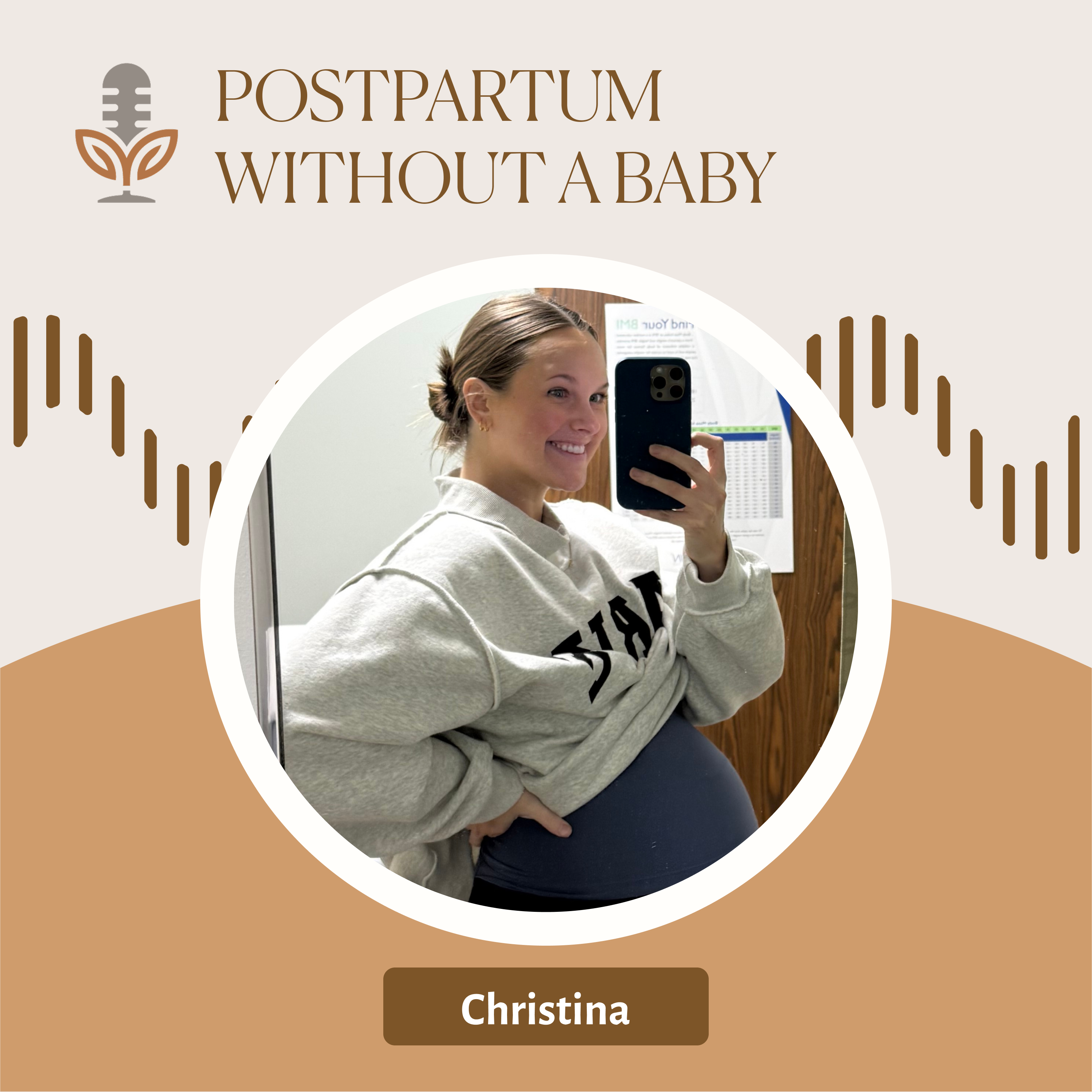
[00:00:00] Speaker A: For many women, faith is part of why they choose surrogacy. It shapes the decision to carry a child for another family. But saying yes is only the beginning. What follows is more than a year of appointments, of waiting, of transfers that work and transfers that don't. It's a stretch of life that can bring loss as easily as it brings the moment everyone was hoping for. No two women walk into this the same way. And no one knows going in exactly what it will ask of her. Hey, welcome to the Surrogate series. I'm Eloise Drain. Thank you for joining me today. My guest today is Christina. She has been married to her husband for almost seven years and is a stay at home mom to her two little ones, ages 5 and 4. She stays active, loves being outdoors, and recently picked up photography as a passion project. Christina has carried for one family, welcoming a healthy baby boy in early 2025. And she is now on a sibling journey with the same family.
Christina, thank you for joining me. I appreciate it.
[00:00:58] Speaker B: Absolutely. Thank you so much for having me today.
[00:01:01] Speaker A: Sure. So I'm just literally going to jump right into it and ask you, so when did surrogacy first come on your radar as something you might actually do yourself?
[00:01:12] Speaker B: Yeah. So surrogacy was really, truly something that I had heard about in probably the celebrity realm, but didn't really know that it was something that people like me were doing.
And I had a friend who knew a friend who was doing it. And after I had my daughter and had a wonderful experience, she mentioned it to me and it was something blessing a family was something that my husband and I were passionate about, but we weren't really sure what avenue we were going to take.
And so that was might have been 20, 20, 21 that I first kind of heard about surrogacy and thought, okay, this might be for us.
[00:01:55] Speaker A: So what made it go from I'm thinking about it to yes, I'm going to do this?
[00:02:01] Speaker B: Well, I have a lot of ideas and so there's a lot of things that I think I might do this. And my husband thinks, okay, that's another one of your crazy ideas. And so when I mentioned it to him, spouses do.
When I mentioned it to him, I really thought I was going to get like, huh and confusion. And that's just another one of your crazy ideas. But clearly that the Lord was working on him as well. And so I mentioned it to him and I mean, truly his response was, yeah, let's do it. And I was like, well, that didn't take any convincing at all. And at that point, we knew our family wasn't complete yet. And so we weren't ready to dive all in. And so we just started doing more research at that point. And then after I had my son and we felt complete, we were like, yep, this is our time.
[00:02:55] Speaker A: Wow. So normally a lot of partners, it takes some convincing.
And him, obviously, it didn't take any convincing at all. Was it something that he already heard about surrogacy before or.
[00:03:10] Speaker B: No. So kind of our, our story in our journey to get to this point, we have a lot of very close friends and family who have struggled some sort of scope of infertility, whether that's infertility, recurrent loss or loss of physical children. And so we've always been burdened to bless a family, but our calling wasn't to foster care, it wasn't to adoption. So we really didn't know what our calling was. And we were just kind of sitting in that.
And so I really think for both of us, the, the burden and the calling was there to bless the family. We just didn't have the avenue yet. And so when surrogacy came up and I had already had wonderful pregnancies and deliveries, it was kind of for us a no brainer. And I think we were both just very aligned on what our, what our, what our purpose is and what we want. And so it was kind of like, hey, this has gone really well for us and we've been very blessed. And so now it's our time to give back. And I there quite literally no convincing at all. I think he was like so excited about it as well.
[00:04:21] Speaker A: Well, that's, that's amazing.
[00:04:23] Speaker B: So it was, yeah, wonderful how.
[00:04:26] Speaker A: Well, your kids are fairly young. How did you share with them?
[00:04:31] Speaker B: So my daughter, she's now five. I guess she would have been young four, maybe three. And some change when we started the process and when we first started, she really didn't comprehend. Didn't really.
But then with my full journey, she comprehended way more than I thought she would. Even so much to the point that now she's asking questions about this upcoming journey that I wasn't expecting.
You know, family inception sends out the surrogacy box when you do your first transfer. And it comes with a sweet little book. My mommy's a surrogate and so we would read that and we were very open with everything that we were doing. You know, mommy is carrying a baby and I would tell her the parents names and so she was always asking questions as, oh, this is for so and so and so and so. Yes, and so. She was very inquisitive. She wanted to know everything.
And so we very much explained what was going on.
And then my son could not have cared less. He barely even recognized that I was pregnant. I mean, I don't know how. I mean, it was.
I think he just gained. Thought I just gained a lot of weight, but he really didn't put two and two together. My daughter, on the other hand, really understood. And when we started doing blood work for this next transfer, she said, are you going to have another baby? And I said, why, yes, I am. And she said, for so and so and so and so. And I said, why, yes, I am. And so she put two and two together and just really understood it and was in full support of it. And we show pictures, and it's just been sweet to see her get excited about it as well.
[00:06:24] Speaker A: What about the rest of your family, parents and siblings and all of that?
[00:06:29] Speaker B: Yeah, so they're used to my wild ideas by now, so they were not shocked when this came about.
And I thankfully have a really great support system.
We have both sets of parents very close to us, close emotionally and also close physically.
And so we had a lot of great emotional support and a lot of great physical support as well.
My parents, his parents, were very excited. I think majority of people that I speak to, people that I don't even know, are very excited and interested to hear about it. I think, like, the biggest comment that I get is, oh, I've never known somebody to do this. And so I think a lot of people are just really interested to hear what it's like.
I haven't really experienced any negativity around it. I've experienced a lot of confusion and questioning, rightfully so, because it's just. It's not. It's not talked about a lot. And. And when it is talked about, it's. It's kind of talked about from a celebrity's perspective. And there's always a lot of, you know, obscure things that happen, and those are the things that are talked about. And so, like, the random times where things go wrong, that's what gets publicized. And so I think people just want to.
Want to really understand, like, okay, know what's actually going on. And I'm an open book, and so I love to explain it.
And so I've gotten a lot of positive feedback and a lot of great support. And my friends think I'm the coolest person ever. So I think it's just been. It's been so great and positive with my friends and family, but there's a
[00:08:09] Speaker A: lot of other things, you know, as a believer, there's a lot of things that, you know, you could have done in order to help somebody else. Why did you choose to become a surrogate?
[00:08:23] Speaker B: Yeah. So kind of going back to our origin story, you know, foster care was. Was not for us. Like, we just. We had not been called to that. It wasn't that we did want to. It wasn't that we weren't equipped for it. We just had not been. That was not our journey. We have. We really considered adoption because I was like, well, what else do we do here? You know, and. And we know a lot of people that have gone both of those routes, but it just didn't. We never had peace about either of those things. And so. And surrogacy was never on our radar. And so when surrogacy came up from through a friend of a friend, it was like, oh, yes. So, like, that was the avenue that we finally were waiting for.
And I think with my story of having wonderful pregnancies and deliveries, it was kind of this no brainer of like, I've been so blessed. So let me bless somebody else.
[00:09:23] Speaker A: Yeah. Yeah, for sure.
So let's talk about your actual journey itself.
[00:09:29] Speaker B: Yeah.
[00:09:29] Speaker A: So you did your first. You started with first set of intended parents for that first set of intended parents. Like, what drew you to that family that you initially started with?
[00:09:47] Speaker B: Yeah, so it's actually kind of a wild story of how I ended up with this family. And it. I was actually at a different agency and there was some connections. And the biggest part of our story is that we.
Faith is very important to us. And so there were. In the matching process, there were specific things that we were really passionate about. And we wanted our intended parents to be on that same page so that down the road you're not having to have some awkward conversations because we don't align on our beliefs.
And so we actually had somebody reach out to us and say, hey, we know of a set of intended parents at this agency that is looking for someone just like you. And I was like, well, great, here we go. And so that's how we ended up with our first set of intended parents. I didn't actually go through the very traditional matching process, which was fun, that I just kind of. Just kind of fell into our lap.
And we did share all of the same beliefs and we had all of kind of the. The same things that we wanted throughout the journey for each other.
And so it was kind Of a. It was a very obscure way to end up in a match that I wasn't expecting, but kind of showed me that it doesn't have to be cookie cutter. It doesn't have to look a certain way.
And so that was. It was kind of unexpected how we ended up in that match
[00:11:15] Speaker A: and what happened with that match.
[00:11:18] Speaker B: So we did our first transfer, and we had positive pregnancy tests. And then our first beta came back. Great. And we were all very excited. And then our second beta came back, and it hadn't doubled, and we still had that kind of cautious optimism.
And then our next beta came back, and those numbers had dropped. And so we kind of knew that we were looking at a chemical pregnancy.
And then, unfortunately, there was a little bit of miscommunication, I might say, between the fertility clinic and the intended parents that kind of led the intended parents to believe that I might not be fit to carry their last embryo.
And so they unfortunately decided to break that match, which was pretty difficult because it wasn't something that I had prepared for at all.
And quite frankly, I had gone in pretty naive, and that's to my fault. But I went in with that mindset of, okay, I know it could happen, but it shouldn't happen to me. I've never had a miscarriage. I've never had a chemical pregnancy, so certainly it won't happen to me.
And there was some protection in that. But then there was also.
It made it a little bit harder to process that because it was my first miscarriage or chemical pregnancy for a child that wasn't mine, but a pregnancy that was.
And so, you know, you're having to grieve something that was somebody else's. And then you are also trying to convince your mind, like, hey, no, you're actually not responsible for this.
And so that was actually something that it was really difficult for me to process, and I was not prepared for that.
And thankfully, I have a wonderful therapist that has really helped me through that.
And so. So that. But that journey was very unexpected for me.
[00:13:23] Speaker A: Yeah, well, you know, and I think it's also very important that people hear, you know, it. It's not your fault. Like, you know, there's things that, you know is not in anybody's control because you can have the most perfect embryo. It could be tested. It is grade A, all the things you've never had. Like you said, you've never had a miscarriage, You've never had any problems, and it just doesn't work.
So.
And no one can give an explanation of why it Didn't.
[00:13:57] Speaker B: Right.
[00:13:57] Speaker A: You know, so sometimes as women who choose to become surrogates, you carry this burden on your shoulders. Like it's, it's all on me to, to make this happen. And it's like, yes, you are 100% part of this story, but you're not the whole story.
And it's not all on you to make. Yes, you're supposed to follow the contract and follow, you know, staying healthy and all of the things, and doing the things that you're supposed to be doing with any pregnancy. But at the same time, it is not someone's fault if there is a chemical pregnancy or, you know, especially if you didn't do anything and it just, it just happened then. It just wasn't meant to be.
[00:14:41] Speaker B: Correct. Yeah, I had to really come to terms with, you know, it wasn't my responsibility.
And you know, the. I, I just had a hard time processing that, man. Like, I really, they really wanted this. I really wanted this for them, but I'm so not in control. And I think that's one of the biggest things that I learned through all of this, especially through the timing of surrogacy and, you know, the, the lab work and when your lining doesn't thicken like you want it to thicken and you have to push your calendar back, it's like, man, it's such a great reminder that I've never been in control. I will never be in control.
God is in control. And, you know, if that was not his will, it wasn't his will. And I couldn't have done anything to prevent it or to make it happen. And so it was, it was really a great reminder that, like, yeah, just you're still not in control.
And his plan is still better than my plan, as much as I was like, but wait, it was all right going right until it wasn't, you know.
[00:15:47] Speaker A: Yep.
[00:15:48] Speaker B: And, and it. Had that not happened, it wouldn't have led me to our next match and to the beautiful story, the beautiful child that came from that. And so there are, there are beautiful things that did come from it, and I grew so much through it.
[00:16:04] Speaker A: Yeah. So tell me about that particular story of your next match and you know, and how, you know, when you first talked to them and what was that like for you?
[00:16:17] Speaker B: Yeah, again, another crazy story that kind of led to that in a very non traditional way.
My agent was very honest with me that she currently didn't have any intended parents that shared our, our belief system and, and what we were looking for in a match, which I knew Was going to make it more difficult for us to find a match and probably a bit of a lengthier journey.
I was actually just kind of chatting with her on a day about some of my frustrations that I was having and some of my doubts, really, that I was having in the process. And quite frankly, just like, crying on the phone to her, which was so great that I had built that relationship with her.
And she, as I was on the phone with her, had said, hang on one second. I actually just got a profile, came across my desk, and it ended up being the profile for the intended parents that we matched with.
And she was, like, literally reading through it and was like, wait, wait, wait. I actually think this might be perfect for you.
And so she sent over the profile to us, and my husband and I were able to look through that, and we were like, oh, wait, actually, this is exactly what we're looking for. And we had a matching call, and it was. It went wonderfully. And we just kind of all felt very at peace after that first matching call.
And it was truly smooth sailing from then.
[00:17:45] Speaker A: Yeah. And I think, too, that's probably something that people don't often talk about is the importance of feeling a connection, you know? Yes. People come into surrogacy for all kinds of reasons, and nothing is wrong and nothing is right.
It's just whatever you decide is best for you, that's what's best for you. But you're also very intimate with somebody for an extended period of time.
And to not be able to have some kind of connection, some kind of relationship.
Now, if you both decide, like, no, that's not what I want. That's not what I'm looking for. Totally. Okay.
But it's also realizing as someone who's choosing to do this, you can also get to choose what kind of relationship you want to have and what you want that to look like. And what do you want your intended parents to be like for you? You know? So that is, I think, something that's really not talked about as often.
[00:18:49] Speaker B: Correct.
[00:18:51] Speaker A: But it's probably needed.
[00:18:53] Speaker B: It was very important for us. I am a very emotional person, and I get very involved. I go 150% into anything that I do. And so I knew, and my husband knew going into this that a relationship of some sort was going to be very important to us. And quite frankly, it's a little awkward at first because you don't know these people from Adam, and you are talking about quite possibly the most intimate details of your life and of their life, and some the parts of you that traditionally you keep between you and your husband are now being shared with strangers. And. And so that is a little awkward and a little uncomfortable. And intended parents are probably bringing in their own history of pain and of, you know, a little bit of maybe trauma, and they might be a little bit guarded. I know with our intended parents, they were very cautious going into this process. They had heard a lot of no's, they had had a lot of heartbreak, they'd had a lot of disappointment. And so I had come from.
Aside from that chemical pregnancy, I had come from no trouble getting pregnant and no trouble during deliveries. And so I was on the very optimistic side. And so it was a little bit of, oh, I kind of have to soften my approach a little bit here because as when I see a positive pregnancy test, all I'm thinking is, hip, hip, hooray, we're good to go. When they see a positive pregnancy test, there's a lot of fear behind that, of, okay, well, that's good news. But I'm also thinking about all these what ifs, because they've had so much heartbreak and so much loss and so many no's and so much disappointment. And so there was a little bit of kind of a learning curve, for lack of a better term, of navigating this relationship, because it is just kind of a weird scenario to navigate a relationship in.
But as you're going through was really beautiful to kind of see that relationship grow and see each other get more comfortable.
And that's why I was really excited about a sibling journey, because we have grown so much in our relationship. And quite frankly, when you see somebody deliver your child, I don't know how you can't be close after that.
Such a beautiful experience. Experience. And I'll never forget their faces and praise God that we have this on, you know, captured on.
On film. Because I'll just never forget seeing their faces when they got to see their child be delivered and. And just the.
The relief of, like, it's real. Yeah, he's here. And. And our family is. Is. Is now built.
[00:21:51] Speaker A: Yeah.
[00:21:51] Speaker B: So that was just really beautiful.
[00:21:53] Speaker A: Yeah.
How was the pregnancy?
[00:21:56] Speaker B: The pregnancy was great.
My third pregnancy, so I feel like they just keep getting a little bit harder as you go.
But I have always been blessed. I've never thrown up during a pregnancy, so I'm like, in Jesus name, let's keep that up.
I will say this last round of meds was a little bit difficult.
I.
I felt like I was pregnant before I was pregnant, essentially.
And so. And I Think one of the biggest challenges for me is as opposed to your own pregnancies, you know, you're pregnant the day you're pregnant because you do an embryo transfer. So it feels like approximately eight years of pregnancy. And so it, it did feel long, but I had no complications and I was fairly active the entire pregnancy, chasing around two Todd, if nothing else.
But I, I mean, truly was so great. It was surreal. It was very surreal. Every time we did an ultrasound, I was like, there's just no way that that is inside of me. That's just crazy that this baby is inside of me. I, I really couldn't. And I do think that there was a lot of protection in that, that the Lord was protecting me because I, I couldn't really kind of bridged the gap of like, I know there's a baby in there, but every time I see this baby, I'm like, huh? Really? Like, that's just crazy to me. And even when I delivered and I, you know, I saw him and he was crying, I was like, there's just no way that you are alive and that you're breathing and you're crying. And it was just again, like, so surreal that truly, like, came to fruition. I mean, it was crazy to me.
[00:23:51] Speaker A: So how do you, how did the relationship between you and your intended parents evolve during the. The journey? I mean, obviously, you know, you're doing so. Something so significant for them, and surrogacy is one of the biggest asks that somebody can do for someone else. Right.
So for your relationship.
And like you said, it's very awkward when you first meet your perfect strangers and now about to talk about some of the most intimate things, and then you're in this relationship for however long this process takes. How did you guys build your relationship? Was it organic? Was it something that you felt was forced? Like, how did you feel about that?
[00:24:44] Speaker B: Yeah, so that was one of the biggest things that we talked about going into the vetch, was that we wanted something organic. We wanted something to naturally form. And, you know, we weren't going to force it if it, if it wasn't right. But we also were going to try, you know, to. I think in any relationship you got to put an effort.
[00:25:00] Speaker A: Right.
[00:25:01] Speaker B: And I realized right off the bat that my, my husband is a little bit more reserved. I am most certainly not reserved, but my husband and I are a little bit different than our intended parents. They are far more reserved than we are, and we were blessed with the best intended parents. They, quite simply, everything that was ever asked was like, Whatever Christina wants. Whatever Christina wants. Whatever Christina wants. They just wanted me to be comfortable and happy, and it was so sweet. And I also was like, hey, guys, this is your child.
Like, I. I want whatever you want.
So we were both on the same page there.
But because they were more naturally reserved, I realized from the very beginning that I was going to have to put in a little bit more of the legwork to help them feel involved, to help them feel like they were part of this, because they didn't want to impose, and they didn't want me to feel like they were doing too much or. And they never said this, but I could very much tell that she never really wanted to ask too many questions. She didn't want to. She didn't want me to feel like that she was being too invasive. Where on the other side of it, I was like, girl, you can ask any question you want. You can call me at any time of the day. You can. I mean, whatever. Whatever you want to do, I'm here for you. And so I knew that if I put in the effort, that it would be reciprocated and that they would feel more comfortable. And this is exactly what happened.
When I had any information to share, I would share. And there's that kind of lull in the middle where you're not really feeling.
[00:26:36] Speaker A: Yeah.
[00:26:37] Speaker B: Too many symptoms, and there's not really any updates to give.
And so I would just keep in contact as much as possible. And, you know, if anything was new, I would tell them. If we got any news, I would tell them. If we had an appointment, I would tell them. Whenever I felt baby kick, I was telling him.
I was really trying to give them as much positive information as possible.
And then they were able to come for the anatomy scan, which was super sweet.
And then any time that we were ever together, we were always getting dinner and really trying to connect on a level that was just beyond just the surrogacy.
And then simply, the delivery was just really cool for all of us. I was very adamant that whatever they wanted that I was going to be okay with. So if they wanted to be in the room, absolutely. You know, if they weren't comfortable with that, I understand.
And that was actually a reason why I made a lot of decisions about the delivery. My first two children, I had naturally, and I knew for me, when I have my children naturally, I go inward, and I shut everybody else out. And it was really a bonding experience between my husband and I. And I knew that that's not what the surrogacy Journey was about. And I didn't want them to feel like outsiders in their own birth. And so I made the decision to get an epidural this time, which was fabulous.
Would totally recommend.
And so it was fun to have everybody in the delivery room, and we were just chatting and laughing, and it all went very, very, very fast for my third child.
But it just felt like we were all hanging out and we were all about to just, you know, watch a football game or something.
And then all of a sudden, their child was there. And then after that, truly with that kind of same, relationship building continued to happen. And they would send me updates and sweet little pictures of milestones, and we just kind of kept that organic.
Now they're a pretty good distance away from us. They're several states away. And so it's not like we can just pop in and hang out anytime.
But we have still kept a good, close relationship. So close that they asked me to do it again for them.
[00:28:49] Speaker A: Did you go into spontaneous labor or was it all planned?
[00:28:53] Speaker B: So I actually thought that I was in prodromal labor. I had prodromal labor with my son for four weeks, so that was fabulous. And so I had pretty much convinced myself that my contractions weren't really real.
It was actually on Valentine's Day, because I wanted to finish my Valentine's Day steak before I went to the hospital, that I was having some irregular contractions. And I think I was like, maybe 3cm dilated at that point. And I live about an hour and a half from the hospital, so I was on guard. I was ready to go at any time.
Knowing that third baby, my two labors before that had been pretty quick.
And so we actually ended up in the hospital. And they said, well, you are contracting, but you're just not very active right now, so go home. Which made me very nervous.
And then a couple of days later, I think it was two days later, I had an appointment, and I was going to go in and beg for my membrane sweep so that I could get the things rolling. And I went in with regular contractions, and I said, hey, I'm in padroma labor. I know it's not real.
This is going to be happening for a couple more weeks. I think I was maybe like 38 and five days pregnant, and I was very nonchalant about it. And they were there, praise God.
And my doctor went to check me, and she said, well, you're 5 centimeters dilated, 80% of face, and you're having regular contractions. So do you just want to Go over to labor and delivery and I've never moved faster in my life.
Absolutely. They were on board. She said don't pass go, don't eat lunch, go on over. Yeah.
And I think we, we started the, kind of started everything maybe around 12 o' clock and in the afternoon and they had their baby by 5pm oh my gosh.
[00:30:42] Speaker A: So yeah, those, those fast laborers are amazing, aren't they?
[00:30:46] Speaker B: It was, it was funny because I was like, you know, as first time parents, you will Never experience a 24 hour labor. You got a four hour labor in
[00:30:55] Speaker A: your belt for sure. So how do you feel your kids were affected by all of this?
[00:31:03] Speaker B: I really don't think they were at all. I think that's one of the two biggest questions I get was what the heck do your kids think about this? And I explained to a lot of people when you have your own children, you make a really big deal about it. You know, you're gonna be a big sister, a big brother and then you come up with names and you make a nurs and you have baby showers and you do all the things and you're talking about baby all the time. You're preparing the siblings.
When you're a surrogate, you just live your life as if you're not pregnant. Really not much in my life changed. You know, I had to work around my pregnancy. I gained a little bit of weight, had changed my clothes, but my life didn't really change and it certainly wasn't going to change afterwards. And so I think because we didn't put, put too much emphasis on it and because I was so open about why mommy was pregnant and why mommy's going to doctor's appointments and what's going to happen after mommy has the baby. That when I came home without a baby for them, the only thing that changed was my body. And so there really wasn't this big adjustment for them. They didn't really feel a loss because I didn't really allow them to get connected beforehand.
[00:32:15] Speaker A: Yeah.
What was your recovery like physically and mentally?
[00:32:22] Speaker B: Yeah, that was actually a challenge that I wasn't expecting in a different way.
I had prepared myself for a bit of a challenging recovery because I just didn't know what was going to happen. You know, I was, I've never had a baby and never and not kept it. So I was like anything could happen.
I think my recovery was so good, I mean surely so good that my initial instinct and my personality is to jump right back into things. And so I felt this just deep desire to get Right back into daily life. And my brain was like, all right, Christina, come on. Like, you don't. You don't have a baby. Let's keep going. Like, let's. Let's get out there. Let's go work out. Let's go do things.
And my body was like, hey, girl, we have just experienced a lot.
And so I had.
Really, the hardest part for me was just that disconnect between my brain and my body, of my brain saying, let's go, go, go. And my body saying, hey, no, no, no. And having to allow myself to slow down and to recover and to take a break and to give myself grace and to not put too much pressure on myself.
My husband was so helpful in allowing me room to slow down and allowing me room to recover.
And so, I mean, physically, my recovery journey was amazing, aside from the postpartum contractions that get worse and worse the more babies you have. Didn't love that.
It was also my first time not breastfeeding, and so it was my first experience with drying up my milk supply. We had decided between us and the intended parents that they weren't gonna have any donated milk, and so I had to navigate what that was like to dry up my milk supply, which was pretty uncomfortable at first.
But aside from that, my physical recovery was so great. Emotionally, I felt amazing. There were obviously some ups and downs because you're. I mean, your hormones just hit rock bottom all of a sudden, and it was interesting. I. I don't know if cool is the right word, but I think it's a little bit cool to see the comparisons between what your body naturally does when you have a baby. So something that I thought was, like, just conducive to me and my baby and my experience.
I think they call it, like, sundown scaries or like, when the. When the sun starts to set and you get a little bit of anxiety at night. And I really thought it's because, okay, well, I'm going to be up all night with my baby, so I'm a little bit anxious about this. I know it's going to happen.
Well, it was my first night home from the hospital, and the sun starting to go down, and I looked at my husband, and I was like, I'm getting that feeling that I had with my children.
What is happening? And he starts flipping on all the lights, and he was like, no, no, no, no, no, we're not doing this. Like, no, we're not doing. No, no, no. Like, let's. Let's get some energy going.
And I actually reached out to my therapist and asked, you know, like, hey, what's going on? She was like, yeah, friend, your body has no idea that you don't have a baby. And so it's preparing for the night ahead, and it's.
It's pumping adrenaline to keep you awake so that you can care for your child. And that was another thing that was really unexpected for me. I thought, oh, my gosh, I'm gonna have the best sleep. I won't be up all night with a baby. I'm so excited to get all the rest. Well, I truly did not get a full night's rest for two or three days because there was so much adrenaline pumping through my veins.
And again, your body just has no idea that you don't have a baby, and so it's preparing you. Hey, friend, we got to get up, and we got to feed a child, and we got to keep it alive. And so I remember, like, being so exhausted, but then every time I would close my eyes, it was almost as if, like, my mind was doing a marathon, and I couldn't sleep, so I was like, all right, let's get up. Let's go eat lunch or something.
So that was just funny to kind of see those comparisons of, like, yeah, your body still totally thinks you have a child, and it's. It's biologically doing all the right things, and I just have to kind of adjust to that.
[00:36:42] Speaker A: Did you feel, like, any kind of depression or longing or a sense of loss?
[00:36:52] Speaker B: No. This is actually my favorite thing to talk about, because it's my number one question that everybody always asked me is, you know, do you feel any connection to the baby? How do you not feel loss?
And I think first and foremost, and I'll say it till I'm blue in the face, what God called me to, he's going to see me through. And so I truly believe that God called us to this, and so he's not going to leave me hanging. You know, he's going to see me through to the end. And so I truly do believe that there was so much protection for my emotions in that.
And then I also explain it to people.
I explain it kind of like foster care. It's kind of the closest relation that people can wrap their minds around. When you go into foster care, you take in this child. It's not your own, but you love and you care for it as if it was your own. And you would do anything for this child while it's in your care as if it was your own. But you go into the process with the foreknowledge that the goal is healthy reunification. And so with surrogacy, it's a little bit similar where you go into this with the knowledge that this isn't my baby and the goal is reunification with the parents that, you know, this baby does actually belong to. And so while this baby is in my belly and in my care, I'm going to treat it the best I can. I'm going to treat my body the best I can. I'm going to handle this pregnancy as if it was my own pregnancy and do what I would do as if it was my own baby. But I know that at the end of this, it's not my baby. And I really, really want this for somebody else. And I really want to see this connection for somebody else. And truly, I think there was so much protection in it that that was what was made it hard for me on the other side of it was to come back to the realization that, like, oh my gosh, I did just have a baby because I was.
I was so ready to just be like, all right, let's get back at normal life. Because I wasn't grieving a loss. You know, I. There was. There was no loss feeling because I didn't feel like I ever had ownership of this baby, if that makes sense.
[00:38:59] Speaker A: Yeah.
[00:39:00] Speaker B: It also just kind of reminds me that, like, gosh, children are never ours to begin with. You know, they belong to the Lord and he places them in our care. And that baby was never mine to begin with. And neither were my kids. And they're just placed in my care for the time being. And so it just. And it was so joyful to watch this family become a family that I couldn't even.
There. There was just no way that I could grieve in the midst of that. You know what I mean? Like, it was just so beautiful to see. And I know that not everybody experiences that. I know that not everybody has the easiest match. I know that sometimes there can be a little bit of animosity. I know that sometimes, you know, things can. There can be tension. I know that sometimes things can be hard. And so not everybody has the beautiful BO at the end of their journey that I had.
But I think the biggest component of that is really that mindset going into it. And we went in very prayer filled and we went in with the knowledge that, hey, grief and the feeling of loss is a possibility and you can't rationalize with your hormones sometimes. And so that is a possibility and it does happen and it doesn't it's not wrong when it does happen.
But what are the steps that we're taking and taking now and putting into place now and the mindset that we're going to have now so that when something. And if something does arise on the back end, we can process it together? And I've mentioned my therapist a couple times, but I mean, between my husband and my therapist, we were all on board and we were ready to combat whatever came up.
And so I did not have any depression, and I'm so thankful that I didn't. And I know that depression is not always circumstantial. I know that a lot times it is biological and you can't help it, you can't control it.
But I do think that going in with that mindset was so beneficial. And also, you know, having that connection with them that I get to now watch this baby grow up and celebrate with this family and for this family has also been really beneficial as well, that there was not just this clean break that kind of felt like a loss.
[00:41:15] Speaker A: Yeah, for sure.
So there's a, you know, kind of talking about this, especially given how people have a misunderstanding, I think, of surrogacy. There's a long running argument against surrogacy that women who are doing this are being taken advantage of, they're being exploited.
I mean, obviously someone who has actually lived it, getting ready to do it again.
What would you say to that?
[00:41:42] Speaker B: Yeah, I think.
I mean, we live in a very broken world and there's a lot of really bad that happens in this world. And so it would be wrong to say that people haven't misused or taken advantage of surrogacy, whether that be the gestational carrier or whether that be the intended parents.
I think that what gets publicized is what is going to grip people's attention. And what doesn't get publicized often is stories like mine that have gone well and that start with great intentions. And so it's not surprising to me that the negative experiences have been publicized so much.
And I would be remiss to say that I'm sure that there are people that go into it for the wrong reasons. And thankfully, from this agency's perspective, I have seen a wonderful vetting process. I have seen measures taken that would prevent somebody going into this for the wrong reasons and then having a negative outcome.
I have a wonderful lawyer who wrote a beautiful contract that would prevent, you know, the parents from being heartbroken and for me from being heartbroken if either one of us decided to go rogue. So I I do. I'm so thankful that there are a lot of measures in place to prevent the very extreme and very rare things that people want to publicize from happening.
And that's why I've chosen this agency, because I stand behind you, and I stand behind what you believe in, and I stand behind the true heart of surrogacy.
Anything and everything in this world can and will be misconstrued at some point. And so I think that.
I think that surrogacy is a wonderful and a beautiful thing, and I think that it provides families with an opportunity to bless this world and to make the kingdom bigger. And so I think. I think it. It can, and it is beautiful, but I just don't think that it's.
It's worth time and energy to just harp on the few and very rare people that don't do it for the right reasons and quite frankly, get the outcome that they put into it, you know?
And so, yeah, I think anybody can make a case for why they might think surrogacy is wrong, but until you do it, I don't think you can really understand it.
[00:44:29] Speaker A: Yep, 100%. Could not agree with you more. Could not agree with you more.
Can you speak on your experience with working with family Inceptions?
[00:44:38] Speaker B: Yeah, I have had a wonderful experience with family inceptions. Like I said, it wasn't the agency that I started with, and so. And that simply just because there's 8 million1 agencies out there. But the journey to getting to family inceptions was. Was obviously a God thing. And I.
I speak so highly of my agent that walked me through loss.
It was.
Without her. I mean, truly, it would have been so incredibly difficult.
She was so kind and so patient with me, and, I mean, answered every single one of her phone calls, no matter when I have a phone call, was always available for me, and it was truly beautiful. I mean, it could have been an experience where I would have said, you know what? Maybe this isn't for me. I'm going to walk away from it.
But because of the support system that I had at family inceptions, it made me want to do it all the more, and it made me want to come back and say, you know what? No, this is still for me. I was still called to this, and something beautiful can come out of this. And I've worked with a lot of people at family inception, and there's a lot of different kind of moving pieces and people that you talk to and coordinators and agents along the way and have just truly had a great experience with Everybody. And everybody is warm and welcoming and just truly has the kindest soul. And so it's been wonderful working with family inceptions.
[00:46:07] Speaker A: Well, thank you. I really appreciate that. So for a last question, for a woman who is considering surrogacy, what do you want her to know before she starts?
[00:46:18] Speaker B: The biggest thing that I would probably say is just go in with the best of intentions, but also with your hands wide open. Because what I've learned through this process is that everything changes all the time. You know, what I wanted the timeline to be probably isn't what the timeline is going to be.
And this is now technically going on my fourth transfer since we have had another loss since the. The delivery.
And so in seeing all three of those, my first one, I was pretty.
I felt pretty controlling, and it maybe caused me to be a little bit anxious and uptight about the process. And. And now going into this one, I'm kind of like, you know what?
Whatever happens, happens. And, you know, this is the Lord's timing, and I'm just opening my hands, and when I do that, I get so much more out of it. And when I do that, so much of my anxiety and my fears go to the wayside. So my. My advice to really, both intended parents and gestational carriers is. Is to go in hopeful, but to go in with hands wide open.
[00:47:39] Speaker A: Yeah. Yeah. I mean, that is a big piece because, again, you know, like I had said earlier, you can't control any of it.
Everything could be literally as perfect, textbook, all the things, and it just didn't work.
[00:47:55] Speaker B: Correct.
[00:47:55] Speaker A: And no one can say why. No one can give an explanation. They can think that, you know, it could be this or could be that, but no one actually knows 100% what the reasoning is.
So, you know, being able to kind of, to your point, be flexible is significant.
[00:48:17] Speaker B: Absolutely. Yes.
[00:48:19] Speaker A: So. Well, Christina, I thank you so much for joining me. I really appreciate it.
[00:48:24] Speaker B: Thank you. Yes, ma'.
[00:48:25] Speaker A: Am.
[00:48:25] Speaker B: I've loved this.
[00:48:26] Speaker A: Yes. I mean, you know, that's the thing of why I wanted to do the surrogate series, because to your point, there's so many negative things out there, and that's the only things that the media wants to portray is the negative side, rightfully so. They don't want to talk about the good stories, and even though the good story still has hiccups, you know, just like you said, you had to, you know, fail transfers that didn't work, but it doesn't minimize what you've actually done,
[00:49:00] Speaker B: even if it never works at all,
[00:49:02] Speaker A: the fact that you were willing to stand up and say, hey, I'm willing to do this and sacrifice for another family is huge and all of that gets lost.
[00:49:12] Speaker B: Yeah, yeah. And that's media for you. That's going to be anything in this world.
Somebody's going to always find the negative in anything that you're doing. And so if you have the confidence that the Lord has called you to it and then that's your journey and it's not to be anybody else's.
[00:49:28] Speaker A: Yeah, for sure. So I'm really grateful for you and thank you for being with me.
[00:49:33] Speaker B: Absolutely. Thank you so much. I appreciate y'. All.
[00:49:36] Speaker A: Thanks so much for listening to Fertility Cafe. If you've enjoyed this episode, be sure to subscribe so you never miss an interview. Leave us a review and connect with us on socials. We're ertilitycafe. You can also watch the full video version of today's conversation over on our YouTube channel. Until next time, remember, love has no limits. Neither should parenthood.