Episode Transcript
[00:00:00] Speaker A: In the 1980s, a medical student became a sperm donor. Decades later, a connection was made that changed everything. Not just for him, but for the person on the other end of that discovery. One is a reproductive endocrinologist, the other his donor conceived child. And the story of what happened when they found each other is one that everyone needs to hear. Welcome to the Fertility Cafe where we explore the beautiful complexity of modern family building.
I'm your host, Eloise Drain. And this, this is a space for honest conversations about surrogacy, egg donation and the journey to parenthood. With expert insights and real stories, we're here to guide you through the medical, legal and emotional aspects of third party family building.
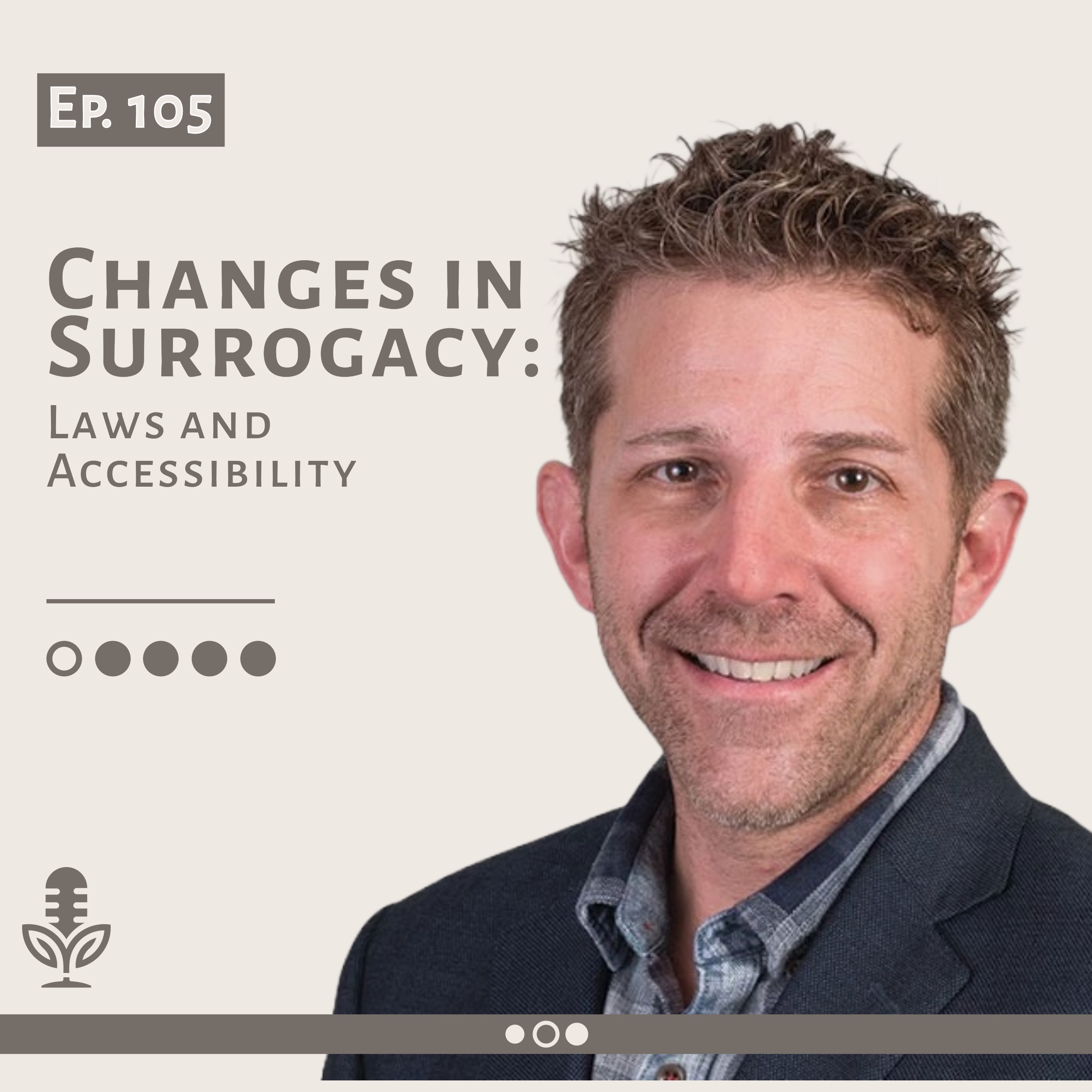
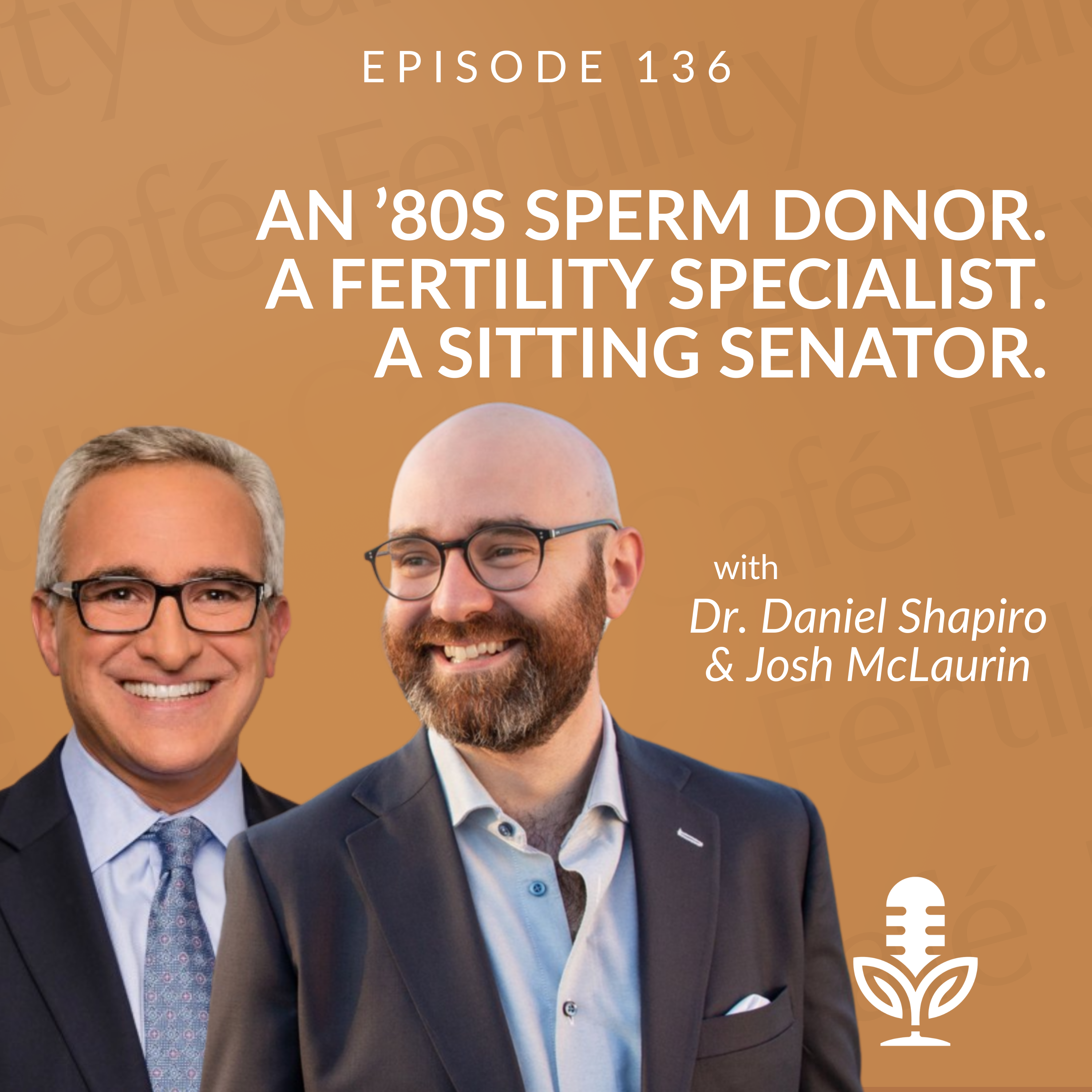
We believe that love has no limits and neither should parenthood. Welcome back to Fertility Cafe. I'm your host, Eloise Drain. I'm so excited about this conversation because it's one we don't hear nearly enough in the fertility world. We spend a lot of time talking about the process of donation, the logistics, the medical side matching screening. But we rarely sit down with the people who are living with the long term impact of those decisions decades later. And that's exactly what we're doing today. I have two guests joining me and I'm going to introduce them separately because each of their stories deserve its own moment. Dr. Daniel Shapiro is the medical director of My Egg bank and Reproductive Biology Associates in Atlanta. He's also the founder of My Egg bank, the largest network of frozen donor egg banks in the U.S. Dr. Shapiro graduated from Bowdoin College in Emory Medical School. He swims, hikes kids, skis, sings, acts and writes for fun. He has three adult kids and an adorable eight pound Havanese named Charlie. But there's another part of Dr. Shapiro's story that most people don't know, and that's what brings him here today. Senator Josh McLaurin was elected to the Georgia State Senate in 2022. He serves Georgia's 14th Senate District, which covers portions of north Fulton county and includes portions of Sandy Springs, Roswell, Johns Creek, Atlanta and alpharetta. Previously, Senator McLaurin served four years in the Georgia House of Representatives. Senator McLaurin grew up in Cobb county, is a Double Daw graduate of UGA, and received his law degree from Yale. His law practice has focused primarily on business litigation and aviation law. All right, well, Dr. Shapiro, Josh, thank you for both so much for joining me today. I've been telling you guys I've been very excited about this episode and I know that this is a personal story and I'm Grateful you're willing to share it with our listeners. So, Dr. Shapiro, I'd love to just start at the beginning. Tell us your story. And how did you end up becoming a sperm donor?
[00:03:00] Speaker B: So I was an Emory medical student from 84 to 88 and the head of the Reproductive Endocrine Program. Ironically, those were my advisors in later years in medical school, and they became my partners at RBA. Drs. Mitchell and Toledo were the doctors at Emory at the time in the reproductive Endocrine division. And they sent out their nurse practitioner, a woman named Sue Wassenhove, to solicit the entering medical school class to see who wanted to be a donor. Because at the time, the FDA didn't oversee this. It was all fresh donation, and all you needed to have was a blood test. Because I'm Jewish, they had to make sure I didn't carry Tay Sachs, which is the only thing they would screen for then. And if the count was okay, they're like, yeah, sure. And so I qualified, and I carried a beeper for a while. They left messages on my home machine to call me when they needed to set something up. And as a medical student, when all of this was ongoing, you know, I was at Grady Hospital doing clinical rotations. And if I got the call, I'd go into the call room, lock the door, make the sample, and then put it in a little paper bag, and it would ride the Grady bus from Grady to Emory Clinic, where they'd pick it up. Yeah, good chain of possession, right? Yeah, Right. And then they'd use the sample. They'd process it and use the sample, and somebody who was about to ovulate and I. For a while, there was like two to three times a week for three years.
Wasn't always two or three times a week. Sometimes I'd go two weeks, no call. But it was pretty frequent. They paid 75 bucks a pop. And that's why I did it, because I was a destitute medical student and I needed the spending money and a couple hundred bucks a week to pay for gas and groceries and help pay the interest on the loans I took out to get through medical school. Yeah, it was welcome income. And so that's how it happened.
[00:04:49] Speaker A: Josh, I'd love to hear your side of the story. So tell us about you, your life growing up, and when the topic of how you were conceived came into picture.
[00:04:59] Speaker B: Sure.
[00:04:59] Speaker C: Well, I don't have any memories of riding the Grady bus, even though I probably did. I was born in 88, which was one year after it says on Dr. Shapiro's website that he was first inspired through a project to go into reproductive medicine as a med student. Put that together. Later, it took me until 2019 to put that together. But when I was 31 years old, my mother called me and she was emotional and said she had something to tell me and she didn't want it to affect our relationship. And I had no idea. I mean, this was a very strange call coming from her. I hadn't gotten many like it. And so I thought this must be some pretty big news. I was ultimately relieved. You know, she committed no crimes and nothing terrible had happened. And she said, your dad is not your biological father. And I was raised as an only child with, you know, two parent household. We lived in a residential neighborhood, you know, suburban neighborhood up in Cobb county in Georgia, so metro Atlanta. And I had gone to school and gone to college and gone to law school and come back to Atlanta and started practicing. And then all of a sudden, she drops this on me. But, you know, I thought at first, that's okay. I'm. I'm not too concerned about this. I'm not angry. I mean, people find out stuff like this all the time, and it's just not that weird. That was my first reaction on the phone call with her. And then it started to set in that I actually was disoriented and I was angry, and I was angry at my parents because it felt like, you know, there's lies tell that are, you know, affirmative. Like you make a misstatement. And then there's what the law would call material omissions, which is failure to say something that the person that you failed to say it to would consider to be really important information that would affect their decision making. And so over the weeks and months following that disclosure, well, first thing I did was I said, I'm getting 23andMe, Mom. You know, rest in peace, 23andMe. But I said, I'm going to sign up for the Cadillac service and I want you to pay for it. And I didn't say it in that friendly of a way, you know, and she said, aye, aye. I mean, she agreed. She knew I was upset and hurt. I think she zelled me the, like, 400 bucks or whatever it was. And so then I got my DNA results and it said, you know, boom, you're 47% Ashkenazi Jewish from, you know, certain parts of Europe. Thought, okay, interesting. And I was reading all about the various genetic predispositions and whatnot. But then there's also a messaging feature There was on 23andMe where you could see your family members who are also on the app and you could send them a message. And so you got to give it up to the app designers for 23andMe for knowing a little bit of user interface and the human element. Because when you click on see your family members, it says, are you sure? It gives you one final. To just confirm that this isn't some grave error that you're about to.
[00:07:31] Speaker A: Right.
[00:07:32] Speaker C: I raced through as soon as I could spit in the tube and get the results back. I mean, it's probably only two or three weeks after the initial disclosure that I had the results on my phone. And I click yes, I want to see. And then it gives me a name. Daniel Shapiro. At the time, I thought probably pronounced Shapiro. Turns out I was wrong. 47% match, 50%, whatever the, you know, the DNA match was. And it said father. And I was able to reach out to him through the app. And I honestly didn't know quite what to say. I mean, how do you start a conversation like that? I mean, I'm 31 years old and I guess it may have told me his age, that he was in his late 50s at the time. Time. And. But I, you know, I reached out and I said, hello, I am ready to meet you. And that's all I put in the message.
And with periods, no exclamation points. It was like a work email, you know, very, very to the point. And I mean, look, I didn't know who would be on the other end of it, really. And so I just kind of put it out there like a message in a bottle. I will say I did have friends who have donor conceived children and they're sort of like my guides through all of this emotionally and practically to get me up to speed on what all of this was about. Because my mom. I didn't even mention that the conversation with my mom, you know, she.
It wasn't anything weird or untoward. It was just that, you know, we were having trouble conceiving and we used the technology available and it was the 80s and we didn't know whether to tell you or not. We figured we could just. We didn't have to tell you. We didn't think it was important. And we apologized and my dad was still alive at the time. And, you know, I think he also was apologetic via my mom. My friends had sort of figured out that Danny was a doctor, that he did reproductive medicine, that he was in Sandy Springs where I represented Georgians in the State House. So I'm an elected official, right? And I ran for office in 2018, had been elected by 2019 when I reached out to him. And so I reach out, I say, hello, I'm ready to meet you. And I guess this is the part that you flip the CD now so that we go to side B so we can hear Danny's reaction to that.
[00:09:24] Speaker A: I guess you had purposely like been in 23 and me, Daniel, or was it like, did you know, like I'm going to do it because I know I've done this in the past or.
[00:09:34] Speaker B: No, actually there been a moment. Prior to 23andMe a woman named Terri Jacobson was an Epstein School parent and she was on the COVID of the National Enquirer because her kids were donor conceived and they found their siblings through donor sibling registry. And this was like 2005, 2006. And then the, the B was in my bond. And it's like, as I was reading, it's like, you know, the psychology of this is you're supposed to be identified. And so I reached out to donor registry and I put my characteristics out there without my name to see if anybody was interested in finding out about an Emory sperm donor in the 1980s. And nobody was. And so I forgot about it. Then in 2015, we were approached by private equity and a, a serial entrepreneur who named Martin Varsovsky, who was an angel round investor at 23andMe. And they wanted to buy our practice and our donor egg bank. They wanted to buy my egg bank, which is, that's not my egg bank personally. That's the name of it, right? Capital My capital E, GG Capital B A, N, K. I was one of the founders of my egg bank. How, how ironic is that?
[00:10:44] Speaker A: And I was one of the first gestational charities to go through it. But go ahead.
[00:10:48] Speaker B: Correct.
As since you and I first met, it's the bank's now like the biggest network of frozen donor egg banks in the U.S. so we're very proud of that.
But at the time when Martin was coming to us, we were still relatively new and a bit more contained. He was an angel round investor. 23andMe says here, this is fun. Why don't you do the kits? You'll find out if you're really 100% Ashkenazi was what he said to me. And I'm like, yeah, I'd like to know.
So that was why I did it. Just to see if the parentage prediction of 100% Ashkenaz was true. And it said 99%. It said I was 1% North African. And I was very proud of that. But it turned out with the revised estimates, no, it's 100% Ashkenazi. About six months after I'd done it, we were at dinner at the Bermans. We were talking about 23andMe and how she was beginning to see the impact of that in her donor consults. And I started listening. I'm like, huh?
And she said, wait a minute, you did 23andMe? I said, Mm. And she said, you can be found. You know that. And I said, I'm realizing that now. I hadn't considered that when I put my DNA in the cup and I spit in the cup myself. But at that moment, and this was 2016, my now ex wife said, take it down, I don't want you up there. And my reaction to that was, you know, I understand why you feel that way, but it's been six months. There's no match. There may not be a match, but in fairness to the people who were donor conceived, who might be my donor conceived offspring, they ought to be able to find me. And so I'm going to leave it up because it's doing no harm. And I found a couple of distant cousins already and we've had some interesting exchanges. She didn't like that idea, but Lauren encouraged me to keep it up and I was all in favor of it. And so it was another three years before the I am ready to meet you now email came. And I wasn't expecting it when it came and when it did, I was in a hotel room in Amsterdam on December 7, 2019, a day which will live in infamy for me. I went doing and I thought, you know, I better check this guy out before I say too much. Not knowing he'd already cyber stalked me, which he can explain himself. And I said, here's who I am. And I basically wrote a book.
What came back was, basically, I'm your State House representative and I'm a graduate of Yale Law School, which was relevant at the time because my father went to Harvard Law and my daughter graduate from Harvard Law School. And so my reaction to that was, is Yale, how am I going to explain you to the family?
You know, it started an exchange and then we met in my office about two weeks after that. And it took less than 15 minutes for the life changing moment, the deflection point, whatever you want it want to call it, to come out. Josh was already deep into this and he can talk about that if he wants to, but the Ashkenazi Gene bundle contains an awful lot of stuff and one of the things that comes with it is obsessive compulsive disorder. And I had never been formally diagnosed, so I certainly showed the symptoms. And I learned from Josh that, oh yeah, that is what I had. And I got it confirmed by a mental health professional by taking the Yale Brown assessment.
And it wasn't severe, which I'm glad to say, though, you know, my A student wanted it to be the top, but mild to moderate I could accept.
But it really made me start asking an awful lot of questions about how I think, how I make decisions, what motivates fear, what causes my triggers, all of these things. And had it not been for that meeting, I wouldn't have gone down the path of self discovery. I'm very grateful for that part. There were several elements of this that became quite disruptive, frankly. But in the long run, I found me was happy about the discoveries, even though there's some cringe in there.
[00:14:49] Speaker A: And I'm sorry to cut you off, but that is so interesting you say that because typically when you're talking about the donor conceived person and then the person who gave them the genetics, it's always the conversation about how it impacted the donor conceived person and how it has changed their lives.
Very rarely do we have the conversation about how it has changed the lives of the person who gave that genetic.
[00:15:16] Speaker B: It taught me who I was and it taught me how to talk better to my kids. Now, they might not agree with that, but all three of them have some form or flavor of this.
And instead of, oh, don't worry about it, poo, poo, poo, poo. I started listening to the anxious talk through a different lens. In fact, I had a conversation with my son Jeremy, where he was down a little obsessive loop. And I said, you're not an ax murderer. You're not going to kill anybody.
You're not going to throw yourself off the railing, you're not going to put the cat in the microwave, you're not going to do any of these horrible things.
And there was a long pause. He says, how the F would you know? That's what's in my head. And I started to laugh and I said, yeah, apples and trees, buddy. Obsessive disorders aren't rational.
[00:16:03] Speaker A: How did your kids take this whole response or not response, but this whole story of like, we have a half a sibling somewhere out there.
[00:16:14] Speaker B: I would say my oldest, honestly was. I think she found it a bit threatening. She's not been quite as warm and receptive to all of it, but that's her stuff.
[00:16:23] Speaker C: I've met Lauren, she's very nice. So for anybody watching, including but not limited to Lauren. I mean, I think what Danny's describing to just, sorry to interject, are like just smaller side reactions. Everybody, I think with some very rare exceptions thinks this is a really cool story and it's been productive for both of us. But I'm just helping you with your politics, Danny, with your.
[00:16:42] Speaker B: Thank you. Well, she's not going to yell at me for this.
[00:16:45] Speaker C: Okay, good.
[00:16:45] Speaker B: I would say she thinks it's kind of cool. I don't think she thinks it has anything to do with her, which is fine. She's entitled. The other two they ask, it's like, so what's going on with that? And have you talked to Josh lately? And so he's running for lieutenant governor. Really? They've leaned in Jeremy a bit more than Hannah, but both have asked the questions. I mean, neither of them have any time to call me. So I'm not surprised they haven't reached out to Josh, but not hostile to it at all, but eyebrow raising for them and they're curious, they have some curiosity about it.
[00:17:20] Speaker A: What about you, Josh? What about your family's take now that you know who this person is and you've met them and was, you know, was there any fear from your parents side?
[00:17:30] Speaker C: You know, what's interesting is they had the same kind of reaction, I think that Danny's oldest child did, which is interesting. Good for you. Maybe doesn't have a whole lot to do with us. Right. You know, because they had their concept of family and it was pretty well defined. And I think I can speak for Danny that there was a similar dynamic in his family.
If you don't have to do the work of upheaval to redefine your family concept, then why would you, I think is part of the issue here. And so, you know, with no disrespect at all to my family's reaction, because again, I think echoing Danny was a fully appropriate reaction they had because they can draw their own boundaries about how involved they want to be, but it just was not of significant interest to them, which again, I was fine with too, because, you know, without going way too far down the rabbit hole, if you're in a family dynamic where you as a child struggle to individuate and for whatever reason, whether it's, you know, inherited or social, but you, you have a lifelong challenge of I'm going to individuate, I'm going to have Good boundaries. I'm going to make this family dynamic more healthy than maybe historically, generationally, it's been. You welcome the opportunity to individuate. So I really wasn't mad at all. I was not really upset that my parents said we're just not that interested in learning too much about this because it did give me my own lane to do my own self exploration. And one note I'll add to going back to the meetup, you know, December ish of 2019, when we first met at Danny's office, we got really lucky. I try to emphasize this anytime we talk about our case, we were lucky that we had these preexisting social bonds that facilitated and accelerated the trust between us. Because I think a lot of times donors and donees are stuck in the limbo that we were talking about with the message that I sent to Danny originally, which is, I'm a human being and you're a human being and some decades separate us and we. And maybe geography and we don't know how to talk to one another because we've never met. Even though we have this unbelievably connected relationship, we don't know what to do with it. I'm not just a state representative. I was Danny's state representative, as in, I represented Danny in the state legislature. And that was true before either of us were aware of the connection. And Danny, I don't want to disclose your confidential voting information.
[00:19:48] Speaker B: I'm a Democrat.
[00:19:49] Speaker C: But. Well, I was just gonna say, you know, Danny voted for me in the 2018 election. So it's kind of wild.
[00:19:56] Speaker B: 2020, and in 2022 for senator too.
[00:19:59] Speaker C: And he's not the only one from his family that had reached out to me as a constituent. And I have emails to prove it. And so we were lucky in the sense that there was already that existing basis for a trust relationship. So that, you know, I think at first not to blow you up, Danny, but I think you were like, I'm going to need some time to process this before I want to meet. And then within a couple days, you're like, you know what?
Like, how dangerous could it be to meet with. With my state representative? Which is something I might go to the capitol try to do anyway, right. So I say all that just to say, like, I think that one thing Danny and I have come to appreciate after talking to. We've been to conferences, we've talked to other donors, other donor conceived persons. Tell me if you disagree, Danny. We are by far the situation or the, you know, the pairing that had, I think, the most going for us in terms of making it easier to connect.
[00:20:48] Speaker B: Yes.
[00:20:49] Speaker C: Yeah. I mean, by far, I don't know of anybody I've met that has had the ingredients to have as automatic of a friendship or a connection. And that can not just the state rep thing, but it could be something as simple as personality differences. I mean, Danny and I are both. We figured this out at his office that he directed his med school comedy show when he was in med school, and I directed the law school comedy show at Yale. And what both of those have in common is you're in grad school, you're not a comedian, and so you think you're funny and you. You take the helm of this graduate student comedy experience.
[00:21:21] Speaker B: What do you mean, think?
[00:21:22] Speaker C: Yeah, right. But, you know, something like that, I think made us more conducive to wanting to explore this connection and learn from it and. And going back to the boundaries thing, I think what we have realized is there are a lot of people who are perfectly happy to say thanks, but no thanks. Yeah, it's good to know that I come from this source, but I don't need to be writing any books about it, essentially.
[00:21:45] Speaker A: So fascinating. It's such a fascinating story because Danny has spent his entire career helping people build families through, you know, obviously assisted reproduction. And you again founded the largest frozen donor bank in the country. And now you've lived this from a completely different angle that obviously, I mean, clearly you knew what you were doing at the time, but you, you know, you don't really necessarily think future forward now that you are helping people to do this, as you're literally your career and what you do day in and day out, has it changed anything for you and how you even approach your work?
[00:22:21] Speaker B: A hundred percent. I can be a little black and white. Empathy, sort of the theme in my head over all of this is it made me understand how other people might be thinking a lot better. It clued me into how to read that and to address it and to talk about it up front and to validate those who aren't comfortable with it. As somebody who was a egg banker, the goal is to do donor egg cycles. And I did them great. And I was thrilled with how successful that was. But I think in the early years of the egg bank, when I do the consults, it was more about, look what we can do, and this is going to be less expensive and it's going to be faster and all the things that made egg banking beneficial. But I wasn't really talking a lot about the psychological piece.
And though I understood its importance, I didn't put a lot of emphasis on it. And now my consults include comments like, this usually goes fine, but you honestly really don't know what you're going to get till you get it. And you may recognize behaviors in a donor conceived child that are not familiar to your family but might be familiar in the donor's family. It's an argument for disclosure. It's an argument for making this open and collaborative rather than, here's your donor egg, see what you can do with it. It has changed my conversations. It's changed the way I think about it. I hope it's made me a more empathetic person. It's actually made it more meaningful too.
[00:23:45] Speaker A: I know you know that I've been an egg donor and a couple years ago also had the opportunity to meet my donor conceived daughter.
Luckily though, for me with my children and my husband and family, I was always very upfront. I never hid from them that I donated. And so. But this particular family, they did not share it with her until she was 16.
But we had kept in touch because it was an open donation on the parent side to me. And so I get a phone call and they were like, we finally just shared it with her and she wants to meet you and can we come to Atlanta and you meet you. And I'm like, sure, absolutely, no problem. And went and met them at the hotel that they were staying at. You know, she came down and yes, we definitely favored each other as the two of you to do too, as well, just as an FYI. And then they just gave us an opportunity to chat. And her first thing to me was, you know, I thought I was broken because I just always felt like there was a disconnect. And then when they told me then I felt even more broken and you know, and I thought that people were going to look at me strange and, and everything else and I'm like, sweetie, you're not strange. And she was like. And then I have this thing about shoes and bags and I don't know, there's this obsession. I was like, oh no, you get that from me. That's, that's all, like, that's all me right there. So. But it gives you the perspective of both sides that, you know, as we are in this field and oh no, the agency will be 18 years old April 1st.
[00:25:28] Speaker B: Congrats.
[00:25:29] Speaker A: Giving me same similar to you, Danny, of now having more empathy, now seeing it from a different perspective, now having a different lens that I look through when I am now speaking to recipient parents or even speaking to donors about at the end of the day, what you're doing, there's going to be somebody else on the other side and eventually they're going to become an adult and they're going to have to questions and your children, potentially your own children that you're going to have, are going to have questions. And luckily for me, I was so opened with mine that the day that I met them at the hotel, it just also happened that my mom was in town and I was like, why don't you just come to the house and meet my mom and you know, my husband and the kids and, and they were like, really? I was like, yeah, come on. Like, literally they came, met my mom, met my, well, they had already met my husband and my children when they were younger, but now they are adults and you know, now I have grandchildren and all of the things. And so now it's just a whole different animal for them, but it still gives you a whole different perspective. Now, Josh, I have a question for you on the political side.
[00:26:40] Speaker C: Before we do that, can I, can I go back to. Because you, you've opened a lot of cans of worms and, and I want to speak to the experience of somebody as a donor conceived person who, when you don't have the knowledge. So she was 16, I was 31 when I found out that. So I was going to adult doctor's appointments and writing wholly irrelevant information down on my father's side, you know, genetic history or medical history stuff that had nothing to do with me, that I had no elevated risk for any of the stuff. So this whole idea of, you know, oh, I felt broken. I mean, what a powerful way to describe that. I don't know that I ever would use that word, but I knew something was, was a little bit weird or off. And there are message boards out there where donor conceived persons talk about that. Feeling that, like, this is something wrong. I remember asking my dad at once, one point, hey, was I biologically conceived by both of you? You know, you could have grabbed any baby from the hospital. Right. And why would I ask, why would I come to him and, you know, rule that out as a possibility? And I remember his response was basically the word sure would not. Yes. Not an enthusiastic yes, but sure is like a word you use when you mean, let's go with that sounds great.
Right. And so in retrospect, it was interesting that I also shared that same sort of reaction that a lot of donor conceived persons had, apparently, which is something's off. I'd like to figure out what it is. And if I could use an analogy, it's almost like, you know, getting out of an escape room. Every child has to deal with their genetics, grow, mature, become an adult. And doing this is a little bit like doing it with a mirror in your hand where you're sort of like everything you're experiencing is refracted through a lens that, you know, you can't quite understand. Or maybe it's like having the, a slightly off glasses prescription where, you know, things are just out of focus and the, and the value and you know, obviously Danny speaks to the value of it as a adult older than I am. It can teach you something. It basically removes an obstacle to self knowledge that you otherwise might have happened upon faster and gives you the clarity you need to pick up the self discovery and self awareness journey with a little more tools at your disposal. And I mean, I'm 38 and having trouble putting into words and a politician having trouble putting into words, but I think it's, it has to do with self knowledge and it has to do with making sure like, you know, the whole pro disclosure thing, making sure that kids who are already on a path of self discovery that will be fraught for any number of reasons don't have undue obstacles in the way of it.
[00:29:06] Speaker A: On the political side, you know, the state of Colorado passed a bill that at the age of 18, the donor conceived person gets to have access.
[00:29:17] Speaker B: It's way more than that. You have to disclose up front. Yes, the recipient needs to be able to identify the donor before the donation.
Right. I'm fully in favor of disclosure, but I'd like to say that there are plenty of people out there who would want to know that they were donor conceived and stop right there. And for that reason, I think the Colorado law goes a little too far. I agree with the spirit of it that open donation really is better for everybody.
But there are going to be donor conceived people who know their donor conceived who really don't want contact.
And I think that has to be respected. And they don't want to know, you know, who the person is and be tempted to cyberstalk them or whatever. A modification of the Colorado approach is what I think would be best. But strict anonymity is dead anyway. And I think, you know, especially with AI bots and, and facial recognition technology and the ability to predict genetic background just based on your face shape and all of this over time, everybody's going to have access to everybody. I think we need to Figure out a way in this space to put up the ability to create boundaries where the parties want them. And the Colorado law doesn't really do that. I'm speaking as a non politician with an opinion. We just discussed this at our physician summit in Orlando. For poops and giggles. Jared and Ivanka came out of the hotel with their three kids as I was waiting for my Uber and boy, did they look awful and miserable. Tall, but miserable. The kids look miserable too.
[00:30:51] Speaker C: As part of my official campaign messaging, I have no ill will or opinions about anybody of any party. That's not. I just, I want to build the largest coalition possible for the state of Georgia. So.
[00:31:04] Speaker B: And I want you to making an observation.
[00:31:08] Speaker C: Right.
[00:31:09] Speaker A: So I would be curious though, Josh, given again the whole thing out of Colorado and you know, and when you become lieutenant governor, Governor of the state of Georgia, I think that there needs to be a interweaving, I guess, of the fertility world and the oversight or something because there's just too many stories now that are affecting people's lives. It's no longer just what we're doing here now. And bringing a baby into the world. You're only a child for a certain period of time. You're an adult way longer than you are a child. Obviously a physician and a politician that's here on this episode being able to say, okay, yes, there needs to be changes. We do have a responsibility to patients that we work with in our constituents.
[00:32:01] Speaker C: So one thing I'd say in response to what Danny said, I don't think I'm disagreeing with him at all.
I don't know that it's practicable for the state to protect someone from their own impulsive desire to find more information. Right. So if I don't think we should be structuring legal rules that take as their presumption, their, their predicate assumption that, that people should not be empowered to find out if they want to. I, I mean, I think mandating. We are going to send you priority mail that says here's the name of your donor. We don't necessarily have to do that, but I think, and again, I haven't studied the Colorado law in detail, but I think the premise of open donation, that's been explained to me because again, even though I'm in politics, I'm a lawyer, you know, this field, the fertility and reproductive medicine fields are pretty new to me in terms of all these conversations. But what's been explained to me is a person, when they reach the age of adulthood, should have the ability to Go get the information. That seems to be the bedrock princess principle. And that doesn't mean a right to go get lunch. It doesn't mean a right to a Christmas card. It means. Or a Hanukkah card, as it were, depending on how your results come back. It's a right to know. Without being any more specific about legislation in any state. I just think that's the bedrock principle and the one that, you know, when Danny and I go to conferences, we. We try to sing the song of open donation. Yeah. Because it's something that, I guess the literatures, as it's been explained to me, is already there to show that there's really no question that open donation is best for everybody. But that doesn't mean that the concept is so well socialized to the field that people are integrating it seamlessly into their consultations. And that seems to be, as it's been explained to me, where we're at in history. And so, you know, I see my role as. From a policy standpoint, before you even get into the brass tacks of what should go in the law, it seems like we've got a whole lot of work to do in the reproductive medicine, fertility fields to just catch up to the widespread acceptance of the notion that this should be part of it. And then once it is, and this is often how, how policy making works and why you got to put the. The horse in front of the cart, once the field itself has its private internal awareness of what best practices are and what should be happening, then it's often the practitioners themselves that propose their own regulations, and they come to their state houses across the country and say, this is what has worked in practice. This is now the consensus based on the literature. And we'd like for you to codify something in the law that, you know, keeps the bad actors or the bad apples from doing this without the bare minimum. That's usually how this type of thing goes, because you don't, I mean, it's a political will thing. You don't want to pass a law on something before the broad consensus of the field has already kind of gotten there, because setting that coercive boundary is really the last step. So there's your political philosophy for me from, for the day. But I, you know, it's. I see myself as an agent of building that awareness as part of these conversations with Danny so that we can get to the point where those laws can have some teeth.
[00:35:00] Speaker A: But, Danny, do you don't think, though, that the majority of the people now in this field. I Mean, I mean, there's a lot of us, but I think that the majority of the people in this field are starting to see the importance of having open donation or at least having the ability to have it opened for people who want it.
[00:35:21] Speaker B: So I think the ability to have it, you'd find wide support for that. Mandated disclosure, there's resistance. And I saw it at our meeting this past week that I sat on a panel discussing exactly this. My story was shared and there were two physicians who I very much respect who made very sound arguments for no, don't disclose now, when you talk to them privately, it's because they got the con in the debate that they made it sound strident. They actually agree that for people who want it, yeah, they should definitely have it. But there are health reasons, there are mental health reasons why access to the donor before a child becomes an adult would be a benefit. The psych testing, it's valid for two years, but I mean, if a donor goes off the rails four years after he or she donates, it's got a genetic basis. The donor conceived offspring starts showing signs of that diagnosis, bipolar. God knows what it could be.
[00:36:20] Speaker C: Right.
[00:36:21] Speaker B: It would be beneficial to everybody to have access to that record long before that kid became an adult so that the parents can appropriately take care of that kid.
There's a lot still to learn about this and I don't really know where the line should be, but I would say a lot of people in our field are still resistant. Very much so. I think over time that's going to erode.
But it ain't gone.
And I saw it this past weekend.
[00:36:48] Speaker A: It ain't gone well, but I also think it's not gone, given depending on where the person is, how long have you been in this space versus how recent you got into the space and where you know, how you've come into this space.
Older reproductive endocrinologists or older individuals that have been in this space for a very long time who have also had been in it more so of the anonymity, the things that need to be hidden. All of them, yes. I would say a lot of them are probably going to be, no, let's not disclose.
[00:37:27] Speaker B: That's right.
[00:37:28] Speaker A: And I get it. I completely understand. But at the same time, we are shifting as a society, everything is shifting as a society.
And we can't be stuck in this space that we've been in because as we can see, all of these children that have been born from the technology that's been created and evolving over the years, technology is Evolving then surely the mindset and the thoughts and how we're moving and progressing in this space has to evolve.
[00:38:00] Speaker B: What you just said is exactly right. And that's what I saw is the Altococckers at the meeting were like really?
Right, really? And the younger people were like, like what's the big deal? There's another thing going on here and it actually coincided with when the egg bank was acquired by private equity. Same sex marriage by necessity, whether it's two men or two women, they need a donor, something if they want to have a family. That decision. The changes in the wake of Oberfell have made this far more common. And so as the society changes and same sex couples parenting become far more common. Open is going to be what they're going to want because before they accept the DNA into the family they're going to want to know what the characteristics are and they're going to want to meet the person very often. And you see, especially in California, you see that happening a lot where there's legislation that controls this and where the sociology of this is more advanced than what we have in other parts of the country. So I think what you just said is spot on. The older generation as we phase out the resistance will go away and the reality on the ground is going to necessitate that open donation be the far more common modality.
[00:39:09] Speaker A: What is you guys relationship now?
[00:39:11] Speaker C: We're friends.
[00:39:12] Speaker B: We don't say dad and we don't
[00:39:14] Speaker C: say son and we hang out occasionally.
The plurality of times we've hung out I think are to eat sushi.
[00:39:20] Speaker B: Yes. Except for the one time I made him and Melissa lasagna because that's my specialty.
[00:39:26] Speaker C: Also true, but also by virtue of. We've been to a couple events now where we've talked about our story and, and those places hotels sometimes have pools with poolside bars, bars serve drinks. And that has happened also too. I feel like I'm giving a political answer or something these events have happened. But no, I mean it's. That's what it means to be friends. There are very little expectations that he and I put on each other which I think is why this works. That you know, to have any relationship. I think what is really tough is when you do have so many fraught childhood associations with, with either disclosure or lack of disclosure that could be very difficult to work through and it might be too triggering or too complicated to try to bring those out into a relationship of any kind. I mean I think friends of all kinds go through this if there's Ever something heavy. And if it doesn't fit within the friendship, you have to work it out or it doesn't work. And it's the same with me and Danny, I will say my dad who raised me passed in 2022.
And prior to that, I was not super interested in building much of a close relationship with Danny at all because it was a disorienting and confusing and sad time for me. And I didn't want to complicate how tough that already was. For his part, Danny, the self discovery he's talking about, I think I'm within my rights to say, you know, it was right after 2019 is when he earnestly got started with that. And it took him a couple years to move through a lot of that. And so the timing worked out quite well for us to be friends post 2022 because he had gone through what he needed to get out of this whole thing and I had gone through saying goodbye to my dad. I think it just, you know, by the time we got to 2022, 2023, I had met his kids, I had met his family, but we were more comfortable with, oh, you want to go on tour and start telling our story now and hang out a couple times? Yes. And again, it's like I said, that's all on the basis of having what I think is the most likely ingredients for a friendship of anybody that we have met.
I mean, this is on the, the tall end of the spectrum in terms of the amount of relationship that we have. And I think that, you know, it is worth reinforcing to anybody who's going through this from either side of the equation that they should not expect or demand or anticipate this level of friendship or coordination. It should not be something that they hold themselves to.
[00:41:43] Speaker B: Quoting Josh from one of the previous symposia, you know, we got kind of lucky because in our own fields we're reasonably recognizable. That makes it safe because, yeah, there's going to be stuff under the surface of what a public figure might portray, but most of what you need to know is kind of already out there.
So for both of us, there was much less danger than I would have otherwise anticipated if it was somebody who was calling me from out of the blue, didn't have job in the State House as my State House representative wasn't all over social media already. If there had been more digging to do, it might have been a little intimidating. And I certainly know other donor conceived kids who it's, that's more the story. And they're like Yeah, I know who my donor is, and that's enough. I get why that's how they are. The timing was right, the situation was right. Our temperaments, I think are matched well enough that. That's right. Too early on, I was kind of dysregulated a little bit emotionally over a lot of other issues.
But in some of the first meetings, I did a lot of dumping on the poor guy. He didn't run screaming into the street, but he could have.
He could have.
[00:42:58] Speaker C: But I mean, it's. We were lucky again, lots of lucky in lots of ways. I'm lucky that we learned of the disclosure later on. If I had been in my 20s, which were more disorganized for me, or if Danny had been, you know, less advanced in terms of his self awareness, this might not have worked for us to know each other and be friends. And so again, it's so contextual. Right. And that gave me, you know, and Danny's. He's being modest, but I mean, he just, he was going through a lot and we both talked about stuff we were going through when we met because that was part of figuring out, you know, do we have the same psych conditions like all of this stuff. I think the reason I was okay with that is because I knew, hey, I've got my own predispositions and things I'm working through too. And, and that's actually. It was talking about an opportunity to individuate. That was really an opportunity for me to feel more in self possession that like, hey, here's a person who's 26 years older than me who shares half my DNA. He doesn't have it all figured out. He's going through stuff as well. And I get to be in a, in a way kind of a guide for him that I was the one who was first to the OCD diagnosis. You know, I have the capacity to show a little grace and mercy where Danny's going through a couple things.
So it was extremely healthy for me as a 31, 32 year old to think, you know, not only am I past my own confusion, that brokenness or whatever it is that the 16 year old described, but I am now in a position where I can even lead others to some small extent who are my senior in a very similar path that I've already walked a little bit. So no, that was an extremely validating and healthy experience for me. I don't remember any part of this with a, oh, it was bumpy and, you know, could have gone haywire. I just think of it as a very natural self awareness journey for both of us.
[00:44:41] Speaker B: Eternally grateful. It taught me how to look at my own stuff. And instead of the immediate shame, blame go, yeah, all right, I know where that's coming from.
And take a breath and pause.
And there are others who've helped me with this too. But it look at what's in front of me instead of going projecting days, weeks, months into the future about the end of the world, right? All the terrible things that could happen. And there are terrible things that could happen. But this gave me some freedom to live my life without looking over my shoulder.
[00:45:16] Speaker A: But I think it's also validating to people who are, you know, just learning or just coming into it or, you know, I've met my donor conceived child or I've met my donor and now.
[00:45:28] Speaker C: Now what?
[00:45:29] Speaker A: Now what are we supposed to do? And there's almost like you don't have to do anything. You don't have to do anything. You can just sit with that information and it's okay to just sit with it. You don't have to make a decision one way or the other. I mean, my donor conceived daughter, she has my contact information. She follows me on social media. I mean I'm all over social media. It's not like you can't just pull up my, Google my name and you can't you find me. So she can do that. But, and if she reaches out, I respond. But I'm not, you know, doing anything extra to engage or whatever. I allow her to make that decision. And we've spoken here and there, you know, throughout the years. But at the end of the day though, there's still no required commitment of on either side. And I think that that's an important distinction to also make. Even though you have that information, you don't have to and react to it.
[00:46:28] Speaker C: That's exactly right.
[00:46:29] Speaker A: From both of you, what would you want to leave people with on this whole experience?
[00:46:37] Speaker C: I, I would say good boundaries facilitate a lot of freedom. If you understand how to protect whatever it is you need going through this process on either side, whether it's frequency of contact, the degree of contact, knowing yourself well enough to know what you need to process all this information will facilitate a lot more freedom and self awareness because of it. And there are a lot of lessons that can be learned from this about both your own psychology and self awareness, as we've discussed, but also, you know, for the greater good and facilitating the policy of open donation and all that. But it absolutely requires good boundaries to know what you personally need most in the way of psychological security to move through it.
[00:47:23] Speaker B: I would agree with that. And then I'll use a grandiose finale here. DNA might be disposition, it's not destiny. What I learned from this was that I was pre wired for an awful lot of what I thought was off in my head and I'm like, no, it's not off.
And I have a lot of agency and choice about how I manage my own wiring. I gave myself some grace instead of being hypercritical of myself and others with the same kind of stuff or their own stuff. It allowed me to kind of amp down, take a seat back. Yeah, we call this team nature with
[00:48:01] Speaker C: no disrespect to nurture at all.
[00:48:03] Speaker B: Even being on team nature now we all as human beings walking along the street, we have choices about how we're going to act and we can listen to our inner voices which I think are pre wired and then we can decide what we're going to do with doesn't force anything.
And that's for me anyway, that was a very powerful message.
[00:48:27] Speaker A: I'm curious though, Danny. I know I said last question but it just popped into my head now what would you do if somebody else reaches out to you and says hey by the way, let's connect.
[00:48:39] Speaker B: That would be the first thing would be to let Josh know that there's somebody else who's contacted me, which I don't think that's going to happen.
I know from Dorothy Mitchell and actually I spoke to Sue Wassenhove a couple of years ago. I found her in Wisconsin and she said well we kind of limited it. It's not going to be more than 10 total. It's probably less than that actually. And they may not know because it was the 80s and people didn't disclose. But with the online genetics platforms, my guess is that I'll, if I ever get contacted again, it'll be a grandchildren quarter percent or 25% match. Not close to 50. 50.
[00:49:15] Speaker A: Yeah.
[00:49:15] Speaker B: I'm going to be like who's this dude? And then I'll maybe get contacted or maybe not but, but I mean that's what I think the next step will be. I'm in my mid-60s so I don't think they're going to be any 36 to 40 year olds picking up the phone and saying hey, just found out I'm donor conceived and I think you might be my genetic parent. I don't think that's going to happen going forward. But I, you know, I, I did not delist myself from 23andMe when bankrupt and now they're a non profit so I'm still on there. Precisely. And I'm on Ancestry too.
[00:49:47] Speaker A: Yeah.
[00:49:48] Speaker B: And I haven't shielded my DNA and it's specifically so that if there is anybody else out there, they can find some answers. But I haven't been contacted again.
[00:49:56] Speaker A: Well, thank you guys so much for joining me and sharing your story. Like I was saying earlier, I was so excited about this episode. I'm like, this is so fascinating. Like this needs to be like an actual movie or something. So. So here we are.
[00:50:10] Speaker B: Yeah, art has cinema, maybe.
[00:50:14] Speaker C: There you go. Yeah.
[00:50:15] Speaker A: Well, thank you so much. I really appreciate it. Thanks so much for listening to Fertility Cafe. If you've enjoyed this episode, be sure to subscribe so you never miss an interview. Leave us a review and connect with us on socials. We're ertilitycafe. You can also watch the full video version of today's conversation over on our YouTube channel. Until next time, remember, love has no limits. Neither should parenthood.