Episode Transcript
[00:00:00] Speaker A: Choosing to carry a child for someone else is one of the most generous things a woman can do. It is more than a year of her life, and it asks for a kind of dedication and responsibility that is hard to put into words until you have lived it.
Every woman who says yes to this has her own reasons and her own experience of what it gave her and what it asked of her.
These are their stories told by the women themselves.
[00:00:27] Speaker B: Hey.
[00:00:28] Speaker A: Welcome to the surrogate series. I'm Eloise Drain. I'm so excited, excited for you to be here with me today.
Before I bring in my guest, I wanted to share why I wanted to do this series.
No two surrogacy journeys are the same.
There are women all over the country doing this right now, and every one of their stories looks different.
The media tends to reach for the most dramatic version, almost always the negative one. And that leaves out everything else. The reality is so much fuller than that.
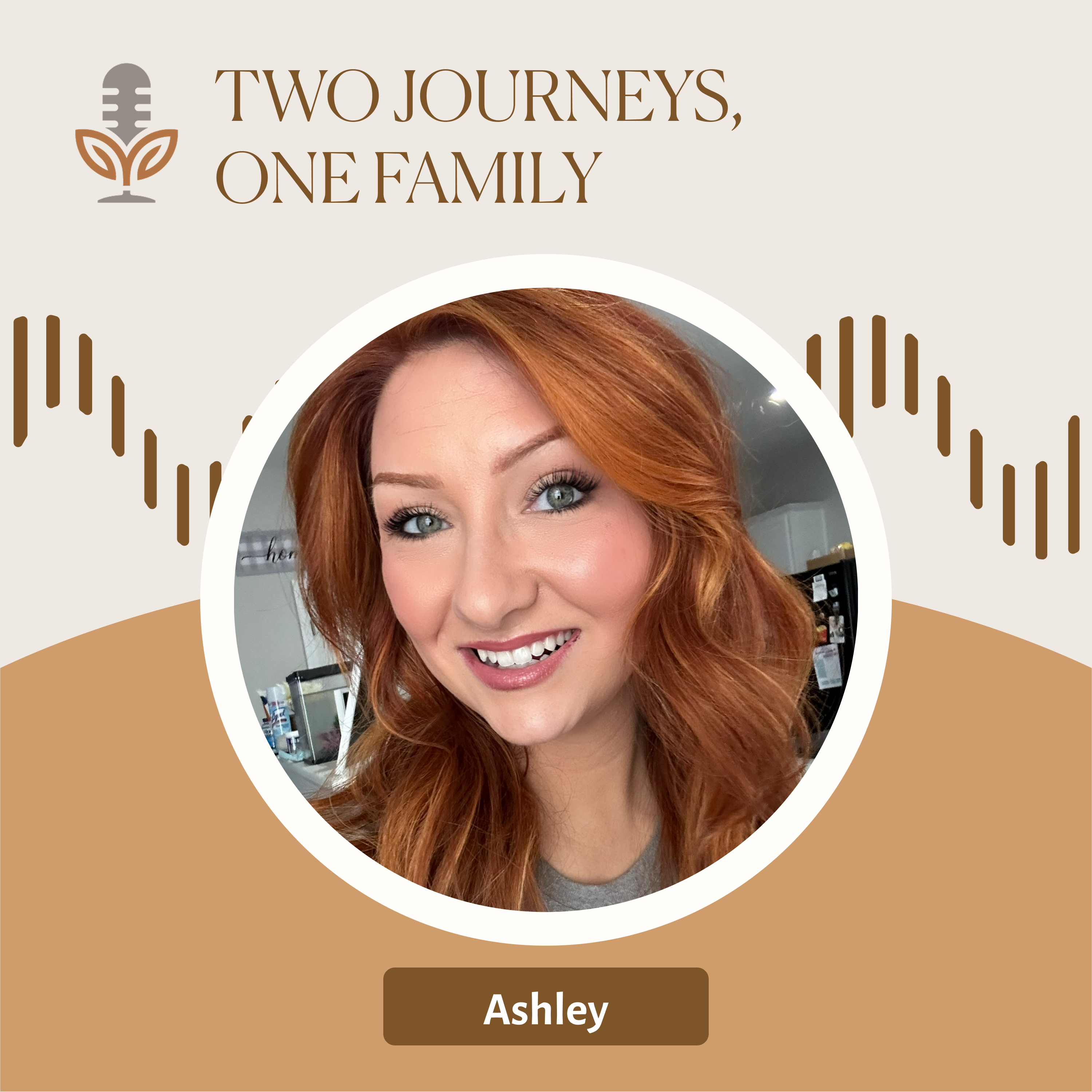
This series is about hearing directly from the women who actually do this so they can share the full range of what their experiences have been, not just the parts that make headlines. My hope is that you come away with a real honest picture of surrogacy, the kind that can only come from the women who have lived it themselves. My guest today is Ashley. She's 29 years old and she's a two time gestational surrogate. Through family inceptions, both of her journeys were for the same intended parents, and the bond between their families has grown well beyond the journeys themselves. You can follow her on her Instagram at the Carrie Diaries. Ashley, thank you so much for joining me.
[00:01:44] Speaker B: Yeah, I'm very happy to be here.
[00:01:48] Speaker A: So first, before we kind of get into the whole surrogacy world, would you mind sharing a little bit about yourself?
[00:01:55] Speaker B: Yeah, for sure.
So my name is Ashley. I am 29 years old, about to hit my 30s. That feels really gross to say, but I.
I have three kids. One biologically mine, two amazing step kids. And I am married to my husband. We've been together.
We've only been married for a few years, but we've been together for. For more. And we've got three fur babies too. And I have now been a surrogate twice to family that I got connected with through family inceptions.
[00:02:30] Speaker A: Awesome.
[00:02:31] Speaker B: So.
[00:02:32] Speaker A: And I know you got your hands full with three kiddos and three dogs. I mean, that's. That's a whole Brady Bunch right there.
So now, on the surrogacy side, when did surrogacy, like, first come on your radar as something you might actually do yourself. Like, was that the, you know, was it something that triggered it? Was it something you watched? Like, what, what made you, like, huh. This is something that I could actually think about doing.
[00:03:04] Speaker B: Yeah, no, something definitely triggered it. So when I first got married the first time, not to my now husband, I was very young. I was a teenager and had my son.
And it was a really complicated pregnancy. But I lived in a really small town in Wyoming. There wasn't an OBGYN I was going to, just a regular doctor. He couldn't tell me, you know, what was going on, why I was so sick.
I finally went a couple towns over to an OB GYN and she helped me get right back on track. And it was so nice. I actually got to enjoy the second half of my pregnancy. And I have my baby. He was great at a vaginal birth and I was in labor for quite a while, but I only pushed for a few minutes, which was awesome. Loved that. And he, he was amazing. And I knew I definitely wanted more kids.
But my first husband and I then ended up separating and getting divorced.
And so it was kind of weird. I did. I always planned on being pregnant again to have more kids, but then I met my now husband who already had two kids of his own. And going from one kids to three kids is a big difference.
So it was very weird for me to all of a sudden think to myself, I'm not going to be pregnant again.
I didn't feel like I had closure. And it was weird because we really. I mean, I thought about it and I was like, do I want another kid? And it was something my husband and I talked about, but he really didn't want another kid. My husband's older than me and fun, fun to think about a baby. The baby stage is so fun. But I didn't want. I didn't want another child now that we had three. And I was having a really hard time coming to terms with the fact that I wasn't going to be pregnant again, even though it was kind of a rough pregnancy. And so this surrogacy just felt like the right option. I remember presenting it to my husband and thinking, he's going to call me crazy. And he did not. And he was so supportive from the very beginning and said that if it was something I really wanted to pursue, he would be there with me and we could do it together. So it ended up working out well and it was good closure. It was what I needed and it was a good way to do that and do good in the world too. In helping another family grow.
[00:05:27] Speaker A: But it's a big jump, though. It's a big leap from saying, I want to have another baby or I want to have a pregnancy to I'm going to have another pregnancy, but I'm going to carry for somebody else, you know, and it's a big going from maybe to someday to like, oh, I'm going to do this. Like, it's a drastic undertaking and responsibility. And so how did you, like, reconcile it in your head? Like, yes, this is definitely something that I want to do and I'm capable of doing.
[00:06:07] Speaker B: Honestly, a big part of it was my surrogacy advocate that you guys paired me with, because when I was kind of looking around at different agencies, I started by looking at a much larger agency, and I. I made it. I don't know if you'd say far in the process, but I was supposed to start looking at couples to match with. But I still didn't have a whole lot of information. And it felt weird. They couldn't remember me or my husband's names, and it felt like we were a number. And so I kind of felt defeated.
It comes up every year in my Facebook memories. When I see the post I made when it just, like, it didn't work out with them, it really kind of heartbreaking. And I stopped and I was like, maybe surrogacy isn't going to be right for me. But then I thought, maybe there's an agency that's, like, smaller and. Or closer to me. And me being in the Charleston area and finding family inceptions in Georgia was great. And when I initially filled everything out again, it was very much so information seeking. And so I remember probably, like, two weeks later, I had not gone to do the appointments that I needed to. I hadn't filled out all the things I needed to do. And she called me and she said, ashley, I have the perfect couple for you. Get your shit together.
And so I did.
I went and did the appointments and everything, and it still didn't really feel real until me and my husband saw Tom and Charlie's video of, you know, putting out there what they were looking for. Their wants, their reasons for doing it, and watching their video was it that solidified it for me. I was like, oh, they need me, and. And I can help them, and it's something I can do while continuing on with my life. It's. It's a natural thing to do, and it's that closure I need. So it felt right as soon as I saw their video. Yeah.
[00:08:06] Speaker A: So how did you tell your kids.
[00:08:08] Speaker B: With me and Trevor both being divorced and having shared custody with our previous spouses, it's not something where we always have all three kids with us.
Our kids were younger at the time, and it was pretty easy to explain to them just kind of what we were doing. I don't know that they really understood it, or, I don't want to say felt the gravity, because it wasn't something that felt big for them, especially the first time around when they were younger. But I don't think they really got it until I was very pregnant. Like my third trimester. You could see where I, you know, was not just jumping up out of bed in the morning ready to make them breakfast and stuff. I was having a hard time getting out of bed, needing help from my husband.
But no, I remember telling them that, you know, they're not all moms and dads or just moms and couples in general are able to carry babies in their belly, and so sometimes they need help from other people that can do that for them. And it wouldn't be them having another, like, little brother or sister. It would be us helping to. To make a baby for another family. And they seemed to. To get that.
[00:09:24] Speaker A: It.
[00:09:25] Speaker B: Honestly, my sons, their ADHD brains, didn't really care. I know that sounds awful, but again, they were really young at the time. My daughter was the one that was more interested, so.
[00:09:37] Speaker A: And what did the rest of your family say
[00:09:41] Speaker B: the first time around?
That I was a surrogate. They. They were like, okay, I'm just kind of worried about you. Everyone was worried about how hard it would be for me to give up the baby. And that just didn't really compute with me because I didn't.
It just felt really obvious to say, it's not my baby. I know I'm carrying the baby, but, like, it's not my baby.
And I know a lot of times, you know, people will explain to kids or the people that haven't had children, like, you don't understand the bond that's there until you, like, have a child for yourself. This isn't the same type of bond at all. And I don't think anyone that's not been a surrogate can really understand the different kind of a bond it is that you have with the baby. Very much so. Still a bond and a love that's there, but it's different.
And like I said, it's not something I could explain to someone, but it wasn't hard to give up the baby that was not mine to keep, you know?
[00:10:38] Speaker A: Yeah. I agree. And I mean, even for myself, I.
All three times, it was like I. I actually connected more with the parents than I did with the child.
[00:10:50] Speaker B: Yeah.
[00:10:51] Speaker A: And I.
I was excited for the baby to be born, for him or her to go back to, you know, their parents. More so than, oh, my God, I'm giving up this baby. No, I was so excited. If anything, I was like, oh, my God, I get to. You know, we was talking about earlier about sleeping on your stomach. I was like, oh, my God, I could sleep back on my stomach.
[00:11:10] Speaker B: Yeah. Yeah, for sure.
[00:11:13] Speaker A: So that was one of the biggest things for me too, was it wasn't that. I mean, obviously, yes, I loved the children that I carried for as far as the surrogacy pregnancy, but it was a different type of love than I had with my own children.
[00:11:28] Speaker B: Yeah, for sure. It's a. It feels like a protective kind of love. Not that. Not how I feel with my kids, but like, that's. That's the main feeling that, That I. I have there with them and seeing them now that they've been born and everything. For sure. I will say my family had a very different reaction the second time I did surrogacy. I remember my mom asking me, she was like, why on earth would you do that again? Because my. My.
My second pregnancy, which was my first surrogate pregnancy, it was rough. So people asked me if I was psychotic.
[00:12:00] Speaker A: But yeah, we're gonna get to that one. We're gonna get to it.
I'm curious though. How did your job handle you being a surrogate? If. Did they even know?
[00:12:13] Speaker B: Yeah. Yeah, for sure. So I really was kind of delusional when I was a surrogate. The first time I was interviewing for a.
And just starting my bachelor's degree program online. So I was doing a lot at once and my husband was like, are you sure? Are you okay? Like, I'm here. I'm here to support you, but, like, are you sure? This is a lot. And I was like, I got this. It's cool.
But during my interview, and probably something you shouldn't do, but I'm just such a transparent person, I can't help it. I.
I said, hey, I have been pursuing surrogacy for a long time. It's happening. It's not something I'm willing to compromise on. And my now boss said, you will be supported the entire way through. It was actually really cool.
When I started that job, I was technically attempt to permanent employee, so I wasn't. I wasn't yet someone that, like, had all the benefits or anything, but they still made sure that, you know, I, I got the time off that I needed. Even if it wasn't like paid maternity leave, they. They still made sure I got that I needed.
When I did convert over to a full time employee and then have the baby 30 days later. So nothing but support from my employer, which I'm sure not everyone can say it was really refreshing.
[00:13:35] Speaker A: That's awesome. But if. And we're going to talk about specifically the pregnancy and your experience there, but given. And also what I know about how your journeys were, what brought you back to do it a second time.
[00:13:47] Speaker B: I remember during the pregnancy crying to my husband saying, I can't do this again. I cannot do this. It was so hard. I was terribly sick. But when I had to go in for a C section because there was so much amniotic fluid and baby was big, so would not have been able to do a vaginal birth. And so my husband was there in the room and it was really important to me to make sure that mom Charlie could be in the room too.
And my poor husband cannot handle gore or anything to save his life. He just was at my head watching me and looking at nothing else. Charlie works in a hospital as like a nutritionist, so she's like trying to look over the thing. She's very interested.
And I remember they. They pulled him out and it was weird. I hadn't known that feeling before because my first delivery with my son was vaginal. So it was all around very odd to feel them, like to feel, but not feel them pulling a human out of your body.
Remember they, they wrapped him up and gave him to mom. And mom came over and she held my hand and she, she said that there just like really weren't enough words for her to say thank you. And we both cried and I stopped and I was like, yeah, I'll do it again. Yeah, for sure.
[00:15:07] Speaker A: It always gets you.
[00:15:09] Speaker B: Yeah, it's.
They're some of the most deserving people. And I, I know that Charlie would rather be carrying her own babies. And I know that if she could, she would be doing that. And it's so unfair that she doesn't have that ability. And so being able to do that for her was really special.
[00:15:28] Speaker A: Yeah. And they're. They're amazing couple anyway too, so.
And one of the sweetest couples. So there's that, you know, I know obviously you decided to become a surrogate and clearly started doing your research and going down that path. And you mentioned that you had started with another agency.
Why did you start, like, how did you find that first agency? Why did you go with them initially?
[00:15:57] Speaker B: I think without knowing much about surrogacy, my initial thought was really big national company, like one of the larger companies. They know what they're doing, you know, they're going to have everything set up. But what I didn't know at the time was that, you know, going with a bigger agency, you. You really could just be a number. And I also didn't know that they did all of the. The legal stuff and escrow in house rather than third party, which, you know, made it to where things could be done unfairly and the surrogates wouldn't necessarily be taken care of. And I, I'm glad I didn't go with them. I've since learned that a lot of women that I have encountered that did end up going with them haven't enjoyed their journey. And it just sucks. I can't imagine having been able to do a sibling journey and giving us a second baby to a family because maybe I picked the wrong agency and they ruined the experience for me. That would be awful.
[00:16:54] Speaker A: Yeah. And unfortunately, you hear a lot of those stories of people whose, you know, their one chance to become a surrogate wasn't what they had pictured it in their mind it to be and that's all they have left to be able to, you know, kind of that gift that they wanted to give was ruined because of. Of somebody else's negligence.
[00:17:19] Speaker B: Yeah.
[00:17:20] Speaker A: So what. And you mentioned about, you know, having to do paperwork and having to get on top of it and you kind of like delaying it. Do you remember what you needed to have in place before, you know, us family inceptions would even consider you?
[00:17:37] Speaker B: I honestly think it was just the basic, like, go to your ob GYN and make sure they say, say, yes, you're good to go. You can be a surrogate and maybe like a blood test. It was pretty basic stuff that wouldn't take a very long time. So I got my butt in gear. I think the reason it took me a little bit on that is because I still. Not that I was unsure. I knew I wanted to do it, but I didn't feel a sense of urgency with it because I, I still didn't know the whole. I didn't know what the journey was going to look like yet.
But I'm. I'm gl. Glad I didn't have my button gear. I don't know if I had done it a week earlier, if Tom and Charlie would have been there waiting, you know, the, The Timing's perfect. And I. I can't imagine having done it with anyone else now with how close we are with them.
[00:18:26] Speaker A: So what was the matching experience like from, you know, your side of it?
[00:18:30] Speaker B: When we got told we had to make a video, I almost said, nope, I'm not gonna be a surrogate so bad. I was like, I can't. I can't talk on camera about myself. No, absolutely not.
My husband was also not looking forward to that. He was game for it if I needed him. And so I think we sat awkwardly for like eight minutes looking at a camera, talking about ourselves and just kind of rambling. It was weird. And then we saw their video and we were like, oh, that is it. Yes, for sure. And I think from what I remember, we had like a video call where we got to meet each other and it felt very right. And with Charlie being a running influencer, her Instagram was. Was pretty easy to find.
And now I. I don't even know if I had Instagram at the time. I'm old school. I just. I like Facebook, but maybe I did.
Either way, we kind of found each other and I was like, oh, my gosh, these. These just seem like the best. The best people. And it felt really good. And from there, when we, I mean, we had matched, but we hadn't officially done anything big yet. Tom and Charlie flew to Charleston to have lunch with me. Like, while they were on vacation and not super far away from Charleston, they flew into Charleston just to meet me and have lunch with me. And then they flew back home and I was like, they really want this. They want to make this work. And it was good. It felt like the perfect fit.
[00:20:00] Speaker A: So were you on your match call? Were you initially, you're meeting obviously each other for the first time on video and were you nervous? Were you like, oh, yeah, I've done research on her and I'm good to go, or was it like, oh, my God, this is such a horrible experience?
[00:20:19] Speaker B: I was nervous they weren't gonna like me, honestly. So one of the things that was another reason that the first larger agency didn't work out is they seemed kind of wishy washy about my custody situation with my ex husband. We've got a weird one. You know, we live on opposite sides of the country, and because I work in a remote role and have the ability to be the one to travel to, to see our son, and that's just how our custody is set up, minus the times he's with me, you know, during the summer and spring breaks and Christmases and things like that. When I fly him to Charleston, I am flying a lot. And they kept getting kind of weird about that and talking about how that might not work. And I was like, well we, we gotta make sure that does. And it felt like there was a lot of judgment on, on their side about my situation. And that was one of the, the harder parts when we did part ways, um, and so worried that we were going to meet Tom and Charlie and I just wasn't going to be their cup of tea. I wasn't going to be the right person. And I don't, I don't know if I would have been able to continue on in the, in the process. I feel like that would have been a really hard no to hear, so.
[00:21:32] Speaker A: But obviously it worked out very well.
And then you moved on to the screening process. What did that actually like, like involve like from start to finish. How was that?
[00:21:42] Speaker B: Honestly, so much of it being able to be done from your home is great.
My husband, when he got his blood drawn, which he hate needles, being able to have it done at home was nice. Someone came in and drew his blood. We did like the, the psych eval and you know, them talking to not just me, but also my husband. And it, it was a process, but it, it felt very smooth because. And I don't know if other agencies are like this, but having a surro advocate literally walk you through everything and taking care of anything that they can on their end. Like I remember she would fill out any, any stuff she could not, not things like my Social Security number and things like that, but just anything she could fill out that was really basic information like name and address and, and would handle as much as she could and was always willing and able to, to make appointments, to change them, to, to see if she could call in favors, to get last minute ultrasounds or things like that, it was, it was so nice to have someone that knew what they were doing to handle these things because I wouldn't know what to do.
It was so helpful to basically have a checklist with half of it already checked off because of her. So having that was absolutely necessary. I can't imagine, I know that there are some people that do this independently without an agency and kudos to them because that could not be me. I would be so lost.
[00:23:08] Speaker A: So was that ever something you ever even considered when you started thinking about surrogacy? Like, oh, I could probably do this independently or was it. It's.
[00:23:15] Speaker B: I didn't know that was a, I didn't even Know, that was a thing. I mean, I take that back. I. I knew people that did it for people that they know. But I. I've since learned that there are people that will. Will match with strangers, whether it be, you know, Facebook groups or online in different forums or through. Through friends and acquaintances.
They will do that and carry for them. And it just. I feel like there's so much room for.
Not for error, so much. But unless your personalities mesh very well, if there's ever a misunderstanding that could be so awkward to try and go back to. Whereas, first of all, I didn't have misunderstandings with Tom and Charlie. But if we ever did, it's something where we go back to the book on that. Like, these are the steps. These are the things we do. Oh, we ran into this. Okay, well, this is. Is. This is the next step from there. That. The natural next step. So I. I just don't think I could do that at all.
[00:24:14] Speaker A: Yeah, I know. It's definitely not for everyone.
Yeah, it definitely is not for everyone. So.
So let's talk about your transfer day.
[00:24:25] Speaker B: Yeah.
[00:24:26] Speaker A: Because obviously you're doing all of this leading up to it.
And, you know, clearly there's the medication and the injections that you have to take. How were you with that?
[00:24:42] Speaker B: I didn't have a problem with it. We thought that initially, I think we thought that someone else had to do the injections on me so that my husband was going to have to. And he was terrified. He was like, I don't want to stick you and hurt you. And I was like, needles don't bug me. It's fine.
So I remember him, like, cringing and looking, and I grabbed the needle and I did it, and I was like, oh, I can do it myself. This is fine. And he was like, oh, okay, cool.
So, no, it wasn't.
Wasn't a problem. It was weird to have that turn into a part of my daily routine. But I do remember when it came time to doing certain injections that have to be done, you know, certain amount of days before the transfer I had accidentally done. It started two days early. I read a date wrong. But luckily it all worked out and they were able to move up the transfer date. And Charlie was. She happened to be in California for running a marathon. So it worked out perfectly. We. We flew out and we did that, and it was nice. We didn't really have plans for what to do while we were in San Diego for the clinic there, but we spent the day with Charlie. We walked around an outlet mall and did some shopping we went into a bookstore and I think we got some baby books. And it was like, books for the baby. Not like on being in pregnancy, but it was fun. It was, it was really cool to get to know her. And it was like, there was no pressure in doing that. And then I remember we went over to the, the clinic and for me, I had to have a full bladder, so I was supposed to drink a lot of water and not go to the bathroom. And Charlie felt so bad. We got there and we ended up having to wait like 15 or 20 minutes and she had to go pee. I was like, it's fine. And she's like, I just feel so bad. Like, you can't. And I was like, right, but you can. I promise it's okay.
And now only one person could go into the room with me. So my husband Trevor, he just, he sat outside waiting and Charlie went in with me and it was great. It was, it was a really cool process and it was, it was good to have her there. And during those times when it was only me and Charlie that were in appointments, whether it be an ultrasound or, or an OB appointment that she was able to make it to, or a scan, whatever it was, it was, it was a cool bonding experience because that's something to where, you know, if my husband never wouldn't have been able to go with me for something, my best friend would have gone with me. So it felt like I had like
[00:27:06] Speaker A: best friend bonding moments with her, which is really nice. And it helps her to also connect to, you know, their child and the process that they get to miss, they can be involved in. So what was the early weeks after the transfer like, before you knew anything for sure. That dreaded two week wait period?
[00:27:28] Speaker B: Blissful. I wasn't sick yet.
No, they were great. I. I remember going about my life and I was like, this is easy this time around, nothing. And boy, was I wrong. But no, I was told specifically like, hey, don't take an at home pregnancy test by my surrogacy advocate. I did not listen. I took one as soon as I got home and I saw the faintest hint of a line and it was probably like 11:30 or midnight. And I went and woke my husband up and I was like, do you see a line? And you saw like, no, it's pitch black in the bedroom. I don't.
I still turn on the lamp and like, sure, I see a line. And I was like, awesome. I don't think he saw anything. He just wanted to go.
But yeah, I took a few more Tests over the next couple days, and the faint line got a little less faint each day. I did not text them to the mom and dad.
My surrogacy advocate called me, and she's like, so you did take a test then, right? And I was like, yes, I did. She was like, yeah, everyone does. Please don't send anything over to mom and dad just yet because we. We don't want to. We want to make sure. And I was like, yeah, no problem at all. And so, yeah, we. We waited for that. And mom and dad were very, very happy when we got the official thumbs up from the.
[00:28:44] Speaker A: So how was the pregnancy? So tell me about it, because it didn't sound like it was the most pleasant.
[00:28:51] Speaker B: No, I had hyperemesis and it was awful.
It didn't matter. The amount of Zofran I got.
I really. I could be wrong, but I think it was the additional hormones that you have to inject for that first trimester, you know, to make sure everything sticks. They.
They were rough.
We tried Zofran, we tried Reglan, we tried promethazine, and just nothing touched it. I couldn't. I couldn't do anything. I mean, I was working from bed. We bought this special desk that goes across a king s bed so that I could have my laptop on it. And. But I told my boss I was like, I am off camera for every call for the next couple of months. I look rough and I'm here, but I'm.
I'm here only as much as I need to be. And it was really hard.
A lot of sick days.
Having trouble sleeping because I was so nauseous. Then starting to feel weak and getting dehydrated because I couldn't get. Keep stuff down. It was very, very hard. It got to the point where the doctor put in an order for a Zofran pump where, you know, they attach it to you and it's just Zofran being fed into your body 24 7.
But it made me so dizzy that I fell over, like, 12 hours into having it. And they were like, yeah, you need to discontinue that right away. Like, awesome. I just power throughed for. Powered through for a little bit longer. And it wasn't once I hit the second trimester. It was once I hit, like, halfway through the second trimester.
I was good. I was good to go.
I was huge. And it was. Mobility was challenging, but I could eat again. I was human again, and it wasn't so bad. And that was my exact same experience the second time around for Surrogacy. So. So it was hard. But, you know, the weird part is, once I hit the good piece where I wasn't so sick. When you're pregnant, you still go through nesting, even if you're a surrogate. So I didn't have a nursery to put together. So this most recent time, the second time around, I looked at my husband in my third trimester, right before Tom and Charlie and their first baby were supposed to come to Charleston for their second baby to be born and to spend Christmas with us. And I said, let's remodel our entire downstairs.
And he said, okay. Like. Like have people come in and said, no, let's us do it. So we did. We. We painted the cabinets, we put in new countertops, we completely redid our dining room, repainted our living room, got new furniture, put it together, because I was nesting, and I just had to do that. And, yeah, it looks lovely now, but I was crazy for that.
[00:31:41] Speaker A: Oh, my gosh. Yeah, yeah, yeah. I don't know if by my third trimester, if I wanted to do anything but just sit and not do anything. Just sit.
I mean, so during your pregnancy, how was your family? How was the kids? I mean, obviously you have a much bigger belly now, and people can tell obviously that you're pregnant.
Did you get any, you know, any weird comments that people talk about or say or very inappropriate comments that people say during any woman's pregnancy, let alone a surrogacy pregnancy?
[00:32:23] Speaker B: Yeah, all the time. Not from family. Honestly, so much.
I don't talk to a lot of my family anymore, but strangers, they. They. They made some comments. I would get so many older women telling me, wow, you look like you're just about to pop. Are you due any day now? And I'm like, I'm in my second trimester. I'm just massive. Thank you so much for asking. And I remember there. There was this. This cashier at Target.
This was. It had to have been, like, seven months ago. So this was right at the very end of my most recent surrogate pregnancy. And also made the comment. He's like, oh, my God, you are massive. And I was like, okay, well, I'm set to deliver in a couple of weeks. And he was like, oh, okay, well, then that makes sense. And I was like, right, great.
And he had made a comment. He's like, do you at least get to do a C section? And I was like, yes. Why? And he was like, because if not, the damage would be catastrophic. And I was like, okay.
Oh, God, it was crazy. I didn't and it's one of those situations where you think to yourself, oh, you're absolutely going to stand up for yourself. But I was caught so off guard. I was really blown away. I. I didn't know what to do in that moment.
But, no, you get a lot of people that I. I didn't bring up surrogacy unless someone asked, like, oh, are you so excited? I'm like, well, not my. Not my baby. But, yes, very excited for the mom and dad. And the most common thing I would get is, oh, my gosh, that would be so hard. I don't think I could do that.
The not understanding a totally different bond thing. But you know what? I got some weird, weird ones. But sometimes I decided to just have fun with it. You know, in supermarkets, me and my husband would be walking down an aisle, and you'd get an older woman that would just want to come up and touch your stomach and shield it. And you'd be like, oh, are you guys excited? And I'd be like, oh, it's not his.
And she'd be like, whose is it?
British guys.
So, yeah.
[00:34:29] Speaker A: Yeah. Sometimes, though, people need it. Sometimes you just have to put them in their place because just. Yeah, yeah.
So obviously you didn't have a C section with your first pregnancy, and you ended up having it with your second. How was the recovery for that?
[00:34:45] Speaker B: I. I remember being in the hospital right after, and I was like, this isn't so bad. Like, I can move around. I've got the feeling back. And I went to bed, and the next morning I woke up and I went to get out of bed, and I. I couldn't stand up. I was like, oh, oh, I feel it now. I literally could not stand up. I needed Trevor to come help me, and I did. And it was a pain I hadn't felt before.
And trying to walk, it was a very strange stiffness that was there. It's also such a weird feeling because you're in pain but somewhat numb from all those nerves being cut. It's very odd. And I also didn't know that once every few months, some of those nerves are gonna come back to being able to feel things again, and you'll feel these twinges and this pain out of now.
So it was very different.
I can't imagine moms that do that for their own child and then are taking care of a newborn like that. I was no stranger to surgeries, had had appendix out, assist out, gallbladder out. So surgical recovery wasn't a problem for me. But I Can't imagine having done that with a newborn. So, yeah, it was rough, but it was nice going into it the second time, knowing what to expect a little bit more. I was prepared. That second day after, I was like, okay, it's going to be hard to stand up. And I was able to do it. And I was like, okay, okay. Still not great. Still not fun, but a lot more doable going into it, knowing what things look like. For sure.
[00:36:15] Speaker A: Yeah, yeah. No, for sure.
Because I know my first surrogacy journey as well. I mean, it was twins and I had one vaginally and then 40 minutes later I had one C section.
[00:36:28] Speaker B: That's wild.
[00:36:29] Speaker A: Yeah.
So I'll. I'll have an episode sharing that experience one day. But yeah, I.
The same. I, I mean, I had never had a C section previously and I didn't also know what to expect and. Same, you know, obviously, because you're numb the first night and you don't really feel anything and all of the things. And then the next morning, you know, I just wanted to take a shower.
It was just like, okay, let me just get up. And it was like, oh, no, ma', am, you're not going nowhere.
No. And then I walked hunched for a couple of weeks until you can straighten back out and all of that, and then turned around and went to go do it two and three more times. So there's that now.
[00:37:22] Speaker B: Honestly, one of the harder parts, though, now that I remember of the C section was during the process itself. So everything is numb. But, but. And it's nice you get to have your support person in there with you and the mom, but you don't get to have anyone with you while they're preparing things, while they're sticking the big ass needle in your spine and doing the epidural, that no one's in there with you for that. And then you're getting laid down on a table and everything is numb and they're moving your body all around and you're completely exposed. And I, I just, just remember I had a panic attack this, this most recent time and my husband wasn't in there yet. But I started struggling really bad because I, I think it was kind of like similar to a claustrophobia feeling.
It. It was hard all of a sudden to not be able to move my body. And I'm starting to get sick and I'm just saying, please get me, get my husband, get my husband, get my husband. And they're like, we're working on it, I promise, we're working on it. And they're like, well, put on the music you want. And I'm like, the life of a going to help me right now.
I. I'm not doing well. And so I started throwing up. And the really cute anesthesiologist, he. He's like, wiping puke from my face. And I'm like, this is awful.
And then my husband finally got to come in. I was like, okay, I am feeling better now. But then as soon as they. They took baby out, I made sure I was like, okay, he's good. He's okay. And my husband said, yeah, no, he's doing good. He. He's. He's making noise. He's great. And I said, okay, good. And I started hyperventilating and crying, and I don't know why.
And they had to pump something into me. And whatever it was, I mean, it helped, but I was still. It was more like, okay, I feel delusional as I'm having this panic attack. And I don't know where it came from, but it was a very strange, like, rush of emotions and feeling very scared. And so it's just really strange what your body goes through. No matter how it is, baby comes out, the hormone changes, the rush of emotions that's there with it. Being a baby, you're handing over to mom and dad. It was a very strange mix there that I couldn't have predicted, especially given
[00:39:45] Speaker A: that this was your second journey. For a couple that you're very close with, you went in eyes wide open, full intention of doing this for them, even knowing all the experiences that you had and still had that reaction.
[00:39:58] Speaker B: Yeah. So I have no idea where it came from, but it was really scary in that moment, while I know they're trying to stitch me up and I'm supposed to be very chill and keep my blood pressure at a good place to be, unable to control my breathing and my emotions and regulate things.
It was scary, for sure.
[00:40:19] Speaker A: And after you left the operating room, did you feel better? Did you have any other symptoms or.
[00:40:26] Speaker B: Yeah, no. My. My husband, while I was there, he. He was so good. I know he was scared, too, having me go through that. And I was just crying, and he was wiping the tears from my eyes, and he was comforting me, telling me not only that I did a great job, but that, like, mom and baby are good. Like, baby is healthy, everything's okay. Like, you did it. Like, we are finally at the end of the journey. We don't. We don't need to be. Don't need to be freaked out anymore. You're gonna get to sleep on your stomach soon, like you had said, you know, you're, you know, get to have a drink soon if you want. And just kind of bringing me back to reality while also keeping me distracted at the same time. It was exactly what I needed.
[00:41:10] Speaker A: So did you ever go into labor at all with either of the surrogacy pregnancies? Did you, like, have any contractions or anything or. It was just like, scheduled C section.
[00:41:20] Speaker B: The first one was scheduled.
I mean, we had one scheduled for the second one. But I remember Tom and Charlie had just gotten to the States with Charlie's cousin and first baby, Birdie. Cousin was there to help out with Birdie while I. While they were, you know, at the hospital for. For the delivery of their second baby. And so I asked Charlie, I was like, hey, do you want to go into my appointment today?
This was like, probably a week. And because I delivered or November 24th and I was supposed to go in, I think December 3rd was my scheduled C section. So it was early. I went in for my appointment and my OB GYN was out. Dr. Reeves, it was his dad that was filling in for him.
And I went in.
Charlie came to, just very casually. And mind you, this is at the very end of the day. My appointment was at 4:30, and their Airbnb they were staying in was in downtown Charleston. So that's where dad was, that's where Tom was during traffic rush hour. And we go into the appointment and the nurse is like, what have you been doing today? As she's taking my blood pressure. And I was like, I've been. I slept for three hours before I came here. That's what I've been doing. She's like, you haven't been running errands or doing anything crazy? And I was like, no, why? And she was like, I'm just gonna have you, like, come sit on this chair, take a few breaths and we're gonna take your blood pressure again. And I was like, okay, sure.
And I did that. And she was like, so I'm gonna have Dr. Reeves Senior come in in just a minute.
And so he came in and he. He was like, he see your blood pressure's really high. I was like, oh, okay. And he's like, so we're going to send you to labor and delivery. And I was like, as in, I'm going to have the baby today? And he was like, as in, I would bet so.
And Charlie is panicking. I've never heard her swear before at all. But we get in the Car. And she's calling Tom, and he's not answering. And I was like, do you want me to try calling him? And she said, yes, please. I was like, okay. So I called him, and I handed the phone over to Charlie, and he was like, well, your cousin is, like, doing a food. Food tour right, Right now. And she's like, tell her to cancel the effing tour. Like, we have to go. And he was like, okay, okay. And there was a bag packed, but it didn't have stuff for Charlie in it. And I was like, don't worry, there's a target. Trevor will go get it. It's fine. And so we get over to the hospital, and they hook me up to the machine and everything. Everyone ends up getting there after, like, five Ubers cancel on Tom because it's rush hour. Everyone gets there, it's fine. But I'm having contractions very regularly. And they. They came in and they were like, I think you were going to have the baby today regardless. Like, have you been having contractions like this? I was like, these just kind of feel like cramps to me. I don't think I would have known to come in. So maybe it's a good thing I'm here, because I feel like sometimes once you get through so many pregnancies, you feel these pains, and it's like, okay, it's another Tuesday. You know, it's just. Not that I have this high pain tolerance, but you kind of tell yourself, it's Braxton Hicks, it's something else. Just you, on with your day. And it was not.
So we had scheduled C sections, but I.
This one did not happen as scheduled, so.
[00:44:37] Speaker A: And I obviously. I know you guys, during the process, had conversations about your birth plan. Did you? You. Were you upset that your birth plan or the decisions that you may have made for your birth plan didn't, you know, happen? Or, like, how did it come up, even about the decisions for your birth plan?
[00:44:57] Speaker B: Yes and no.
Yeah. I wanted to make sure the hospital had everything because they don't always want to have more than one person in the delivery room, especially when it's for a C section. So I was nervous about that, about them might not have having all of the paperwork, but I will say I was very ready to be done being pregnant. And so I.
We had been past the point where baby was fully cooked, fully grown, good to go. So I wasn't sad about that part.
[00:45:26] Speaker A: Yeah.
[00:45:27] Speaker B: Yeah, I was ready that that pregnancy had been rough, too. I just. A lot of nights spent not being able to Sleep. Going to sleep on the couch because for some odd reason my, my couch was more comfortable on my hips than our like nice expensive bed that we had gotten a few years prior. And I didn't feel like I got to be as present as a, as a mom or a wife as I wanted to be. And it, it was, it was time and you know, we knew that this was going to be the, the last go around for them. They. They just wanted the, the two kiddos. So yeah, I, I was ready for sure as. Yeah, most any pregnant woman.
[00:46:07] Speaker A: Yeah, yeah, no, for sure, for sure. So after the babies weren't home obviously with their parents. What did that feel like for you though?
[00:46:15] Speaker B: I got postpartum depression at that point. It was weird. I, I was on like full on maternity leave now that I had been at my company for long enough cause I'm still in that same role. And it, it was weird. I, I had been pumping milk for them so we were seeing them all the time getting them milk and not only that, but we just, we really enjoyed hanging out other. We spent Christmas Day together. Like they came over, we opened presents, we had a big dinner.
We spent Thanksgiving with them and had a nice big dinner. It, they really are extended family for us. We love them and oh my gosh, the boys adore. My husband, he is like a fun uncle that will just play and wrestle and rough house and I just wanted all the baby snuggles and it was great. Our kids, even though my kids are teenagers, we're having so much fun playing, playing at like trampoline parks with Birdie who, who was a few years old at that point. Like they were having a lot of fun. My daughter is 14 and she, it was so weird to me. I didn't know this. She told me. You know, I, I never ever wanted to have kids. But after spending time with Birdie, I, I can't imagine not having a kid now. And heartwarming and amazing. But then all of a sudden the family, you know, went back and I was still on maternity leave and my son was with his dad and my stepkids were with their mom and my husband wasn't on leave anymore. He was back at work. And I felt like I had no purpose.
I felt really not needed. And it was very hard and very depressing and it, I, I had to go back to my doctor to, to get some help with that. But it, it was weird because first time I had it, I had postpartum depression hit immediately after for like a week or so. It was nothing Bad. It was very quick. This didn't hit until like six weeks after and it was hard. It was really hard.
[00:48:25] Speaker A: How did you cope? How did you deal with, deal with it?
[00:48:28] Speaker B: I tried to force myself to, to get out of bed and do little things.
But honestly, as dumb as this is going to sound, or at least as I feel like it sounds to me is going back to work felt like it cured my depression.
No one wants to do that, right. No one wants to go back to work. But I was waking up and I had structure again and my team needed me and I, I was there and I, I felt like I have my purpose back and it was honestly, I feel like more helpful than the medicine was that the doctor had given me.
It was exactly what I needed. Going back to work definitely did it for me.
[00:49:09] Speaker A: So do you feel like it was that sense of loss and especially knowing that it was going to be your last journey of this everything was final?
[00:49:18] Speaker B: Yeah, I felt like I wasn't needed, but not just on a daily basis basis. Like Tom and Charlie are still, we're so close with them. I text them all the time. We're going to London later this year to see them. But it, it felt like I, I wasn't needed in a lot of ways anymore. I wasn't pumping breast milk. I, I wasn't helping and going and doing these, going on adventures with them and holding the baby while, while Charlie was playing with Birdie at the park. I, I just, I felt like I wasn't needed anywhere and, and like I wasn't going to be again because it, the, the final journey was over and,
[00:49:55] Speaker A: and I know, you know, in my journeys as well, like I had said earlier, I felt, you know, a more sense of connection with the parents than I did necessarily with the connection of the pregnancy. And I definitely did feel a loss when, you know, they had to kind of, of go and go be parents and, and I still have my children, I still have my husband and all of the things, but there was definitely that sense of loss and I think a, a process of a mourning that you have to have.
[00:50:26] Speaker B: Yeah, it's, it's different than, than a, a regular pregnancy and it's not. I, I know a lot of people probably will hear this and think, okay, well there it is. It is hard to give up the baby. It wasn't like that. It, it was a feeling of I, I don't need to, to be there to be a person for them anymore. I'm. And it wasn't, wasn't for the baby kind of like you're talking about was for the parents or like the family as a whole.
[00:50:52] Speaker A: Definitely. Yeah.
And it, it is a, you know, and it's a hard distinction to be able to make sometimes when you're like just knee deep into it and you're trying to figure it out and you're, you're also wondering like, what the hell is wrong with me? Like why am I. Why am.
Like why what is. And knowing too that, you know, every pregnancy is so different, whether it's yours or somebody else's that you're carrying for. Every single pregnancy is different. I can't say. I mean I've had seven pregnancies, eight babies and they've all been different, all of them. So you can't predict just because it was this way this first time or the second time or whatever that it's going to be exactly that same way way every single time. Because it's not.
[00:51:40] Speaker B: No, not at all. And there are going to be some similarities. It also I feel like affects your body postpartum differently each time. Yeah. You never know what's going to linger, what's going to change it. It's very unpredictable. It's hard to prepare for.
[00:51:55] Speaker A: Yeah, for sure.
So I'm curious. Obviously you did it twice and clearly, you know, as in the US we are are allowed to get compensated for all of the things that you have to endure in becoming a surrogate.
Would you mind sharing kind of like how the compensation was for you and you know, kind of like what was your plan for your compensation?
[00:52:23] Speaker B: Yeah. So the first time around we did is what allowed us to be able to buy our home. Before that we were renting and Trevor and I both work from home for the same company, actually doing the same thing. And we, we really can't work in the same office. And that's what we were doing before because our house was smaller and some of our, our kids were sharing rooms and they're just. There was not enough space for all the people that were there. So buying a house was much needed. We didn't want to move on to rent more. It just didn't make sense. We knew that wherever we went after that house we were going to need to buy. So. So we each have our own office space. Every kid has their own room. Our dogs have a huge backyard that they don't actually use that we thought they would. So the first time around that was for sure helpful. And then the second time around, honestly, I desperately wanted the money to be used for something fun.
[00:53:19] Speaker A: What would you tell A surrogate. Like, what's the biggest misconception about surrogacy? That you wish more people would understand?
[00:53:27] Speaker B: Two things, I think. One, I've kind of learned that you should not just go with an agency. One, because they're offering the most money or because they're like one of the larger ones. It doesn't mean you're going to have a good experience. And the experience with the agency is one of the most important things to make sure you survive it. Not literally, but that you can mentally handle it and that you get really well taken care of. Of. But two, I. I hear.
I mean, so many people say, oh, I could never do that. And I'm always curious, like, why, if you. Why couldn't you do. Is it something that, like, you just wouldn't want to, or are you interested? But it. It seems scary to you because it's not scary. It's.
It is the. The greatest thing I have done in my life, honestly, is be able to. To. To give two extraordinarily deserving people a family and in turn extend our family. And. And now we've got an amazing British family that I never, ever would have. Would have thought to have. And even though we are not related by blood, I mean that I. I feel so much love for them and I feel so blessed to be. Be part of their lives and to get to watch the boys grow up. Surrogacy is not scary. Surrogacy is amazing.
[00:54:54] Speaker A: Yeah.
So knowing what you know now, would you do anything differently or do you may have any regrets?
[00:55:04] Speaker B: Oh, that's a good question. I don't think I have any regrets.
Oh. I regret getting rid of my maternity clothes the first time because I thought I was, but overall, no, I. I had such great doctors that really listened to my needs.
I. Tom and Charlie were supportive of anything and everything that was needed. So was my husband. I don't think I have any regrets. And I can't say that I regret starting by looking into the other agency first because, again, I just feel like everything happens for a reason and timing worked out well for it to be. To be Tom and Charlie. Tom and Charlie actually told me that there was another surrogate that they had been. That someone had proposed to them first, and it just didn't feel like the right fit for them because she didn't have the best support system in the world. And with them living outside of the country, they really wanted to make sure whoever they had had a great support system. So it feels like timing on both sides was really important.
[00:56:08] Speaker A: So, last question.
What's your experience been like working with family inceptions across both of your journeys?
[00:56:16] Speaker B: So good.
The first time, like I said, having that surrogacy advocate that kind of called me and told me to get my butt into gear was so needed. And I, I really, I don't know if other agencies do it like this where you have so much done for you and it's like, hey, you're gonna carry a human for someone. So we're gonna do all the legwork that we possibly can and you just get your blood drawn, take your meds, you know, get your ultrasounds done, take care of you and take care of the baby.
It was really great to feel so taken care of. And I remember talking to Charlie and she had said a big reason why they wanted to go with family inceptions was because they also felt like you guys took the best care of the surrogates out of all the agencies that they looked into. They felt like you really cared about the surrogates. And I felt that on my end, through both journeys, even with a new advocate the second time around, it just, I never, I never felt like a number. I always felt taken care of. And I don't know that family is the right word, but like, I know that you guys know when, when the birthdays are and you know, when the milestones are hit for, for the kiddos of the babies I carried. And you know, you guys reach out and do stuff for me on Mother's Day, which, which can be a rough day for me because I don't typ my son custody wise on that day. And there's never been a moment where I didn't feel like even now I, I could reach out to, to someone at family inceptions and get help or support in any way.
[00:57:51] Speaker A: Well, you know, and I think too, having the experience of being a three time surrogate and we have other people on the team that have been surrogates and knowing the amount of responsibility and the amount of, of sacrifice really that surrogates have to endure, I mean, it's like, yes, you, you're raising your hand, you're saying, yes, you want to do this and you want to do it for somebody else, but it's no walk in the park. This is not, you know, this is not easy by any stretch of the imagination.
And you know, and it's like, you know that they're, they have children, they have a home, they have, they may have a partner, they, you know, have a job, they have things, they have life lifing yeah. And it's like on top of life, lifing. I, yes, I chose to do this. But, you know, being able to know, like, I have somebody who has my back for me, that I can just, can just take care of this for me so I don't have to worry about it because I have two kids who are sick right now, one who has been out of school for the last couple of days. I haven't been able to go to work. I'm sick myself. I don't even know how I'm going to make dinner. And it's just like all of those things, people just don't realize that it happens on a daily basis.
[00:59:15] Speaker B: Yeah. No, life still goes on and you're just trying to survive. And honestly, surrogacy has been like the greatest thing I've done. But those, those first trimesters for both of my surrogacy journeys, those were the months in my life where I felt the absolute worst and the absolute sickest and just, it was a terrible feeling, health wise. But dealing with that for a few months so that Tom and Charlie can be parents for the rest of their lives, it sucks in the moment and it feels like you're not going to be able to crawl out of it and it's really hard, but it's so, so worth it.
[00:59:50] Speaker A: Well, thank you, Ashley, for joining me. I so appreciate you.
[00:59:53] Speaker B: Yes, it was really good. It felt good to talk about this.
I don't always get to, to, to talk about this with people in my life, so it was a very good experience.
[01:00:03] Speaker A: Well, good. I'm glad to hear it. Thank you.
[01:00:05] Speaker B: Yeah, thank you.
[01:00:06] Speaker A: Thanks so much for listening to Fertility Cafe. If you've enjoyed this episode, be sure to subscribe so you never miss an interview. Leave us a review and connect with us on socials. We're ertilitycafe. You can also watch the full video version of today's conversation over on our YouTube channel. Until next time, remember, love has no limits. Neither should parenthood.