Episode Transcript
[00:00:00] Speaker A: Some people spend their whole lives in the work of caring for others. It shows up in the job you take, the home you open, the way you show up when someone is at their lowest. And then with the life that is already full, you look at everything you give and decide there is still room for more. Carrying a child for another family is not a small thing to add. On top of all of that, it asks for a year or more. It asks for your body. It asks for a kind of steadiness most people never have to find.
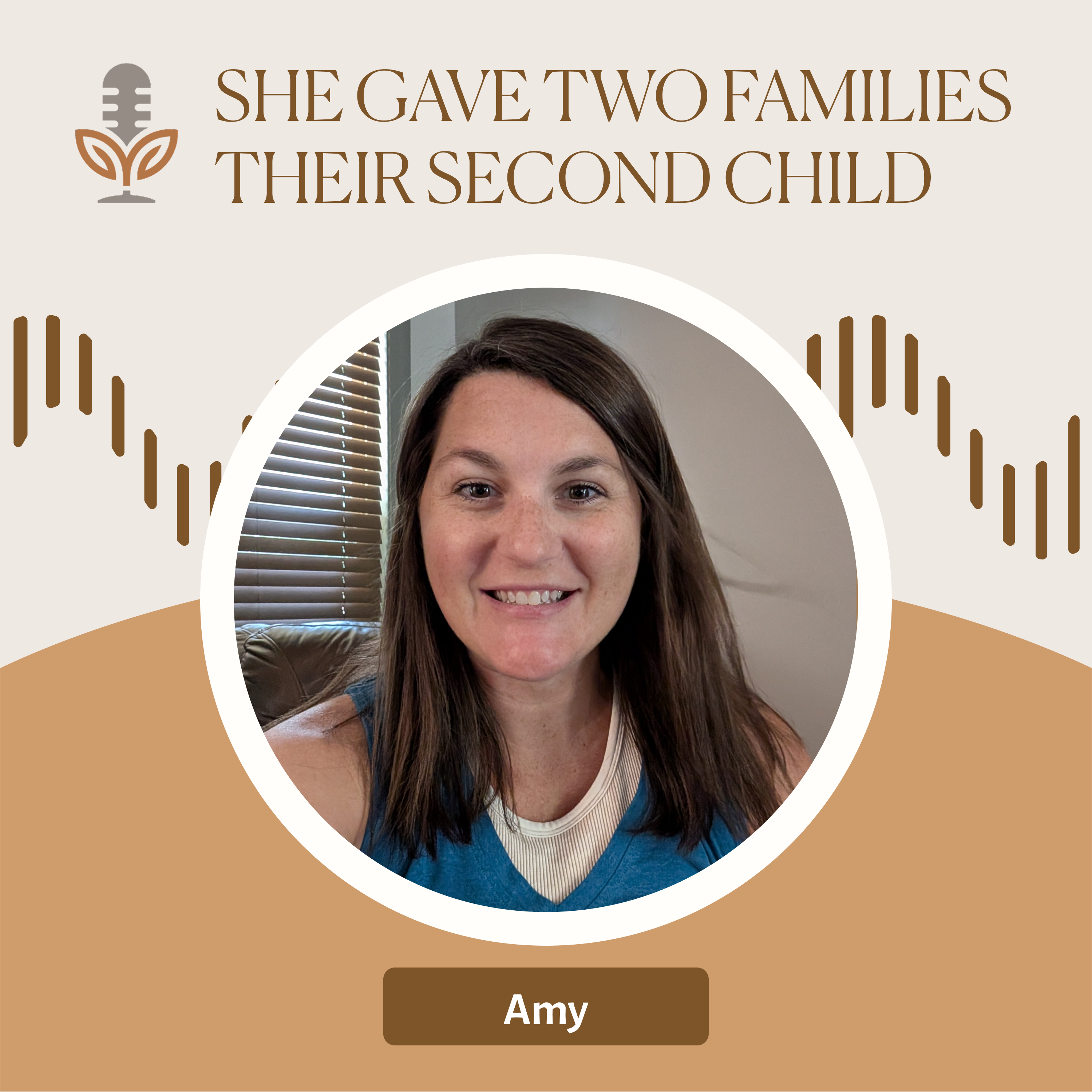
This is one woman's story of saying yes anyway, and what it was like for her. Hey, welcome to the Surrogate series. I'm Eloise Drain. Really glad you're here. My guest today is Amy. Amy is a mom of four, a foster parent, and she works in patient affairs in a hospital emergency room. So caring for people is pretty much the thread running through her whole life. She's been married for 16 years, and she has carried as a gestational surrogate twice for two different families. Amy, thank you so much for joining me.
[00:00:59] Speaker B: Thank you for having me.
[00:01:00] Speaker A: Unlike a lot of people, I think so much of your life already involves taking care of other people at work and at home.
When did surrogacy first come on your radar as something you might do yourself?
[00:01:13] Speaker B: I actually thought about surrogacy for years before I actually became a surrogate.
I work in the healthcare field, and us in healthcare tend to be a little more open with those medical issues, and a lot of that is infertility. So I worked with several women who were going through their own difficulties, either getting pregnant or carrying a pregnancy to term.
So I became familiar with it years ago, and it was very interesting to me because I had very healthy pregnancies.
So I really didn't have a lot to contribute to these conversations where these women were really struggling and, you know, way, you know, weighed on my heart.
And me and my husband became foster parents and, you know, we got really busy with life. And I had a surprise pregnancy myself during COVID and I remembered how much I love being pregnant and how great it went, and I said, I think I want to do that again. I think I want to become a surrogate and, you know, help someone else out. So it was many years coming before I actually pulled the trigger and went for it.
[00:02:25] Speaker A: What was your husband's response when you shared that with him?
[00:02:29] Speaker B: He was very supportive.
He enjoys me being pregnant. He says that I'm happy and I'm very carefree.
I tend to be a little type A, so When I'm pregnant, I tend to ease up a little bit, which is. I know the opposite of how most people are, so I tend to just be like, oh, it's okay.
But he's very supportive.
He was great during both my journeys.
[00:02:57] Speaker A: So what was the thing, though, that took it from something you thought about doing and then, okay, I'm ready. I'm ready to pull the trigger. Was there something or was it just time?
[00:03:09] Speaker B: I think it was time. I think everything falls into place at the right time.
When I had. I have four children, and when I had my last daughter, the whole time I was pregnant, I'm like, I guess this is it, we're done.
And when I had her, I just felt like I wasn't done.
And I remember asking family and friends, like, how do you know when you're done having kids? Like, I'm not really sure.
And so we really didn't know what we were waiting for. And our son came seven years later. So it was a bit delayed, but I think it was that it was reminding me, like, how great the experience to be pregnant was.
And again, you know, it brings up a lot more of those conversations with people who don't have the same experiences and they don't have it as easy.
[00:04:02] Speaker A: How was it sharing it with the kids about what you were going to do?
[00:04:07] Speaker B: We did talk to. We tend to talk to our kids before we go on these journeys.
We did the same thing when we were going to foster. When we started fostering, our girls are a little older. My oldest just turned 16.
So we were very open with them. Like, you know, we're thinking about doing this, and honestly, I think they're in the age where they're like, yeah, we don't care.
You can. You can do whatever.
My oldest now, she does like to tell her friends about it. Like, she's. It's. I think she's proud of the fact that we've kind of gone above and beyond to help other families, and she enjoys sharing that part.
[00:04:46] Speaker A: So for you, obviously, you're in the health care field.
You've spoken to a lot of people that have had these experiences.
So when you started thinking about doing this for a family, what kind of family were you wanting to work with? Like, what were you looking for when you said, okay, I want to be a surrogate? Did you have some kind of, like, concept of, this is what I want, this is what I don't want, this is what I'm looking for, or any of that?
[00:05:16] Speaker B: I did it, actually. I was very open on you know, there's all sorts of families and I was very open to carry for a wide variety. I can't say that I had a specific idea in mind.
I wanted to help grow a family. I know I did.
When I went through the beginning process, I was open to being a second time surrogate, meaning like the intended family already had a child.
And I thought, not only am I bringing a child to parents, but I'm also giving a sibling and growing that family.
And that was what I went with with both my journeys. I was the. I gave them their second child for each. And that was really nice to be able to not only gain those friends from the parents, but their kids as well.
[00:06:15] Speaker A: So let's talk about your first journey and how that went. I mean, obviously the most probably awkward thing is getting on a, a call with a perfect stranger and, and each other looking at, you know, you're each looking at each other, having to answer questions that's being fielded by somebody. But still, it's still kind of nerve wracking. How was that first experience?
[00:06:41] Speaker B: The first one, I get really nervous and I talk a lot, so I probably talked more than I should have. But we match so well. I think Family Inceptions does a great job at kind of matching personalities and what we wanted out of our journey.
So my husband and I, when we met the first parents, we just hit it off really well.
And actually the mom, she told me she had bought a book for her son about surrogacy. And it was like, who is Ms. Amy? And I think it's just a book about the surrogate coming to the birthday party.
She was like, when I found out your name was Amy, I just felt like it was meant to be. You know, I just bought this book yesterday and then they sent me your profile.
And so we just, you know, we really bonded and we hit it off right away. It was a little nerve wracking, but as soon as we started talking, it just really fell into place.
And I think that's when I was new. Like, this is a great match, you know. You know, it lined up perfect.
[00:07:50] Speaker A: Yeah.
But leading up to that match, like the whole screening process and you know, the medical screening with the fertility clinic and the psych and all of the things that you ended up having to do.
How was that for you? Because I know some people, they're just like, I just want to hurry up and get matched and, you know, forget all of that other stuff.
[00:08:13] Speaker B: I think working in healthcare I understood the importance of, was a little, no more than, than regular Doctors, it was a little nerve wracking. You obviously want everything to go well, so, you know, there's always that nervousness of, like, the what ifs.
But I was fortunate enough that everything went very soon, smoothly.
I try to compartmentalize my, oh, goodness, what's going to happen and try to stay positive. But we were very fortunate.
And again, family inceptions did a great job of walking me through that process.
So I, I didn't feel like it was overly stressful.
[00:08:56] Speaker A: I mean, although sometimes I know it can be. But it's just like the screening.
Can you imagine if I just came to you for the first time and was like, hey, let me get one of your kids and I'll take them for nine months and bring them back to you healthy and whole and see how much information you would want from me?
[00:09:14] Speaker B: Oh, yeah. I mean, and when you have to go through that process and you, once you match with a couple and you have to talk about some serious, you have to have some serious conversations and you have to dig deep and those what ifs you have to talk about and make sure that, you know, you're kind of lined up on what you want to do. So there's no, no issue. And it's, it's very interesting, the things that you don't think about until they ask and you're like, oh, okay, what would I do in that situation? And you have to really think about it. So it was, it was a little stressful during that process, I'd say, like bringing up questions that you didn't think about before.
[00:09:52] Speaker A: But all questions, though, that are important to actually talk about because you just, you never know. Every pregnancy is different.
[00:10:00] Speaker B: Yes. Yes. And it's great that they do that beforehand and.
Yeah. So we could talk it out.
[00:10:06] Speaker A: Yeah. So speaking of every pregnancy being different, what, what felt different, you know, the second time around, going with, you know, now that you've already done one, so how does it feel doing a second one? And then what was different from the first to the second?
[00:10:25] Speaker B: My first surrogacy, I definitely was a little more nervous. You know, you're carrying a child for someone. You go through the fertility clinic and they have so many embryos.
So, you know, that's, it's a shot that you're like, okay, all right, we, you know, your fingers crossed and you're hoping that everything goes smoothly. And that was, that was nerve wracking to begin with to, you know, have that concern for not only you, but this other couple here that you're, you know, it's like you're all in it together.
And I tried to be a little more laid back. My second journey, that intended mother, you know, she, she and I spoke a lot about her concerns and things like that and I tried to alleviate them as much as I could. So I tried to just like stay calm and, and that's what's so beautiful about surrogacy. When you have your biological children, you know, our husbands are our support system. And then when you're a surrogate, you have this excitement, extended support system and you're kind of in it with your mom and dad that you're having this baby for. And it's, it's really neat to have that extra, like those extra people that you share everything with and, and have you to support you during that journey.
[00:11:37] Speaker A: So once the pregnancies were underway for both of them, what was the relationship like with the intended parents?
[00:11:43] Speaker B: Day to day, we kept it to pretty casual. We just kind of let things flow naturally. We didn't set any like, you know, we're going to talk at a time or anything like that. I was lucky to have my intended parents fairly close by in the same state. So they were able to make it to doctor's appointments and things like that.
[00:12:04] Speaker A: For both your journeys?
[00:12:06] Speaker B: For both of mine, yes. We text pretty often. I would say a couple times, you know, at least once or twice a week or so. Me having multiple children and then them having children. Sometimes we'd go a week or two and it'd be like, oh, you know, how are you? You know, during the beginning it gets closer to the end and you obviously talk a lot more because, you know, you're going to the doctor more and there's a lot more going on. But it was neat to share that, you know, if the baby's moving or not, you know, like I said, that extended support system, you want to share those things with them as well. And we tried to keep contact. Like I said, it just kind of flowed naturally. Like when things came up, how was
[00:12:45] Speaker A: it with your, like your extended family? Not just like the intended parents, but you know, your mom and parents and siblings and all of that stuff. How was their response to you being a surrogate?
[00:12:59] Speaker B: So the first surrogacy journey was obviously very new. My parents are older, so they were a little like, what?
Confused.
So you have to explain the science to them a little bit for them to fully understand.
But they were, they were all very supportive and they, they were almost like my daughter. It was almost like a proud that, you know, I was Going above and beyond to kind of help this extra family. And they thought that was such a neat thing. And they were very supportive. Our extended family don't live super close to us, so they weren't, you know, as involved with every little thing. But, you know, when we still saw them, they were very supportive.
[00:13:41] Speaker A: Yeah. And did it. What was it like at work?
[00:13:47] Speaker B: So I do work in health care, so everyone, even healthcare workers. I think there's a lot of questions around surrogacy.
People, I think, don't understand everything that goes into it, whether it being, you know, that family's embryo and not having any kind of genetic markings to even people in healthcare, like, they don't understand all the ins and outs of it.
So I did get a lot of questions, even at work.
Everyone was supportive, but lots of open questions in healthcare field about how everything went.
I think the question question I got the most was, are they going to be in the room when you deliver?
That was what everyone was very interested about, which was.
Which was always really funny.
[00:14:34] Speaker A: Really. That's what they were concerned about, like, were curious about.
[00:14:38] Speaker B: Well, I think they were curious, like if the dad was going to be in the room.
And I was like, I'm very supportive. I've told my first surrogacy journey, the dad didn't make it in time. But the second one, I was like, you really need to be in the room. Like, you know, this is your child being born. I was very supportive of that.
Of course, you're at the head of the bed with my husband. You know, no one goes below the waist except for the doctor, but everyone was in the room. And that was a great experience. But yeah, that was the question I got the most was if they were going to be in the room.
[00:15:12] Speaker A: So how was the birth for both of them, really?
[00:15:16] Speaker B: They were vastly different with both my surrogacies. Labor happened very quickly with my first.
So we got to the hospital very quickly and she came very soon. I had a beautiful little girl for the family and mom made it just in time. Like I said, they lived in state. She tells me she got the best phone call of her life. My husband called her and I think he said something really funny like, it's going down, you know, she.
She came racing over to the hospital, but she made it in time right before she came out and was able to get to hold her right away.
So it's great timing. And I was really nervous about how that was going to go, but it went very smoothly. And then my second surrogacy labor was very long and drawn out, and mom and dad, along with my husband, were able to be in the room. And we had a great nursing staff. Everyone did a great job of incorporating everybody and making sure everyone was comfortable. I think me at any point, and made an extra space for parents so they were able to come in and out and then have skin to skin afterwards. And it was great.
It was the best experience I think I've ever had.
[00:16:26] Speaker A: That's amazing.
And you always love to hear the, you know, because the media loves to portray all the negative stuff. They never want to talk about the good side of and the beautiful side of what, you know, someone like you or someone who's chosen to be a surrogate is actually doing. And the ultimate gift that you get to see somebody experience for the first time and know, like, oh, my God, I had a part to do with that.
[00:16:59] Speaker B: Yeah, it is. It's hard to describe. I think me becoming a mom, that is the circle of my existence. Like, I do everything for my children. You know, they're the center of my world. And to give that gift, it's re. It's hard to express. Explain it to people to be able to be a part of that and give that gift. And in the delivery room, you know, when they get to see their baby for the first time, that's. I mean, it was just as special to me as when my own children came, you know, to be able to see that and hand that over to them. We got really lucky. I Even with my second sur c. We had a lot of nurses that were able to capture in photos those moments between me and the parents. My husband. My husband's kind of there in the background, but it was really. It was really special to look back on the pictures and see that. It's hard to explain it to people who haven't experienced it.
[00:17:50] Speaker A: Yeah, no, 100%, I agree. And I mean, for me, when I was a surrogate, I had such a close relationship with the intended parents that after the babies were born, I felt more of a loss of missing the parents than I did of missing the pregnancy.
[00:18:11] Speaker B: That is true.
I definitely am like, are you okay? Are you doing good?
I enjoy the pregnancy, but it's nice. It's a different experience to have a baby and then say, tag, you're it.
I get to go to sleep.
[00:18:29] Speaker A: Yes, for sure, for sure. How did you feel, you know, after the baby went home? The parents went home. You get to sleep. But did you have any, you know, physical issues, mental concerns? Like, after, you know, it's done, it's finished and you're going home with no baby and your body's like, hey, well what are you doing?
[00:18:52] Speaker B: It was definitely a concern the first time. I never had any issues with my own children, but that concern of not having that baby and what am I going to do afterwards? I was nervous about it beforehand, but after it happened, right in the delivery room, I had my first. My biggest concern was for, you know, my intended mom to be there in time and to kind of capture that I didn't have any issues. So then I wasn't as concerned my second time. But afterwards we tend to do a little project afterwards and you know, focus my attention on something else. I did tend to like go on a trip right afterwards and that was always really helpful to kind of like take my mind off everything and kind of enjoy that time off. I had my second surrogacy the beginning of the summer and I joked that this, that was the best plan ever to get the summer off with my kids and not have the baby to take care of us. I should have done this the first time. I should have planned better to have a baby at the beginning of June. And I had the entire, I had the entire summer off with my kids, which was great.
[00:20:02] Speaker A: So how was it, you know, going from I'm going to be a surrogate and I'm going to do it once to okay, I'm going to do it again. Like, you know, some people are just like, I'm one and done and then there are others. Like, I want to continue doing this as long as my body can continue doing it.
[00:20:19] Speaker B: That was me.
It was such a great experience the first time. It was very flawless. I was very blessed to have a healthy, healthy pregnancy and you know, a great bond with the intended parents. And I was like, this is fantastic. Like, this was a, a beautiful experience. Why wouldn't I do it again?
Yeah, so that's, that's where it kind of fell into like, okay, let's, let's go again.
[00:20:44] Speaker A: And did you feel any kind of hesitation, regret, like especially when you're in it and you're, you know, eight months pregnant and you're over it and it's just like, okay, I don't know why I'm doing this to myself.
[00:21:00] Speaker B: Normally that happens during labor when all the pain, it's like, oh, this was a terrible, terrible choice. But it's very short lived.
I felt great even at the end of my pregnancy.
It went very well. But I would say in the middle of labor when you're in the thick of it. It's like, oh goodness, this was a terrible choice.
You know, in that moment, it's rough, but it's very short lived.
[00:21:29] Speaker A: Yeah, well, I mean, they always say too, if women were going to remember the labor for there would be nobody on this ear earth. So there.
[00:21:37] Speaker B: Yes, yes.
[00:21:39] Speaker A: So for you, obviously you've now have had six pregnancies and you know, surrogacy is kind of done for you. Is it something that you wish you could do more? Like how?
Or not wish that you can do more, but yeah, maybe wish that you can do more.
[00:21:59] Speaker B: And how I did, I wish I could have done it again.
I wish I would have done this sooner and known what a great experience it was.
I'm kind of sad to be all done.
[00:22:12] Speaker A: One of the questions I meant to ask you at the beginning, and I know you've been around a lot of people and heard stories and all of that, but still, choosing to become a surrogate is a big thing and there still has to be something. I feel like there's an innate thing in a woman who can choose to become a surrogate because there's a lot of women who say, yeah, I would do it or I want to do it, but never really pull the trigger.
So why do you feel like you chose to become a surrogate?
[00:22:45] Speaker B: I think I try to live my life in the sense that if you can help, you should help. I try to teach that to my children. We became foster parents because, you know, we have a happy, healthy home and we wanted to share that.
I became a surrogate because I'm a happy, healthy pregnant woman and I wanted to share that. You know, it. It takes a lot to, to go and, and do this big great thing. I mean, your body changes and labor is not. I mean, it's a. It's a huge journey and to do it for someone else. I won't say it's a completely selfless act, but it does take you to kind of look beyond yourselves and do something for the greater good. Makes it sound so crazy, but, you know, for the better of someone else. I mean, it's.
I think sometimes we get involved in our own little world and we forget everyone else is going through different journeys and to kind of step away from your own journey and take apart in someone else's. I mean, it's a big thing.
[00:23:47] Speaker A: Yeah. Yeah, 100%. What do you think is the biggest misconception about surrogacy? That, you know, you would want more people to understand?
[00:23:57] Speaker B: I think the relationship between me as A surrogate. And my intended parents was a lot more laid back than I think people conceive it as. They're like, oh, well, you know, I got a lot of questions about, like, well, how often do you talk to them and what do they tell you? What do you can and cannot do? And I'm like, it's a healthy pregnancy. I'm obviously not going to go skydiving or drive anything like that. But, you know, it's a relationship. You know, we've. We've partnered with this couple to help grow their family. You know, it's. It's more of a bond than an employee, employer type of situation that I think people visualize it as, you know, it's this big magical thing and you, you know, you become friends and somewhat family to. To go through this together.
Um, but I think misconception is, you know, because you get compensated as a surrogate that, you know, you're their employee or, you know, it's not that close of a relationship. And it is.
[00:24:58] Speaker A: And did you ever get, you know, responses of, well, you're just doing it for the money?
[00:25:05] Speaker B: People did ask, you know, well, don't you get paid for that? You know, and of course it's.
You get compensated for it. You're. You go through pregnancy and labor for someone else.
You know, I think it's accurately and adequately compensated. But you can't just do it for the money. I mean, you just have to, like I said, go beyond yourself and become part of somebody else's journey. It's just more than that.
You just.
You go through this. This journey together. And I've. I've had people, you know, say, I would love to be a surrogate. You know, I had such healthy pregnancies, and I'm always like, we'll do it. Like, no, help somebody. Like, what's stopping you?
So I'm. I always do give a lot of information because I. I think people aren't as knowledgeable about the process. It's. It's such this illusion of. That it's far off. And it's like, no, you. It's a. There's several people that have been surrogates. The first time I was a surrogate, I would go places and I found out that the community is bigger than I thought. But it's still pretty small of people who know about surrogacy and how feasible it is to do and become a surrogate. I wish there was more information out there so people would join because I saw tons of people that are like, I had Great pregnancies. I should do that.
[00:26:31] Speaker A: But the crazy thing is though is there is a lot of information.
But I think the other problem is there's also a push in some states, I mean, even some states right now who want to ban or restrict surrogacy and make it seem like women who choose to become surrogates are being taken advantage of, they're being exploited, they're uneducated, they're poor, they are being used.
And you know, it's like you're trying to educate, but then you have these other people who have no idea of the process, who have no idea of what you have to go through, what you have to kind of choose within yourself even to be able to make such a vast decision of doing that for somebody else. This is like, oh yeah, you know, I mean, we just saw what's on the news and so therefore it's the same for everybody and so let's just ban it.
[00:27:27] Speaker B: Yeah, there's definitely a misconception. I mean, the steps to become a surrogate and the matching process to make sure that you've matched with your intended family, it goes well beyond, you know, everything you want at of your journey and you know, a lot of personality matches. I mean you have to, you really do have to bond with them or it. I, you know, there's definitely a misconception of everything that goes into becoming a surrogate for intended parents.
[00:27:56] Speaker A: A misconception and I think a misunderstanding to the general public of what it actually really means to make that decision for yourself. As an educated woman, as someone who's not poor, as someone who went in this eyes wide open, like I fully know what I'm getting myself into. No one is coercing me.
[00:28:18] Speaker B: No, no. I mean, I can't speak enough of how great of experience it is. You know, it's, it's one of the best things I think I've, I've ever done.
I just, I can't. Like I said, it's very hard to under, to explain it to people who don't understand that process. And a lot of times it's people who, you know, either haven't become parents and they don't know everything that it sends. And it's, it's always those uneducated assumptions 100%.
[00:28:48] Speaker A: So what made you choose family inceptions as your agency?
[00:28:52] Speaker B: So I heard from family inceptions from a co worker of mine who was looking into surrogacy. And it was very important to me to be able to be a surrogate for a family who in Other ways wouldn't be able to have a child. And that was something that I loved about family inceptions. We had a great journey manager the first time and I mean, they really helped me in every step throughout the process.
I became very close at my first journey manager I had on my Surrey seat. You know, we talked almost as much as I talked with my intended mom. You know, we. She stayed in contact with me the entire time and helped me through all that process. I. I definitely think that there's so many ins and outs with all the medical clearance and the legalities that it's so important that they were there to help me cover everything and put everything together. They were there every step of the way.
[00:29:48] Speaker A: So for a woman thinking about becoming a surrogate, what would you have wished you knew before you started?
[00:29:53] Speaker B: I think who you match with is very important.
You know, this journey going through pregnancy hormones are crazy. I think it's important that you have a true bond with your intended parents and. Or not so much a bond, but a friendship. I can't imagine going through my two surrogacies if I didn't have that friendship with the intended parents.
There. You know, there were other matches that were given to me that I didn't feel an instant connection to.
And I think it's important to listen to your instincts and go with your gut with that because.
And there's so much entails with having a child for someone else. Do you really, I would say think hard and, and really match up with someone that, you know, you would want to watch your kids because you know that that's really.
[00:30:50] Speaker A: You're.
[00:30:51] Speaker B: You're sharing that with someone. You want it to be someone that you want to be friends with that you want to, you know, share this journey together.
We have spent time afterwards with our intended families and gotten our kids together and gone to birthday parties.
And I love that we're able to stay connected. So I just can't.
[00:31:13] Speaker A: Connected with the both of them.
[00:31:14] Speaker B: Now I am.
Yeah, that's. It was.
That was another beautiful thing about it is you. You gain all these friends. Yes.
[00:31:23] Speaker A: You really do. You gain the friends, but you also gain a sense of like, wow, I did that for somebody else. It was me. It was, you know, I was the one who literally have changed the trajectory of somebody else's life, you know, and
[00:31:38] Speaker B: our families see that too. I've said it before, like, it's always a great feeling when my teenage daughter is very proud of the fact that I was a surrogate.
Even when they make jokes about you know, me being pregnant with someone else's baby, you know, they're teenagers, but I think with my. Imagine having that serious conversation with your teachers.
My husband is kind of a goofy guy. He always likes to have those funny conversations and like, it's not mine and have a, you know, that pregnant pause where lets people think about it.
But it is. It's a great feeling to.
To go above yourself and then. And have your close family and friends recognize that about you. And it's. They do. They look at you differently. You know, they sometimes are like, you're way better than I am. I'm. And that it always makes you feel great.
[00:32:35] Speaker A: Mm. Well, Amy, I appreciate your time. I appreciate your willingness to, you know, obviously become a surrogate, because I know it is one of the biggest asks out there that someone can do for somebody else.
Any last parting words for someone considering becoming a surrogate?
[00:32:56] Speaker B: I would say reach out, you know, get some information from an agency. It's a great experience, I think. Just look into it, see if it's a match for you.
[00:33:06] Speaker A: Well, all right. Well, thank you so much for joining me. I appreciate it.
[00:33:10] Speaker B: Thank you.
[00:33:11] Speaker A: Thanks so much. Thank you so much for listening to Fertility Cafe. If you've enjoyed this episode, be sure to subscribe so you never miss an interview. Leave us a review and connect with us on socials. We're ertilitycafe. You can also watch the full video version of today's conversation over on our YouTube channel. Until next time, remember, love has no limits. Neither should parenthood.