Episode Transcript
[00:00:00] Speaker A: Some women carry once and know it was a season of their life. Others find their way back to it and carry again for someone they have never met. What pulls a woman to do this a second time is not the same thing that pulled her the first time. And the second journey is rarely a copy of the first. The body changes, the reasons change.
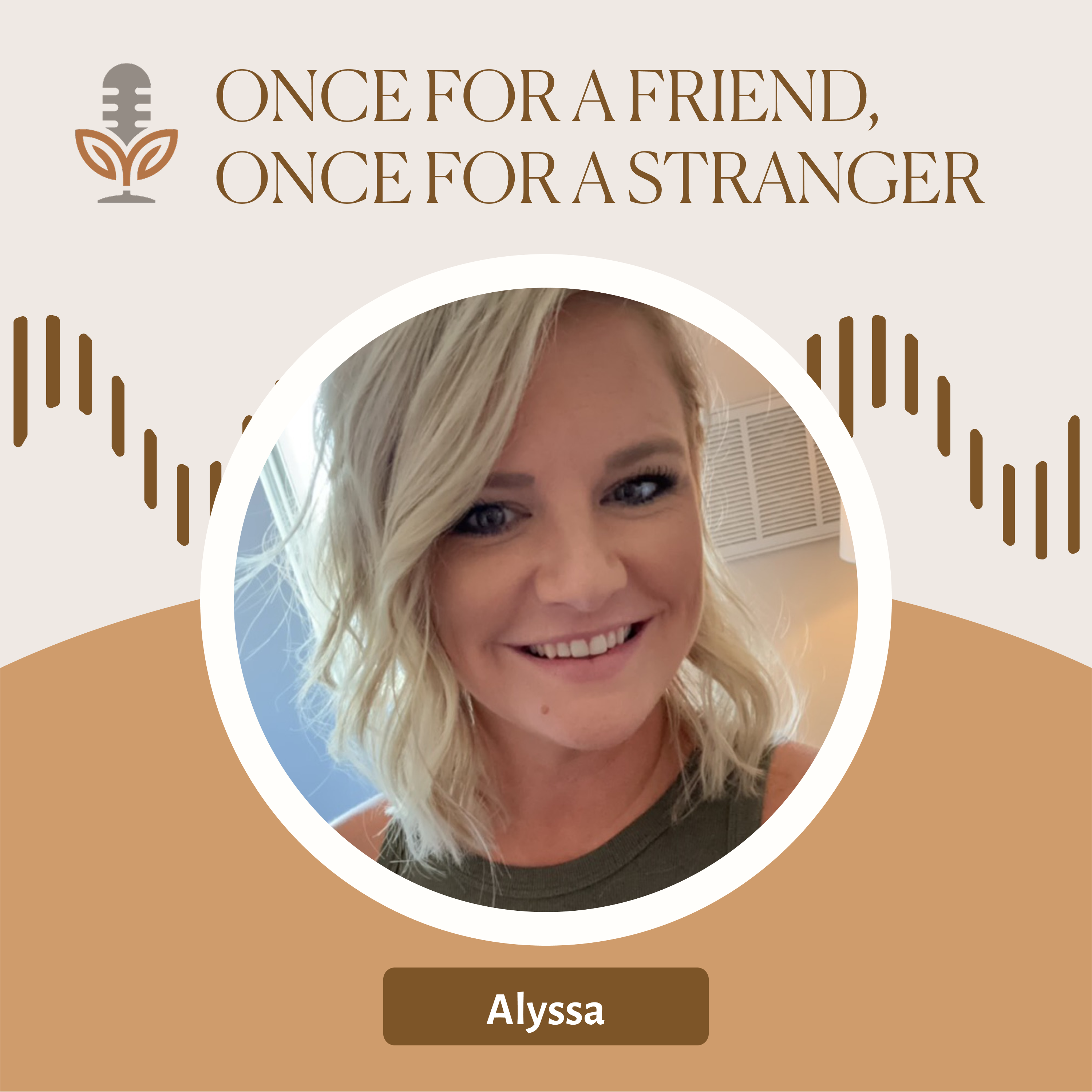
What stays the same is that she chose it fully and on her own terms. This is the kind of story you only hear from someone who has lived it 20 twice. My guest today is Alyssa. She lives in Iowa with her husband and their two daughters. Outside of running her girls to their activities, she runs, reads, and spends time with friends. She has been a surrogate twice, once independently and once through an agency. And she says she would do it again and again if she could. All right, well, Alyssa, thank you for joining me. I appreciate it.
[00:00:50] Speaker B: Yes, thank you for having me.
[00:00:52] Speaker A: I'm gonna jump literally right in and first ask you, how did you first learn about surrogacy?
[00:00:59] Speaker B: Well, that kind of goes back a ways. I think. I've always known about surrogacy and thought it would be something cool even before I had my own kids. I honestly, I'm not even really sure where I learned about it from, but when I did learn about it, I. I always thought, gosh, that would be really cool to do for somebody.
Fast forward. I had my daughter, and then my friend had a child who. And then she couldn't have another. You know, health issues caused her to not be able to carry another pregnancy. And that was kind of when I really started thinking about it, because they had mentioned needing to use a surrogate at some point if they wanted more children.
And she subsequently is the person. I was a surrogate for the first time, but her second time, if that makes sense.
So it. It kind of was a whirlwind, and it might be easier if I just kind of jump into that if you want the first one.
[00:02:07] Speaker A: Yes.
[00:02:10] Speaker B: They had a. They had a child that unfortunately was diagnosed with cancer.
And.
And his.
He always wanted to be a big brother.
And so they knew that she probably couldn't safely carry a pregnancy again, and so they started looking into surrogacy.
At that time, my husband and I were not done having kids of our own, and she knew she needed me more on a friend role than a surrogate role at that point.
And so they went through an agency, got a surrogate, they had a baby through surrogacy that way.
And then fast forward another year. Ish, maybe.
I had had my second daughter and we knew we were done having our own kids at that point because she was our youngest is difficult.
She was a difficult baby.
And so it was kind of at that point that I was like, gosh, I really could do surrogacy. Like, I watched them go through it the first time. I thought it was super cool, super interesting.
And so actually I. I signed up with an agency to become a surrogate with them.
And before we matched or, you know, before anything was really rolling too far, they had asked me if I would be a surrogate for them. And at that point I was like, well, who else would you rather be a surrogate for than your best friends? Right?
And so that is. That's how that first journey kicked off. And so I was a surrogate for them, delivered a healthy baby, and kind of thought it was the end of that for me. And then five years later, I decided, no, it wasn't. So.
[00:04:04] Speaker A: So the crazy thing about it is I feel like once somebody becomes a surrogate one time, it's like there's something there there that it just. It like, calls you back.
[00:04:15] Speaker B: Yes, I couldn't agree more. It's kind of one of those, like. And I think people probably thought I was a little nuts, and maybe I. Maybe I am, but I. It is. I tell people all the time. Until you experience it, you can't possibly know or understand what it's like, you know, what that feeling is to give that gift to somebody.
[00:04:40] Speaker A: Yeah, for sure. So, I mean, obviously this was friend of yours, and clearly, you know, your husband had to be involved with the whole thing. And it's very different for him to say, yes, you can carry for your friend versus okay, go carry for a perfect stranger. So how did that conversation come about?
[00:05:01] Speaker B: Honestly, kind of out of the blue for him.
I hadn't mentioned.
[00:05:07] Speaker A: We do it often to them, don't we?
[00:05:09] Speaker B: He is so supportive of those types of things. I mean, pregnancy is difficult, right? So I'm sure, like, at. When I first mentioned it the second time I happened, I was. It was shortly before my 33rd birthday, and I thought if I went and had kind of been in my mind, the back of my mind, right? Like, could I do this again? Is my body healthy enough to do this again? All the things.
And I just thought, gosh, if I'm gonna do it again, I have to do it soon. I'm not getting any younger. Pregnancy is difficult on a body, no matter what age you are, but as you get older, it's more difficult. And so I think we were driving in the car home, maybe from a date night or something. And I said, hey, what would you think if I decided to be a surrogate again?
And he was like, what? You know, but I had always obviously wanted to carry for a friend, and that was so cool. But I had also seen from their first journey that they got to meet somebody, you know, meet a family that they had never met and form a connection with this family that they had never met and wouldn't have met had. Had they not gone through a surrogacy. And so I thought, gosh, how awesome would it be to just do it for a total stranger? Also to meet somebody you've never met, to make these connections in a place that you probably wouldn't typically meet somebody.
And, and. And so I talked to him about it, and he said, well, yeah, I guess if you. If you think you can do it and you want to do it. And then, you know, then we kind of got the ball rolling. I had already kind of been looking through different surrogacy agencies and all of that, trying to vet some of that, because I wanted to have my research done before I brought it to him and said, like, here's this wild idea that I have, but he's always been super supportive of it.
[00:07:06] Speaker A: How did you share it with your daughters? Because they were young when you did the first journey, right?
[00:07:10] Speaker B: They were very young when I did my first journey. My. My youngest daughter doesn't remember the first one at all. And I think my older daughter very vaguely remembers the first time.
My oldest daughter was 12ish when I did it the second time, and she was very uninterested, like, very preteen.
Didn't really want anything to do with it. Didn't really, you know, she just didn't really care.
And my younger daughter is very curious about everything. And so, um, at first, actually, at first, my younger daughter, I think she was 7 or 8, she said, no, she didn't want me to, but I don't think she understood. I think she thought I was going to be in the hospital for a really long time. Like, she didn't quite understand how pregnancy works and how, you know, how all of that works. So once we explained that's not. That's not the case, then she was like, okay, cool. And, you know, rattled off a thousand questions. Mm.
[00:08:18] Speaker A: As they. As they normally do. They do.
And then what about your immediate family? Did anybody have any comments to say? No.
[00:08:30] Speaker B: I mean, so I will say the first.
The first surrogate baby that I delivered was large in size. He Was over ten pounds when he was born. Oh, my God.
Yeah, yeah, like ten and a half pounds. He was a big, big boy. And so were your own children that big? No, no, I mean, they were big. 8, 9, 8 12, something like that.
But he was really big. And so I was so uncomfortable in the end of that pregnancy, and that delivery was harder. I did bleed more. I did, you know, like it. But.
And so I think that was where the concern lied with, like, my immediate family, like, hey, is your body okay to do this? And that was something that I really had to take a lot of time to research and talk to my doctor and talk to, you know, other doctors and just make sure that this isn't a risk that would be worse, you know, if I had another baby, am I going to bleed out? I. Obviously that we're not in the business of that.
And so once we did, once I talked to those doctors and, and, you know, went through all of the. The health processes, the. The blood work, the doctor's appointments, the approvals and all of that, then they felt more comfortable and I felt more comfortable as well.
[00:09:53] Speaker A: So, I mean, obviously you're in. It was for your friend. So I'm assuming it was a very close relationship and everybody was there for delivery and all of the things. And the pregnancy. Was.
Was she or were they involved a lot in the pregnancy with you during that independent journey?
[00:10:13] Speaker B: Yes, very, very involved. She went to every appointment with me.
Yes, she was. There wasn't an appointment or a thing that she wasn't a part of, which that. That was really special to me too.
Um, I think I have the unique perspective.
They happen. Their. Their child that had cancer did end up passing away. And so I knew that you're. They are now in another situation where they have no control. Right. Like, she's putting all this trust into me to carry her baby. So if she wanted to text me 9,000 times a day and ask me how I'm feeling or, you know, I. I'm certainly not going to not reply to that because I know how difficult it is for them to put the trust in me to do something like that when they've already gone through something where everything that's supposed.
They know what can go wrong, I guess, is what I'm trying to say. So then they have to put the trust into me to make sure that I take care of my body and all of that.
I.
I was very open all the time for her to be a part of pretty much everything.
[00:11:30] Speaker A: Yeah, and him too.
[00:11:31] Speaker B: And him too. But, yeah, of course, different when it's.
[00:11:35] Speaker A: We can't forget the spouses.
[00:11:36] Speaker B: We can't forget the spouses.
[00:11:38] Speaker A: But I think, though, that goes for any intended parents. I mean, when you think about it, they are, like, literally releasing the most important person in their life to.
I mean, luckily for you, you guys were friends, but often it's to a total stranger.
[00:11:56] Speaker B: Yeah. And the second time it was. And kind of a similar family dynamic because the intended parents I cared for the second time also happened to have lost a child. And so it is to me, I took it so personally. Like, all I wanted to do was just take care of this little baby and just give them that happiness again, you know, that they thought maybe that they would never get, but.
And in both cases, they already had a child at home.
And so that also made me feel. I don't know if there. I didn't want to be.
As odd as it sounds, I never. I didn't want to carry for someone who didn't have any children, which I know is not the norm in the surrogacy world.
I didn't want that kind of pressure, you know, like, if something, you know, if it didn't take, if it just didn't work, some reason or another, if it wasn't a healthy pregnancy, that sort of thing, I. I preferred to carry for somebody who already had a child or children.
[00:13:05] Speaker A: Yeah, yeah, yeah.
So, I mean, obviously you did it independently, and then you decided to go with an agency. When you started looking for an agency and you said you started obviously before you even spoke to your husband, just to make sure you had all the information. What were you looking for? What was the things that was like, this is what I'm looking for for my next experience.
[00:13:28] Speaker B: Mostly looking for reputable. Right. Somebody who's not going to take advantage. I did a lot of, as silly as it sounds, a lot of Facebook research, because you can learn a lot in a lot of those surrogacy groups.
I.
I just wanted to make sure that they were doing things ethically, you know, I, um.
I. I don't know. It was kind of one of those, to be honest. I came across family inceptions, I think, from.
From a Facebook post, just looking for, like, recommendations of agencies. And I'm all the way up here in little old Iowa. And then, you know, I found family inceptions in Atlanta, and I.
I just kind of started looking through everything, and I kind of got a good feeling about it. And so that was the one I moved forward with.
[00:14:23] Speaker A: And how. How different is it, though, from, like, Doing it independently and then going with an agency, because obviously it's independently. You're doing everything pretty much on your own.
[00:14:37] Speaker B: Just gonna say that it took a. I mean, it took all the legwork out of it. Right. Like, I.
When I signed with family Inceptions, it was, okay, we need you to do this, we need you to do that. And we booked this, and we, you know, they made the appointments, really, for the most part, for me, obviously, attorneys. That was on the independent side. We had to find the attorneys and get two different attorneys that could. Both that are familiar with surrogacy laws and all of that, because we knew we wanted to do it the right way the first time as well.
Since they had gone through an agency their first time, they were comfortable doing an independent route, and I trusted that, and it did work out just fine.
But then with family inceptions, there was just no work that I had to do. They just kind of did it all for me, and all I had to do was worry about the getting pregnant part and taking care of myself.
[00:15:40] Speaker A: Yeah. Yeah. So how was the experience in matching with, you know, going from your best friend to now a total stranger? Like, how.
How did you even feel on your magical.
[00:15:54] Speaker B: I was so nervous. I think we were both so nervous.
Luckily, our surrogacy journey, our journey manager. Is that what you call them? Yeah. Whoever does the matching, she had a good idea of who would be a good fit for us, kind of right when we had. When I had met her, and she said, hey, I've got this couple that I think you would mesh really well with just given your profile.
Do you want to, you know, chat with them? And so obviously we did, and they were awesome. Right off of the bat, we kind of clicked really well.
And so it was pretty seamless.
Was weird. It feels like you're going on a blind date a little bit, and then it's kind of like, well, we liked them, but did they like us? And luckily, they did.
And I will say, the way that I had to fill out the profile with all of my likes and my dislike, you know, and just kind of about your life and your personality, I think that was so well done
[00:17:06] Speaker A: that
[00:17:08] Speaker B: I was able to answer those questions to. And I'm. And then you give it to the intended parents, I'm assuming. And.
And I feel like I was able to be transparent and honest and answer all those questions that somebody might have without them then having to ask all those same questions in a match call. Like, they already have the answers to a lot of those questions. If that makes sense.
[00:17:32] Speaker A: Yeah. And I think too that the match call, it's not necessarily to go down a list and say, okay, you check this box.
[00:17:39] Speaker B: You check this box.
[00:17:41] Speaker A: It really is, is going to be a good connection because I don't think that people really realize when you're doing surrogacy, how intimate of a process this is going to be with somebody.
[00:17:54] Speaker B: Yes, yes. And I knew I'm not, I'm not a needy person emotionally. Like, I don't need somebody to check in on me a hundred times a day and say, like, how are you feeling? Is there anything I can do for you? You know, da, da, da. I'm okay to go about my day and I don't necessarily need the fluff, if that makes sense.
[00:18:20] Speaker A: Yep.
[00:18:22] Speaker B: And so I was happy that I matched with a family who appreciated everything that I did, but also didn't necessarily need the fluff. Right.
And so, yeah, it just, I don't know how they do it, but it was, it was seamless. It was wonderful.
[00:18:38] Speaker A: Well, that's awesome. So how was the relationship with these new set of intended parents?
[00:18:43] Speaker B: It was phenomenal. I mean, I couldn't have asked for another journey after my first one to go as well as it did.
The friendship that I had with the first intended parents unfortunately has kind of fizzled out over the years. Not anything related to the surrogacy, but just kind of life in general.
Um, and, and so then the second time around, I wanted a good connection again, obviously, and it was phenomenal. We live really across the country from each other, so distance made it difficult. Right. As far as, like trying to coordinate schedules and all of that.
But they were able to fly in for like, like the 20 week appointment they were able to come to and, and at the beginning of the pregnancy and there was a few minor bumps in the road as far as, like, is this pregnancy going to make it? We didn't think it. We, we didn't think it took like, we did the betas, you know, the very first blood test and then I started, I started bleeding and then we did another beta and it had dropped and so we thought for sure, right, it's done.
But as it turns out, I had done the beta at a different lab.
And that makes a difference. I didn't know that at the time.
And so when we went in for. It must have been maybe after the second blood test, I'm not sure.
But then when we went in for the ultrasound, we expected to see nothing, of course, and to our surprise, it was there. And unfortunately she wasn't able to be there. The intended parents weren't able to be at that appointment. But that was one of the best, you know, phone calls I could ever make, like, hey, we're okay. And, you know, everything moved forward fine from there. But their communication was wonderful. It wasn't.
We. I still get messages from that intended mom often. I, you know, get pictures and all the things of baby. And so. Well, not really a baby now, but it was. It exceeded my expectations, the relationship that I formed with them being so far apart. I wasn't sure, you know, what that might look like after giving birth, but it's been great.
And like I said, I'm not somebody who needs that all the time. But the occasional updates and the how are you? And those sorts of things have been really nice.
[00:21:26] Speaker A: Yeah. And it really does make a difference. I mean, we're talking about. And funny enough, I, you know, did three journeys myself and the. My second journey.
The intended mother last week sent me a text message sending me pictures because the.
The baby that I have her, who is definitely not a baby, getting ready to go into high school.
Oh, my God. Can you believe he's getting ready. Just graduated middle school. He's getting ready to go to high school. And sent me the pictures. And it literally just melted my heart.
[00:22:06] Speaker B: I love that.
[00:22:08] Speaker A: Just melted my heart. It was random, out of the blue, and I'm like, oh, my God. First of all, I can't believe he's going to die.
[00:22:18] Speaker B: You're like, wait, I haven't aged that much.
[00:22:21] Speaker A: Yeah, exactly.
And then I'm just like.
And then to just, you know, for her to be open enough to be willing to share that experience with me.
[00:22:32] Speaker B: Yes. I love that.
[00:22:34] Speaker A: And it's just like, you know, and I sometimes I wish the intended parents would see, like, as a surrogate. There's nothing more that I want for you than to have your child and to have a healthy baby. But at the end of the day, I still love that child.
[00:22:49] Speaker B: Yes.
[00:22:51] Speaker A: You can't separate that.
[00:22:52] Speaker B: Yes.
[00:22:53] Speaker A: You still love that child while you are carrying and nurturing and growing that child in your body.
[00:23:00] Speaker B: Yeah.
[00:23:00] Speaker A: You don't forget that child. Regardless of whether. Yes, I was totally okay with giving them back to their parents.
[00:23:07] Speaker B: 100%. Yes.
[00:23:09] Speaker A: But at the same time, I think about them on their birthdays. I randomly think about them. I'm hoping that they're okay. I hope, you know, did they get. Have they gotten sick? Are they. Everybody like you? It's just something that you just. You just do.
[00:23:23] Speaker B: Yes. And I I think that is one of the things that.
And, you know, and I live in a very small town in Iowa, so surrogacy is not very commonplace around here. Right. And I don't think it probably is anywhere. But a lot of the questions around me being a surrogate, not even once, but twice, was like, how, like, aren't you, like, connected? You know, isn't that so hard to give the baby back to the parents? And I. And I always tell people, again, unless you've experienced it.
No, the answer is no, it's not difficult. Right. Like, that's the whole point of doing this. Like, it is. It is a relationship that's different than just being pregnant with your own body, you're doing. Or for your own, you know, for your own family, you're doing it for someone else.
You build that connection with them, and you care about them so much that you want to give them a baby. You want to give them their baby. And. And so unless you've done it, it's hard to explain that feeling that, no, I'm not. I'm not connected in a way that I want to keep this baby. I'm connected in a way that I carried this baby and nurtured this baby and was able to, you know, give them back to their family.
But I do still have a love for that child. There is nothing I love more than getting updates of or pictures or they're walking or, you know, that sort of thing.
It's just. It is so special. It's hard to explain it if.
If you haven't experienced it.
[00:24:58] Speaker A: Yeah, yeah, 100%. And I also feel like for the women who choose to become surrogates, there's this innate thing in us that you somehow can separate the two. I don't know how. I don't know how it's possible. I don't have any idea. But I know that there's this innate thing, that it is possible. And that's why I also feel that, yes, there are some women who are amazing and should be surrogates. And I definitely think that there are women, even though they want to be, they should never.
[00:25:38] Speaker B: Yes.
[00:25:39] Speaker A: Become surrogates.
[00:25:40] Speaker B: Yes. I could not agree more. I could not agree more.
[00:25:43] Speaker A: Yeah, like, you just, you know, I understand you want to, but. Yeah, no, this is just not the right thing for you, because this is not a walk in the park.
[00:25:51] Speaker B: It is not easy. And that's the other thing. You know, people are like, oh, you're doing it for this, or you're doing it, and it's like, no, this is not, this is not easy. If anybody's trying to say, like, I'm going to be a surrogate because it's easy, easy. And you know.
No, no, it's not. It's just not easy.
[00:26:08] Speaker A: It's.
[00:26:08] Speaker B: Your pregnant. Pregnancy is hard no matter what way you shake it.
[00:26:13] Speaker A: That's right.
[00:26:14] Speaker B: I, I am lucky that I had very healthy pregnancies. I.
Babies make themselves comfy inside of me and have to be addicted every single time. I, I've never gone into labor on my own. I, it.
Yeah. But as easy as my pregnancies were, it's still difficult.
[00:26:36] Speaker A: Yeah. And it's not just difficult on you. You also have to think about your family, your spouse, your daughters. Like, how is it affecting them? Because this isn't just, just me carrying a pregnancy.
[00:26:48] Speaker B: Exactly. What about them?
[00:26:51] Speaker A: How is it going to affect them? And it's like, it's not just a silo thing.
[00:26:56] Speaker B: Yeah. And if you don't have somebody at home or a good support system around you to make sure that you can get through the. I mean, what happens if you're on bed rest or what happens if you're, if you don't have that support around you? You just can't do it. You have to have strong support because if you're, if you land in the hospital for an extended period of time, you can't do it when you're at home. You can't, you know, can't bring the kids to school if you're propped up in a hospital. So it is so important to have somebody around you that can help you and take care of you, take care of the things at home.
[00:27:35] Speaker A: Definitely, definitely. What about, so your first, this first surrogacy pregnancy was a 10 pounder. What about the second one?
[00:27:43] Speaker B: 8, 8, 10, 8, 9. And actually we, I carried so much smaller or I felt so much smaller the second time.
Um, we really thought it was going to be like a normal size baby, like a seven pound baby. And still ended up being, gosh, I think eight, nine, I think.
[00:28:05] Speaker A: Oh my God.
[00:28:06] Speaker B: Yeah, I think somewhere in there. Yeah. Yeah.
[00:28:11] Speaker A: So how was your physical recovery though? Like from the first one to the second one?
[00:28:15] Speaker B: Honestly, a breeze. It was so good. I will say after I had the second one, I wound up back in the hospital like three days later or something like that.
And in props to the nurses where I delivered, I live like over an hour, just over an hour away from the hospital that I delivered. And it was the first time I had delivered at that hospital because they had a Level four nicu, which is what the parents had wanted. They wanted to be close to a high level NICU in case there was a need for that.
And so I, I was totally fine with delivering there.
And my blood pressure very early on in the pregnancy, I'm talking, like the 12 week appointment was a little elevated while I was at a new doctor's office with new intended parents that had flown in. And I had never, you know, met.
Well, I had met them in person. But, you know, I think I was so nervous that my blood pressure was a little high. And so they had tagged my, you know, my chart noting that I had elevated blood pressure. And it just followed through the, the whole pregnancy. Every time I went in for an appointment, they know, they're like, oh, you have some, you sometimes have elevated blood pressure, you know. And I said, well, it was really only like one time, but they were like, well, we'll keep it on there. And it's like, okay. Well, after I delivered the baby, the postpartum nurse, as I was getting ready to leave, said to me, hey, you need to come back in like two days. We'll just do, you know, a check or whatever, a nurse's check and make sure everything is going okay. And I said, gosh, do I really need to do that? Like, do I really need to come and schedule an appointment like over an hour away?
And she said, well, she said, just keep an eye on it at home. Like, if you're not feeling well, call us. You can do that appointment, you know, we can get you in. It's no big deal. And honestly, I thought nothing of it until two days later when I was at home and my kids were at school and my husband had gone back to work.
Maybe it was three days later. Anyway, my husband. I said, go ahead and go to work. I'm fine. I'm going to lay on the couch all day, like, I'm going to recover from having a baby.
But I happened to be so tired, just, just incredibly, incredibly tired.
And I had my apple watch on and it had, it had dinged at one point. I remember I fell asleep and it had kind of like buzzed at some point. And it said, like, low heart rate, you know, if your heart rate gets below a certain threshold, the watch is like, hey, your heart rate is low.
And I didn't really think a whole lot of that even. But then I thought, well, maybe I better just take my blood pressure. Like, I don't feel bad, but I don't feel great. I'm just really tired. And at Home. My blood pressure cuff was like.
I don't know, it was 160 over, like 196 or something. It was high at home. And so I was like, okay, well, maybe I better make this appointment. So I hopped online, I made the appointment for that afternoon, and I went to the appointment. I drove the hour to the.
To the clinic. Not the hospital itself, but they have a clinic in town.
And they took my blood pressure, and it was like 164 over 106 or something. I have a picture of it. It was incredibly high. My blood pressure was incredibly high to the point where they said, yeah, you can't drive away from here. You. We need to send you back to the hospital. And I, you know, they gave me a medication at that time to try to bring it down.
And since my husband wasn't there, they then had to call an ambulance to take me to the hospital. I was mortified. I was so embarrassed. I was crying, you know, hormones and all the things.
And I called my husband and I said, they're taking me to the hospital.
And he works in law enforcement. And so he was actually at a training that day a couple hours away. And so he, you know, came home and met me at the hospital. And they ended up.
And my. And my heart rate was very low, so my blood pressure was high and my heart rate was low.
And they still, to this day, they kept me overnight. They gave me some blood pressure medication. It brought it back down.
My heart rate kind of came back. It leveled itself out. And they never really did give me a reason as to why that happened, other than, you know, maybe your body just wasn't regulating itself postpartum as it should. I did. I wasn't hemorrhaging. I wasn't.
They did all the EKGs. They did every test in the book, and everything came back just fine.
And so they. That earned me a trip overnight. And I think that was the point where I was like, yeah, I think. I think I'm done. I think my body is saying, you know what? You did this four times. You did a great job, but time to retire.
And it happened to be that postpartum. My. When I got my first period postpartum, it was atrocious. I mean, it was like, I should have gone to the er. You know, they always tell you if you go through so much and in an hour and whatever, you should go to the er. And I was stubborn, and I didn't.
But I ended up being.
I was anemic in pregnancy, but then postpartum, I Ended up being anemic as well because of all the blood I was losing every month. And so eventually I would.
I had. I ended up having a hysterectomy this March. So I had baby last May, and then by March I had. By January, I kind of had enough. And I had talked to my.
My OB and I had a. A pretty large cyst on my left ovary that had been hanging out there for. Since before the pregnancy that was kind of starting to cause some issues. And so between the two of those things and knowing that I was done right, I'm not gonna. I'm not gonna put my body through it again if, you know, that was scary. Going back to the hospital a couple days later. So.
So we ended up moving forward with the hysterectomy. And so I'm officially retired from having babies now, which is very. That. Honestly, that was emotionally, like, that was the hardest part for me. Like separating that for the longest time, that's like, that's what I did. I had babies, you know, and whether it was for me or for someone, el. Love it. It's a very important part of my life. I just loved it. And so that was a hard thing for me to accept emotionally, but it was the right move. I knew I was done health wise. It was the right move. And so. Yeah, that's kind of where we are now.
[00:35:33] Speaker A: Yeah. Yeah. It's crazy because I also had to have a hysterectomy.
I had her in the last thorough. In July, and I had my hysterectomy the following June.
And, you know, same thing. A lot of bleeding, just a lot of things, and just nothing would stop it.
[00:35:55] Speaker B: Yes.
[00:35:56] Speaker A: But that finality of knowing, even though I knew I was never going to have any more, I didn't want to have any more.
Yes. But it was just like, that is a piece of me being a woman.
[00:36:13] Speaker B: Yes. Yes. Yeah.
[00:36:14] Speaker A: And it's being taken away from me. Not by choice.
[00:36:17] Speaker B: Right. Yes.
[00:36:19] Speaker A: And.
[00:36:19] Speaker B: And that is a hard thing to accept now.
[00:36:23] Speaker A: Yeah.
[00:36:24] Speaker B: Post hysterectomy, I'm so glad I did it. I mean.
[00:36:27] Speaker A: Oh, yeah. Yes.
[00:36:28] Speaker B: Most.
[00:36:28] Speaker A: 100%.
[00:36:29] Speaker B: It's like. Oh, yeah. Okay. Now I know why I did it.
[00:36:33] Speaker A: Yes. Yes, absolutely.
[00:36:35] Speaker B: I had. I like to run. And I had gotten to a point where, like, I was having such bad back pain from running. And after some research, like, the cyst that I had was. I mean, it was like the size of a small orange. So, I mean, it was pretty good size. And so they think that might have contributed to some of the back pain that I was experiencing and I have not had it since then. And now I'm running again and doing all the things. So, I mean, it was. It was a good move, but it is. It is hard to accept. Yes.
[00:37:06] Speaker A: Yeah. Yeah, definitely.
So what do you think is the biggest misconception about surrogacy that, like, more people really need to understand?
[00:37:18] Speaker B: You know, I just think surrogacy in, like, the world of media gets such a weird rap, right.
It always becomes so twisted or so like surrogate's stealing the baby or, you know, they're doing it for. It's.
[00:37:37] Speaker A: Yes. The Lifetime movies.
[00:37:39] Speaker B: The Lifetime movies.
I think some people assume you're doing it for the wrong reason.
And I think other people just can't fathom having a baby for someone else. And it throws them for such a weird loop that, like, when you're talking about it, they can't even.
They can't wrap their heads around it. And so they just make silly or stupid comments. You know, I don't know what I would say. The biggest misconception is probably that people are only in it for the money or, you know, like, that it's easy. Like here we just. And that everybody thinks they can do it.
[00:38:28] Speaker A: Oh, yes.
[00:38:29] Speaker B: That's one of the other things that I've talked to many people that said, oh, gosh, I would love to be a surrogate.
You know, do you think I could do it? And then list off all their pregnancy woes? And it's like, nope. I mean, it is not.
Not only is it not easy to be pregnant, right?
It's not easy to get pregnant as a surrogate. And you have to go through all the shots and go through all the medications and you have to be healthy in order to carry a baby for someone else.
And I think, you know, I think people don't really even consider that. And they wouldn't because they aren't in the surrogacy world or the IVF world for that matter.
Yeah, they. It's just wild how long of a process that it can be.
And I was fast tracked with family inceptions. Right. Like, I had already had experience doing it. And so they kind of fast tracked everything for us. And. And it still is over a year. I mean, I think our journey was a year and a half, start to finish, which is fast.
And.
And so it is a big time commitment. It's not just, here, let's get pregnant and have a baby. It's. It's a big commitment. There's a lot that Goes into it. A lot of variables.
[00:39:52] Speaker A: Well, it's a big commitment, and then it's a lot to also put your body through. Emotionally. Yeah.
You know, physically, spiritually, all the leads. Right? It is a lot to put your body through.
[00:40:05] Speaker B: Yes. Yes. And a lot to put your family through. Yeah.
[00:40:09] Speaker A: Oh, yeah.
[00:40:10] Speaker B: I mean, I remember when I started doing the progesterone shots, my daughter, my younger daughter, was like, mom, what are you doing?
Why are you doing that?
And, you know, obviously they got used to it and whatever, but she was always so curious about it and, you know, the bruises that you get and all of that, and she just. She always thought it was so crazy. But. Yeah, I mean, it is a lot. And I think even now, like, talking back through it, it's like, oh, yeah, I did that for 12 weeks or whatever it is. You know, it's like, wow, how easily you forget.
Yeah.
[00:40:49] Speaker A: And that's the thing that, you know, it's like, I don't really know if when somebody, you know, is first considering surrogacy and they see an ad or they see something or they see a celebrity that worked with a surrogate, and. And it's this.
You know, it makes it seem like it's this glamorous thing. And it is. It's beautiful, and it's wonderful, and it's all the things, but it also has another side to it.
[00:41:14] Speaker B: Yes, yes. And I think another thing people think is that, like, oh, only. Only rich people have surrogates.
[00:41:22] Speaker A: Oh, yeah.
[00:41:23] Speaker B: Like, you know, and it's like, man, no. If you only knew the depths that some people went to become parents, you would just. You would be baffled. I mean.
Yeah, it's wild. Yeah, it is.
[00:41:39] Speaker A: And actually, it's less of celebrities or rich people having babies and normal, regular people who have saved up forever and taken out loans and have all of this debt just so that they can actually have a child.
[00:41:59] Speaker B: Yeah. And that was one of the other reasons, like, we. You know, the first time that I was a surrogate was obviously a special circumstance, but even the second time, in the meantime, we had some friends that really, really struggled to get pregnant a second time. You know, they had the secondary infertility and. And just watching them just struggle to get pregnant, it's like, that's the reason I do it. I want you. You know, how much you love your own children. And I just can't imagine the people that can't do that easily. I just can't imagine how difficult that must be for them. And so I always said if I can If I can help, then why not, right?
[00:42:41] Speaker A: Yeah. Yeah, for sure.
So for a woman who is considering surrogacy, what do you want her to know? Like, even before she starts, she's considering it. She hasn't really done anything. What would you tell her? I.
[00:42:55] Speaker B: You need to sit down with a surrogate who's somebody who's been a surrogate or talk to somebody or do your research about what a commitment it is to be a surrogate. It is the most wonderfully rewarding thing that I have ever done, aside from delivering my own children.
But it doesn't always go easily.
[00:43:19] Speaker A: Right.
[00:43:20] Speaker B: I, I am probably one of the exceptions to the rule where both times I was a surrogate it happened quickly and pretty pain free, you know, and the pregnancies were good pregnancies, but that's not the case for every surrogate. And you have to be prepared emotionally and mentally to go through those trials and tribulations if there are some.
And just to do it sounds kind of cliche, but just to do your research, like read everything that you can about what surrogacy entails.
Know the, the law side of it, the state that you're in. Does it. Is it surrogacy friendly? You know, is there a lawyer that you can trust to do the legal side of things for you? And if you're going through an agency, make sure that they are reputable and that.
And that they're taking care of both the surrogate and the intended parents. And there's just so many different facets to surrogacy that you'll never know unless you're in it or if. Or you're looking into being a surrogate.
[00:44:30] Speaker A: Yeah. Yeah. Would, would it ever be if your daughters, obviously they had their children and you're now a grandma and they come back and they were like, hey, guess what, mom, I'm interested in being a surrogate. What would you say?
[00:44:43] Speaker B: I would say as long as you're healthy, as long as your body can do it and that you have, I mean, obviously I, I would totally be supportive of it. I. Again, it's the best thing, one of the best things I've considered myself to have ever accomplished. And, and so I would totally say let, you know, go for it, but obviously be smart about it. You know, you don't, you don't want to be taken advantage of. You don't any.
And unfortunately those things do happen. There is a dark side of the surrogacy world and, and you know, you could go on down a rabbit hole on Those things. But there is a very good and bright and.
And ethical side of surrogacy. And that's the path you want to go down.
[00:45:27] Speaker A: Yes. Yeah, definitely.
Last question. Yeah. Any.
Any regrets?
[00:45:35] Speaker B: Hmm.
No, I don't think I do have any regrets. I.
I love that I got to experience both the independent side and the agency side. I did it for a friend, and I did it for strangers, and the end result was two perfectly healthy kiddos that, you know, I get to see one around town because I live in the same town and I get pictures of the other in communication that way with the other.
I just, I'm so happy with the way that everything turned out. Obviously, the postpartum health, things I could do without. But there's not a single part of me that regrets going through it, you know, just because of those little health issues.
[00:46:23] Speaker A: Yeah.
[00:46:24] Speaker B: Not little. But. Not little. But I always say it felt very dramatic.
I mean, it's like, okay, I'm all right. I always. I kept telling everybody, I'm fine, I'm fine. And they're like, well, actually, we need to make sure you're fine, but that's. Right. Yeah, sure.
[00:46:40] Speaker A: Well, Alyssa, I really appreciate you coming on and sharing your story. And, you know, that's the whole point of this series is just letting people hear other people's real life stories, not just what the media portrays.
[00:46:58] Speaker B: Right.
[00:46:58] Speaker A: Because the media only wants to portray, you know, all of the negative or it's. They're making movies about how the surrogate is going to kill the. The mother to marry the. The husband because she's gonna be like the nonsense that people talk about.
[00:47:15] Speaker B: Yes, yes. In that. And. And let's, like, be very clear, right? Like, these, this was. These were never my babies. It was all your embryo. And I think that's the other thing that people don't. Don't always understand is that, like, no, this is not my baby. It's not mine. It's theirs to begin with, so. Yep, exactly. Yeah.
[00:47:34] Speaker A: Well, I really appreciate your time. Thank you so much.
[00:47:37] Speaker B: Thank you. Thank you for having me.
[00:47:39] Speaker A: Thanks so much for listening to Fertility Cafe. If you've enjoyed this episode, be sure to subscribe so you never miss an interview. Leave us a review and connect with us on socials. We're ertilitycafe. You can also watch the full video version of today's conversation over on our YouTube channel. Until next time, remember, love has no limits. Neither should parenthood.