Episode Transcript
[00:00:00] Speaker A: IVF is so expensive. Well, so is hip replacement. So is a major heart surgery. The difference is those things are covered, whereas IVF is not always. It's hard when people say it's expensive because it's not expensive relative to other necessary aspects of care and treatment. So I think that's my number one thing that I would be able to fix, and, man, I'm working so hard to try and get it fixed.
[00:00:36] Speaker B: In vitro fertilization has been a part of our cultural and medical landscape for over four decades now. It's a process that began as an experimental breakthrough, marked by both hope and hesitation, and has evolved into one of the most common paths to parenthood for millions around the world. But with its growth has come a wave of complex conversations.
IVF isn't just a clinical procedure. It's a deeply human experience.
It raises questions about how families are formed, who has access to those possibilities, and what it means to bring life into the world through science.
Today, as we reflect on the legacy of IVF and its impact on identity, ethics, and access, we're reminded that this journey is still unfolding and there's still so much to consider about where we've been and where we're heading next.
Welcome back to Fertility Cafe. I'm your host, Eloise Drain. IVF has transformed how we think about conception, family, and the very definition of possibility.
What once seemed like science fiction is now a standard and still evolving part of fertility care.
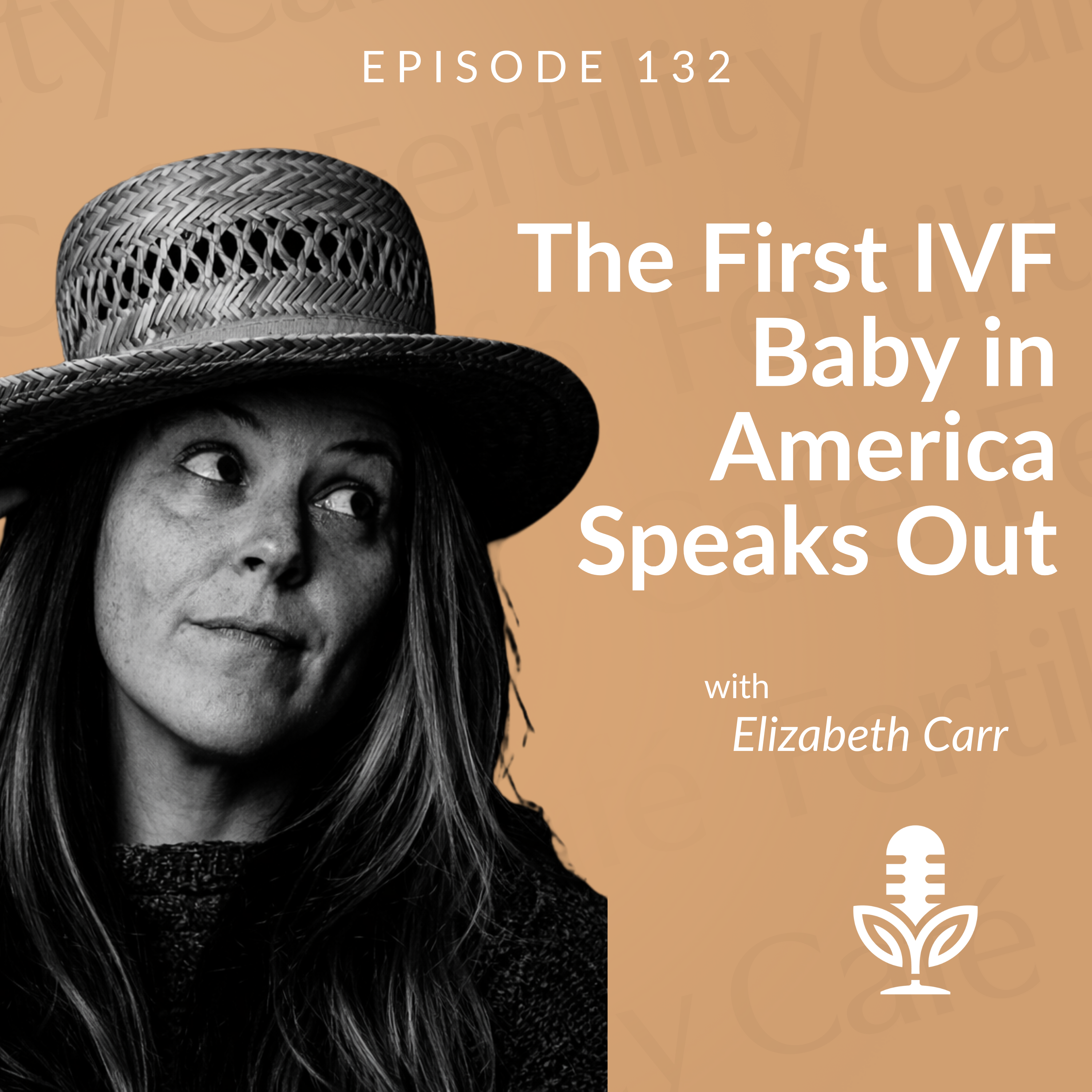
But behind every breakthrough, and there are real people, people whose lives are shaped not just by the science that made their birth possible, but by the cultural weight and curiosity that came with it. My guest today is someone who has lived that experience from the very beginning, literally. Elizabeth Carr is the very first baby born via in vitro fertilization in the United States.
In the media, since she was just three cells old, Elizabeth has grown into a passionate advocate for those navigating fertility. Through her writing, speaking, and advocacy, she brings heart, perspective, and lived experience to one of the most transformative medical advances of our time.
So with that, let's dive into the conversation.
Well, thanks, Elizabeth, for joining me.
[00:02:35] Speaker C: I appreciate it.
[00:02:36] Speaker A: Yeah, I'm happy to be here.
[00:02:38] Speaker C: So let's start from the beginning. For listeners who may not know, can you share a bit about the circumstances of your birthday and why it was such a significant moment in U.S. history?
[00:02:49] Speaker A: Sure. So I guess the best place to start is with my parents story, which is really that, you know, they got married quite young and tried having a family right away and quickly discovered they could get pregnant. But not stay pregnant. So my mother had three ectopic pregnancies, which is effectively a tubal pregnancy.
On the third one, the internal bleeding was so bad, she actually had both of her fallopian tubes removed. Because of that, her OBGYN came in and said, well, Judy, I hope you know this means that you will not have a family of your own. And basically, like, said, you might want to consider adoption or whatever. And on a subsequent checkup is when she actually found out about ivf, because he said, I had just come back from a conference, and I learned about this thing that they were successful doing in England called ivf, and there's a program starting in Virginia, and I think you should apply. And so my parents applied to this experimental program down in Virginia, which they were living in Massachusetts at the time.
Howard in Georgiana, who started the clinic, basically called my parents and said, how soon can you get here? And so my parents traveled back and forth from Massachusetts to Virginia in order to access ivf. And that's how I got here.
[00:04:13] Speaker C: Wow. What was it like, though, growing up with such a unique story around your birth? Because I'm sure, funny enough, I'm also originally from Massachusetts, but back in the days, they used to call it test tube babies.
[00:04:29] Speaker A: Yes. I hate that term.
[00:04:31] Speaker C: I know, I know.
So now, sure, people would ask questions or, I don't even know. Did they treat you differently, like, how you became into the world?
[00:04:41] Speaker A: Like, yeah. I mean, the press and the media has followed me. The first photo of what would become me was of the embryo at three cells old. And so I've literally been in the press since before my birth. And my first press conference was at three decades days old. And the media has never stopped following me my entire life, including when I gave birth to my own son and got married and all these things. Yes, there was a lot of scrutiny and a lot of pressure and a lot of eyeballs and a lot of questions. But on the other hand, I grew up with it. And so it was just kind of my life. It was just kind of normal. I mean, I know it wasn't like my friends lives who didn't have this attention. I just kind of, you know, rolled with the punches as much as I could because I realized, like, this is just, you know, goes along with being the first of something. And so I. I learned from a very young age my birth meant for people because it was historic and it was the first time it was done in the US and that was a big deal and meant, you know, hope for so many people. To potentially build their families. Yeah, there were times where it was awful and I hated the attention. And then there are other times that it's really felt like a privilege to be able to shed light on something that many people need to access in order to build their own family.
[00:06:01] Speaker C: How did your parents navigate that attention? Because I know obviously we're talking about you and your. And, you know, your experiences, but as the parents themselves and going through that, how did they navigate and then how did it kind of shape your own sense of self?
[00:06:19] Speaker A: So for my parents, they were extremely, extremely lucky that they worked with the program down in Norfolk, who took exceptionally good care of them. And to the point of there were armed guards outside of my mother's whole wing of the hospital. There were code words you needed and special badges to get into that wing of the hospital because it was such a media circus. And after my birth, we had a gentleman that I like to call our agent in reverse. You know how most people get an agent to get jobs and get bookings and get press? Well, we had one in reverse to keep press away.
And so he was our first line of defense. So luckily, because I was born in the 80s, our phone number was unlisted and unpublished. So if anybody wanted to get in contact with us, they had to talk to this gentleman first, and then he would call us. And so my parents made a conscious decision right away, basically, that they would not do anything that they did not consider educational. So I didn't do the talk show circuit. They did PBS and Nova and, you know, things like that. There's a funny story that I like to relay that. But almost immediately after I was born, my mother was delivered a dozen long stem roses with a telegram. And the telegram was from the National Enquirer. And it was said something to the effect of, like, congratulations on the birth of your baby. We'd love for you to sell us the rights to your baby's story. And, you know, from now until she's 18 years old, for some amount of money, my parents being my parents, just simply wrote back, thank you so much for the roses.
And it started basically like that.
[00:08:01] Speaker C: Oh, I can only imagine what they have heard. People have asked. And with you being so young and literally kind of being in the limelight.
[00:08:10] Speaker B: Since you were three cells old, like.
[00:08:14] Speaker C: When did you even start understanding the meaning behind how you were conceived?
[00:08:19] Speaker A: I think I understood it pretty young just in the fact of, like, you know, I started asking the normal questions that every. Every child does so at age 2 or 3, asking, where do babies come from. And my parents just kept telling me, like, we couldn't have you without the special help of science and doctors. And we had to go, you know, all the way to a different state to. To access that and, you know, that kind of thing. And then as you get older, the explanation gets a little more sophisticated. And when I was about 6 or 7, I watched the documentary of my birth, which happened to be on Nova. I had one doctor on this side of me and another doctor on the other side of me, and they were kind of live commentating the documentary for me and translating it into, like, little kid English. And so I learned, you know, exactly what IVF was and what it meant, you know, historically, the impact when I was effectively six or seven with two doctors, doctors by my side, who wanted to make sure that I understood it.
[00:09:20] Speaker C: All, which is very different than how it is obviously now. But did being born through IVF impact how you thought about identity? Or even your friends obviously weren't experiencing any of what you experienced in your lifetime. So how do you manage that as a 6 year old or an 8 year old or even a 15 year old?
[00:09:42] Speaker A: It's hard because IVF is just how I got here, but it's not, you know, who I inherently am. Right. Like, there's so much more to me than just how I was born. I think I've always realized that. And so to me, just because I was fertilized in a dish, I was still put back in my mother's womb, and nine months later, you know, I was born just like every other baby out there. Right. To me, it really wasn't as big a deal as people made it out to be. I mean, it was because of the technology, but from my point of view, I always felt like, oh, it's really not that big a deal.
[00:10:20] Speaker C: Right.
[00:10:21] Speaker A: You know, I'm just like everybody else. I'm normal. I'm, you know, don't clean my room sometimes, you know, little things like that. And it's not something you lead conversation with either. I think, you know, that's the other piece is I was very lucky. I grew up in a pretty small town in Massachusetts. Most of my classmates in school, you know, knew who I was and knew my history. And it wasn't shocking if I was on the news or in the newspaper. You know, people would still try and jockey their seats to try and sit next to me and get on camera or whatever, but other than that, it really wasn't quite a big deal because they grew up watching me in the media as well.
Yeah, it all just kind of was. That's just Elizabeth's family. That's just what they do, right? Yeah.
[00:11:05] Speaker C: And what's crazy, I remember hearing about you in the news, too, so.
So I guess what have you learned from your family or others about what IVF was like, you know, in the early 1980s? Because clearly it is vastly different than what it was previously.
[00:11:24] Speaker A: Yeah. I mean, what's interesting is it's vastly different, and it's also not vastly different. And what I mean by that is, you know, my birth was the first kind of what we think of as modern ivf. So Louise Brown, who was the first IVF baby in the world, was born via what we call natural cycle. So there were no hormone injections to, like, stimulate this production of eggs. And, you know, whatever I was. I was, you know, the first baby that was, you know, pretty all hormone protocol. That basic hormone protocol has not really changed that much. Some of the names of the drugs, but not their functions or forms has changed.
Some of the instruments that were used in IVF are better now, but were really invented through my mother's birth. And so, you know, like, a whole slew of transfer catheters and all these kinds of things that didn't exist are now, you know, commonplace. But the procedure itself is pretty much the same.
You know, there's a lot of different options now that can kind of go around IVF with pre implantation genetic testing, and, you know, you can freeze eggs and embryos now, which we didn't figure out how to do until, you know, I remember touring a facility when I was, like, 11.
So as much as it's changed, a lot of it is still exactly the same.
[00:12:42] Speaker C: So your parents were on, like, the hormone regimen and all of that. So that process for them is kind of what it is still now.
[00:12:51] Speaker B: Yeah.
[00:12:51] Speaker A: Except for the fact that because it was the first time being done, you know, you give yourself hormone injections or your spouse gives your hormone injections at home now. Well, back then, she was having injections by a nurse or a doctor. So every time she needed a shot, you know, they basically had to get on a plane and travel, which is kind of mind blowing, Right? That part of it is a little bit different, but the actual drugs themselves are essentially the same. That is wild.
[00:13:21] Speaker C: It's wild to think about, like, all these years in that process is still the same. And with all the technology and all of the things that we have in place.
The very first time that I had to take progesterone injections, I asked My husband, obviously, to give it to me. And he was like. He saw the needle. He's like, I'm not doing that. I can't do that. I'm like, oh, God. I'm like, fine, I'm going to do it myself. And I try to do it myself that first day. And I was like, I can't do this. So it's funny you say that she had to travel to go see a nurse every day. I actually had to travel to my intended mother. She had a nurse friend and who actually. I had to go to her house every single day to get the shot because my husband couldn't do it for me. I couldn't figure out how to do it myself. I didn't have to travel as far. It was still in the same state, luckily. But I can only imagine having to travel back and forth from, you know, Massachusetts to Virginia all the time. Because I'm assuming she had to first take the medication to create the eggs and then take medication to be able to actually do the transfer and hold a pregnancy.
[00:14:29] Speaker A: That's right. She was given all these hormones to create the eggs, and on her retrieval, they only got two eggs. So I don't think people realize, you know, we talk about it's a numbers game now. There were only two eggs that they got, only one fertilized. It was a whole different ball game. And remember, because we didn't know how to freeze back then, I was a fresh transfer. So the timeline, you know, everything was much more chaotic because you did not have the luxury of, like, scheduling things. Right. It was like, okay, this has done everything in the dish we needed to do, and now we got to get it back in your womb. Like, we got to go, go, go. Whereas with frozen, you're given that a little bit of elongated timeline, which kind of gives you a little bit of breathing room. They did not have that at all.
Wow.
[00:15:20] Speaker C: So when you hear parents, advocates, whatever, talk about what they're facing, like, what their barriers are facing, or should I ask, what do you hear most often about the barriers that people are facing? You know, especially when it comes to.
[00:15:36] Speaker A: Ivf, in my case, the number one thing I hear still that's a barrier, is access.
My parents had to travel all the way from Massachusetts to Virginia.
But unfortunately, in many places, we still have what we call fertility deserts, where there is no care or the closest care is many, many hours away, which is really unfortunate. So there's that geographic aspect of access, but also access in terms of financially. My parents were very lucky. They could cobble together enough money to pay out of pocket for this, because obviously there was no insurance for, you know, an experimental procedure. A lot of people don't have the tools to be able to pay out of pocket. And so if your insurance doesn't cover something like ivf, then, you know, you have to move on to another option, which for a lot of people, you know, IVF may be their best option. So it's really difficult in terms of access that way. We've come a long way, obviously, since I was born.
We still have a lot of work to do. We're not done in terms of access and coverage of insurance and things like that. We still have a long road.
[00:16:47] Speaker C: Unfortunately, it would have gotten better that it's no longer with the, in quotes, experimental, because it really is an experimental. And for many people, IVF is the only option, not just their best option, the only option that they have. So it's unfortunate that, you know, like you just said, we're still having conversations that we've been having 20, 30, 40 years ago.
[00:17:14] Speaker A: Right. That's the part that's exhausting to me. A lot of people ask me, like, oh, has it gotten worse? Has the conversation around IVF gotten worse? I feel like it's gotten worse. And I always say, actually, I feel like it's the same. I don't feel like it's gotten better or worse. I feel like, because I've had a front row seat to this my whole life, it's exactly the same as it was 43 years ago in many ways, in terms of the conversations we're having. So a lot of people might think that it's worse because we have, you know, social media and, you know, all these kinds of things kind of amplifying what's being talked about. But if you were the center of those things that were being talked about, it's exactly the same volume and, you know, cadence, really, that it was back in the day, unfortunately. Yeah.
[00:18:01] Speaker C: Have you seen any meaningful changes in.
[00:18:04] Speaker B: How people talk about or experience the stigma around assisted reproduction?
[00:18:09] Speaker A: Yeah. So I think now, thankfully, a lot of people have gotten more comfortable with talking about reproductive options out there. When I was younger, people would kind of come up to me, say in a hushed tone, like, you know, my sister had to do ivf or I'm an IVF baby, too. And now it's much more. Yeah, hey, I had to use this technology. And if you do too, like, I'm happy to help you and connect you to resources where several years ago, that wasn't necessarily the case. So I think we're definitely more open about talking about these things, but the number of people that are opposed to it has not necessarily gone down or gotten any quieter, in my opinion.
[00:18:46] Speaker C: Mm. And now with how everything is being changed just in general of reproductive health, of all the things reproductive health, it's unfortunate that some of the conversations that we're having, we're still having. So, example, obviously, with the Pulse Roe climate in the US and how some of these states are trying to put in personhood laws that could clearly affect fertility treatment options, it's the same, but in some instances, I almost feel like we're going backwards.
[00:19:18] Speaker A: Not necessarily backwards, it's just things like personhood bills being proposed in places where, you know, there was not even a law on the books one way or the other. So it wasn't necessarily negative, but it wasn't necessarily protective either. So it was like, in the absence of law, now we're seeing people try and take this extra step of creating some kind of legal precedent around, is this a personhood state? Or, you know, whatever the case may be. So. And I think that's what makes it the hardest, is that, you know, there's no universal standard across the whole US So depending on what state you're in, you may have better access than another. You may have insurance coverage, you may not. It. It's like playing whack a mole, really.
And I think that's really, really hard for people when they first start talking to me and they're exploring their options. The first question I ask is not, have you seen a specialist? A lot of people would think that that's the first question, right. For me, that's never the first question. The first question I always ask is, where do you live and are you receiving care?
Because that question is, what will then determine kind of your next options and your next steps. Unfortunately, you could have great resources around you, but if you can't access them, then it's a little bit like, did a tree fall in the forest? If you weren't around to hear it. Right. So I always started the conversation with, where are you living and where are you receiving care?
[00:20:46] Speaker C: And do people, like, normally ask you about, well, can you share with me the process as a child that was born from ivf, how is it going to impact my own children? And are they going to be any different? I mean, you are literally part of this whole new growing generation that was born through IVF that I'm sure many people still find an anomaly.
[00:21:15] Speaker A: Right. Yeah. So that's probably the second Most frequently asked question I get is, how do I tell my child? And how do I have these conversations with them? And I always answer with, you know, the younger the better. Because if you start having those conversations quite young, it just becomes like it was in my life. It was quite normalized, and it gets easier to digest if you start their education super young and you can kind of crank up the language as the ages tick up, as was done with me. But, yeah, people definitely, you know, wonder my child going to have concerns, or is there a concern? You know, a lot of people want to know, well, did you need IVF to have your own family? Well, spoiler. No, I did not. And you know, in a lot of cases, infertility is not hereditary. So it totally depends on your personal situation. Just because you have IVF yourself doesn't mean that your child is going to have to go through reproductive tech to have a family. Maybe they will, but maybe they won't. It's just kind of on an individual basis. So I answer a lot of questions like that these days.
[00:22:20] Speaker C: Yeah, well, I'm sure. Do you answer questions to people who were conceived via IVF about how they explore their own identities?
[00:22:31] Speaker A: Yeah, I think if you follow me on Instagram, I have a big community on Instagram, and a lot of I call them babies of art Assisted Reproductive technologies. Not just IVF babies, but folks born in a non traditional, I'll say, manner.
You know, we often have conversations and group chats about the fact that, particularly in my case, I was born via IVF and I was under a lot of scrutiny. I put a lot of pressure on myself to, in essence, make sure I was worth it for my parents. You know, there was no doubt in my mind that I was wanted and they went through all this crazy rigmarole to have me. But I always felt this pressure of, like, geez, I hope that I'm good enough. I hope that I'm worth that struggle that they went through. And a lot of the people that I've talked to that are born the same way I was have that same pressure. It's also the reason I don't like the term miracle baby. You know, a lot of people say, like, oh, this is my miracle baby. Through ivf, I'm always, you know, the one in the corner that's like, ooh. Being called a miracle is like, a lot of pressure. And I don't particularly love that idea. I just showed up on time. I didn't really do anything. Like, I didn't perform the procedure. I wasn't a doctor, I'm just here. And so now like what I do with my life is, you know, up to me. But if I have to be your miracle, that's like a lot, that's heavy to me.
[00:23:56] Speaker C: Yeah, I can imagine. And it's just probably a lot of kind of responsibility to put on somebody's shoulders.
[00:24:04] Speaker A: Absolutely. Because I had so much press attention my whole life, I also went through the machinations in my head of okay, I need to be articulate, I need to be polite, I can't be seen as a brat. I'm representing like basically an entire population that's born the way that I was. And I don't want to misrepresent those people. I'm really cognizant of, I'm a spokesperson for, for these babies that were born after me. Most of the people that I've talked to that are born via those technologies also feel that way. Because as much as there are so many IVF babies roaming the world now, you know, there are still people who have never encountered somebody who's been born through this technology. Technology. And so therefore we all kind of feel like we're the reps, we're the shining example that you have. So I better not screw this up.
[00:24:48] Speaker C: Doing this day in and day out. You don't even really sit down to think about those little pieces. And it's not little pieces, but those parts of somebody's experience was just like, well, we're here to help people have children. But you don't really think through what for that child, what that actually looks like long term as far as being holding that responsibility of how did I get here? On their own shoulders.
[00:25:18] Speaker A: Yes. And often education, how to explain my birth so young is because I was always being asked about it. And so I better get the terminology right or explain it in a way that isn't wrong.
So often we're seeing this educators as well.
[00:25:34] Speaker C: Yeah, definitely.
So let's talk about the technology part because obviously we know it's changing fast now we have things like AI and you know, genetic testing and all of the things that your parents didn't even probably knew existed was going to be part of the creation of this world. How do you feel about the direction we're headed now with all of these new tech changes?
[00:26:00] Speaker A: You know, I'm such an open minded person when it comes to all these reproductive technologies because I got here through an unproven as of then technology. So I am probably the most open minded person. I feel like anything that we can do to improve Outcomes, patient care, and the industry as a whole to lower costs and better care. I'm all for. So some of those things are still in their early days, and we don't know the full extent of how they're going to impact the things I mentioned. Cost, patient care, outcomes. We're still looking at those and studying. And it takes a really long time for things to become mainstream. So let me give an example. As I mentioned, I remember being 11 and touring a facility where they had figured out how to cryopreserve eggs and embryos. And this particular program was specifically for cancer patients so that they could preserve their fertility while they were going through cancer treatment.
And after they were done treatment, they still had viable eggs and embryos to lean on to build their family through IVF. I remember touring that facility when I was 11. But it's taken until the last three or four years for egg freezing to become mainstream. And talked about in the way that we're talking about it now, Things like that take a really long time for us to figure out. Is this helpful? Is this not? Is it accessible? Is it not? Is it helping outcomes? Is it not? It's taken us that long to just in terms of even egg freezing as an example for us to really look at it and say, okay, yes, this is a viable thing that people should consider.
[00:27:45] Speaker C: But where do you draw the line, though, between, like, innovation and ethical concerns? Because, you know, just like you brought up egg freezing, you know, there are some people who are just like, when should somebody do it, who has access.
[00:28:00] Speaker B: To it, who has the right to.
[00:28:01] Speaker C: Be able to do it, and so on and so forth. And it's kind of like innovation. And then there's the ethical piece, and I just read where they're using three genetics to create embryos.
So it's like, where do you stand with all of that?
[00:28:18] Speaker A: So my father always used to say, ethicists never had to go through these experiences in real life.
And I say that because I feel very strongly that it is not up to me personally. Whether I am comfortable or not with any technology doesn't really matter. What matters is the patient's autonomy. I feel very strongly that patients with good informed consent and proper education should be free to make up their own minds about the care that they would like to receive.
So for one couple that may be going through genetic testing, for another, maybe they're not comfortable with that. They don't have to go through genetic testing. I feel very, very strongly that it doesn't really matter what I think. It doesn't really matter what anybody else thinks, quite frankly. If the technology is safe, is, you know, adhering to the standards that we've put in place as an industry, then I think patients should be educated about the pros and cons and the risks, and they need to make up their own minds. I feel extremely, extremely strongly about that because quite frankly, my parents knew almost nothing about ivf. They were given a one page black and white Xerox piece of paper, you know, explained IVF essentially in the most of basic terms. They didn't really know even back then, was I going to come out normal? Was I? I mean, it was a complete shot in the dark. And so they had to take a leap, you know, on their own education or lack thereof. Right. I am one of those people that I feel strongly is completely up to the patient what they should be able to access.
Look at being able to tell the sex of your baby. So in the United States, you can either know or not know. It's up to you whether you want to know if you're having a boy or a girl, especially if you're going through genetic testing. We can take that off a report or we can leave it on. It's not a big deal.
In other places like Canada, you're not allowed to know the sex.
And so they don't even put it on there. You know, to me, it's one of those things where I just don't feel it's up to me.
[00:30:29] Speaker C: If you could wave a magic wand and fix one thing about the current fertility landscape, what would it be?
[00:30:36] Speaker A: It would be access. It would be access in terms of geography and access in terms of coverage for these procedures.
You know, a lot of people always say, well, IVF is so expensive. Well, so is hip replacement, so is a major heart surgery. The difference is those things are covered, whereas IVF is not always. It's hard when people say it's expensive because it's not expensive relative to other necessary aspects of care and treatment that, you know, are procedures that people go through every day. So I think that's my number one thing that I would be able to fix. And man, I'm working so hard to try and get it fixed. I say this to everybody that I talk to. 43 years ago ago, I was born in Virginia. Guess which state still doesn't have an insurance coverage mandate. Virginia. Guess how long I've been working on it.
[00:31:24] Speaker C: Well, a lot of states still don't have insurance mandates. Yeah. Which is ridiculous. Even though, you know, we were told that IVF is going to be covered for everybody.
Guess we're still waiting.
[00:31:37] Speaker A: I mean, I would be very happy if that happened, as long as it didn't restrict people's autonomy and access. That's the key.
[00:31:46] Speaker C: What message would you share with fertility professionals and even lawmakers about the heart of this work?
[00:31:55] Speaker A: I think for lawmakers, my message is always the same, which is that infertility doesn't care if you're a Democrat or a Republican or an independent. It affects one in six. And that's only the people that we know that are dealing with an infertility diagnosis. That's not even the people that we know that need treatments like IVF to build their families through, you know, because they're LGBTQ or because they're going through cancer treatments or whatever. It's a lot of folks. So more than likely their voters are dealing with these issues that we're talking about and wrestling with. So that's what I always say to legislators. I think the biggest thing for me is you cannot assume that a patient will walk into your door knowing everything that you know in terms of their options. You know, that was one of the things that the Doctors Jones did really well with my parents is like, yes, they explained IVF or what little they knew of IVF to my parents, but they really explained it in a way that made my parents feel comfortable and feel like they could, you know, take this leap. That's critical, right? Is being able to spend that time with your. Your patients and just answering every single question that they have and making them feel like, okay, there are no dumb questions. This is a whole new frontier for you, and I'm the expert and I'm here to answer whatever questions you may be. I don't care how off the wall you think they are, they're not, you know, opening that dialogue very, very early for folks, because you don't want to get into a situation where patients feel like they can't question their provider. You know, ask them the questions, they'll give you their opinion. But then, like I said, it's up to you to decide whether that path is the right path for you.
[00:33:37] Speaker C: Not kind of like a final wrap up. What are you doing now? I know you're a big advocate in doing advocacy work. Clearly, your whole life has changed the trajectory in the of the world. Can't just say just the United States. It's like, affected the entire world. So what are you doing now?
[00:33:59] Speaker A: So my 9 to 5, I work in public relations and marketing for pre implantation genetic testing company called genomic prediction that produces the LifeView suite of PDT tests. And aside from that, I spend most of my days, well, most of my nights really, after work, doing the advocacy work. So I'm talking to patients, I'm talking to providers. I'm down in D.C. you know, in front of legislators, talking about these issues, trying to help move the needle. Yeah, I mean, that's pretty much how I should spend the lion's share of my day.
And I really try to make myself open to patients who want to contact me and just ask me questions. So I'm a team of one.
But if you message me on Instagram or you go to my website and you leave a question, you're not going to get somebody else pretending to be me answering you back. It's me. I take the time and do it. I'm can be kind of slow based on the volume of people that contact me, but I set aside about an hour every day to go through the messages and questions that I get and get back to people, people. And if I don't know the answer, I will find you a resource for someone who does. And I think that that's really important for people.
[00:35:11] Speaker C: Yeah, definitely. And how should people find you?
[00:35:15] Speaker A: I'm probably most active on instagram. I'm @ejordan12 and my website is ejordancar.com and you can leave me a message there as well. Anytime.
[00:35:26] Speaker C: Elizabeth, thank you so much for joining me. I mean, like I said, I especially being in Massachusetts in the early 80s, hearing, you know, about the story and about this little girl that was born and, you know, and all of the things and to come full circle and being in the space and then, you know, and having a conversation with you and just kind of getting your perspective is just. It's pretty awesome.
[00:35:50] Speaker A: Well, thank you so much for having me and being a resource for so many people who need to hear information like you're providing. So I really appreciate everything you're doing.
[00:35:59] Speaker C: Well, thank you. I appreciate it and I appreciate you. Have a great day.
[00:36:02] Speaker A: You too.
[00:36:03] Speaker B: Thanks so much for listening to Fertility Cafe. If you've enjoyed this episode, be sure to subscribe so you never miss an interview. Leave us a review and connect with us on socials. We're ertilitycafe. Until next time. Remember, love has no limits. Neither should parenthood.