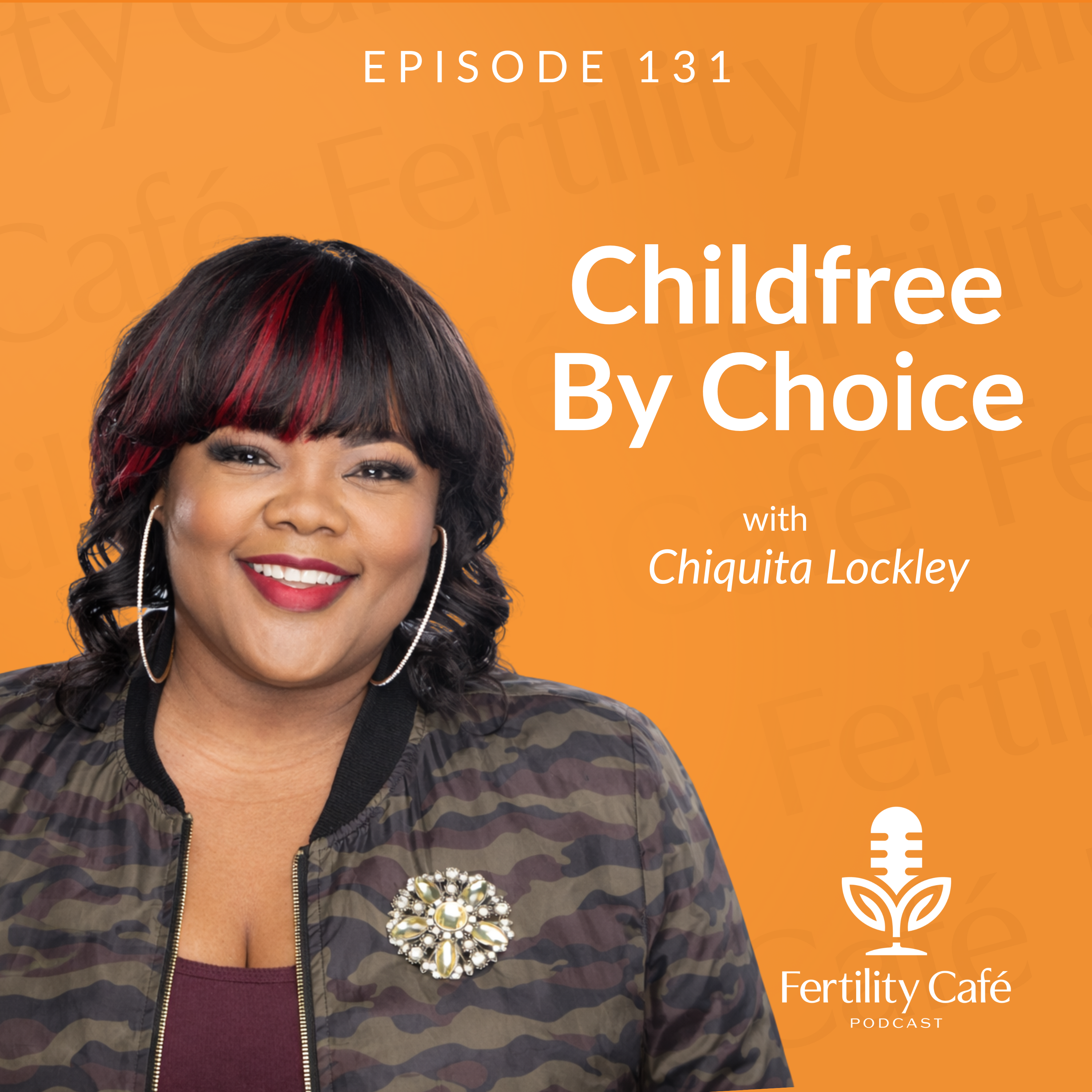
Episode Transcript
[00:00:02] Speaker A: Choosing not to have children is a deeply personal decision, one that is often overlooked in conversations about fertility, family and womanhood. While so many narratives focus on the desire to conceive, there are equally powerful stories of people who decide to take a different path.
For some, the choice to remain childless comes after years of trying.
For others, it's an intentional step toward a life that aligns more closely with their values, goals, or sense of peace. There's no one size fits all. Journey to Fulfillment. And in a culture that often equates womanhood with motherhood, choosing to be childless can feel both liberating and at times, misunderstood. Today, we're opening up space for that conversation about identity, expectations, and what it means to define life on your own terms.
Welcome back to Fertility Cafe. I'm your host, Eloise Drainage. The journey to parenthood, or away from it, is really simple. It's filled with questions about possibility, purpose, and sometimes acceptance.
And for some, that journey includes deciding that having children isn't part of their story. And that wholeness can still be found even when the path looks different than expected.
Welcome to the Fertility Cafe, where we explore the beautiful complexity of modern family building.
I'm your host, Eloise Drain, and this is a space for honest conversations about surrogacy, egg donation and the journey to parenthood. With expert insights and real stories, we're here to guide you through the medical, legal, and emotional aspects of third party family building.
We believe that love has no limits and neither should parenthood.
If you've been with us for a while, you might remember episode 34 where I spoke with Shaquita Lockley about her powerful document documentary Eggs Over Black Women and Fertility.
That episode focused on advocacy, education, and the unique reproductive health challenges Black women face today. Chiquita returns not just as a filmmaker and advocate, but as someone who's lived through her own fertility exploration and ultimately made the decision to live childless by choice.
Her story is nuanced, deeply personal, and a needed counter narrative to the idea that motherhood is only the path to fulfillment. So let's get into it. All right. Shaquita, thank you for joining me. I appreciate it.
[00:02:41] Speaker B: Thank you for having me. It's always a pleasure chit chatting with you.
[00:02:44] Speaker A: So obviously last time you were on the show, we talked all about eggs over easy and what you uncovered about black women's experience with fertility, reproductive care and kind of the pressure to build families a certain way. However, this I wanted to talk about your own personal story about parenthood and something that's often what we don't hear enough about and what that journey has looked like for you.
[00:03:11] Speaker B: Well, dive in. I'm ready. Okay.
[00:03:14] Speaker A: You did this whole documentary for women and fertility and all of the things about having children or not having children or experiencing infertility, and then you are childless yourself.
[00:03:28] Speaker B: I'm childfree. I'm child free now by choice.
[00:03:32] Speaker A: Yes, correct.
[00:03:33] Speaker B: So childless for. For women who actually wanted children and always knew they wanted children and they feel like something is missing is childless. They use the term childless for women who are are people who are child free. Like just the weight of always wanting a child, it's not there. So instead of feeling like we're missing something, we're just living life freely without children. So that's the difference. And when I started the documentary, I didn't know that, so I was saying childless. And then someone pulled me aside and said that that was an offensive term to women who are child free. And I didn't know the difference.
[00:04:06] Speaker A: Me either.
[00:04:07] Speaker B: So yeah, it's a thing. So I'm in the child free category. And women who either could not have children or wanted them and it just didn't work out for them, they feel like they are childless because they are missing a child.
[00:04:20] Speaker A: Obviously you didn't know it when you did the documentary. Remind me again because that you had worked on that documentary for years, for a thousand years.
[00:04:28] Speaker B: So my research started in 2015 and my principal photography shooting started in 2017. You were my first interview. My first guest was I.
You were my first interview.
[00:04:41] Speaker A: Well, okay.
[00:04:44] Speaker B: We've come a long way. We've been together a long time. So it's been 10 years since I started the research and then eight years since we started filming.
[00:04:53] Speaker A: When in that process, when in those specific moments, conversations, experiences or whatever, did your perspective shift?
[00:05:03] Speaker B: I want to think this was probably like 2018 or 19. I already started filming, doing the interviews for Eggs Over Easy. And my auntie, Aunt Linda, she pulled me aside and said, hey, I think you should consider 60 year old you.
Well, 60 year old you, like, you're fine now and you're vacationing and living your best life. Will 60 year old you be okay with your decision to not have children? And let me say, it wasn't like, oh, I never wanted kids, but by the time I hit 34, I wasn't married. I didn't want to be a parent by myself because my mother is a single mom. And it was very hard. And I'd always said I would never do that. Like we made it out alive, but it was tough. So that's not something that I wanted to do for my personal journey. Although, you know, kudos to those when if that's the choice that they make, it just wasn't for me. So at 34, when I wasn't married and I was like, desperate, like, oh, my God, I have to get married. First of all, I went to Spelman and Morehouse is across the street. So it's already kind of ingrained, like, you're probably going to get married. So my thoughts were, okay, by 25, I'll be married and we'll, you know, move through this, have kids, get the house, the picket fence and all the things minus the dog because of my allergies, but all these things, like, I had it to the point of, okay, no pets because of allergies. Like, this was the picture that I had in my mind. And then by the time I reached 34, I was not in a relationship, no marriage in sight. I had a very difficult mid-30s. I was like, so pressed. I would date people I wasn't compatible with. Not making good decisions because the end goal was like, okay, well, I got to get married so I can have kids. Once I decided that that might not be happening for me, I let it go. And when I say let it go, I mean, I did not think about.
I lived my best single girl life, made the most of it. If I'm going to be here, I might as well find some joy. And so that's what I did. Fast forward about a decade later when Linda asked me, what would my 60 year old self think? Would my 60 year old self be happy with these decisions? That was the first time, like, as an adult, that I paused to say, is this really what I want to do or have I just said, okay, it's not going to happen. I'm not going to worry about it. So I thought about it and I was like, okay, this is what I'm going to do. Fast forward about maybe one or two more years. It was 2020 when Covid hit, well, 2019, I found out I had very big fibroids and that I might not be able to have children if I wanted to because of where they were placed. And that freaked me out. So. And Linda had just had this, oh, when you're 60 conversation. And then my gynecologist was like, you need to buckle down and figure out what you want to do. If I had the ablation, it was going to cause some scar tissue inside that could make it impossible to have kids. Did I want to do that? Which would have Been, like, probably the easiest path. And that was when the rubber hit the road. And I had to say, like, oh, my God, do I really not want to have children? Or have I just been, like, chilling because I'm not married and I don't have a situation that I would want to bring a life into? Like, is this what I want to do? And so I paused, and I think I had, like, a small emotional breakdown. Like, what in the world? Knowing that I could have kids even if I didn't want them. That was always in the back of my head. Well, if I ever want to, I can hearing, okay, if we do this procedure that might take away your ability to have kids.
That was a different lens that I'd not had to deal with before, because that made it. If you want to, you cannot. And now you gotta find some other things. Like, you have to find another path if this is what you want to do. So I sat and thought about it, and I really am okay without having children. And I think that's because I'm a godmother to a couple of kids. And I'm very serious. I take my godmotherly duties very seriously. I don't miss birthdays, I don't miss recitals. And I've been doing that for 20 something years. The last person who asked me to be a godmother, like, five years ago, I had to decline because I'm tired. I couldn't start another generation of that. It's only so many recitals and soccer games and things you can go to. I'm at capacity, so I've taken that seriously. The girls I mentor, I've taken that seriously. And when I looked at the milestones that I knew would be important to me, like being mother of the bride and taking them to see, filming to see if they want to go to school or pledging my sorority, God has been generous, very generous in my life with me. And I've had mentees or nieces, I call them my nieces, who I've been able to show up in that capacity for all of them. I've been the mother of the bride. I've taken Anise to Spelman to see if she wanted to go there. I've had one pledged through my sorority, and I got to, like, be there and be a part of it. I had one graduate, Spelman, and we have some specific things that happen when you graduate. Like, you get to go traditional things. You walk through the arch. It's a whole week of things. And I got to do that with one of my mentees because of how my life has always had children. These aren't kids that popped up when they were in college. They popped up when they were 8 years old. Or, my God, kids. They came out the womb. I have children in my family. I just had one of them last weekend. She spent the week with me going into her senior year, wanted to come to the big city. So I think because of that, it filled my cup for nurturing.
So when I say I'm good without having biological children, I really mean it. But it took the rubber hit in the road for me to have that conversation, because I don't think it's a conversation we often want to have with ourselves. Especially, like, if you check all the things off the checklist. You went to school, you got the degree, you got the job, you did all these things. Tracy Ellis Ross says it beautifully, but she's saying, I did all these things. But if you don't check off motherhood in our culture and in our community, you have done nothing because you didn't fulfill the one thing you were here for. I wasn't that moved by other people having that conversation. Like, after my mid-30s, my family stopped asking me at Christmas about it. Stop asking me about it. I wasn't polite when they asked. My answer was never polite. So the outside world, they may have had questions, or people would say stuff like, oh, we need more little use. Like, we need more of the good people in this world. Have more good people in this world. Well, maybe my assignment in this world is to just help some of the people y' all put here already, to become good then, to be the good people. But it was a tough conversation for sure. Not with folk outside of myself, but with myself once I realized, oh, I'm gonna have to have this talk.
[00:11:22] Speaker A: Did it take you, though, a long time to make peace with making that decision?
[00:11:28] Speaker B: It wasn't a straight line. It would come and go. So with the whole fibroid thing, my doctor was able to do a surgery that she did, an open myomectomy, and she was able to leave scar tissue inside my uterus. So when I come out, I went into that surgery, like, I might have to have a hysterectomy, Because I did sign off that if I needed it, if it was life or death, I would like to live. Take the uterus and everything connected to it.
Take it out. So I went in thinking that I would have a zero percent chance if I wanted to. I don't know if I was struggling. So it was Covid so everything was crazy. I was at the hospital by myself. Nobody could come. Like, my mother and aunt dropped me off. My mother came in for anesthesia, but they made her leave. And I was there for all those days by myself in the hospital with nobody could visit. I had a major surgery because I was on the floor with the heart attack people, because that's how the hospital. They had too many people. And they put me. Like, I could hear people coding. So some of that was just environmental, like, just where I was. But some of it was that I went into surgery not knowing, just assuming I wouldn't be able to have kids and trying to come to peace with that. And when I came out, my gynecologist was like, oh, your uterus is perfect now. If you want to do something, you need to go ahead and do it. So then I was like, back in the game. And so I had to make a decision because I knew the clock was ticking. I had already finished most of eggs over easy. I think we were almost done. The only thing left was, like, the part we added with Keisha during COVID I knew tons of information, and I knew that that was a slim window that if I wanted to have children and, you know, they put my uterus back together and everything was fine on the inside because my fibroids ended up being mostly on the outside.
So there was no scar tissue. If I wanted to, I could. And I sat there in that hospital, and I would go back and forth. Am I gonna be mad at 60 that I didn't move and have kids? Like, move forward and have kids? How am I gonna feel about it? Am I really okay? Like, I know I'm okay at this level. On a high level, I'm good. But am I okay? Is my soul okay with this decision?
So when I came out, I kept. It was on my mind.
It wasn't an emergency because I had this small window. By 2022, I had decided definitely that I was okay with this decision. So it wasn't a yes, I'm okay today. It was like a process, because I had a decade where I was strictly like, I'm child free, living my best life. Gonna just be here for the kids in my life, and I'm okay with it. But now my lens has shifted a little bit because that option could have easily been taken away. And I knew that right after that, I would be going into menopause. So. So it wasn't like this long, extended window. So 2022, I was on a beach, and I said, okay. I think I'M good and I've been good ever since then. But that was like a two year process of knowing I could. After thinking I couldn't have kids or might possibly not be able to, that fear shook me. So knowing like, okay, I can, but I need to do something immediately. I talked with a couple of my close, close line sisters and the facts for me didn't change. I don't want to be a single mother every time I would get the flu because once a long time ago, I was gonna adopt. I was 25, I was gonna adopt at 25 and one of my friends said, well, well, you're by yourself, so what happens when you get the flu? And that is why I paused because, like, who was going to help? I didn't have a village here. Like, what are the logistics of parenthood if you are single? For me, that would have meant, like, I would either have to move my entire life back home to my family or I wouldn't be able to do it because none of my friends live close by me. Not close enough to come take a kid to school. So I revisited that in 2022. Nothing has really changed. The reasons that I didn't adopt when I was 25 had not changed from 2020 to 2022 when I was thinking about it and every time I would get the flu, I would be reminded, there is nobody here to take a toddler to school. There was nobody here to change a diaper for me. There's nobody here. And I have people in my life who love me. They would probably drive to change a diaper, but it's not realistic. Nothing had changed. I don't want to do this by myself and I still don't want to do this by myself. And I know that when I'm 60, I'm still not going to want to do it by myself. I made peace with it. I give all the love I can to all the kids in my life, like live with me for extended periods of time and that is enough. I look online and they always have the arguments in Instagram, like in the comments where they're like, well, if you don't want to have kids now, it's because you're selfish. And when you're old, they're going to put you in a nursing home. I will have to put my myself in a nursing home. But there are many people with kids who the most loving thing they can do is put their parent in a nursing home because they're not equipped to take care of them anyway. So if that is the Reason we're procreating is so that you'll have a way, like a path to not go into a nursing home. We're already doomed as a society, especially when some of the most compassionate care you can give is by putting them in a space with people who know how to turn them over so they're not getting bed sores. My thoughts on it just, just evolved. I don't know if they evolved or if they just expanded. They just expanded because this is always at the core what my belief has been. But once I was like older and really looking at it, no, I have not changed my mind. I haven't changed my mind at all.
[00:16:45] Speaker A: Did you go through a grieving process, the mid-30s?
[00:16:48] Speaker B: Absolutely. Because that was when I was all or nothing and I just let it go. Part of that grief. And when I look back on it, I can see it more clearly. I had to be in other countries, 30s, like I couldn't breathe here. But no matter where you go, you running from yourself, but yourself is still there. If there was like an extended grieving process, it was the end. All of my mid-30s take a big four year chunk out because I just couldn't believe normally I achieved the stuff that's on my list. I'm gonna have the highest grades because I work hard and that's on my list. Ever since like first grade, I have been that way. So there hadn't been anything on my list from childhood that I didn't accomplish. And so coming to terms with that, that was difficult. It was very, very, very difficult trying to decide, well, this is what the world, our society says success looks like. Is this really what I think or is this what I think I should think? Do I really feel like that? Because I have an aunt who's quite successful on Linda, the one who asked me how would I feel at 60. Her only life regret is that she didn't have a child, a biological child. And that was why she was asking me those questions, to make sure I was making the right decisions that would serve me. But I look at her and she's like the most successful person in my family. So when I came back, like, am I trying to be Claire Huxtable and do that or is it because that's what I saw?
Because I also saw success with women who were child free and who were amazing in my community. That was a process, but that was all of my mid-30s. So it was living single and girlfriends, watching both of those shows, like having something else to look at that also was kind of helping Me process. I'm like, okay, it's not just me, because Joan, she out here struggling, too. So that was helpful, but it didn't, like, lessen the stress of it. And I look at, like, some of the girls I mentor now. They are, where I was at 35, in complete panic mode, like, completely stressed out because they want the marriage and then the carriage, and now because they are aware of options. And I have been so loud about it, it might be the carriage, and it may not be a marriage. You may not get to be a marriage. So I also. I always frame it. If marriage is important to you, God bless you. That's. I think marriage is beautiful. If you want a child, you're going to have that need to have a conversation with yourself. Do you want a child, whether or not you're doing it by yourself? Or can you create your village so that even if you're not married, you're not doing it by yourself, so that you live within 10 miles of your mom and them who can come and help you with these children you think you want to have? So that's kind of how I process it, and that's kind of how I try to pay it forward. Because I think this entire experience has made me just more compassionate. So instead of saying, well, I would normally I would say things. I would not soften them or say it kindly, even though it's the fact. So now I'm more compassionate, having, like, lived through the experience. So when I am talking to the girls I mentor or just some of my Soros who are younger, I try to soften it because I understand how sensitive and delicate it is because my mid-30s were a train wreck emotionally.
So when I'm talking to them, I speak through a lens of compassion. These are the things you want. It does not change the reality that your clock is ticking. It does not change the reality that you need to call your job and see if your insurance is going to cover egg freezing or ivf. If that's the route you go. None of these facts change. But I also understand that you are panicked. Your cortisol is up, your weight gain is going up because you're stressed out, probably should go to a gym and just try to maybe find a therapist and pull your life together. So I understand the emotional part of it, and I just say it with, like, a little more kindness. But the facts don't change. And so I'm very clear to tell them the things that at 35, that would have been so helpful for me when I was, like, all like oh my God, I have to get married and oh my goodness and all the things and just panic every day and anxious every day. That would have been so helpful to have somebody who could have had this, this conversation with like kindness and facts.
[00:20:49] Speaker A: Well, and I think too the other problem is that society makes it so that again, like how we even talked about right from the beginning about how society makes it that you know, as a woman you are supposed to be a mother and, and then family where family is asking you every time, like you said, you're in Christmas and you know, when are you having a kid, when are you going into a relationship or were you dating? What, what's going to happen? All of the noise that culture and family sets as expectations on how life is supposed to be for you and as you progress through this generation and this generation and so on and so forth and how it's supposed to look and you have all of these outside voices that are showing up and telling you how it's supposed to look for you. So of course someone in their 30s is going to have that anxiousness of oh my God, there's this pressure that I have to hurry up quickly. And now even as in the space where everybody is talking about egg freezing and making sure that you freeze your eggs just in case you don't know if you're gonna have child or you don't know if you're, you're going to need it down the line or whatever. So you know, you should consider egg freezing. But, but we don't also have the conversation that egg freezing is not necessarily an option for a lot of people because it's also still very extreme expensive in a process that you have to go through. It is not something that is just a simple like, well, just go freeze your eggs and it shouldn't really be a big deal. That way if you decide, you know, down the line that you want to have a child, that it's not going to be an issue. Well, yes it is, because egg freezing is, it's not a simple snap your fingers and you can go and freeze your eggs. I mean, all of those factors have a bearing on a decision that is life altering.
[00:22:39] Speaker B: Correct? 100%.
[00:22:41] Speaker A: When you decided and said, okay, you know what, I'm good with this, I'm totally okay with being child free.
Like how did it shift your relationship with you?
[00:22:53] Speaker B: And I know this sounds like super dramatic or whatever, but because remember the first time I, when I was 34, like mid-30s, I just traveled and came back and was like, this is the decision.
And I didn't. There was no emotional part of it, really, because it was just a decision that had to be made. I made the decision. But in 2022, when I circle back around and really went through all of my reasons, like the literal logistics of it all and then the emotional side of it as well, it was like this relief because it had been from 2020 to 2022. So two years of kind of in the back of my mind, I'm just ruminating, like, am I gonna do this?
What are the pros? What are the cons? When I decided, like, for real, I'm okay with it. And I looked at the emotional part, I opened every door, every closet of my mind to. In my emotions and my spirit, just to make sure that I am completely in tune with this decision. It was this quiet relief, like, this weight just kind of like I didn't think about it anymore. I haven't had to think about it anymore. And I think it's made me more honest when I'm talking and dealing with people, especially if they're in the middle of trying to figure things out, because I've answered all of my questions. And sometimes, even if you're in conversation with people, if you haven't answered your own questions, that's haunting you in the back of your mind, your lens is not clear.
Your lens is not clear. You can, like, I can give all the advice in the world, but if I haven't actually had to go and deal with it myself, it's. That's like googling advice, or the best, best advice that I have at the time. But that doesn't mean it's the best advice. It's the best advice I have at that time. So after I went through all of my own cobwebs, I have a different clarity about it. You can ask me this question, and I can answer it in a thousand languages because it's not going to change. And when I went back to the core of who I was, I knew at 34 when I decided. And I knew at 24 when I decided. And I knew At 18 when I decided I did not want to be a single mother, I knew it then. I knew every iteration of myself. I've always known that. And that didn't change. And if life had been different and I was married at 25, I will have children. But that is not how things panned out for me at my core, who I was in high school, that. Who made the decisions that I made to make it to college, who made the Decisions I made to make it into adulthood. Now I'm 50 years old now, by the way, but who made these decisions at 50? I am still the 18 year old version of myself at the core in the decision that I don't want to be a single mom. So none of that changed. At 60, I will still not want to be a single mom. And I can just look back on the blessings of all the young people who have come in throughout my life. You know, nobody owed me that. That was a blessing.
[00:25:44] Speaker A: So did you make the decision? Obviously you don't want to be a single mom as well as made the decision that I want to be child free and I don't want to have the responsibility of also being a mom.
[00:25:58] Speaker B: Well, let's talk about it. So, Eloise, I was on a dating profile, one of the dating sites paired with this man. He seems wonderful. And in my dating profile I went back on like every couple years I dip my toe in the water and see what's happening in the dating world, like the online dating world. So for the first time I included I'm okay if they have children, but the children have to be old enough to like feed themselves and take themselves to the bathroom and that sort of thing. That's why I say I'm ever evolving. But I think we have to be honest with ourselves.
So with this particular match, we needed to wait for a three week break in the summer because he had sold custody of his children. Who could take care like preteens could take care of themselves. The fact that all of the scheduling had to center around children, I decided that that probably wasn't what I needed. I need to take that age up to college. That was eye opening for me because I have children in my life, I have a schedule. So my God, kids have different mothers.
One, my goddaughter, she's danced forever and is now in college her entire life. She's danced her entire life. I don't miss anything. My godsons, they're in all the sports, they're boys, they are in every sport you can do, they play it. One of them decided to be a filmmaker. He's eighth grade, he decided to be a filmmaker. They have films. I go to everything. So I'm accustomed to other people sending me a calendar and I will go and pick out my availability to make sure that I don't miss their stuff. That's not the same as having the responsibility of a child every day who has a schedule.
And like, I think I'm awesome for not missing, my God, kids Stuff also, I don't pretend that that's parenthood.
That's not the day to day parenthood at this stage of my life. That's not something I'm interested in because it is not a schedule coming in. Like, okay, we can go to these things or show up at these things. Things. It was. We can't do anything. We can't do things because it's school nights. No movies. No, you can't do things until there's like a break in the schedule when the other parent parents. And then the other part of that is, I wouldn't date a deadbeat dad. So I'm over here applauding, like, this is amazing. I am so glad you're a full time parent. That's beautiful. Kids need their dads in their lives, like, all of those things.
And also, no, no, no, no, no, no, no, no, no, no, no. That's not gonna work for me. Yeah, that, like, helped me pay attention to the ages now, which I never did before. I'm like, oh, if you got a kid, that's fine, whatever. No, because I never walked into a situation where the father was the custodial parent. So every other time I've dated men with kids, but they. It's been like, either or the mother has custody, so you're working around schedules, but it's weekends. Like, you're. You're not really working around schedules that much. So this was different.
And this helped me realize something new about myself, that they're gonna need to be a little bit older. If I was in my 30s, like, if I was mid-30s, I wouldn't care. But I'm not. I'm 50 years old. So it's just something new to learn about myself. If we are dating, it would be great if your kids are adults or like in high school or something where it doesn't matter as much that they like, every single day has to be tailored to your kids.
So that was also interesting because I sat there like, well, girl, does this mean you're selfish? And that's a very real question. So now I'm back to, like, the people fighting in the comments on Instagram where they're like, oh, no, you just don't want kids because you're selfish and you're gonna be like, put away in a home or whatever. Whatever. You know, some people might look at it as being selfish. I look at it as, like, I know myself and I know that to take eight months of minimal being able to do anything because you're mindful of your children And I also understand not inviting new people in to meet your children. I don't want to meet children if it's early anyway. I don't think that's healthy. My mom did a good job with that. Like, I'm sure she had a boyfriend when I went to college. She did have a boyfriend boyfriend, but we didn't see if she was like dating people to get to the stage of boyfriends. I didn't see that because she didn't bring me home. And we didn't meet them obviously because I was in college by then. You know, maybe it's selfish, but also I know myself and I know that at this stage of 50 years old, I'm not interested in toddler stuff. I'll pop in if I need to with the ones who are in my life. Like, I have a nephew, he's five years old. If it's something that I need to show up. I have little nieces, they're like seven to eight and they're the cute stage. I will show up. We've had a swimming pool day this summer, that kind of thing. But the every day of it, I'm not built for that right now in my life, 10, 15 years ago, different story, different version of me, but this version of me is like moving into retirement.
[00:30:57] Speaker A: And believe it or not, there are actually a lot of people who are starting to have those conversations with themselves about being child free, choosing to be child free. And even if they had a partner, it is couples that are choosing. Even though I'm in a relationship, even though I'm not going to be a single parent, I still want to be child free. I do not want to have children. And a lot of people are more than even what I would say 20 years ago are starting to consider that. And it's not just because I want to be single or I don't or I because of their schedule. It's expensive. This world as we know it is just evolving. And you know, right now there's all the crazy things that are happening. Sometimes it's just like you do have to wonder what is the world going to be like for your children 20 years from now, 50 years from now, you know, you know, I'm 52 and when we were young, you know, our parents used to say, oh well, you don't know how the world's going to be with you guys and how, you know, how you guys are. But it's just like, wow, if they just saw what we would have to endure with our children and you know, with our Grandchildren. It's just like. Well, I mean, I don't know. So there's so many different factors now. It's not just about somebody being selfish. There's a lot more. So I'm curious what you think might be the biggest misconception about women being child free that people don't even think about.
[00:32:34] Speaker B: There are probably lots of things. Well, I'll say two of them. One. And this one bothers me. Sometimes people assume that you don't have kids because you don't want to and not because you can't. I have friends who couldn't have kids. So when society is looking at them or being bold because, you know, folk say whatever they have to say these days, all this bravery behind a laptop. But when people may say things, I'm offended by that because the assumption is that everybody can feel physically produced and all of the stars aligned and it happened and everybody can have kids. Some of these women are selfish. Some of them are heartbroken because they had five miscarriages. That's the first part. The second thing I would say that is a misconception. Happens in the workplace, but also with friendships. People assume we have extra time. There are 24 hours in the day. Most of my friends, especially those of us who don't have children, we are very involved in our civic activities to make the world go right around. If we have more time, it's either going to be spent on career, picking up the pieces of our family because especially in black families, especially in our culture, we are the aunties. If you have to send your kids somewhere, you're going to send them to this auntie. So we're picking that up, picking the pieces up for that, picking up whatever is dropping on our jobs. And then in the community and at our churches, we are the ones making sure your kid has vacation Bible school. Who do you think is bringing the snacks for them? Who do you think is teaching the classes for them? Them? I'm the board chair of a non profit that focuses on black women in film and entertainment. Who has the time to make sure that y' all can get jobs? Because the job market is crappy. But who is taking hours, this is non paid, taking hours to hunt down studios like, hey, do you have jobs? I have interns. Do you have internships? I got students we need to send. Like the assumption that we have all of this extra time for leisure and to do, you know, whatever you may need need for us to do is wild. Because nine times out of ten, if you look, or at least in my Circle of friends. We keep the world running because with that little bit of time, it's. Although it may not be like, on the clock getting a paycheck, we're investing that time so that our communities are better, so that our churches are better, so that our families are better. We don't just have extra random time to run errands or the. We're not just watching Netflix and chilling. Now, granted, we might be taking some vacations because, you know, black girls travel, but in general, just the assumption that we have all of this extra time or all of this extra money, that's crazy. And children are expensive. So this is a conversation we should probably have in our community. So if you have three kids and I have 10 God kids, and you do for your three kids every day, and I go above and beyond for my 10 guy kids every day, am I spending less money than you? Probably not. You would have had to live in your house anyway, so you're paying the mortgage, but all the other things you're doing, you have three and. And not to take away. I know parenthood is very hard. I wouldn't sign up for it alone, as I've mentioned. But just this assumption that if someone doesn't have children, there's all of this extra time and there's all this extra money. No, it's not. Because if we're in community, we helping y'. All.
And we're helping more than just one person most times. And like, this is. Historically, I can look at my Aunt Linda. Linda has helped everyone in our family do everything. Like, if you got to go to college and Linda's gonna help you with your tuition, and that's every one of my cousins. If you need something, she is going to fix it. If you get in trouble, she is going to help you. If you need a loan for a car or something, her interest rates are way better than the bank. Not to say that she's. And she's a retired educator. So I don't want to act like she got a trillion dollars. Right? But that this is what this woman and many women in my life, this is who they've been to our families. This is who they've been to our communities, to our churches, to our organizations. So, no, we don't have an extra 24 hours. We got the same 24 hours in a day. And we don't have an extra million dollars. We're just allocating it to several people or organizations or our church to make sure that our community stay afloat.
[00:36:51] Speaker A: Do you have a lot of People similar to that made the same choice of being child free in your community. Like, do you tend to gravitate towards others who have also decided to be child free?
[00:37:03] Speaker B: I think it's just a numbers game. And this was something that I noticed during COVID So some of my friends, like, my friends who have families, they didn't really think about pods because their household was the pod. But like who your people you gathered with during COVID because remember, you couldn't really go out, you couldn't go anywhere after like the first 60 days.
Several of us had had human contact, let that sink in. And so we made a pod. And then some of our friends with kids, married with kids, they joined the pod. But we were like, oh, everybody else has human touch. Like, we, we were on zooms. But we had like, like seeing people in real life. No, because we were quarantined for all those months. So we made a pod. And that's when I noticed I have a lot of friends without kids. And some are childless, some are child free. But we also have friends who have kids. They will pop in for like adult night. A couple of them will bring their girls. The girls are teenagers, but that was their, like adult time. And they could come with us. So I don't know that it's specific. I think it's just a numbers game. I went to all women's college. I live in Atlanta. My circles are heavily female. It's probably 60 without kids, 40 with kids. And now that number might be higher because I don't want to say without kids. A lot of my friends, their kids are grown.
So now they're back hanging out. They have some flexibility. They went through the younger motherhood stage. Now they're back.
[00:38:31] Speaker A: Yeah. What about the conversation about legacy? And people talk about, well, your children are your legacy and what is your legacy going to be? What does that word mean to you now?
[00:38:45] Speaker B: I'm reframing it. I'm thinking about it, and I'll tell you why. Two reasons. One, Dr. Miles Monroe, he was this great preacher and philosopher. He said, when I die, I don't want my name on the building. I want the fruit that I like, the seeds I've planted, to grow as fruit and peace, people. That should be the takeaway. That was always not strange but just interesting to me. The things I do should grow in people.
Instead of a building, that's a monument, the people are the monument because it gets passed on and passed on. So that's one thought. And then more recently, Fawn Weaver, she owns Uncle Nearest, she's my new Sarah Fawn. Someone asked her about Legacy about a month ago and she said, I do not care about a legacy. Whatever happens when I'm gone, y' all deal with it. I care about like making this world better today. And whatever y' all do with it, that's what you do with it. And I thought, how interesting because she started Uncle Nearest is a billion dollar company now. And for her to do all this work and not care at all about it. She cares about just making this life, making this place better. And whatever happens when she's gone, y' all deal with it. I have been rethinking it because, you know, I lean into what I do. I think, or at least I try to do do is give enough that the next generation has nuggets to give to the next and give to next and give to the next. I know I have a film so that's etched in stone and it'll always be here. I'm rethinking it. I really am rethinking it. So this is a new concept for me, the fine Weaver method of legacy, of not caring one way or the other. Let everybody else deal with it. And I'm thinking about that. I really am thinking about it.
[00:40:20] Speaker A: So if someone's listening right now and they're in that, that same uncertain space, what would you want to say to them?
[00:40:27] Speaker B: Relax.
Relax. You have to relax. Get somewhere where you can think. Because when you're all like just as a ball of string, like a ball of yarn, it takes a minute to unravel yourself, to get to a place where you can think clearly because you need to figure out what is it that you want and why? Do you want it? Do you want it because your family wants you to have it and told you this from the time you were born? Do you want it because that's what television says. Do you want it because the influencers now have trad wives and you think it's cute when they whisper and make food? Oh, it's a thing. The trad wives. So they make food but they. It's in a whisper, whisper tone. It's the whole lifestyle. Google it. Is that why you want this or do you genuinely want it? It's something you were born like. Kalei Stewart knew. She always knew she was. She wanted to of be part a. Be a mom. She always knew it. Bad relationships. She still knew she wanted to be a mom. She wanted to be a mom. And now she's on the journey to. To being a mom. Some people Know that. But if you don't talk to yourself, you don't know, like, what is your reasoning? Is it worth those sacrifices? That sacrifice meant, like, put in a whole IVF cycle, all of it, egg freezing, all those things. Not the IVF cycle, but the egg freezing, putting it on a credit card and having to pay it off. There are some sacrifices that may come with, with this want that you have. So figure out, is it you who wants it or is it external noise that's telling you you want it. And if this is something you want, go for it. Lean in. Time is not waiting for anybody. When you're like all raveled, like, everything is raveled in your, your chest is tight and you're having anxiety about, oh my God, my children and am I having them? You cannot think clearly. So that's why I say wait. Try to relax first. Get someplace where you can think. And once you have made your decision that, yes, I want to be a mom, move, like, move. You can wait. And yes, we pray. I'm a woman of faith. And also faith without works is dead. So you have to do something. And sometimes it's easier to not know. I have friends who won't go get the AMH because they don't want to know. Like, they desperately want kids but won't go get an amh. And I, I've said it with love and sometimes without. But I have been working on myself, so mostly with love. You need to go get these tests because you playing and like, you may be the person 60 time is not waiting. You may look back at 60 like, oh my gosh, I wish I would have known. Like, even in the beginning when I started doing the documentary, that kick, as you remember, what kickstarted me was not knowing that I needed an AMH to figure out my I. If I had any juice inside. Do I have any eggs outside of fibroids? Is this a possibility for me? And when I got my AMH and it was low and they were like, move fast. I was so mad because somebody could have told me that 10 years prior when I was stressed out in my mid-30s. If anybody would have said, oh, you should keep your eye on this, maybe I would have changed my mind. Maybe I would have had a different or at least taking some of my dating more seriously. I'll say that part. I wouldn't have changed my mind on being a single parent, but I might have dated differently. Instead of being like anxiously dating, maybe I would have dated differently. I don't know. And I will never know because I didn't have that information. To the person that's like on the fence and trying to figure out your feelings. I would say 100. Whatever you decide after you calm your spirit and, you know, say your prayers about it and figure out, is this outside, is this external, or do I really want to be a mom? If that answer is I really want to be a mom, do something about it. You have to do something about it. Pray and go to your doctor. Pray and get your amh and fsh. Like it's a prayer and it works. So that is what I would say. And do it with urgency. Use that anxiety, like that anxious energy to kind of propel you forward to make those moves. If it's something that you want to do and if it's something that you don't want to do, girl, take a trip. Enjoy your life. Live your best life. And the chips will follow where they may with your family and whoever else might have these expectations of what your life should look like. It is your life. So live your best life. But you won't know until you're honest with yourself which direction you should be going in.
[00:44:47] Speaker A: Well, Ms. Shaquita, I appreciate you so much in coming on to this podcast again.
[00:44:54] Speaker B: You're always so much fun. I'll jump on anytime.
[00:44:56] Speaker A: Well, thank you so for the Eggs Over Easy documentary. It's been in a lot of places and all of the things, but do you want to share a little bit about where we can still watch it and nowhere.
Oh, no, no.
[00:45:13] Speaker B: Yes. We had a three year contract with own Oprah Winfrey Network and that ended this year 20. The top of 2025.
Yes. So it's been interesting in the reproductive space with the new administration because I have more reproductive projects that are in the wings just waiting for green lights. And the networks have not been interested. A lot of the networks are going through some dynamic changes right now and they have not shown interest in reproductive health, which is so odd to me. But I understand it because of the administration we're currently under in this nation. The ebbs and flows. So that's what we are. You can't watch it anywhere.
We're working on it. But you know, that's up to networks, really.
[00:45:57] Speaker A: Sorry. And it just brings me another question that just popped into my head. So you've decided to be child free, but you've made one of your life missions to educate people about reproductive health and reproductive care. How did that work?
[00:46:14] Speaker B: So first it was fueled by the anger of not knowing. Remember when I said I plan out all the things I didn't know to plan anything for my reproductive health. So my mom had breast cancer early. She's alive and well, but she had breast cancer before she was 50.
So I'm always doing my mammograms and I'm always doing my Pepsis. And I've been that way since I was like 26 or 7. Never missed so at all these years when I was going to doctors and I had different doctors, I over the years, but nobody mentioned to me, like, do you think you may want to have a child ever? If so, you might need to keep an eye on your AMH and fsh. Nobody ever mentioned that. So when it was mentioned to me, I hit the roof. And I was so mad because when I took that test and my numbers were, they weren't too low to do IVF, but they were low. They weren't low 10 years ago, they weren't low 15 years ago. And I was so mad that I set out to say, okay, I'm gonna do this short. It was going to be 15 minutes. I'll pay for it myself. Because you're looking at a thousand a minute on like a low budget doc. Just so that the girls behind me for these young women I mentor, to not be here in 10 years, to not be in this seat where I am in 10 years, trying to figure it out and not knowing anything. So that was kind of how I turned my rage into something positive. And then once I started doing the research, I just realized, like. Like, we really don't know anything. We don't know anything. Of course, TV has caught up a little bit with it at this point, but back then being Mary Jane had the one episode where Gabrielle Union frozen eggs. Other than that, nobody was talking about it. So that's kind of how I ended up in the space. And then I just am passionate about it because it still irks my soul that it's not talked about enough.
So the rage has simmered thankfully. But I still feel a ways that is like we're just discarded as black women. Like, this is not an important topic that even today, networks can love us put up, you know, a documentary on a singer or a musician or an athlete, but things that are like life and death for us, they do not care. And that bothers me. And so I will continue to be an advocate. Whatever platform I have, I will speak on it until I can't speak anymore.
[00:48:35] Speaker A: Well, thank you for doing that, ma', am.
[00:48:38] Speaker B: And thank you for sharing your platform with me.
[00:48:41] Speaker A: Absolutely. It's My pleasure.
Thanks so much for listening to Fertility Cafe. If you've enjoyed this episode, be sure to subscribe so you never miss an interview. Leave us a review and connect with us on socials. We're fertilitycafe.
You can also watch the full video version of today's conversation over on our YouTube channel.
Until next time, remember, love has no limits. Neither should parenthood.