Episode Transcript
[00:00:00] Speaker A: Every year, thousands of women in the US choose to become egg donors. Each one of them makes a deeply personal decision to go through something physically and emotionally demanding for the benefit of someone else's family. And while most donors complete a cycle or two and move on with their lives, some choose to come back again and again. Because for them, something about this experience keeps calling them forward. Today, we're sitting down with one of those women.
Welcome to the Fertility Cafe, where we explore the beautiful complexity of modern family building.
I'm your host, Eloise Drain, and this is a space for honest conversations about surrogacy, egg donation, and the journey to parenthood. With expert insights and real stories, we're here to guide you through the medical, legal, and emotional aspects of third party family building.
We believe that love has no limits, and neither should parenthood.
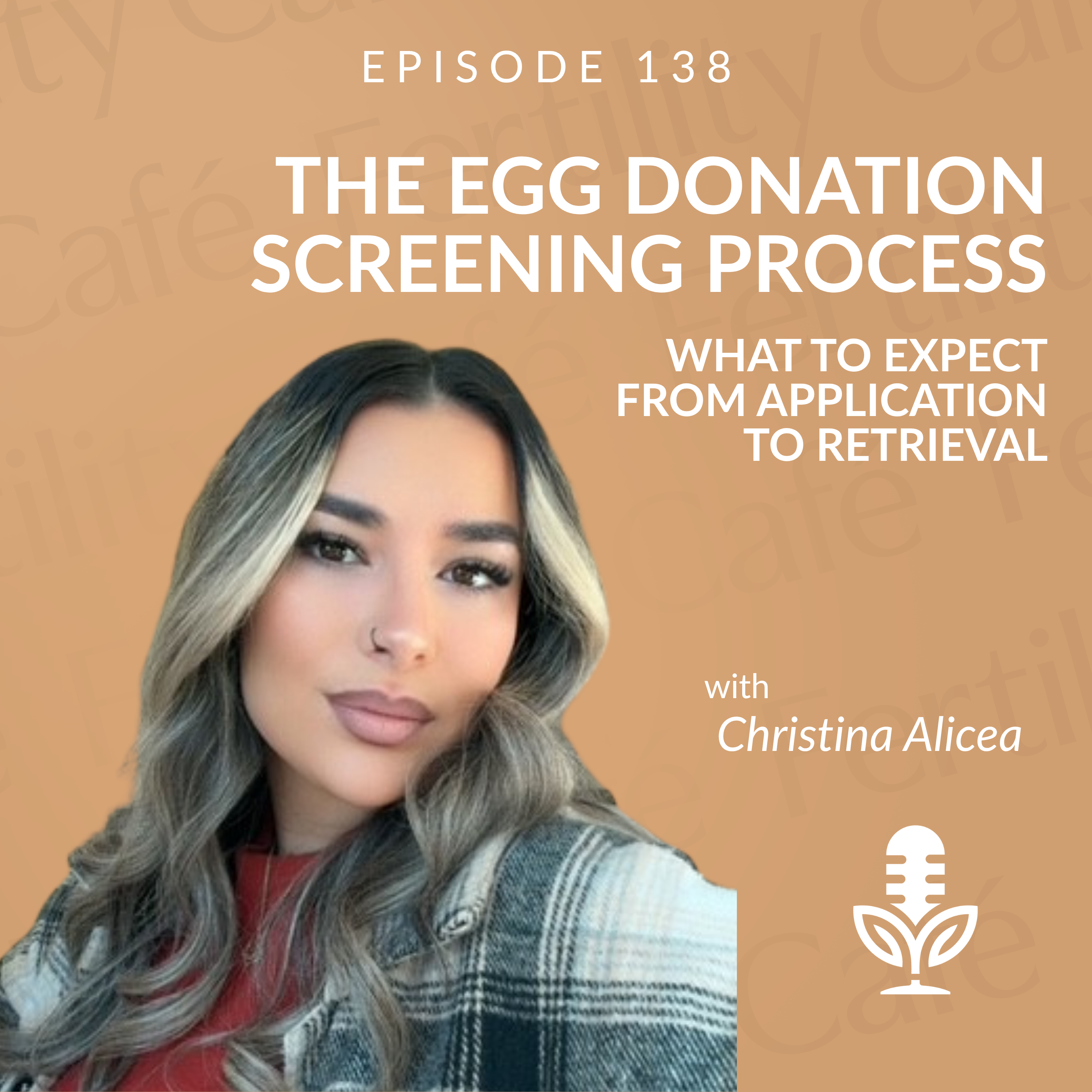
Welcome back to Fertility Cafe. I'm your host, Eloise Drain, and I have to say, I have been excited about this one. Today's guest is Christina Elcia. Christina is an egg donor, a fertility industry professional, and a fierce advocate for ethical, transparent reproductive care. She has donated her eggs five times, and somewhere along that journey, she ended up working inside the industry too.
[00:01:22] Speaker B: So.
[00:01:22] Speaker A: So she really has seen this from every angle. She is passionate about making sure donors actually know what they're getting into and that they are taken care of, not just during the process, but after it too. And I think that this is a conversation that is long overdue. Christina, thanks for joining me. I appreciate it.
[00:01:40] Speaker B: Thank you so much for having me. I am honored to, you know, participate.
[00:01:43] Speaker A: So I'm just gonna start from the beginning. How did you even know learn about egg donation and how did it even come into the picture?
[00:01:54] Speaker B: At the time, I was really young. I was in my early to mid-20s. I just actually taken a break from school to really give myself the time to understand what my passion is, find my passion and figure out what path I wanted to pursue in terms of my education and my career. At the time, I was working as a medical assistant in an internal medicine practice. While I was trying to figure all that out, I had always been drawn to healthcare and really wanting to help people in tangible ways.
And I knew I wanted to shift gears into a specialty. My top three having been obgyn, neurology, and cardiology. I had done my externship out of school at an ob GYN practice. I absolutely loved it, wanted to get back into it. So I'd started my job search and I stumbled onto a fertility clinic that was actually hiring. And although at the time I had very little knowledge and experience. I decided to take a chance. I applied, I got hired, and I instantly fell in love and knew that I had found my passion. And so egg donation first came into my life almost by chance. I saw an opportunity. I became very curious about it. I've always been very curious since I was a child. And I was just extremely touched by all of the stories and the journeys of our intended parents. As I continued to grow in the field and learn the lengths that some of our patients had to and were willing to go just to have a child and build their family, it was a no brainer for me. The idea that I could help someone build a family while also helping myself financially made me want to pursue egg donation.
[00:03:33] Speaker A: Well, I'm assuming obviously you started working for a fertility agency. Did you go through the fertility agency and say to them, like, hey, I'm interested in being a donor and want to sign up and register and go through the medical screening?
[00:03:49] Speaker B: Yeah, so that's essentially kind of how it happened. I started with the fertility clinic and it's funny, I always like to tell people about how when I first was introduced to this field, I always thought I would absolutely be a gestational surrogate, I would carry somebody's child for them. I don't know that I would ever be an egg donor. Because the first things that you start to learn about egg donation is, you know, that's your DNA going to someone else and that is going to technically be your biological child going to someone else. I had to take some, wrap my head around that. Right. And again, first being introduced to the field, having very little knowledge and experience, having not carried a child of my own to full term, I naively came into all this like, absolutely, I'm going to carry somebody's child for them. I don't know about egg donation. So it's actually almost about a year into my role at the fertility clinic where I actually had been moved to shift that train of thought where I absolutely, like, I'll donate my eggs. I don't know that I'm going to dedicate and commit my body for almost a year to carrying somebody else's child. Right. So that completely shifted for me. And it was about a year in and I had gone through the channels of, you know, asking. I was work. The fertility clinic that I was working at, there were three different physicians. They're talking to all of them to really gain their perspective and understand, like, would I be able to donate through their program?
At the time, they did not have it Set up so that employees could donate through the program. And so I was actually referred to a different clinic in the area, started the process through them. It was right around the time that Covid had hit, so the practice that I was at had shut down and gone down to like a skeleton crew. I was going through the. The screening process, the initial screening phases with the other fertility clinic, and also happened to stumble upon the fact that they were hiring and so told them, listen, I would love to apply for the position if it means I can't donate, I understand, not a problem.
Just so happened to work out, they hired me and I was able to continue on through their egg donation program. And so, yes, the decision came after I started my first position. I'd done a lot of reading, a lot of thinking about it, and just as I was learning and growing in the field, I was moved to help in that capacity.
[00:06:00] Speaker A: So you talked about going through a screening process. So what was like the application and the screening process?
[00:06:06] Speaker B: Like that is probably one of my favorite questions so far because I think that there needs to be a little bit more education for donors in that aspect. And that's whenever I have a conversation with another woman, whether it's family, friends, or just a woman I've met in passing, because you get into this field and I like to joke that it becomes your whole personality. It's all you like to talk about. And so I've had wonderful conversations with women in passing and I always like to explain to them how involved the screening process is. Starting at the very beginning with the application. I always explain to anyone that I'm encouraging to apply to ensure that if they pass those preliminary phases of the application, to ensure that they set aside at least 40 minutes to an hour to complete that full application. I prepare them for all the types of questions that they're going to have to answer so that they can collect all of the relevant information ahead of time. The screening process is very extensive and it covers, you know, medical history, family history, genetic testing, psychological evaluations, and a lot of personal questions that oftentimes donors aren't always prepared to have to answer. It's designed to ensure that donors are healthy and prepared by. But it can feel really intense because you're essentially sharing every detail of your medical and personal background. Going into my first cycle, I was fortunate enough that I worked in the field and had a well rounded understanding of the process, which I know isn't always the case for everyone. General steps include once you've gotten through the screening process and you're getting into, you know, the cycle and the retrieval. It's going to include the hormone injections, the monitoring appointments, the retrieval procedure. But it's hard to fully grasp what it feels like until you experience it all.
[00:07:53] Speaker A: So what was your first cycle? What was your first journey like?
[00:07:57] Speaker B: The physical part was somewhat manageable. The hormonal changes, the emotional side is something that I don't think I had fully anticipated. And it's important that donors understand that that can also change from cycle to cycle. It's not just different from person to person. It's so different from cycle to cycle for each individual person. Right. So I know donors who have gone through the process multiple times and have. Have had multiple cycles without incident. Those are like the unicorns that we'd all love to be like, right? And they feel amazing from start to finish. They have really no complaints. But then I also know others, myself included, who go through the process, and they could be one and done, or every cycle is complet.
My first cycle I would describe as having been my best cycle leading up to retrieval. I remember having even joked at one point that I wanted to stay on these hormone injections permanently. I felt great. I was happy as a clam all the way leading up until retrieval. It was like two days before retrieval, I did my trigger shots. And then the very day, next day, the day before my retrieval, I started feeling everything, you know, in my lower abdomen. And I don't think I was fully prepared for that recovery for sure.
[00:09:13] Speaker A: Well, obviously you got the trigger, which means that the eggs are now released, you know, for them to be able to go and retrieve it. But, like, what were you actually experiencing?
[00:09:24] Speaker B: So, as I said, I don't think that I was fully prepared for the physical side of things. Again, even when working in the field, seeing all that, you see, knowing all that, you know, you don't ever truly understand it until you've gone through it yourself. Everything was great up until, you know, day before retrieval. And then I started feel extremely bloated. I think one thing that isn't talked about enough is the constipation. Not to be tmi, but it is not talked about enough. I don't think donors are prepared enough for the level of constipation that also can be attributed to all of the bloating that you're feeling. Right? You're on these hormone injections. Your body is used to releasing one egg a month, maybe two. And that's in a rare instance. But now you've, you know, medicated your body with all These hormones, your ovaries have grown to what they're not growing used to in a normal menstruation cycle, right? Everything's pushing into each. All your. It feels like all your organs are pushing into each other. Then you add that constipation on top of that, it becomes really intense. I quite literally felt like I was three months pregnant for about a week after my retrieval, my very first retrieval. It was very uncomfortable and something that I've always focused a lot on when educating donors on what to expect and what steps to take take to alleviate those symptoms once they've gone through the retrieval process.
[00:10:43] Speaker A: So what was your recovery then like?
[00:10:46] Speaker B: My first recovery was extremely uncomfortable. You know, again, it's not something that you fully understand until you've gone through it. And so it was actually through my first few donations, I had to, like, get it down to a science, right? You need to be hydrating yourself. I started, I think by my third donation, I had all my supplements and everything down to a science. I was. The week prior to my retrieval, I was already incorporating those laxatives and stool softeners to alleviate that discomfort from that constipation and that bloating. It really wasn't until, like, about my fourth cycle where I really had it down packed to where my, my recovery wasn't as intense because you don't know what you don't know. Even with all of the education and all of the preparing, everybody's different and you never know what your recovery is going to look like, even as an experience donor. And, you know, I'm convinced that with that first cycle, I definitely experienced what we call hyperstimulation.
And that's a real risk that we warn donors about. And it's something that clinics monitor closely. And I did feel like I was experiencing symptoms that were consistent with ohss, for short ovarian hyperstimulation syndrome. So I was convinced that I was experiencing that through, during my first cycle. And it really reinforced how important like proper monitoring and aftercare are during the process.
One thing that I can't stress enough is to listen to your body. If something feels off, it more than likely is. And you want to ensure that you're communicating that to the clinic as well. Even as an experienced donor, oftentimes we see that there's always that urgency to get back to normal life, get back to, you know, being a mom, get it back to work and kids and so on. So. But it's so crucial that you're allowing yourself and you're accounting for the necessary Time following the procedure to be able to make follow up ultrasound appointments, hormone level checks, prepare to for at least another day or two following the retrieval. Like always set that time aside to commit to that. And then if you don't need it, great. It's better, right? It's better to have it set up and be prepared for it and not need it than the reverse. Right? Because you don't want to travel all the way back home and now you're experiencing these symptoms and now the clinic has to try to support you locally rather than if you had been there. And they're the ones in charge of your cycle and they're the ones that are going to be in charge of your aftercare too. So I always stress that, you know, be prepared to have that time set aside to commit to that if you need it because it's better to be
[00:13:20] Speaker A: safe than sorry 100%. But you had that first experience, but then you went on to do it an additional like four more times. Like why?
[00:13:30] Speaker B: Well, I would say that I was fortunate enough to work in the field and have the knowledge and experience and that became a real conversation after my first cycle. Right, because you go into it and you never really know. You want to know what that first experience is, is like. And again, I've seen donors go into this and you know, they're anticipating to do multiple cycles, but then they have that first cycle, they're one and done. They don't want to put their body through that again. And so, I mean, I was fortunate enough even with that first experience. Experience, right. I was fortunate enough to have the care that I had, have the team that I have, but also just again working in the field and hearing all the journeys and hearing all the stories of the intended parents and being really moved in that way to help. I like to say that I have a really high pain tolerance. So it's like even going through that first experience, I was still very moved to continue helping in some way, shape or form. And it wasn't enough for me to have, you know, decided that this is it, this was too much, I'm not going to do it, it was more. So I took it as an experience, an opportunity to have learned my body more. Right. And what my body is actually capable of and what I'm, I'm willing to endure going through this process. So for me, it wasn't enough to make the entirety of the process off putting. I knew I wanted to keep doing it, but that's not always the case for everyone and that's okay. Too, it's understanding that that's okay too.
[00:14:55] Speaker A: Yeah. And you know, and I think too times are when I donated because I applied to be a donor for the first time in 1999.
[00:15:06] Speaker B: Good Lord, can only imagine how different the times were then.
[00:15:10] Speaker A: Oh, I mean, my first donation, I didn't even bring anybody with me. There was no bring a companion with you when you're traveling.
[00:15:19] Speaker B: There was none of that stuff before.
[00:15:21] Speaker A: And my first donation was actually in 2000. So literally 26 years ago was my very first donation. It's wild to think of how drastic things have changed and how much more educated now people are about this whole process. But it also kind of leans to how things are still the same. Like, okay, obviously you've donated five times and I definitely want to talk about kind of the arrangements that you had across your donations. Were they open, were they closed, were they anonymous? And you know, just to kind of give people context when we're saying open or close or anonymous, I think everybody thinks, you know, you go into the egg donation, you apply, you're not going to know the recipient parents, they're not going to know you. That's anonymous. Or what they also call non identified or closed donation or non directed. Every time you turn around, it's another
[00:16:13] Speaker B: different term they're throwing out there.
[00:16:16] Speaker A: And then if you're open and, or if you want to meet the intended parents or want to have a relationship that's considered identified or directed donation or a known donation. And then there's like a sub one that's more modern, open release donation that's at 18. And now some states, for instance, the state of Colorado, it's mandatory, there is no more anonymity or an anonymous donation. And there's. We're going to talk about all of why and all of the things. But going back to you, I mean your donations wasn't that long ago from where mine was.
What was your type of arrangements?
[00:16:53] Speaker B: Like this has just bumped its way up to my favorite question. So this is my favorite question because just as you said, legislations are changing. This whole dynamic is shifting within the field. And so my donation arrangements have ranged from de identified to fully open, fully known. I explained to everyone that all my intended parents will always hold a special place in my heart. But there is a different level of connection with my intended parents that I did enter into a fully open or fully known arrangement with and a DE identified because like you said, terms are changing or there's always a new term. We like to stay away from the term anonymous or anonymity because with the level of DNA testing and photo identifying technology and social media, there is no 100% guarantee. I don't care what you're signing off on an illegal contract. There is no 100% guarantee of anonymity these days. And one of my favorite experiences to share and when trying to explain this to donors and intended parents alike and it's not in a way to explain it to them so that they're scared or off put, but more so this is the reality of things, this is what could happen and you need to be mentally and emotionally prepared for that. And I like to have these conversations in the initial stages because it is a reality that we are faced with. I feel it's something that you want to know earlier on so you can decide if this is the right path for you. Right. So one of my favorite experiences to share was actually not even of my own, but having worked at an agency, an egg donation agency in Egg bank. We had, you know, recipient parents who had found this donor that they loved on our database and they went on to, because the job description like, you know, the personal questions that donors are asked in their, in their applications and are available, available information for intended parents. On their profile she had described what she did for work and so intended parents took her name and took what she did for work because it, it was a very unique job that she did. Went and looked for her on LinkedIn. Now this is before they'd even identified that this is going to be the donor that they're going to try to potentially match with. And we had to like explain to them like it's not necessarily what we like intended parents doing as part of the process. And you know, they understood and they, right off the bat they're like, listen, we're not going to go looking for this donor and reach out to her and, and try to have any conversations outside of the agency. This is something that I like to touch on with donors and intended parents alike. That's just one experience of thousands that are out there that is the perfect example of there's no 100% guarantee of anonymity. My first donation was semi known or semi open in the fact that I worked at the clinic that I was donating through. Right. Recipient parents or intended parents were aware of that but they didn't want a full exchanging of information. They didn't, they knew that I was privy to their information but they didn't want my full identifying information, full contact information or anything of that nature. They knew I worked in the clinic, they were okay with that. And so it was semi open or semi known in that regard. And so when we're looking at different donation arrangements, I like the semi open or semi known because you can navigate that in a way that really feels best for you and aligned to what the donor is looking for and aligned to what you might want, you know, any donor conceived child or children to know in the future. It really leaves room for access to information while also maintaining some level of privacy on all ends. That was my very first donation. That was my first experience. So in a way it was still de identified on my end, but not for the recipient parents or the intended parents. My second donation was actually through an external donor agency. It wasn't through the clinic that I'd worked at. And that one was completely anonymous or de identified with that experience.
One thing that I've always prioritized as being an important for me is knowing having some level of access to information. You know, how many eggs were retrieved, how many fertilized normally, how many embryos were created, how many normal embryos of those that were tested ended up being, you know, usable. Blastocyst is the term that we like to use. How many potential children could result from my donation.
That's another area that I don't think is, is talked about enough. So as everything that changing within this landscape, right, we are prioritizing access to information for the intended parents. We're prioritizing now access to information for the donor conceived, which is great. It's, that's never, you know, up until recently that wasn't always, you know, one of the top priorities. But I also want to start incorporating into those conversations access to information for the donor. We don't talk enough about what information is a donor going to have now when she wants to go on to start her own family building journey. And for me, as a donor, that's crucial. Knowing that I want to go on to have kids. I'm also going to have to explain this experience to my kids one day so that they're not also in shock. If, you know, they go and do an ancestry test and comes out, they've got, you know, I know that right now there's potential for anywhere from five to seven biological children out there, right?
So now that's five to seven potential half siblings that I'm going to have to explain to my children one day.
And so I think that's another conversation that we need to be having.
[00:22:39] Speaker A: No, this is perfect because I couldn't agree with you more. I was been A donor six times. My first one was anonymous and then my subsequent donations were all either semi anonymous or completely open, similar to you. And again, this is from me first applying back in 1999 and then doing subsequent donations from that point on. And I was very open with my children and my family and all of that because that was one of the things that I kept thinking through. This whole process was like, okay, I have children. I'm getting ready to put my DNA out there. Somehow, some way their paths could cross. I don't know if that could be a possibility or not. Twenty years ago, there was no ancestry.com or all of these other DNA tests. And we don't even know what is being created right now. To know what's going to exist later on. I wanted to make sure that they knew. Funny enough, my son, one year, I want to do one of the tests and he did. And I was like, well remember, you know, somebody reaches back out to you.
Somebody reaches out to you and was like, hey, you know, saying we're 50% siblings or whatever, you know, just like, oh yeah, hold on, let me forward
[00:23:46] Speaker B: you to my mom.
[00:23:46] Speaker A: Like, because it's no big deal because I made it that it was normal. It was a thing that we're not embarrassed about. I'm not in, you know, this wasn't something that I was like, oh no, let me keep this hush hush and I don't want anybody to know. No, let me scream it from the rooftops because I know that I did something amazing for somebody else and I'm not going to hide that. I'm not going to shy from what I did. I did it with my eyes wide open, knowing exactly what I was getting myself into.
And that's the importance of people understanding that, you know, you can't just become an egg donor because you see a dollar sign. It's like, oh, that's quick, fast money. And you know, you mentioned donor conceived people. Well, the donor conceived people are starting to find their voice now. They're starting to become of age. Like I said, I did my donation 26 years ago. That means that there could be somebody out there who's 25, 26 years old right now who may not know that they were donor conceived. Because again, that first donation was anonymous.
What would that now look like? If you randomly go on something and you find my son's information and it's just like, wait a minute, my hat brother. What in the world is that?
[00:24:54] Speaker B: How even the closest family dynamics, like it can shake things up. Closed or anonymous arrangements Historically meant that there's no identifying information that's going to be shared whatsoever. No identifying information, no contact information. Again, fortunate enough to work in the field, where I've heard stories that back when this all started, you weren't even getting a profile. Your doctor was picking your donor for you. You would tell your doctor what your criteria was and they would pick a donor and these eggs are good for you, or this donor is good for you. And you wouldn't even. You didn't even have the opportunity to see a profile, a picture, let alone, you know, access to information that was unheard of. And now with open ID arrangements, you know, this allows for a plethora of all different types of relationship arrangements. Right. So with my fully open ID arrangement, I got to meet the recipient, the intended parents. They came into the clinic that I was working at, like from day one when they came in for their testing appointments. You know, I was the first face that they saw in the clinic. And we went on to have this connection that I would not trade it for anything in the world. That has been such an invaluable experience. I got to go to the baby shower for their first child, meet both of their families, attend the first birthday for, you know, the baby. They've gone on to try for a second child. I ended up donating my frozen eggs to them because they ran out of embryos. I had my own frozen eggs. So I was like, we had this connection that allowed for all of that. Right. It's been such an invaluable experience, and I wouldn't trade it for anything in the world. And like we're talking about with modern DNA testings, the lines between those different types of donation arrangements are becoming much less clear. It doesn't matter what you have outlined in a legal contract. Again, not to say that to make it awful putting to anyone, it's to understand the reality and also understand that regardless of the type of donation arrangement that you've entered into, you might change your mind down the line. This is a very human process, involves a lot of human emotions, and you might change your mind. And it doesn't matter what you signed in a legal contract. It's understanding that there are avenues that you have in order to go back and change these things and open those lines of communications. And the research shows that the earlier on a child understands their origins, the better off they are developmentally and historically. Once again, this has always been such a sensitive subject, some cases taboo even, and. But that narrative is shifting and we're seeing that again as legislations are changing, we're seeing that all shift in real time.
[00:27:38] Speaker A: Well, and I think too, you know, for some recipient parents, I mean some of them, it's, I don't want to share this information because my family may not accept my child or there could be other personal reasons that could be the case why they want to keep it unidentified but at the same time, the child is a child for a short period of time. They are an adult way longer than they are children. And I think people keep forgetting that when we're talking about helping bring a child into the world, whether it's surrogacy, whether it's egg donation or you're just doing IVF or you know, whatever the cases might be, these are human beings who are to have their own feelings, they're going to have their own desires, they're going to have their own lives. They're going to want to know what their genetic makeup is. And to your point, if you explain it to them when they're children and you normalize it when they're 15, 20, 25, it's not going to be, it's going to be okay. So what I know my story, right.
[00:28:43] Speaker B: I think that that's so important that you brought that up because again, touching on the fact that the donor conceived community, they are finding their voice. And I think it's something that donors and donor conceived alike need to be prioritized in these conversations. Right. Again, doesn't matter what the paperwork says. Technology has changed the reality of that. I've personally come to terms with the fact that someone could find me someday. And I think that transparency in all of this is what is really important. Absolutely. Hearing the experiences of the donor conceived people has added such an important personality perspective to the conversation. I'll never forget my very first fertility conference, ASRM 2023, the day one. Experiencing the donor conceived community outside those doors, protesting for more regulation, more ethical standards, more access to more information.
And it really made me think more deeply about identity, transparency and the long term impact of donations.
Like you said, this is such a vulnerable and intimate process. People get very consumed with the ideology of just bringing a baby into the world. Right.
But then we're not thinking beyond that. We're not thinking about the person this baby is going to grow into. Nobody's fault. It's a new field. Everything is evolving and I'm honored to be a part of the field at such a pivotal time and be able to be an integral part of, you know, leading and navigating these conversations and Leading these shifts and bringing these conversations to the forefront because it is what needs to happen. I can't tell you in my experience how many recipient parents and intended parents finding out about the legislative changes out of Colorado. I know that they might be coming out of Oregon. It might become a national shift where these laws are changing in every state and how off putting that was to intended parents. Still to this day, you know, having those open arrangements is still such a taboo and sensitive topic. These conversations are so important in that, you know, it's teaching recipient parents, intended parents and egg donors alike that it doesn't necessarily mean that this person's going to come into your life and now assume some sort of role.
I tell intended parents donors oftentimes have these same exact concerns that they do. Yes, they don't want child knocking on their door 18 years down the road. You're my mommy. That is not what a donor gets into this for. And I think that is why these conversations are so important. Right. Understanding these things earlier on and understanding what options and what resources are out there for you. For me, it was a mix of curiosity, responsibility and gratitude. We can't ignore the fact that for donors, some donors, there's a dollar sign that they see when they look at this as an option for them. Right. But it's also educating donors to understand that this is a lifetime commitment. It's not just about the medical and the family history now. It's not just about your looks and your personality now. All of that is going to change over time. And as a donor, you have an ethical responsibility to the clinic, the agency, the family that you've worked with to keep them in the loop and keep them in the know of everything that's changed. And I think that that's another aspect of these conversations that are so important when you know, working in an agency or a clinic run program and educating these donors, it's not just, yes, as a donor myself, the compensation is a very lovely piece of this. I've been able to do a lot of for myself that I otherwise wouldn't have been and I am grateful to have had these experiences, but also understanding that this is a lifetime commitment beyond that compensation.
[00:32:46] Speaker A: You know, we talk about the compensation, we've talked about donor conceived people and all of the things. But going back to the donor and specifically speaking about the donor, we also don't have long term research on what being a donor or even being a repeat donor actually does to a woman's body. Like we don't have long term studies or anything. Like that to say, you know, if you did it once, maybe you may not have any issues. If you did it multiple times, maybe you did. We don't know. I mean, thank God again, I've never had any problems. I've never had any issues. You know, thank God I've never had any complications. But, but we don't know. To your point, it's still a new field that's evolving, that's changing that studies still need to occur in about the long term effects. Now what we know the donor is going through the same exact process as a woman that is going through IVF and doing that and doing the retrieval. So we can glean from that information. But it's still. Where are donors being, Are they really being educated on that? Are they really being educated about. Well, we don't actually really know the long term effects. We know that there are risks of OHSS like you said, and there's mild, there could be severe, there could be moderate, there's all kinds of different levels of, of it as well. And I know for me, when I was being a donor, I did definitely experience all three levels. I had severe, I didn't like end up in the hospital or anything like that, but thank God, but I was throwing up, I was sick, I was like all kinds of stuff. And I literally had my donation, they retrieved all these eggs and I was on the plane the next morning and I was in the hotel by myself, just you know, after anesthesia, just whatever.
So thank God things are different.
But I still think that on the donor side there still needs to be way more education. Not just about the anonymity, not just about all of that, but also about long term. It's not just about the child, it's also about what your health is going to be like.
[00:34:50] Speaker B: Yeah, 100%. Again, I can't stress enough. I am fortunate enough to work in the field and feeling very prepared for the logistics of everything when I went through the process. But I couldn't agree more. I don't think donors are always fully prepared emotionally, physically for long term considerations. There's definitely room for more education and transparency. You know, at the time that I went through the process, I trusted the information that was available, the medical professionals that were guiding me through the process.
Now working in the field for over seven years, I'm much more aware of the gaps in long term research and why continuing to study, you know, donor health is important and support usually involves, as you said, the follow up instructions, the check in appointments, guidance on what symptoms to watch for but, but the level of follow up can vary depending on the clinic. And I think that's another area that can use some improvement. Another one of my favorite experiences to share, not in a way that makes it off putting or scary to donors to not want to go through this process, but to really emphasize the level of importance on following those follow up instructions, not being in a rush to get back to normal everyday life and prioritizing that action. Aftercare, literally such a rare experience, but it can happen. It's the fact that it can happen and knowing these things and being prepared for these things. I had a donor when I was working fertility clinic, went through her very first donation, had a trip planned immediately after her retrieval, like next day after retrieval, wanted to be on a plane to leave, went against all medical advice, did not listen to any of the follow up instructions. She was out for that vacation. And I get, I get it. We all have lives outside of this process. If that's one thing that I've always loved to emphasize as a donor myself, working as a professional in the field, especially to intended parents, because again, we're trying to shift conversations from this being such a transactional experience to actually being a very human, very vulnerable, very intimate experience, a very emotional one. And so I've always liked to emphasize that we all have lives outside of this, the donor income included. Just because she's doing this for a compensation doesn't mean that all bets are off. She's no longer a human outside of this. I get it. You want to get back to normal everyday life. You've got, you know, vacation planned with your boyfriend and you want to be out. I understand she went against all medical advice, left for her trip very next day and she did have a very terrible like recovery. Ended up with what we call an ovarian torsion. And what this is is when your ovary twists itself. And it is something that it is very crucial to identify immediately so that you can get in surgically and untwist that ovary. Because the longer it's twisted, the more blood is being cut off to get to that ovary. Ovary then dies and you lose that ovary. And that is exactly what happened. Again, it's like a once in a lifetime is such a rare occurrence, but it is so crucial that you are listening to these aftercare instructions, you are setting aside the time for this follow up care because like you said, there is, everything's evolved and we have all this access to all this information, but you still never know. It's why all of that aftercare follow up is so crucial. Another one of the common questions we get is how is this going to impact my fertility later? What if I, you know, right now I don't want children? What if one day I do want children?
I think one thing that is super important, and again, I always prioritize in conversations with donors, is that we are all born with the number of eggs that we are going to, to release. As you age, it's like any other cell in your body. You know, the cell dies off and it dissolves into your bloodstream or into whatever other cells that it dissolves into. But it's important to understand that you were born with the number of eggs that your body is going to reproduce, release every menstrual cycle you're releasing one egg, is growing to maturation or going to be a mature egg that your body then either prepares to have fertilized and embed in your uterine lining for a pregnancy, or is going to release as your body, you know, sheds that uterine lining. And when you're going through an ivf, the IVF process, those hormones that you're put on are essentially allowing your ovaries to grow, essentially multiple eggs to maturation or to those mature eggs, and then they're released and retrieved when you go through the retrieval process. So it's understanding that it doesn't necessarily impact your fertility in that I'm going to donate my eggs and now this means I'm not going to be able to have my own kids one day or it's going to make me less fertile. So that's it. That's not necessarily the case. Right. And a lot of times the misconception is, you know, when you have donated and then you go on to have your own children and now you're having trouble, doesn't necessarily mean that the egg donation process itself impacted your fertility. You just might have had a lower number of eggs that your body was going to produce and release in comparison to another woman. Another woman might just have had more eggs. And so that, I think, is another conversation that is crucial to have with donors as they're going into this process. And it's, there's no. We all test that amh, right. That AMH level is a good indicator as to how many eggs one individual might produce. But it's not the, the tell all be all. It's not the end all be all. It's not, it's just a good indicator. Not only is it an indicator of how many eggs might be produced, it doesn't tell us the quality of those eggs. Eggs. So that's another thing that is important to understand and I stress in conversations with donors and intended parents alike. Again, I think the final piece of this, what I would, I would also prioritize in conversations, is that those cycles are all different from person to person. Each cycle is different. You can have a donor who has historically been a great donor, has had all great cycle outcomes, has always had a consistent, good amh.
That doesn't necessarily mean that she might not have that one bad cycle. There are so many factors at play. This is a very human. This is science. And I think that that's another part of the conversations that, that are so crucial, especially with, with everything that's happening in the field today and how many negative stories we see. Right. Shedding light on our field is that this is science.
Nobody here is trying to play God. Right? We see these conversations all the time. I mean, yes, there are always going to be bad players, as there are in any industry in the business of creating genetically perfect human beings. Right. We are just in the business of family building. That is it. That is the, the core of what we're doing. When you look at a donor's cycles and how she has performed, I hate to use that term, but it's for lack of a better term, currently in each one of her cycles doesn't necessarily mean that she's not going to have that one bad cycle. Every physician navigates each cycle differently. It could have been a matter of her stimulation protocol. What was the doses, dosage of meds that she was on, how long was she on those meds for before she triggered what, you know, what was her even. It can go as, as in depth as, you know, what is a donor eating and how is she taking care of herself and how is she. There are so many factors at play that are outside of our control. And so it's also crucial to understand that each cycle is also different for each donor, 100%.
[00:42:38] Speaker A: So if someone came to you and said she was thinking about donating, what would you want her to know before she even gets to that application?
[00:42:46] Speaker B: I would tell her to educate herself as much as possible. And this is why, again, I'm grateful to be in the position that I am where I get to work so closely with donors and help support and educate them, not just from a professional experience, but from my own personal experience. But educate yourself as much as possible, medically, emotionally, ethically. You know, look beyond that compensation and look beyond that dollar sign and ask questions, understand the risks and really think about what she feels about the long term implications. I can't stress that enough for me as an experienced donor who's in a position to be able to educate other donors, really getting them to understand what's important to them beyond that compensation. Right. Understanding that this is a lifetime commitment and understanding that that's going to change over time. Time you might feel away about it now, that might not be the case. 5, 10, 15 years down the road. Education for sure. Being at the forefront of all the conversations that I have with donors and
[00:43:49] Speaker A: because I've also spoken to donors that have donated and have then have regretted the donation.
So I mean it, it's not just because they decide to do it and they've done it and now it's like, oh, you know, it was wonderful. No, some people are like, oh, I wish I've never done that before.
[00:44:05] Speaker B: It's understanding that knowing that those things might change. Right. And you might have those regrets and are you going to be mentally and emotionally equipped to handle those things in having those conversations in the initial stages of the screening and education process? Right. Because I've also had conversations with the donor. I mean, it goes as far as to understanding the types of donation arrangements you're open to that might change over time. Time, the types of couples and parents and individuals that you might be willing to match with. Understanding that that might change over time. Understanding that if you do change your mind on some of these aspects, but there's no way to go back and make some of those changes. Like for example, you know, having worked up the egg bank, having, you know, a donor who donated her eggs to an egg bank, we froze her eggs, they get matched later after the point of the donation, there's the potential for a match. She was open to all different types of donation arrangements. She got into a relationship, her religious beliefs changed. Now she doesn't want to donate to certain types of couples. She had already had a match that was going through the process. We kind of had to tell her, like, listen, based on the agreement that was in place with the egg bank at the time, we can't make this change for this particular match. But going forward, we no longer have to present you these kinds of matches. We'll make that change on your profile. It's understanding these are conversations that might come up later down the line. You might change your mind, you might not be able to change that for a particular match. Are you going to be mentally and emotionally equipped to continue with that match knowing that this is there's the potential reality for this 100%.
[00:45:50] Speaker A: So having been on both sides, what do you think really needs to change about how donors are educated treated in what we're actually talking about now with the donors?
[00:46:03] Speaker B: I would say for any donor going through this process, especially a donor who's been able to through the full process, through at least one retrieval, you really want to take time to reflect how your body has responded or might respond. Not just the physical, but the mental and emotional, how you feel about the. The experience now versus how you might feel about the experience once you've gone through the full process. Donors deserve more transparency, more long term health research and stronger support systems for sure. They play such a critical role in family building and that contribution should be respected and protected. Again, this tying back into conversations of. We're trying to shift from a conversation that makes all this feel so transactional, but is now involving the donor on a more human level. So thinking about the implications not just physically but mentally and emotionally, both before and after you've gone through the process, a critical part of that right is the type of support system she has in place. Not just with the medical facility or with the agency, whatever program she's donating through, but also at home. You know, are you open about this with your friends and family? If not, why? You know, really take the time to think about that before you commit to going through with this. Because there is the chance that this is going to come out one way or another, whether it might not be tomorrow, but it could be 20 years down the line. Understand having the right support systems in place, working with the right programs that, that offer such a level of support that the donor isn't always thinking about in those initial stages because again, it's getting the donor to see past that dollar sign. I can understand why intended parents going into this initially thinking that it's such a transact transactional process, but it's a lot of what we do is so rooted in education and support.
[00:48:01] Speaker A: Well, Christina, I just want to thank you because I think like, like this is exactly the kind of conversation that so many people need to hear and I'm grateful you came on and shared all of this. And you know, hopefully it gives people a different type of perspective to think about in a shift as to also the shift of the space of our industry and where it needs to go. So I really appreciate your time, I
[00:48:27] Speaker B: really appreciate you having me. I feel very, very, very grateful for the role that, that I've been able to play in helping families grow and educating donors and at the same time, the experience has given me such a deeper understanding of the complexities of egg donation and why thoughtful ethical practices in this field are so important. So I'm honored to be able to pass that knowledge on.
[00:48:51] Speaker A: Definitely. 100%. Well, thank you for joining me. I appreciate it.
[00:48:54] Speaker B: Thank you so much for having me.
[00:48:56] Speaker A: Thanks so much for listening to Fertility Cafe. If you've enjoyed this episode, be sure to subscribe so you never miss an interview. Leave us a review and connect with us on socials. We're fertilitycafe. You can also watch the full video version of today's conversation over on our YouTube channel. Until next time, Remember, love has no limits. Neither should parenthood.