Episode Transcript
[00:00:00] Speaker A: When we talk about fertility, the conversation often gets reduced to a single idea, usually age or timing. But fertility isn't just one thing. It's the story of how eggs and sperm come together, how embryos develop and how our bodies respond to those processes. For too long, the focus has been placed almost entirely on women, leaving out half of the equation. The truth is that male and female factors are deeply connected and and both can shape the chance of conception. Welcome to the Fertility Cafe where we explore the beautiful complexity of modern family building.
I'm your host, Eloise Drain and this is a space for honest conversations about surrogacy, egg donation and the journey to parenthood. With expert insights and real stories. We're here to guide you through the medical, legal and emotional aspects of third party family building.
We believe that love has no limits and neither should parenthood.
Welcome back to Fertility Cafe. I'm your host Eloise Drain. For many people, fertility only becomes a focus when something doesn't go as planned. By then, the path forward can feel overwhelming, filled with new terms, medical tests and conflicting information. Misinformation is everywhere and even well meaning advice can make the experience more stressful. That's why creating space for clear evidence based conversations is so important.
They not only break down the science, but also help people feel less alone when facing questions about their reproductive health. A big part of that clarity comes from looking at fertility as a whole, not just through one lens. Egg health, sperm health and embryo development are often discussed separately, yet they're deeply connected. When we understand how each of these factors plays a role, it changes the way we think about fertility and the chances of building a.
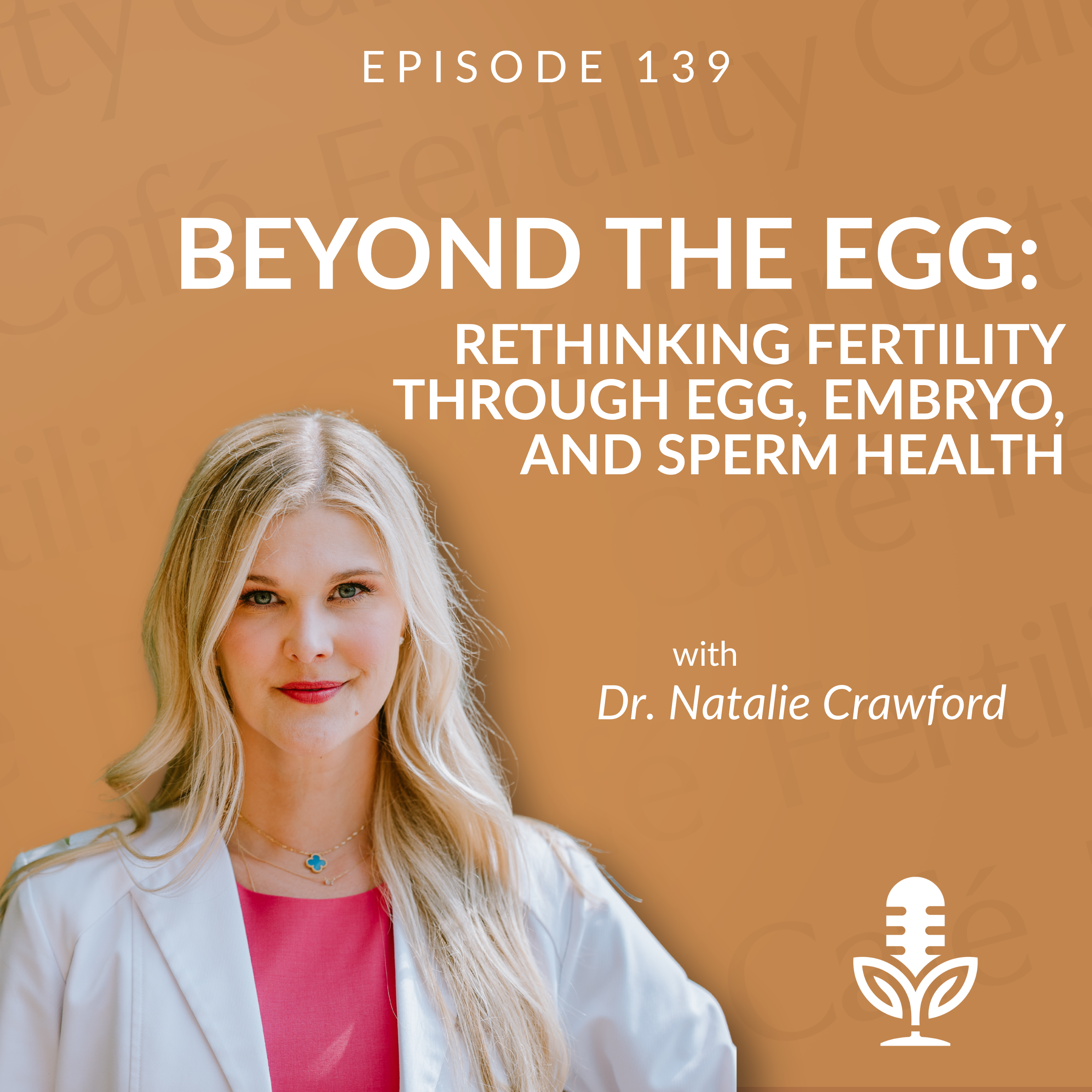
Joining me today is Dr. Natalie Crawford, a double board certified physician in obstetrics and gynecology and reproductive endocrinology and infertility. She is the co founder of Fora Fertility in Austin, Texas and the co founder of Pinnacle, a professional network for women in medicine. Dr. Crawford also holds a Master of Science in Clinical Research and is the author of the Fertility Formula where she combines her medical expertise and research background to help people better understand their reproductive health. Dr. Crawford, thank you so much for being here.
[00:02:32] Speaker B: I really appreciate your time.
[00:02:34] Speaker C: Thank you so much for having me. It's an honor.
[00:02:36] Speaker B: Can you share your personal journey to motherhood and how those experiences shaped the
[00:02:42] Speaker A: way you approach your work?
[00:02:44] Speaker C: Absolutely. It's very interesting even being on this side as a fertility doctor that what I went through, how it changed my entire perception of being a patient and how I approach patients every day. So when I was in medical training at the end of my OB GYN residency, just like anybody has, decided it was time to get pregnant. And I'd been on birth control pills and we stopped the pill thinking, okay, now we'll just get pregnant. And we did get pregnant quite easily, but started having recurrent pregnancy loss and extremely traumatic. I miscarried while running L and D in the middle of the night. And it's one of those things where in that time period especially, people weren't as open talking about their fertility. People weren't as open about talking about pregnancy and pregnancy loss.
So nobody knew I was pregnant, nobody knew I was miscarrying. It was definitely the thing that we felt very bottled up. And my husband and I were definitely experiencing it very alone. But this persisted into fellowship. I had already at that time matched into REI fellowship. So over the course of my OB GYN training and then the start of my fertility fellowship, you know, ended up having three miscarriages and then an ectopic pregnancy and really started to make me question everything. I realized the questions that I had, despite being an OB GYN and a fertility fellow, I didn't know the answers to, like, when was I really ovulating and did I have enough progesterone and what vitamin should I take, Should I sleep? And these really basic questions that were essentially left out of our medical training because I had these high level skills about managing complications and doing surgical cases. But a lot of the real life questions I had about my fertility I had not learned.
[00:04:24] Speaker B: And.
[00:04:24] Speaker C: And so that led me to this, you know, perfect storm time of my fertility fellowship, where reproductive endocrinology and infertility is three years training. They got four years of ob and then you go and you do three additional years. And what's very interesting, a lot of people don't know is a year and a half of it is research.
So a year and a half is clinical and a year and a half is research. So everybody who's a fertility doctor has done significant amount of research, and most research is done on IVF or done in the basic science lab. So most people are studying the things which they do every day. And I had done basic science research in the past. I studied the pituitary gland and had cells die in the lab. But deciding my research project came at this time when I had my own pregnancy loss and I went up to my fellowship mentors and I said, I want to study natural fertility. I want to study why some people get pregnant and why others don't. I want to study how the world around US impacts our chances and our ovarian reserve and our egg quality and our environmental toxins. I want to look at the questions I have, and I was really lucky to be at a place that was supportive. And they said, if you're going to do that, you should get a master's in clinical research, because clinical science changes. It's harder, there's more nuance than everything you can control in a lab. And so that's what I did. And I realized really quickly that I saw the same word over and over throughout a lot of this research on natural fertility and these variations of people got pregnant and didn't, and that was inflammation. And learned about inflammation in medical school, and you learn about it in training, but mostly on a disease process, right? Inflammation is part of what causes endometriosis, and inflammation can be a part of pcos. But starting to see that environmental toxins cause inflammation and people with higher inflammatory markers had a harder time getting pregnant, I started to really feel compelled to say the world around us is impact causing us to be inflamed in so many people and that this is a major contributor to our hormonal health and our fertility than the things that we talk about. And I really started to get frustrated at the fact that the fertility field came about as a reaction to a problem, meaning people had to fail and not get pregnant or be like me and have multiple pregnancy losses before an evaluation was even started.
Yet here's this research in front of me that people had innate risk factors. They had more inflammation if they were exposed to other things. Yet we weren't proactively talking about fertility. So this will coalesce at a time where I was told I had unexplained recurrent pregnancy loss and my testing was normal. And then I could just keep trying but expect the same outcome or do ivf. And I wasn't opposed to ivf. I do IVF every day, but I couldn't do IVF because I was the IVF fellow. I was the one person who was managing all the IVF cycles. And so I needed to wait. And I think many women can understand this. My career had these goals at this moment. And so if I was going to do ivf, well, I had to wait till this year was up. So we kind of relegated ourselves to, okay, let's try to do everything we can to have a good IVF outcome. And this is going to be, based on my research, what I was doing. This is we got to decrease inflammation. I came home, I cleaned out our kitchen and got rid of Teflon and got rid of plastic and started looking at the foods we eat, how we live our life, and talking about, how do we know if we have inflammation? And started to make those changes. We got pregnant prior to ivf, is the short answer, and stayed pregnant. I ended up having celiac disease, which got diagnosed a decade later. And when I started working on decreasing inflammation in my world, one of the things I realized was that when I had gluten, I felt worse. I didn't think I had an allergy to it, but I just felt more bloated. And I said, hey, these are inflammation symptoms, feeling fatigue and feeling bloated. And so I'm going to avoid things that are causing me to feel this way. And so ultimately, when we conceived my two kids, I was not eating gluten at the time, just with this idea of, I don't know what's going on, so I'm going to decrease inflammation everywhere I can.
And a part of that story was cutting out gluten, too. And I think this really set the stage for me to say, I know what it's like to question everything, to feel dismissed when you're bringing up your symptoms. I know patients feel that way very often. I know what it feels like to feel like your body's failing you. And here's this thing that you thought was always going to be a part of your life, this goal of, I'm going to be a mother, and then to question if that makes sense for you, and then to be told that there's, you know, nothing you can do and nothing you have control on it. And I really challenge that narrative by saying that I wish the fertility field would start to be more proactive, you know, more. If you want to have children as a life goal, why don't we approach it like a life goal? Why don't we do testing earlier? I want women to know about their body sooner so that they can catch these signs of inflammation and these little red flags. Because, Eloise, one thing we know is that your fertility is a health marker now, meaning if you have infertility, you have a higher rate of a heart attack, higher rate of developing diabetes and cancer. And it's not because infertility causes those. It's this underlying chronic inflammation that bruised for decades. And for many women, infertility is that first red flag that something's not right in your body. And so a proactive approach to me and what I'm a big advocate for now in all patients, especially the ones you sit in front of, Me is earlier testing, understanding what's normal so you can advocate for what's happening along the way. I argue against this old school idea of medicine where we just say, eloise, you're going to do IVF and that's what's best for you. Right. I want to explain it. I want you to know what we're doing and why we're doing it.
And I want you to control all these factors that are outside the office. Because at the end of the day, IVF is important, it is necessary. There are people who won't get pregnant without ivf, but I can only work with the eggs and sperm that are given to me. And so your inflammatory burden, the world you're exposed to, really carries a lot of weight when it comes to your eggs and sperm. And I think that that's a more empowering message than what we tell patients right now, which feels like you can't do anything about it. Instead of say, you can't do everything but do the things you can. Come to the table knowing you're armed with information and you are bringing the best eggs and sperm and that's going to make this journey a lot easier to walk together.
[00:10:28] Speaker B: Yeah, I couldn't agree with you more. I mean, Lord knows I have been screaming from the rooftops that we are very much a reactive and not proactive whatsoever.
[00:10:40] Speaker A: And the thing about fertility that I
[00:10:42] Speaker B: don't think that people really understand, it's not just about having a baby.
[00:10:46] Speaker A: Fertility affects every facet of your life. Financially, emotionally, spiritually, physically, relationally, your career. It affects every single thing. And yet, and still to your point, it's like, well, I'll get to it
[00:10:59] Speaker B: once I decide that I want to have a baby. We do a disservice when we're not teaching our children, we're teaching them about sex education, we're not teaching them about
[00:11:10] Speaker A: reproductive health, fertility care.
[00:11:13] Speaker B: I don't even know how many women I have spoken to over the years that have said, I didn't even know that I could go to my gyno and ask them to do blood work just to give me a baseline of where I was. I had no idea.
[00:11:25] Speaker C: And that's the society that we live in. And you and I can be loud and try to change it, and we should. But I think for, on an individual level, the reality is, you know, your fertility is not just a life stage. Like you said, it is a sign of hormonal health. It's a sign of how your body is functioning, some marker of longevity which we all don't want to just live long. We want to live long and healthy. And I think that we've got to start empowering people to say, at the end of the day, though, this journey is nobody's but your own. Nobody will look out for your own health like you will. And you owe it to yourself to understand these basics. How does your body work? Are your hormones normal? What can we get tested earlier? Unfortunately, the medical system's designed where, you know, you have to be a squeaky wheel to get oil. And so women don't want to be seen as a burden. They get dismissed, they get gaslit, and we often gaslight ourselves then to say, oh, this is just how it is. I mean, how many women sit across from me and tell me about their terribly painful, terribly heavy periods, right? They bleed through their clothes, they can't go to work, and they say, that's just how it is for me. And I have to say, just because it's become normal to you doesn't mean that it's optimal or that it's okay. So really starting to say what is true, optimal and normal, so that we can start empowering people to get these answers much earlier on.
[00:12:41] Speaker B: So for a basic understanding of obviously the body and the hormones, when it comes to our health, what do you wish people knew earlier in life when it comes to that? I mean, obviously we're all behind the curve, right? So if this is our starting point in getting educated, what's the starting point?
[00:12:59] Speaker C: Let's start at a couple things that I think many women don't understand. And let's just kind of try to hit them as fast and as simple as possible.
I think, number one, most people do know that your eggs are inside your body your whole life. You're born with all your eggs. You run out with them over time. At the end of your ovarian lifespan, when you're out of eggs, that's considered menopause or ovarian failure. Well, inside your ovary, I like to use the analogy and imagine that there's a vault where all these eggs are kept. They're stored here. And when you're balling, that vault is super full. Every single month of your life, a group of eggs is coming out of this vault. Not just the one that you're going to ovulate that month, but a whole group of eggs. And each egg grows inside a small fluid filled structure called a follicle. So you have a group of eggs outside the vault where your normal menstrual cycle is the brain sending out A hormone called fsh, Follicle stimulating hormone, well named to get just one of these follicles to grow. That one grows, makes estrogen, and then ovulates. The rest of those follicles die. And the next month you have another group coming out. So ovulation is this outward sign of appropriate brain and ovary communication, but also on a very physiologic level, you're losing more eggs than just that one that you're ovulating, and yet you're still losing eggs even if you're not ovulating. What's fascinating is that when the vault is more full, you lose more eggs every month. And when the vault gets emptier, you lose fewer. I like to think there's like a bouncer in the room being like, ah, we're too crowded, sends more people out or sees the room is getting empty and tries to convince them to stay inside, wants to stay at that perfect level so we can evaluate these eggs outside the vault. And it gives us a surrogate marker for how many are left behind. And those are our tests of ovarian reserve. So the simple blood test like you mentioned, which is amh, AMH is a hormone called anti mullerian hormone, made from the cells that surround all of those follicles. So you have more eggs in the vault, more come out every month. Higher amh, fewer eggs in the vault, fewer come out, lower amh. If we think about it, the difference here is just when your brain is sending out fsh, you're going to lose most your eggs from when you're born to before your first period starts. Because you had more eggs in the vault, they kept coming out of the vault. But puberty is when your br.
Your brain's not turned on yet. All those. All those years and all those little eggs and follicles, they just die. And the next month you have another group. If you are on birth control pills during your life, birth control pills prevent the brain from sending out fsh, but eggs are still coming out of the vault. They just aren't stimulated to ovulate, so they all die. And the same thing happens when we're pregnant or when we're postpartum and we're breastfeeding. Your body is losing eggs at a rate that you have no control over. There's no medication we have which slows that process down.
So if we think about the fact that our eggs are inside our vault our entire life, two different things start to happen as we get older. One is that your egg's job is to hold your chromosomes in perfect order, kind of waiting that half of the genetic code for you to be able to go and fertilize or be fertilized by a sperm to make an embryo. The other, though, is that the egg has all the mitochondria, the metabolic functions that control early embryo growth and development.
So the egg health, or egg quality, as we like to call a lot of people, simplify this as genetic normalcy. And we act like as you get older, your egg quality is bad because they become more genetically abnormal. And your eggs do become more genetically abnormal as you get older. I like to think about this as your chromosomes. Let's imagine that they are aligned in kindergartners and they're in alphabetical order. The longer we ask them to stay in alphabetical order, the higher likelihood somebody's going to get out of order. So just simply tincture of time, if they've been there 25 years or 40 years, you will have more kids out of line the longer time has passed. And so some part of that we cannot influence. However, there are things which cause your chromosomes to get out of line at a faster rate. Things that cause inflammation, smoking cigarettes, endometriosis, autoimmune disease. There are things that actually accelerate that process.
We can see that. I like to say this is like puppies and candy. If we've got puppies and candy in the room, the kindergartners are getting out of line even faster. And then those same factors that cause chronic inflammation that also impacts mitochondrial health and the metabolic function of the cell. So even if we say, hey, I can't control my age, right, If I'm ready to start a family at 38, I'm ready to start a family at 38. But the metabolic health of your eggs are single cellular level. The mitochondrial function, it is highly dependent on the environment of your body and chronic inflammation, insulin resistance. This is your overall health. These are things you can change right now, this minute. But also things that you can say, hey, if I'm younger and I want kids one day later, where this is, it's too late for you and I, but for the younger generation to say, if having kids is a life goal for you, what should we do? We should know what's normal. So we should be able to track our cycle and know what's normal. We should know our egg count so that if you are already losing eggs at an earlier rate, at a younger age, you might make different choices. And I understand that goes against what ACOG and other societies recommend, but I think that they're minimizing the difference that that data makes to women to say, what do I want for my future? And then we're going to start to say, well, if metabolic health impacts both the genetic and the function of my eggs, I need to start thinking about decreasing inflammation at a much earlier stage. And these things that doctors are not really talking to 20 year olds about getting more sleep and anti inflammatory diet and avoiding environmental toxins and what type of exercise is best for your hormonal health and your body. There should be a focus at a younger age so that we set a good foundation for our long term health, but especially for our fertility. And that's a big piece of the puzzle that is really missing much of the time.
[00:18:42] Speaker A: So can we go back real quick
[00:18:43] Speaker B: when you were talking about amh? Because I think that sometimes there's confusion. Ovarian reserve tests like, you know, AMH are confused with egg quality. How do you explain the difference between the two?
[00:18:55] Speaker C: Egg count and egg quality. So a test like amh, which is measuring how many eggs you have, is telling us simply that how many eggs do you have? Everybody's going to run out of eggs over time is a one time snapshot of where you are right now. It is not entirely predictive of your future. Meaning, I don't know, the rate of decline. Everybody's going to run out, everybody's going to hit zero.
Maybe you were born with less, but running out at a slower pace. Maybe you were born with more and you're running out really fast. So there's this nuance where some people say, oh my AMH was fine, so I'm fertile. And that's not true, just like the opposite isn't true. Just because you have a lower AMH doesn't mean that you are infertile or that you have bad egg quality. Quality is that idea of the combination of metabolic competency. Can your eggs divide and function normalcy and genetic normalcy. Like does it have the backbone of what your egg needs to do? So quality I like to think about as function and quantity or your ovarian reserve is how many do you have?
Most people have a harder time getting pregnant age 38 and on because of quality issues, not quantity. Most women are not out of eggs at age 38. However, if you have a low AMH at a younger age, why is it low? And I think it's very important to say some things that cause a low AMH do in fact impact your egg quality and do in fact impact your rate of getting pregnant. Smoking cigarettes endometriosis autoimmune disease. There are things that can cause you to fall into the low AMH category that are predictive of your ability to get pregnant later. So we're also doing a disservice with this narrative of AMH is just number. It doesn't impact your ability to get pregnant. There's a little bit more to the picture because I feel like we owe it to women to say, but, but why is it low for you? Right. And maybe that reason does in fact impact what your fertility will be at a later stage. It's not that this is too hard for women to understand. ACOG says it's too burdensome to have the stress of finding out that your AMH is low and if you're not trying to conceive because that there's limited you can do about it. And I think an evaluation of what's causing it. I've found women to have autoimmune thyroid disease or endometriosis and they're remote from conception, but they've made life changes, they've started medication. Some women will freeze their eggs, some maybe with a partner, they may just totally change their timeline. They may say, gosh, I was going to wait till, you know, 34, but here I am and this is the family we want. So we're going to switch up what we're going to do.
I do argue that even though AMH is a test of quantity, there are things that can impact the number of eggs that you have that also do impact the quality or the function of those eggs and your ability to get pregnant. And I think fertility doctors have done a disservice saying that's just quantity and that you'll be fine. You know, yes, it's not all or nothing, but we really need to take a more personalized approach to how we counsel patients on that.
[00:22:01] Speaker B: To that point. Why do you think it's so important for us to start think fertility less as like a, a ticking clock and more as part of our overall health and wellness?
[00:22:11] Speaker C: Yeah, well, if the same things that cause you to have infertility, many of the same things impact your long term health and later stage of disease. The quote, unquote cure for these things is not one magic pill, one magic fix. Two things can be true at once. Meaning I'll, I'll hear pushback from my field saying, well, there are some people who will never get pregnant by optimizing their lifestyle and decreasing inflammation.
That's true. There are some things that will require more aggressive interventions. But by focusing on these other factors, you are also going to have a better odds of success and an easier journey. People discredit the emotional side of infertility. I always say if you, if you have infertility, there's four main resources at play. Your time, your money, but your emotional health and your physical health. A lot of the emotional burden is questioning who you are and what your future looks like.
The stigma and feeling left behind of where your friends are, but also the mental gymnastics of am I doing the right thing and should I be doing more and what am I not being told? And that piece of the puzzle shouldn't have to be there. We can't change the question of our future identity. That's a huge piece of the puzzle. We can try to share more and get more community support. It's the one thing in my own fertility journey I wish I'd done earlier. I found it really hard to pick up the phone and call a good friend and say, I just had my third pregnancy loss. If I hadn't told them about any of the others and they didn't know I was pregnant, I, I created this isolation that got worse every time we had failure. Because the burden to let somebody in felt like, gosh, I didn't tell them all of this. So how do I share it now? And I tell my patients, you don't have to share your whole world on the Internet. You can, and that's incredible. But you should tell the people who you know will show up and support you if you give them the chance to, so we can lessen that emotional burden and the emotional burden of the am I doing the right thing? That is, we're starting focus on this earlier. Let's that be less of a piece of the puzzle. You say, I want to be healthy, I want to have kids one day. I want to live a long time and be around for those kids. I don't want to have chronic disease or cancer. What does an anti inflammatory lifestyle mean? Because the world around us is pro inflammatory, we can no longer argue that the foods that we eat, the modern lifestyle, the hustle culture, the lack of sleep. And I see doctors wear this like a badge on their sleep. I only need five hours of sleep. False. That's maybe what you're giving yourself and what you're functioning on, but you're crafting and cultivating a hormonal environment that your body does not like. And at some point it will not be able to tolerate this for the long game. So I always say, if infertility is this first red Flag. We should listen to it and make changes for our long term health. If I could reach you well before you started trying to conceive, it's going to be even an easier journey for you, right? We should approach the struggles that we have and say, how do we make these lesser for the women of the future?
And that's truly why I think it's not just a I had to suffer for this, so you do too. We need to say, here's the lessons I learned, here's the things I do different. Here's what I wish we would tell teenagers about their cycle or women in their 20s about fertility being a goal. I mean, if I think about it, you know, to go to medical school, I had a list of things I had to do, right? I wanted to be a doctor my whole life. Like the two things, when I was young, I want to be a doctor and I want to be a mom. So for the doctor goal, I knew what that went to. I knew what tests I had to study for, what grades I had to get, you know, internships I had to do. I had a checklist. And this was important to me. But the mom one, until I was ready for that one, that life goal got ignored. And that's the narrative that I think we should start saying. And your obs are trained that way too. In training, I asked, what contraception do you want? I never said, do you want kids one day? Right. And having that discussion. And that's the thing. I think we should start saying there's no right or wrong answer and life is dynamic and will change, but we should plan for parenthood if it's a goal that you want, like we would any other goal.
[00:26:02] Speaker B: Yep, 100%. Couldn't agree with you more. That's the whole thing with why we also started an organization called Fertility360 in helping educate people from preconception, pre planning, starting from the beginning. Instead of hearing from thousands of people over the years that we've been having for family inceptions and telling me it's great that you guys are here on the end when it's my last resort
[00:26:32] Speaker A: to have to now use third party, why wasn't there anybody in the beginning? Why wasn't anybody telling me from the start so that I didn't actually have to now try to figure out how I'm going to come up with all of this money to do third party?
[00:26:44] Speaker B: Because I want to have a family.
[00:26:46] Speaker A: I think it's also the responsibility of
[00:26:48] Speaker B: the professionals that's in the space because we do have that knowledge and understanding
[00:26:52] Speaker A: that we need to start sharing it. It shouldn't just be about the fluff
[00:26:57] Speaker B: because that's what it's been for quite some time. It's the fluff in this space. I think it's on the onus is on us that have the expertise because quite honestly there's so much information out there, nobody knows what's actually is this right, is this wrong? Does it really apply to me? Or is this, is this really going to, you know, work out for me? Should I do it, should I not do it?
[00:27:19] Speaker A: How do I know what's the right information? How do I know that actually experts giving the information and not somebody on
[00:27:24] Speaker B: social media who just one day decided that this is what they were going to take up because they, you know, put some information in chat gbt and here it is.
[00:27:32] Speaker C: It's tough. Online is a double edged sword and we see a lot of misinformation.
Yet there's also really valid health information.
We also see doctors using patients lived experience as teaching points. And I also think that's wrong too because we, we harm ourselves when we stitch a patient telling their story and say oh, but they're wrong on these points because we're going to add to the burden of it's hard to share these struggles anyway. So I think we encounter a lot of things online that make us skeptical of even physicians. You know, you start to question do they have my best interest in mind, oh, this person used a patient's story to make them feel stupid. And you know, there's different ways about how we teach and how we educate. I think online is a balance and as a consumer of information you have to approach it as that. And I think you have to get rid of people who are bringing you stress. Right? Feel free, don't follow accounts that you don't trust. Really tailor this so that you know you're going to have trusted accounts. Especially if you are in seasons of life where you are struggling more. You don't need to follow everybody, but you do want to follow good sources of health information. And one of the keys there is if somebody's not transparent about who they are, their experience or their expertise and their credentials, you should wonder why they are giving that information.
And it's not that I've been online a long time. I don't think doctors are the only appropriate source of health information. I think there's a lot of places where people provide wonderful expertise and experience and a holistic view of health. But no matter who they are, they should be really transparent in telling you who they are and what you're going to get and why they're giving it. And I think that's really the key to navigating the online space, especially when it comes to fertility. But I agree with you. The reason I even started an Instagram 12 years ago is every day people sat in front of me, why didn't I learn this information sooner? Why are we not taught this information?
And, you know, we have to reach people with where they are. And I do think we are seeing an uptick in good sources of health information about our bodies. And hopefully, hopefully we can turn that tide so that the younger generation feels more prepared or people who are in the midst of the journey right now feel like they can have more control over what does feel like an uncontrollable process.
[00:29:49] Speaker B: Yeah, for sure. I know we've talked a lot about women and we don't hear as much about sperm in men when we talk about fertility. How important is sperm health in the ability to conceive?
[00:30:01] Speaker C: Conceive, Eloise. It's so important, right? 50% of infertility is due to male factors. So if we look total, we have a third due to female only factors, a third to male only, and a third to combined. Meaning patients come in and have twofold reasons, one female, one male, for why they are struggling to conceive. So if men are 50% of the equation, why are they 10% of the discussion? That's the truth about how we've been taught in our reactive approach to this. Because a semen analysis is one test, you know, and women get a battery of four different things that they're going through on our fertility evaluation.
This is actually more ironic and interesting to me because we already covered. Your eggs are in your body your whole life, you know, the sum of all your choices starts to add up. The sooner you can start to make change, the better. But there's some inherent ticker of time because your eggs have been in your body. Sperm are made over 72 days. Takes 18 days to get them out the ejaculatory duct system, meaning men have germ cells that create brand new sperm. They are not born with all of the sperm. It's about a three month lifespan. I see men make a lifestyle change and they have extremely different fertility potential hormone levels. Sperm counts three to six months from there. And because that is such a different dynamic than what women experience, we should absolutely be talking about it the same, if not more. But instead it tends to be brushed off to the side. Women carry the burden of infertility. Women come without their partners. They're then responsible for relaying all the information to them. I see so many couples where the man doesn't know. It's not that he's not a willing participant, but he hasn't been told that all these things can impact his sperm quality or the things that he can be doing. So if we look at sperm, we know that in the course of, you know, over 40 years, sperm counts have decreased, more than 50%, testosterone levels have dropped, and this drop has been more rapid in the past 10 to 20 years. Meaning if we want further proof that the world around us and the lifestyle we are leading is impacting our hormones and our fertility, we've clearly seen a drop in sperm counts. And we already said sperm are so sensitive. They're one of those easy factors to fix, but also to harm. Because sperm are so sensitive. This is something that we should absolutely kind of give the guideline to focus on. And I also like to say a semen analysis is really inexpensive and an easy test to check. And again, we don't check a couple's fertility till they failed. And then we'll do a semen analysis. And it's so hard to sit across from patients who've been trying and tracking and doing everything right, and then you find out they have no sperm. There was zero percent chance they were going to conceive all of those months. And maybe there's a surgery they need, or maybe there's medications they need, or maybe he was using testosterone and had no idea it was stopping his sperm production. Just another evidence why I think that we really need to have this narrative of if you want to have a family, oh, K, even if it's not super proactive like you and I want in our 20s, even if it's like, hey, now you're ready to start. Let's get some testing now so we know what we're dealing with before we go into this year long blind journey. So a semen analysis earlier can give you a lot of information. A semen analysis is reflecting your hormone levels because sperm and testosterone are made together. In a man, the brain sends out FSH and lh, just like in women. LH tells the testes to make testosterone, FSH tells the testes to make sperm, so they are made together. So when you see a seam analysis, I know how somebody's hormone levels are, and I get a lot of insight into their lifestyle or their environment of their body based on how the sperm move and how the sperm look under the microscope, because since they're grown in the testes, if they're exposed to chronic inflammation and insulin resistance and excess heat, the sperm are not going to be developed in a normal fashion. What can we advice can we give here earlier checkup, but also earlier focus on lifestyle factors for men is even more important. I think, number one, do not take, you know, steroids or exogenous testosterone, because testosterone and sperm are made together.
If you take testosterone, it tells the brain you already have sperm and the brain will not send out FSH or lh and you will not make sperm. And sometimes this is irreversible.
So men can pick up their phone, go to an app, say, I have fatigue and low libido. They can get prescribed testosterone online without ever seeing anybody and no conversation about, do you want to try to get pregnant or are you trying to get pregnant? So you should not use testosterone if you still want to have children. If you are a man, that doesn't mean low testosterone is not a problem. I think that's an important distinction because it is just like for women, like, having low estrogen levels is not healthy. Low testosterone for a man is a problem.
But we need to get to the root cause of the problem. And the treatment should be trying to get the body to make more testosterone through other mechanisms, not just replacing it. Number two is that heat. The testes are outside the body because they want to be at a lower body temperature than your core body temperature. So anything that's going to increase that testicular heat, notably hot tubs, saunas, having your laptop in your lap, we should avoid that external heat source to the testes. Number three, the sperm are highly sensitive to external toxins. So smoking at all cigarettes, vaping marijuana, that all negatively impacts sperm quite profoundly. Same thing like excessive alcohol use or even having a diet high in ultra processed foods or sugars. And I always say it's not all or nothing, but we really want to switch and say, I need a diet high in fruits and vegetables and high in fiber and healthy fats. Cholesterol is the backbone of our steroid hormones, so testosterone, progesterone. So we, we need these healthy, whole foods, and we need to avoid the foods that are really processed. In addition to being highly inflammatory in our body, they harbor a lot of toxins. We kind of starting to think through, like, okay, the things that I eat and what I'm exposed to and the different choices I'm making can highly impact my, my sperm. And the same things about these lifestyle choices, these dietary factors, it's not that here's the one for men and here's the one for women. Right. The common denominator is what is going to decrease inflammation inside of our body. And this can be a partner project for us. If we're trying to conceive, we should talk about how much sleep are we getting? How do we create a better sleep environment? What foods are we eating? How are we going to decrease toxins? Well, we're going to cook more at home and get rid of plastic and get rid of Teflon. Then we're going to, you know, exercise. We're going to build muscle. We talk a lot about insulin resistance. And I know as doctors, we know what this means. So we gloss over it. Like the patient know.
Very often patients will tell me, I don't have diabetes, so insulin's not a big deal for me. And they don't really think about it. There was an IVF study done that showed that women who had insulin resistance had much poorer outcomes. Even who. This was study of people who did not have pcos. So telling us that looking for insulin resistance and treating it's really important, the one sentence explanation because it helps understand some of the lifestyle recommendations. Insulin's a hormone just like these other hormones. Hormones are communication systems for your body. Estrogen, progesterone, testosterone, same thing. They're communication systems so your body can talk to itself. Insulin is released when you eat food. And it is the gatekeeper to open up the door in your cell that allows glucose, which is sugar, to get into the cell. Glucose is the fuel for your cell.
So you eat, your body releases insulin, insulin opens the door, says sugar get into the cell. Well, when you eat a lot, or especially if you eat foods that cause more insulin to be released, things that are high in sugar or these ultra processed foods, they cause more insulin. And you know, now, Eloise, I really love bad analogies. So I think about insulin like the, the salesman at the door. If suddenly you have a salesman at your door every day, you're going to stop answering the door. Your cells start seeing to insulin. They're like, I am so sick, I am not going to open the door, door. And then it's going to take that salesman like banging on the door for you to come and open it. And so that means it takes higher insulin levels to get the cells to open the door to allow glucose to come in. And that's what insulin resistance is. It is your cells are now sick of the salesman and we're stopping to open the door. So inside your cell, you're actually starved for nutrients that it needs the fuel. But your sugar level in your blood is starting to get higher.
And well before you're at diabetes level, this is still very toxic and inflammatory. And your body thinks, we must have high sugar because we have an excess. I should store some fat. And you really start shifting how all your metabolic functions are. So when we look at lifestyle factors that decrease inflammation, a lot of them do it by impacting this insulin resistance pathway. So let's talk about exercise. There's a lot of chatter about exercise and fertility and what should women do and what should men do? But the truth is, is to lower inflammation and insulin resistance, therefore, to have better hormonal health, you need to build skeletal muscle and use it. Your muscle has a transporter called Glute 4. But the short answer is, the more muscle you have, it allows your cells to use glucose without insulin. So we don't have to worry about the salesman. It's like giving glucose a key to the cell. So you build muscle, you use muscle, glucose can get into the cell, lower some of that blood glucose level, lowers insulin. The cells start to become what we say is more insulin sensitive because the salesman's not coming every day. So when he shows up again, okay, now we're going to open the door because we're now more sensitive to this process. We're not just resistant to it. So building and using skeletal muscle, picking up weights, doing resistance and strength training, that should be the core of any exercise program we can do because it's really important for hormonal health for both men and women.
Similarly, I said earlier, sleep. You know, when you get sleep, this is when your body's going to low naturally use up some of the glucose and insulin. It's when your inflammation can drop. Obviously, it's when your body's gonna go clean up, process and try to heal everything.
It also allows some of your cortisol levels to drop, which is that stress hormone, and it sets you up for a day. We wanna start our day with no inflammation, right? We know we're gonna be exposed to things that kind of kick it up for us, but we want to start the day at a, at a good level. And so seven to nine hours of sleep is really what your body needs to do all the cleanup functions that it has to do. And this is real sleep. So we got to charge our phones in other places, have a cool room, make it dark. Men, women, if we sleep in the same bed with a partner, you can't get good sleep if they're doing something different. So you really need to say, hey, we're going to turn off the tv. This is going to be the time we go to sleep. Focus on this together. And the other tenant on this is going to be stress. And I call sleep, stress and exercise the foundation of our day. These are free things essentially that we can do that determine how your body's going to respond to all the things you encounter through the whole day.
Cortisol is that hormone communicating like, oh my gosh, something is happening. It is the stress hormone. Cortisol is. Let's think back to olden days. You know, you see a bear and cortisol is going to say, oh my gosh, there's a bear. And your body needs to free up some glucose so that that glucose can be used to fuel, you know, your heart and your lungs and your muscles so you can run from the bear. So stress response is meant to get you out of bad situations and to free up resources so that you can deal with that. However, we have little stressors and what's called chronic stressors, meaning your body's not supposed to have cortisol elevated all the time. You can't constantly run from a bear. The other analogy I like to say is the things that make us stressed in the modern world are not, not bears. We get a bad email and, or we're in a meeting and, you know, we start to get anxious and our cortisol rises. The olden days, if you saw the bear, you would run from the bear and you would use up that glucose and lower it back down and your body would go back to normal. But now we're exposed to a stressor. We're sitting at our desk, we never deal with the stressor, and we kind of persist with this elevated blood glucose level that we don't use.
And then we're exposed to another stressor or, or we then eat some junky food because we're stress eating. And then we stay up late because we're stressed about whatever the thing is, and we're never giving ourselves that moment to combat that stress because people get really nuanced when we talk about stress. And I have a lot of fertility doctor friends who don't like to talk to patients about stress. I don't want to stress you about being stressed, but the reality is we live in a stressful world. We. Infertility is one of the most stressful and traumatic things that you will go through.
And instead of making people glossing over this, we should say this is a stressful process. And you need to cultivate 20 minutes a day to lower your cortisol levels to start to allow your body the ability to respond to these stressors more. So I tell every patient, you've got to carve it out. And what works for you might not work for me. We're really different people and that's okay too. But you're searching for that feeling. So on a daily basis, what is that going to be? Is that, that meditation, mindfulness, a walk, sitting outside, feet in the grass, yoga, acupuncture therapy, coaching, coffee with your friend? I mean, the hundred things can do it, but you're searching for that feeling and it's not scrolling your phone, that that should exist every day. And then when you do encounter these bad moments, because they're going to happen, we need a game plan for how we deal with them. And if we think about back to how our bodies are made, if you get a stressful email or you come out of a stressful meeting, or you leave the fertility doctor and you got really bad news and you feel everything is heightened, can you go for a 5 or 10 minute walk? Can you do something to use up that extra glucose that is circulating in your body so that you can kind of get the cortisol levels back down? And that's something really simple that we don't tell patients to do. And so I think that this idea of lifestyle doesn't matter as much. You'll just do IVF and we'll get there is selling patients short. And two things can exist, exist. Some people will need ivf. Either genetic factors, tubal disease, severe male factor, age that they are, family size they want. There's a variety of reasons why IVF is really important and has helped so many people have families. But it's not that if you're going to do ivf, you can just ignore all these other factors. These things set the stage for the quality of both your eggs and your sperm. And because they both provide half the genetic code for the embryo, in addition to the, you know, code for how the cell functions and how the embryo is going to develop, we've got to start thinking about how do we set the stage for that to be the best quality possible.
[00:44:34] Speaker B: But I'm curious though, why do you think that in conversations about fertility we often leave men out even though sperm is half the equation?
[00:44:45] Speaker C: I think for a lot of reasons, but I think because the burden of reproduction falls onto women, that's a large part of it. And I also think think that we have done a good Job breaking the stigma of infertility for women. More women are sharing their stories. It is more acceptable to talk about. It's still very hard for men and still very stigmatized. For a lot of men to admit that they might have a problem or that there's something wrong, it still feels very embarrassing. Women's health is vastly underfunded, therefore there's less we know about it than men's health. However, we do see a turn of tide where women are breaking stigma more. It's more accessible to talk about our health now, and especially when it comes to infertility. There's still a gap kind of in the opposite way, where men may have more research done, but there's this burden of shame that really prevents men from coming to the table or asking questions. I think that there's different things we can do about it. Even as a clinician, Right. We still do all of our consults on telemedicine. That's huge because I see partners present almost every visit, which was when I was in person.
That was not the case. So often only one person could make it. It would always be the woman. The she then had that burden again of going home and giving all the bad news. And this is what I found out, and this is what we have to do. And then her partner's asking questions, and his questions are never answered. So thinking about leveling the playing field by access of care. If I can do telemedicine and both partners can be present, that burden is gone. Men can be a more active role. They can get their questions answered. They can hear me say, hey, you have something to do too. You know, sperm quality matters a lot. Here are the things you need to do. And so a lot of that, actually, I think the responsibility falls on the doctors. Like, we've let this be a woman's problem in a lot of ways. It's even how we bill. We bill to the woman's insurance. And we can't change the whole system, but we can make processes where we say, hey, is there any way your partner can be there? What if we do this on telemedicine? Or can we call him? Can he be, you know, on speakerphone? At a minimum, if that's not something that's offered at your clinic, and if you're a patient listening to this or you're going through, keep your partner involved. Right. Try to see can they come to appointments or how can they be present so you don't have to relay that information.
And finding ways to really cultivate this. We mentality and not the I mentality will make the process a lot easier.
[00:47:05] Speaker B: Well, and that we mentality, obviously, is what's creating the embryos.
And you clearly, you need the embryos in order for this to work, especially if you're going through ivf. But the thing that I think there's a lot of people don't understand, that just because you're going through IVF doesn't always guarantee a baby.
[00:47:24] Speaker C: Correct.
[00:47:25] Speaker B: But why do you think or why isn't, I guess, that the case?
[00:47:30] Speaker C: You know, I wish that was the case. The reality is the technology's incredible, but only comes so far. And the field has rapidly changed, you know, over the decades since I've been in it. But it will rapidly change in the next decade as well.
IVF is the only thing that we can offer patients that's going to exceed their natural rate of getting pregnant. Meaning if you're 38 and you're trying to get pregnant for the first time, your odds of getting pregnant per month are about 5%. And that's not zero. But that number feels pretty shocking for most people. However, if I do IVF and I have a genetically normal embryo, that number's closer to 65% per embryo. And those numbers are just in different stratospheres.
So we can acknowledge, hey, this is really incredible, but human reproduction is highly inefficient, and that's part of the problem. So as we are able to test embryos better, we've come a long way in genetic testing. But I always say that embryo competency, the ability of an embryo have cells divide organs to form, fully become a baby. That's technology we're still investigating right now. Are there signs of embryo competency that can help us select embryos that have higher potential, whether that's how they divide or metabolic factors that they. They exude as they're dividing. So there's ongoing research into, let's call it embryo quality beyond just genetics. Genetics is that that low bar need to be genetically normal, but then there's a functionality above that that we don't have a test for yet. And then there's also the, you know, we need the. The uterus, but also our whole body environment. Right. How do we decrease inflammation? How do we improve success of an embryo transfer? There's research going on about implantation failure and what that means. And. But these areas are just starting to become more accessible to us because genetic testing is better. Because we blamed embryo genetics for four decades, it's just harder to get pregnant because more genetically abnormal once we leveled that playing field and said we can get genetically normal embryos, and now they're not implanting.
Now we're opening up these pathways to other avenues of research, saying, well, how do I have a better embryo and how do I make the uterine environment better? But we don't have all that technology yet. And I think, think we will see IVF rates get higher as we start to, you know, cross some of those thresholds, like the 65% number. People a decade ago would never have given a number like that. And when I first entered the field, you know, we said young women would have at best a 50 chance per embryo because we weren't doing genetic testing at all. So numbers get better, but it's not a guarantee. And so I would say none of this is an insurance plan. None of this is a guarantee. It's an investment that though it's an investment in you, an investment in your goals, you know, doing it with knowledge and understanding the most likely road for you. What I find is that patients are often, it's not at their own fault, but they don't understand what's happening in ivf. They weren't explained. They don't understand the attrition, meaning the loss from how many eggs I get to how many normal embryos. And then each normal embryo, that 65% number. And so they're shocked if they go through and they get one normal embryo and then it doesn't work. Instead of sometimes doctors taking the time to say, based on your egg count and based on your age, I would expect this many eggs, which means this many embryos, which means this many cycles, it might need.
One of the true facts, though, is that if you have enough genetically normal embryos, Most people with IVF will have success, meaning cumulative success rate after two embryo transfers is going to be about 83% and after three is about 95%. 95%. So that means if I have three genetically normal embryos, 95% of people are going to be pregnant and have a baby. Recurrent implantation failure, therefore, is that 5% groups. That's not common.
But the big asterisk here is not everybody can get to three genetically normal embryos, especially not with one cycle. So it's one of those things where understanding your, your own expected outcomes, understanding that people do above and below average by definition of the word, and controlling the factors you can to come in with better egg and sperm quality is going to make that road easier. But I've had a lot of women sort of cross from me and Say I'll just do IVF and that will work. I wasn't worried about getting older because I knew I could just do ivf, but IVF isn't that guarantee like you said. And so, you know, it shouldn't be somebody backup plan. Even if it is the best technology that we have, it still has limitations.
[00:51:55] Speaker B: 100%.
I definitely want to talk about your new book, the fertility formula. What kind of practical guidance or tools will readers find inside that? Because you've given us a whole bunch of information that no one is talking about, honestly. And just being able to make lifestyle changes and the impact that that could have on you getting pregnant naturally, before you even get to a fertility clinic or anything else, just taking those steps and starting there is amazing. But what do you have in this fertility formula that could really impact someone's life before they even start the fertility journey?
[00:52:38] Speaker C: Eloise, thanks for asking that. The fertility formula is, as we said before this started. I mean, this has been like years and years of work trying to get this book into existence. And it's the book I wish I had had at a younger age and I wish all my patients had. But it's truly a book for no matter where you are kind of in the journey, the first part of the book is walking through your hormones, your ovarian reserve, your egg quality, and weaving how inflammation and insulin resistance really impact it so that you can understand this isn't just, oh, Natalie, saying all of this, but all the science that's behind it putting, making it really accessible. If your cycles are abnormal, what can that mean? What questions you ask? How do you get it worked up? How do you track your cycle, cycle to know if it's normal? And tips if you're trying to get pregnant and a whole section if you're navigating infertility. So that's what I consider understanding your body, logical advice, kind of practical knowledge. Second half of the book is how do you optimize your fertility? All the things that people aren't telling you. And after you've learned how inflammation is impacting all these factors, you then want to say, what am I going to do about it? And so it's divided into that foundational knowledge. So sleep, stress and exercise.
Then we've got nutrition and diet, and then we have environmental toxins and walking you through how you approach these different aspects of your life and then giving you a plan that's not crazy. You know, how do you actually start to say, I'm going to start to make these changes? Because often patients Will say, oh my gosh, that's just so much. I can't do any of it, so I'll do nothing.
And I always say, hey, it's the sum of all these decisions. If we imagine it being a ticker. Every little thing you do in a given day that is, is pro for your health and anti inflammatory, that helps you and you know, you get to start over every single day and that's how we should view our health. It's not, I didn't work out today, so the whole plan is screwed and I'm not going to do any of it anymore. It's really a plan to cultivate the best hormonal health you can, which therefore is going to set the stage for optimal fertility and long term health. Like we talked about, fertility and longevity are on the same spectrum. So if we want to be able to navigate life, navigate having kids, navigate postpartum and perimenopause and menopause better, all of that starts by understanding how the world around us and the choices we make every day actually impact our hormonal health and starting to change these variables in a really inflammatory world. So it's kind of giving you the data, walking you through it all, but then giving you a really actionable plan. And it includes things like, like the, you know, anti inflammatory recipes we eat in my house every day and some of the tips and tricks and encouraging you to try new foods or replace this with that and trying to break it down in a way that really helps you regardless of the life stage that you're at.
[00:55:17] Speaker A: So when you think about people who
[00:55:19] Speaker B: will pick up the book, whether they're just starting or to wonder about their fertility or already facing challenges, what do you hope they walk away with?
[00:55:27] Speaker C: I really hope they walk away with feeling more empowered that they have more control than they've been told.
And that control comes from understanding what's normal so you can advocate when it's not.
Control comes from knowing what you're doing and why you're doing it. And control comes from how you set the stage for your life every single day and controlling the factors you can. So this idea that your fertility is just luck, I'm gonna argue, right, luck is something you don't control, but you control how much you know, the questions you ask, the clinic you go to, the choices you make make. And so this isn't luck, this is actually we're going to take our education and we're going to use that to empower us to have more control on
[00:56:08] Speaker B: this journey and be proactive about the whole thing?
[00:56:11] Speaker C: Absolutely. I always say right now the book is for everybody because this is when it's coming out.
What's Natalie's dream world would be that, well, in 10 years from now. People got this book so much earlier that they had it early. Then they referenced it at different life stages when they needed the information and that it really is that tool that's going to change fertility from being so reactive to being a more proactive approach.
[00:56:35] Speaker B: Definitely. Dr. Crawford, I so appreciate you coming on and educating our listeners. Where can they find you? Obviously, I'm sure the book can be found anywhere where books are sold, but where can they follow you? Because I know that on your socials I'm always watching you. I mean, you're, you're typically, you come up on my feed all the time and, and it's always about educating somebody on something. So. And I've taken some stuff that you have said and actually gone back into my team, like, hey, these are the things that we need to be, you know, letting people know so that they know to ask these questions to, you know, their own rei. So yes, definitely, please share.
[00:57:15] Speaker C: Love that. So I'm on Instagram and social media at Natalie Crawford, M.D. i host the As a Woman podcast, which you can find on podcast players, but also on YouTube.
And then also the book is at Natalie crawfordmd.com book you can find the fertility formula and I will say it's in pre sale right now, it'll come out in the spring. But if you pre order it, I do have an immediate, you get this whole guide, this hormone reset guide, and that's going to give you some of these actionable tips. You can start right now. And if you are deep in the midst of everything, you'll also get access to my IVF course, which is just educational, to help you feel more prepared for that stage of the journey. Because I know it's hard to wait for something to come out if we want the information right now. So Again, that's Natalie crawfordmd.com book.
[00:57:57] Speaker B: Well, thank you so much. I really appreciate it. And of course, we'll share everything in the show notes as well.
[00:58:02] Speaker C: Love it. Thank you.
[00:58:03] Speaker A: Eloise, thanks so much for listening to Fertility Cafe. If you've enjoyed this episode, be sure to subscribe so you never miss an interview. Leave us a review and connect with us on socials. We're ertilitycafe.
You can also watch the full video version of today's conversation over on our YouTube channel. Until next time, remember, love has no limits. Neither should parenthood.