Episode Transcript
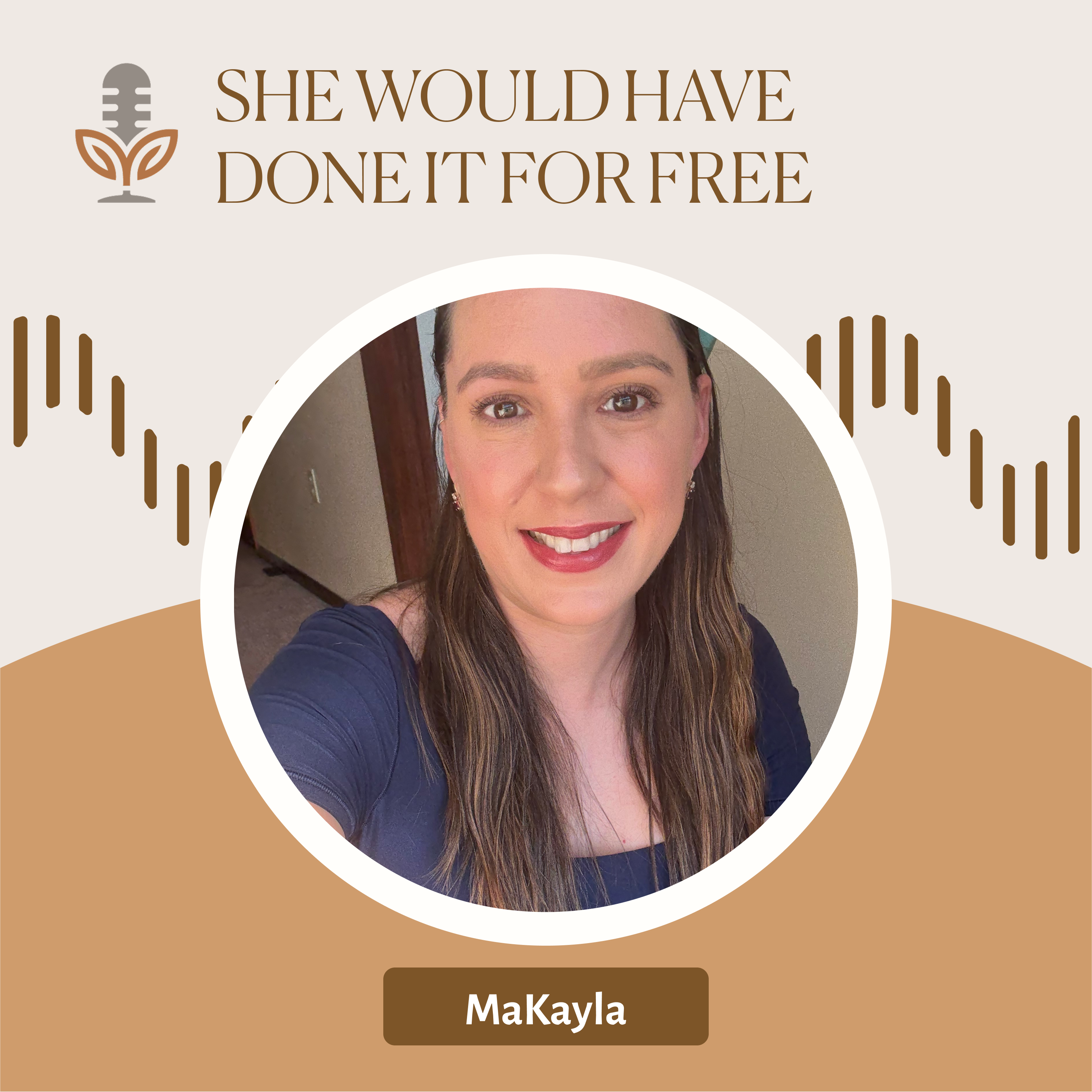
[00:00:00] Speaker A: There is a moment in every surrogacy where it stops being an idea and becomes real. For some women, it takes years to get there. They turn it over, talk about it, set it down, pick it back up until something finally tips them toward yes. Carrying a child for someone else takes more than a year of a woman's life and a kind of dedication that is hard to put into words until you have lived it. Every woman who says yes has her own reasons and her own story of what it gave her. This is one of those stories. Hey, welcome to the Surrogate series. I'm Eloise Drain. Really glad you're here. My guest today is Mikaka. She's a wife and a mom to four boys with a set of twins right in the middle. She and her husband have been married for 16 years and they live on a six acre homestead with chickens, goats, turkeys, quail and rabbits. She's been a surrogate once, delivered in 2025, and she's now matched for her second journey. Well, Mikayla, thank you so much for joining me.
[00:00:59] Speaker B: Yes, thank you so much for having me.
[00:01:01] Speaker A: Let's first start. You, obviously, you have four children.
Yes. Farm.
[00:01:06] Speaker B: Yes, I do.
[00:01:08] Speaker A: Let's first talk about your pregnancies, your own personal pregnancies. How were those?
[00:01:13] Speaker B: Okay. Sure. Yeah. So I had my first child when I had just turned 23.
It was like perfect pregnancy. I had no complications. And then 18 months later, I actually got pregnant with a set of twins.
So that was, I mean, we, like, it was expected, but we weren't expecting the twins. And my husband was actually about to go on a deployment. So I moved in with my parents when I had them, which is actually like a blessing in disguise. It was, it was wonderful. So again, wonderful. Pregnancy had no complications. I did end up with a C section, but not because of like a medical complication, just because it was twins.
And, and that recovery actually was fantastic.
And then my last son I had, I guess I don't even know right before I turned 30.
And so now they are 15, almost 13 and 9.
So all of my pregnancies were wonderful. I enjoy being pregnant. So
[00:02:13] Speaker A: you and your husband had talked about surrogacy for years before you did it, but I know that it was, it wasn't something that you heard about, saw whatever and then was like, oh, I can do this. Let me start moving forward. I mean, it took you a while to get decide like, yes, this is going to be something I want to do.
[00:02:32] Speaker B: Yes.
So I have just run across so many people in my life that had struggled with infertility, But I had never, like, I always wanted to help them, but I never really, like, thought about it. And my husband and I talked about it for years, and then when we bought this house, actually, my neighbor was doing a surrogacy journey, so that's kind of how I got introduced to it. I didn't really know very much about it, so she told me all about it, and then I ended up using the agency that she had used for my first surrogacy. So that was how I got introduced to it, which was really wonderful because I got to see her go through her whole journey, and, like, we talked about so much stuff, and that was what it kind of was like, okay, I should look into doing this.
[00:03:12] Speaker A: So what was your husband's reaction?
[00:03:15] Speaker B: Oh, he wanted me to do it for years before that. Like, he.
He just knows that I have a heart for helping people. And, like, he. Him. Him seeing me struggle to help my friends who were, like, going through it was the reason why he was, like, super on board and wanted me to be able to help somebody. So.
[00:03:34] Speaker A: So you seeing it firsthand from your neighbor, hearing from her, like, all of her experiences, and, you know, I'm sure she probably may have shared about the ups and downs and the shots and everything else. None of that scared you?
[00:03:48] Speaker B: No, it didn't. The only thing that actually scared me is.
And she told me this, like, after the fact. I didn't realize her first because she was doing her third journey at the time, and it was sibling journey for her first journey. And her first journey, it actually took three transfers for her to get pregnant. So when I was talking to her, like, toward the end of my surrogacy pregnancy, I said something about, like, her being so lucky that it took every single time on the first try, and she was like, oh, no, it didn't. And so then her and I had, like, a whole nother conversation about that and, like, the emotion she felt like, you know, having it be till the third transfer and, like, all of that. So none of it really scared me. Actually, the shots I didn't think were that bad.
[00:04:29] Speaker A: Did you see her do any of them?
[00:04:31] Speaker B: No, no. Her husband actually did all of her shots for her.
I can't remember why she told me that he did.
So I had my husband start doing the shots, actually, for me when I had to start them. And so he did the first two, and I was just like, he had to actually end up going out of town unexpectedly. So I was like, well, I'm going To have to figure out how to do these myself anyways. And I actually thought it was better for me to do them than for him to do them because I knew, like, I was about to jab myself, and when he was doing it, I was just waiting. So it was like the anticipation.
But no, I actually figured out a really good routine to do the shots, and so they never really hurt.
[00:05:12] Speaker A: Yeah, it's funny too, because I did my own shots for each of my journeys as well. And that same, like, I prefer doing my own. Thanks. Having somebody else do it for me, I just, it was just something that I was just like, nah, I'm good, I'll do it myself.
[00:05:28] Speaker B: I wasn't a needle person before. Like, I, I, I'm fine with them, but like, I, I'm not going to go out of my way. And now I'm kind of like, that's fine, it's whatever. Like, I, I had to do the shots for 12 weeks or whatever it was, I was like, now it's fine, it's whatever.
[00:05:41] Speaker A: Yeah. So you, you obviously your neighbor worked with the agency that she was working with. How, how was that process? Like, you know, obvious agencies are different. The requirements are different. Their matching process is different. Their screening requirements are different. How was it for you on their, on that side?
[00:06:05] Speaker B: Oh, my gosh. It was completely different, actually.
And I'm not going to say the name of the other. It's a great agency, I'm just not going to say which one it was, but it was just like a completely different experience. They. So I, like, submitted the form or whatever online, and the owner of the agency reached out to me, and I was on my way to my sister's wedding, actually, because my neighbor and I had been talking, and she's like, just send them an email. And I'm like, okay, whatever. Like, I'll hear back from them when I get back from my trip. And she reached out to me, like, the next day and was like, hey, can we get on the call? And I'm like, I'm on my way to my sister's wedding, so, like, can we do it the next week? So I got on a call with them, and while I was talking to her, she actually, it was her and like, the, I don't actually know what her exact title was, but she helped facilitate everything. And so it was her and the owner and me on the call, and she looks at me and goes, I already know who I'm gonna match you with.
And she just had this way of like, like knowing when she talked to the parents, like, what they needed, and when she talked to the surrogates, what they needed, and, like, in her mind, she already knew. So she ended up saying, I think that this would be a match for you. She sent me over their profile. I, like, immediately fell in love with them and was like, yes. So we got on a call, a match call, that same week, actually, that I had the first call with the agency, and, like, immediately we knew that it was a match. So we started through the process, and I started that. It was, like, the second week of March in 2024, and I had the embryo transfer at the end of June in 2024. So it was a very quick process. Like, there was a lot of moving parts all at one time, and we just kind of had to, like, navigate through it all. But, yeah, it was very, very quick. I went down to the fertility center, and I think at the beginning of April is when I had my sonogram. And then, like I said, I had the transfer at the end of June. So, yeah, it was. It was a lot. It was fast.
[00:08:04] Speaker A: So there was no completing an application, doing psych screening? Oh,
[00:08:10] Speaker B: yes, yes, we did all of
[00:08:11] Speaker A: that.
[00:08:11] Speaker B: Yeah. So we. We. I had to go have all my blood drawn, and then I.
Like I said, there were so many moving pieces all at one time. So I did have my blood work done. I had to go to the clinic and have the sonogram done through the clinic. I had to have all of my, like, medical information sent to the clinic. I did. I had a psych evaluation, and then I had a psych evaluation with my husband and I, and then we had a joint psych evaluation with the parents.
[00:08:37] Speaker A: So you matched with intended parents before you did any of that screening?
[00:08:41] Speaker B: Yes, yes, I did.
It was. Like I said, it was a completely different. But also, I think that this agency specifically worked with this clinic specifically.
So they had, like, worked out something already. I'm not totally sure.
So they already. She. The people at the agency already knew what they needed from me and what the clinic required, if that makes sense.
So I think that that's kind of why it went so quickly, is they had, like, already formed a relationship. Like, she brought the clients to that.
That clinic. Yes.
[00:09:20] Speaker A: Gotcha. Okay, so how. How was it for the matching? I mean, I know you saw the profile clearly. I'm assuming they saw your profile.
So how did the matching work?
[00:09:33] Speaker B: So we got on a call, so I will say they were international and did not speak English, so that. So we had to have a translator through like the whole, whole process, which, again, was completely different than what I'm going to be doing now.
So we got on a call. It was the owner of the agency, and then the other. I can. I just honestly don't remember what her title was.
And then it was the parents, a translator, and then myself, because my husband was actually not here when I had the first match call with them. And so the owner of the clinic facilitated, asked all the questions, made sure we were all on the same page, that we all wanted the same things.
And then once we officially decided that it was a match, we had to have my husband join the call another time because he was out of the country at the time. And it was the same thing. They just want to make sure he was on board with it and, well, I wasn't dragging him along behind me, like, you know. So, yeah, it was great. It was kind of like what I did this time, a very similar call. Yeah. So.
[00:10:33] Speaker A: So for your.
For your husband through this whole process, obviously, he's. Was he active military at the time you were doing your
[00:10:43] Speaker B: journey? No, he was previously active military. We met when he was in the military. He got out right after the twins were like, they were right around one year old.
He's now works for the Boeing Company. So, like the company that makes airplanes. And he works for the military as a civilian. Basically. He works on a team that modifies airplanes for different military installations. So, like, if they have a plane in. Where he's at right now in Germany, they have contracted to have something done to that airplane.
So then his team will go and fix the airplane. So, yeah, he's.
He's gone a lot,
[00:11:22] Speaker A: so he. There's a lot of travel for him. So trying to coordinate him doing his part. You obviously doing your part. Clearly the parents need to do their part, so that's kind of been a. A challenge, I take it.
[00:11:38] Speaker B: Actually, for the most part, it's been okay. He did have to. When we had our psych evaluation, he was in Australia, I think. Yeah, I think he was in Australia when we did that. So we just made it to where the time zone would work, where he wasn't at work and it wasn't the middle of the night. Yeah. So. And then other than that, he had his. Just went and had his blood work done before he left, and then we had the joint psych evaluation the day before he left. So I was trying to get it all in there so we didn't have to, you know, coordinate. But for the most part, it's been. It's been easy.
[00:12:12] Speaker A: Yeah. And how was he like with. Did he have any concerns or issues with the intended parents? Did he also get to say, yes, I'm okay with these intended parents, or it really was just kind of your decision?
[00:12:26] Speaker B: Oh, no, we talked about it together. I told. So when I met them, I was like, it's. It's perfect. So I matched with them. I thought that they were fantastic.
And then when we got on the call, I just let him.
I told him that I love them, but I wanted him to also decide that they were perfect and everything too. And he did. He was like, they're. They're great. It's exactly what you said. So. But also when you're on a call with somebody, I mean, they can be a little bit, you know, so that was, that was something I knew going into it that I would have to, you know, take everything kind of a little surface level. But no, they were great. And I still am in contact with them to this day, so.
[00:13:06] Speaker A: Oh, that's awesome.
So you mentioned your transfer was the end of June. Was the parents there for the transfer and what was that day like for you?
[00:13:16] Speaker B: No, they were not actually here for the transfer, so. Because I said they live in another country.
The owner of the agency was the one that was with me for the transfer. My husband was here with the kids.
So it was just me and the.
The owner of the agency and her and I went in and we had the transfer. It was actually a really easy, smooth procedure. It was a really beautiful day too. It was kind of crazy because it was. It's so hot in Florida in the middle of June. And it was actually a really nice day.
So, yeah, we just sent them tons of photos and just kept them updated through the whole process. And then the clinic actually called them after it was all done and everything and told them how it all went and stuff. So. Yeah.
[00:13:59] Speaker A: So you had your transfer, obviously that dreaded two week period that everybody loves so much. Right.
How are you through that?
[00:14:09] Speaker B: So it was very interesting because the parents didn't want to know until the beta. So I was like doing it all kind of by myself
[00:14:22] Speaker A: doing the home blood tests. I mean, home pregnancy tests.
[00:14:26] Speaker B: Yes. So the clinic actually told me, do not test until five days. And then if you get a positive on day five, don't test again until day seven. So that is what I did. And then I sent.
Actually my neighbor was the first person I told.
My husband was with me and then I told her.
So I got a positive, a very faint positive on day Five. And then I tested again on day seven and it was like very positive.
So I took a digital test and that's what I sent to the owner of the agency.
And then the day of the beta, I took another digital and that's what I sent the parents after I had gotten my blood work done. So that was how I told them that it, it had worked. But obviously you still have to wait for the numbers to come in.
So, yeah, that was, I think that was, for me, the most nerve wracking part because I was getting all these positives and then I was like, what if it's like 80? And I'm like, what in the heck? So, yeah, that was the most nerve wracking. And it. Wait. They made me wait to have the beta. Exactly. I think it was two weeks or three weeks after I had the transfer. I can't remember, but it was a really long time. I was like, why are we waiting so long? But that's just how they wanted to do it. So that was, I think the most nerve wracking part was waiting for the numbers to come back.
[00:15:38] Speaker A: Well, what about the ultrasound?
[00:15:41] Speaker B: So I had a beta, and then two days later I had another one. And then I think it was a week or two after the Betas. I went down to the clinic and had my first ultrasound to confirm the heartbeat. I think I was seven weeks and three days when I had the first ultrasound.
[00:15:57] Speaker A: So how was that experience?
[00:15:59] Speaker B: Oh, my gosh, it was so cool. It was so cool. I wish with the time difference, it was hard for me to like, be on the phone with the parents at the same time.
So, yeah, she let me take videos and tons of photos and stuff. And then, yeah, I was able to send that all to the parents. And then two weeks later I had another ultrasound. And then that was when they released me from the fertility clinic. And that's actually when I found out the gender of the baby because I didn't find out when they did the transfer.
[00:16:29] Speaker A: And did you. Did the parents know the gender?
[00:16:32] Speaker B: Yeah, they did, yeah. They chose which gender they wanted. I just, it felt weird to have like a medical person tell me. I don't know why.
So his parents actually were the ones that told me.
[00:16:44] Speaker A: The baby's parents?
[00:16:45] Speaker B: Yes, yes. That
[00:16:47] Speaker A: it was a boy. So you didn't want to know what the gender was?
[00:16:51] Speaker B: Like I said, I just didn't. I felt weird to have like, just a, a person in a white coat tell me, like, it's a whatever. Like, I kind of wanted it to be like a Special experience. I don't know how to explain it other than that because it wasn't my baby. It just felt weird to have some person tell me, like, it. It felt like I shouldn't know kind of a thing, so. And I also think, like, if it didn't work, maybe I didn't want to know because I didn't want to know what I lost, if that makes sense.
[00:17:17] Speaker A: So
[00:17:18] Speaker B: it was kind of like a protection for myself.
[00:17:20] Speaker A: But
[00:17:20] Speaker B: no, his parents were the ones that told me not only his gender, but they also told me his name in, like, a message that, that they sent me after I got released from the fertility clinic.
[00:17:32] Speaker A: Oh, that is
[00:17:33] Speaker B: really sweet.
[00:17:34] Speaker A: Yeah. So how was the pregnancy?
[00:17:37] Speaker B: Oh, my gosh. It went. So it was actually. It went really smooth. It was definitely harder because I was 37 and not 30. Well in my 20s when I had my kids, so it was definitely harder. And having the farm and stuff, there's like, a lot. But since I'm so active, I think that that helped a lot.
But yeah, everything went super smoothly and I had no complications, no issues.
My kids thought it was super cool. So especially now that they're older, they, like, got to experience like this whole. The whole pregnancy and the whole journey of doing it.
And like I said, I have a now 15 year old, so he got to see, like, how this whole process works. And I think that it definitely helped all of my kids.
They're going to be a lot more empathetic and probably really good husbands now that they've seen this whole process play out.
So, yeah, it was, it was a great experience for everybody.
[00:18:34] Speaker A: So they never had any concerns. They never like, what are you doing? Or why are you doing this? Especially since they're older and they do understand.
[00:18:44] Speaker B: No, I'm just like a very giving person in general. So I think it was just one of those things. They were like, yes, she would do something like that.
But also we talk to them about it. We explained to them the whole process, like how somebody can't have a baby and, and I can have babies and that I'm helping them. And they would, they would talk to him and tell him, like, you're going to have the coolest life, you have the coolest parents and stuff. So, yeah, they just, they knew from the very beginning it wasn't mine and that we weren't keeping it. So I think that them being older, I think really did help. Like, they understood what was going on.
[00:19:19] Speaker A: Yeah.
So how did you meet? Okay, so you literally have a farm.
How in the world did you manage like life and this surrogacy pregnancy, not that surrogacy pregnancy is different than just, you know, you having your own pregnancy, but it is different because you're now responsible to somebody else, for somebody else.
So.
And you know, you still have to live your life. You still have four kids, you still have a husband, you still have, you know, in a husband who travels. So a lot of it falls on you too.
So how did you manage? And then what about additional support?
[00:20:01] Speaker B: Okay, yeah, it was a little bit that I signed up. Signed up for, but.
So the farm is for the most part kind of self sufficient in a way. Like all my chickens are on auto water and they have giant like trash can peters that you can put like three or four bags of feed in at a time and they're good for a little while. So every time before he would leave, he would make sure everybody had like, they were good to go for a little while. And then my goats, if it's winter time, I do have to give them hay, which, you know, I. They have a six. We lived on six acres and there's so much grass. But in the winter, inevitably, of course, it dies.
So we. I did have to do that, which I'm so allergic to hay, so that kind of made it a little difficult. But for the most part, the farm kind of runs itself, so that's great. The kids were all in school, so that also helped because I could, you know, get the house cleaned up and tidied up and go grocery shopping and do all the things I needed to go to all my doctor's appointments, which there was more than with my own children with doing the ivf.
So I just went to all the appointments during the day when they were in school, which worked out really nice because I had the surrogate baby right before school got out. So I did like the whole journey. During the school year. I did actually work part time at a.
Would I consider it a farm? I mean, yeah, I guess it's a farm.
Down the road from me, they had the main thing they do. And this is why I say, is it a farm? It's. They have a corn maze and a pumpkin patch. So it's like a big fall festivity.
And I worked part time there during the, during the week doing field trips, like school field trips.
So that was a little bit more challenging because then trying to fit all my doctor's appointments in with that. But I'm a very organized person, so that's kind of how I keep my life kind of running so, yeah, like I said, doing it during the school year was really, like, the best blessing.
[00:22:06] Speaker A: Yeah. So would you say in order to be a surrogate, you probably need to be a bit more organized than the normal?
[00:22:15] Speaker B: I mean, it's a lot. There's a lot going on, especially my life is busy, just in general. But then I also wanted to make sure I was keeping the parents updated as much as possible, letting them, you know, know how I was feeling, know how things were going and not let them. I didn't want them to feel left out. I wanted to try to. I would rather have given them more information than they needed than, like, less information. And like I said, with the language barrier and stuff, I wanted to make sure that they, like, understood what was going on.
You know, some things can get lost in translation. Like sometimes when they would send me messages and it gets, like, translated, I would be like, okay, that's not how you would actually say that sentence. But I know what they're getting at kind of a thing. So I had to, like, keep that in mind when I was messaging them. Like, things might not completely translate. Right.
[00:23:00] Speaker A: Yeah. So how was the relationship during the pregnancy? Obviously they're international. They don't speak English. Did you guys.
Obviously, I'm sure you use the, you know, like WhatsApp or platform to translate, but how was the connection that you guys had?
[00:23:21] Speaker B: So I knew going into it with them living internationally and I wasn't going to meet them until, like, right before the baby was born, like, when we had our match call, that was what we had talked about. So I wanted to have on my side, like, what the.
The intention was going to be.
So it was not.
How do I say this?
It was. We had a connection, but you could tell there was still like a void in between. Right. Because we hadn't met and with the language barrier. So I just set my expectations that, like, going into it, that it wasn't going to be, like, we're not going to be best friends. We're going to be friends, but we're not going to be best friends just because we couldn't really get to that level of connection. Like, I feel like the language barrier was a huge part of it. And like I said, I knew that going in, so I just prepared for that. And I also prepared for, like, if they didn't ever want to talk to me again after he was born, then I was fine with that. If I never got to hold him or meet him or whatever, then I was fine with that. So anything extra that happened outside of that, like, within the surrogacy, I, like, knew I would be in contact with them, but outside of that, I just had to prepare for that. And then anything extra I got was just a bonus
[00:24:35] Speaker A: when in understanding that that could be the process. Was that something that you had wanted for your first journey?
[00:24:42] Speaker B: I don't necessarily know. I hadn't really thought about what I wanted or not. I just met them and fell in love with them and was just like, yes, I want to help you. And like I said in the match call, we did talk about, like, are they going to be here? Are they going to be here for the birth? How long are they going to come before?
Or are they going to be here for the transfer? Like, so I knew from the very beginning that it wasn't going to be.
It was going to be what I wanted. But I did want more. But I was okay with it because I knew what I was doing and I was just like, I was helping somebody. So, you know, some in life.
In life, sometimes things can be transactional. And so I felt like I was going to go into it like that, and everything extra I got was just gonna be a bonus. Like, I just kind of had to protect myself a little bit. Like, I didn't want to get too close and too attached to them and then have them be like, okay, thanks. Bye.
So that I. That was just how I had to do it. Now going into my second one, it's like a completely different experience.
And it's. It's definitely more what I wanted.
But like I said, I. I got a lot out of it and I really enjoyed it. And like I said, I still talk to them, so it's all good.
[00:25:55] Speaker A: So how was the birth for the baby? Was the. Did you, like, spontaneously go into labor? Was the parents there in the room? What happened?
[00:26:05] Speaker B: I wish I had gone into spontaneous labor. I've actually never gone into labor on my own, like, ever. So I don't know why, but once I get induced, I, like, have the babies really quickly.
So his parents got here at 38 weeks, and I met them at one of my doctor's appointments. They came to me to a doctor's appointment, and then they also came to me, came with me to one of the ultrasounds so that they could see him. And I had the same ultrasound tech every single time. I would always request her, and they always told me, you can only have one person in the room. So I had to tell his parents, like, I can only bring one of you. And as soon as she saw me and she saw that the parents were there. She's like, no, they're both coming. So they both got to go in and see an ultrasound of him, which was so cool. The looks on their faces, that was what made everything, like, worth it, like, what I was doing.
So then the day I got induced at 40 weeks in one day, and for. Because I needed to have a specific doctor, which is why I got. I would have had him earlier. But anyways, so they were there. They stayed in the room with me for a little bit. And then there's some medical trauma. I never really got into it with them on that, because if they wanted to share, then I would let them share. But they were very guarded about that part. So I'm not even sure, like, why they needed a surrogate or anything. It was very emotional for them to talk about things. So I just didn't.
I just didn't want to cross the line. Yeah.
So we had been talking about how the labor and the birth and everything was going to go, and they had adamantly said they did not want to be in the room. So when we actually got to the hospital, got checked in, got things all started, I had the translator because I wanted to make sure they understood. I actually wanted them to be in the room. And I want to make sure, like, nothing culturally or, like, religiously or something that I didn't understand was why they felt like they couldn't be in the room.
So we went through that whole process. She was, like, in tears because it was just a very emotional conversation.
And at that point I realized, like, there is something. And she. I need to respect that she doesn't want to be in the room.
So like I said, they stayed in the room for a little while. And then when I started being in pain, it really, like, broke her heart. And she was like, we just can't be in here anymore. And I said, that is fine.
So they stayed in, like, the waiting room. It was just me and my husband.
We labored with, like, the most wonderful nurse. She was so sweet.
And when I was ready to push, the doctor came in, and I had told the nurse, like, I was a surrogate. And I was like, I do not want the baby put on me unless I'm about to die. Like, if you need to save my life, then that is fine. She's like, I really appreciate that because that is happened before. And people have been like, oh, my gosh, don't, don't, don't. And she's like, no, we need to. So I said, you know, when he comes out, I don't want him to be placed on me. And so he came out. I actually got to cut the cord, which was the coolest thing. Like, my doctor, he came out and I was like, can I cut the cord? And he's like, absolutely. So I cut the cord, which was so cool because I'm like, I have now finished my journey. You have, you know, the rest of your life with your family. And so they. They took him over to, like, the little warmer. He was maybe in the room for two to three minutes. Just they made sure, like, his Apgar scores were good and stuff. And then his parents were in the room next door, so they actually got to hear him cry for the first time and everything. So, yeah, they took him next door to his parents. And then I actually.
I had a little gift for them, like, just some, like, I. Because I knew they were going back to another country, I didn't want to give them, like, a big thing. It was all, like, very thought out, very, like, meaningful things. So I gave them a little basket and.
Or I had a little basket that I had a gift for them. And I said something to the nurse and she was like, oh, no, they absolutely want you to come see them. Because I was just going to give it to the nurse. And so I went with my husband and we got to meet the baby and hold him and get some pictures because they wanted, you know, to have some pictures of all of us together.
And then the next. Well, no, it was that day that I met him, that later that day I got discharged. So before I left, we went and said our final goodbyes and I went home back to my kids.
[00:30:05] Speaker A: So you got discharged the same day you delivered?
[00:30:08] Speaker B: No, the next day. So I had like six. I had him at 5pm and then they discharged me at like 3 o' clock the next day.
[00:30:15] Speaker A: Boy, they just really don't waste their time, do they?
[00:30:18] Speaker B: Well, the doctor came in and was like, the reason why they.
Oh, my gosh, the doctor came in and said the reason why they actually keep you so long is because they have to do all the vitals and stuff with the baby. And the baby has to be over 24 hours before they can leave. And since I'm not taking the baby home with me, there's no reason for me to stay. So, yeah, it was great. I got to go home the next day. I only had to sleep overnight one night in the hospital, which was fantastic.
[00:30:39] Speaker A: Yeah, I can only imagine. Although I would say, though, every hospital has different rules because there are Some that's just like, no, you have to stay. So.
But that's awesome, though. And I hear that, or rather I should say, I heard that he was your biggest baby to date.
[00:30:57] Speaker B: He actually was. So we had made like our whole family. My mom was the one that watched the kids while I had the baby. So my mom, all of my kids, myself, my husband, all made predictions of how big the baby was going to be. And then we're in the hospital. I asked his parents, and they also made predictions. So their prediction was that he was going to be seven. I think seven. Seven or seven. Thirteen.
Well, I don't think they understood. When we had just gone to our last appointment, he was already over £8. So I was like. When they told me that, I was kind of like, oh, well, it's not going to be that. He's not going to be that small. But. So my last baby that I had was eight. Eight.
And this baby, he was up in my. Like, I had sharp rib pain. It honestly felt like someone had stabbed me with like a hot pull. And it just kind of like got hot or a little. Not as hot like the last week of my pregnancy. And I could not get him out of my ribs. And I'd never experienced that before.
So after I had the baby and I told my mom how much he weighed, she goes, I knew he was not going to be. He was going to be bigger than 8 pounds, 8 ounces, because you've never had this rib pain before. And I was. And I didn't even think about it. I just thought he was like, position weird or whatever. But he ended up being £9. And that was the first thing his parents said to me when I went to meet them. What the first thing she said to me was, he's such a big baby. And I was like, I know. I knew
[00:32:17] Speaker A: he was going to be.
[00:32:18] Speaker B: I knew he was going to be big. I didn't think he was going to be £9, but I knew he was going to be big. And the look on the doctor's face when he came out and then he, like, looked at me and he was like, I cannot believe that baby just came out of you. And I have a very long torso, like, so I can. I mean, the twins were almost £13 total so
[00:32:38] Speaker A: far. How long, how far along did you go with your twins?
[00:32:41] Speaker B: 37 weeks. In one day?
[00:32:43] Speaker A: Oh,
[00:32:44] Speaker B: yeah. And the one had to go to the NICU, but he asked where he did meconium when he was born. Otherwise they will. They would have gone home with Me so.
[00:32:51] Speaker A: Oh, my gosh. Yeah,
[00:32:52] Speaker B: they were 5 pounds, 10 ounces and 6 pounds, 9 ounces.
[00:32:55] Speaker A: Oh, wow. Yeah. Yeah. You can have some big babies.
[00:32:58] Speaker B: I know. And that's kind of scares me for this next one. I'm like, I don't need another nine pound baby.
[00:33:03] Speaker A: Yeah.
So I'm curious. Obviously, you know, clearly you decided to do this and compensation is a factor in there.
What. What did you think about as far as, like, okay, this is cool. Going to, you know, get compensated. Was there a plan of what you wanted to do with your compensation? Was it just, like, it's just a benefit. We're going to keep it there and we're going to do something later, like. Or did you actually have a plan going into it?
[00:33:39] Speaker B: So we actually kind of did. We threw around a couple ideas, like, we have a tractor that we owe money on. It's, like, not that much money.
The loan we got is, like, through an agricultural company. So, like, it's a really low interest rate. So we tossed around, like, something like that, or maybe paying off my husband's car.
We hadn't really, like, settled on anything.
And then unexpectedly, my husband's company went on strike while I was pregnant with the surrogate baby.
And we had money and savings and stuff, so it wasn't like a big deal. But that. That amount of money that I was making actually paid our house payment.
So for that, it ended up being two months. I think he was on strike. So he actually came to work with me down at the farm. They put him to work. They were like, you're on strike. We have a job for you. So we were both working down there. And then between what we had saved and the surrogacy compensation, that kept us afloat for a little while. And then after that, all of the money from the surrogacy went straight back to replenishing our savings account. So unexpectedly was a very huge blessing.
[00:34:45] Speaker A: Yeah, yeah, yeah, for sure.
So you did it the first time and it was an amazing experience, and then you decided, I'm not going to stop there, I'm going to do it again. But why?
[00:34:58] Speaker B: So actually, I didn't know if I would do it again just because I had such a wonderful experience.
And I am on a Facebook group where I've read some horror stories about people having to get lawyers involved and not NDAs, restraining orders, and, like, the parents couldn't be at the hospital. And it was like this whole thing, and I'm like, oh, my gosh, can you imagine if I did it again? And it was like this horrible experience, and then, like, I ended on a bad note instead of a good note. And then I met Brittany, and we started talking, and she. It was like, a couple months into us talking, she was like, okay, well, I can't do this if you're not going to be my surrogate. And I was like, oh, I guess I didn't. I wasn't talking to her, thinking that that would be, like, the conversation. She just had a bunch of questions she wanted to ask me so she could be better prepared for when she had a surrogate, how she could support them and stuff.
So, yeah, once I met her, I was like, nope, I definitely am doing this again, so.
[00:35:51] Speaker A: Well, I'm sure, obviously it's completely going to be a different experience because everybody is unique and it has to be a different experience. But going into this next journey, what kind of experience are you looking for?
[00:36:05] Speaker B: Well, so we've already met, so there's that already. I didn't meet his parents until the very end, and her and I FaceTime text, like, call each other. We're in constant communication.
She already says that I'm basically family, and that's exactly how I feel. Like, we've known each other our whole, entire lives, and, like, we're just now finding each other kind of like long, long lost siblings or something like that, which is kind of bizarre. But I already know that, like, we're gonna see each other all the time, and she's gonna be there for all the appointments and.
What? My husband didn't go to any of the appointments with the first surrogate journey. And, yeah, it's kind of a bummer to sit in a waiting room by yourself, but knowing, like, that she can come with me and, like, we'll go get lunch afterward and, like, make a whole day of it is. Is really fun to think about. So, yeah, I'm excited.
[00:36:50] Speaker A: Well, that's good. So. And you guys obviously have started the process and things are moving along.
[00:36:58] Speaker B: Yes, we're actually have everything done except for the legal process. Sorry. Yeah. Everything else. I. So I went down to the IVF clinic that her embryos are at and already had my sonogram done. And then we did, like I said, our joint psych evaluation right before my husband left. So that is all we're waiting on at this point, which is very exciting.
[00:37:19] Speaker A: Yes.
So for somebody that is, you know, starting this process, what do you think is, like, the biggest misconception about surrogacy? You know, you wish more people would understand.
[00:37:33] Speaker B: I think the craziest thing is a lot of people thought it was my genetics or me and my husband's genetics or just my husband.
People are very confused on how this all came together. So, yeah, me explaining to them that it was not genetically related because a lot of people would say to me, well, how are you going to give the baby away? Oh, it's not mine to give. Like I can't give something away that's not mine.
And like I signed a contract and I know like what I'm getting into.
So that I think it was the biggest misconception that I ran into is people thinking that it was like my genetics with someone's or my husband's genetics with someone.
And also that a lot of people don't understand all of the safeguards and all of the things you have to go through. It's not like I just, just met these people, you know, at a store and was like, hey, let's do this. You know, it was like a lot of time and money spent to get to that point. So I think those are the two biggest things that I ran into.
[00:38:35] Speaker A: So. And for a woman who was sitting, you know where you are a few years ago, because I know you, you mentioned obviously that it took you some time when you started thinking about it to like really make a decision that you want to do this, you know, and talking about it and you know, not being sure at the time and then finally making decision.
What do you want her to know before she starts?
[00:38:57] Speaker B: Oh my gosh. So the reason, the main reason that I waited so long is I wanted my kids to be older. Like when I first started talking to my neighbor, we, this was six years ago. And so my, my baby was three at the time and I was like, I just can't imagine being pregnant and still like chasing around all these little kids.
And we were just starting out on the farm and stuff. So I definitely wanted to wait until my kids were older.
So I think that that was very important for me is knowing that like if say I went on bed rest or something, like my kids are a lot more self sufficient.
And for me personally I thought that that was really important.
But I, at the same time I wish I hadn't waited so long because I could have helped more people.
So that I think would be my biggest takeaway is just making sure that where you're at in your life is like sustainable for you to have another pregnancy. And then also making sure like your family's at a really good spot in life that you know, if for some reason something happened that you would have all of those things in place.
[00:39:58] Speaker A: So during this whole process, do you have any regrets? Or do you.
Or would you do it all over again, many times over?
[00:40:11] Speaker B: I have no. I think, like I said, my only regret is I wish I had done it earlier, like I said, so I could have helped more people. I would do it all over again a million times over. Literally, the look on their faces when they saw that ultrasound and the look on their faces when they were holding that baby was everything. Like, I. I was waiting for that moment. That was what I kept thinking about the entire pregnancy. And as soon as I saw it, I was like, it's all 100% worth it. Like, they had been waiting so long for that baby, and to see them finally get to become parents was, like, the greatest part of the whole thing. Like, I would have done it for free just for that moment.
[00:40:45] Speaker A: So no, like, postpartum depression? No. After the baby's gone, obviously, literally going to a different country. Oh, my God, I am going to miss this baby. I wish I had more, like, did you have any of those kind of feelings?
[00:40:59] Speaker B: So I think the old. I. I had a couple.
So first of all, I can. I actually pumped for five months after he was born. I g them the colostrum in the hospital, and then I pumped for five months after he was born. I just needed something to keep myself busy and just. It was going to happen anyways. I might as well. So I donated that to the mother's milk bank of Florida, which goes directly to, like, the preemies in the hospital.
And I had a preemie in the hospital, one of my twins. So it felt like I was giving back. I wanted to do that.
And then other than that, the only regret I really have is I really wanted to unwrap him out of his swaddle and, like, look at all his little fingers and toes. Just because he was inside of me for so long, but he was sleeping, and I didn't want to wake him up. And also, I kind of felt the parents were a little bit unsure. They.
So I wasn't. I kept it very, very brief and, you know, in holding him and stuff, because I didn't want them to think I was getting attached or anything, but I did want to see those little fingers and toes.
[00:41:58] Speaker A: Well, that's awesome. And you said you still have contact with them to this day?
[00:42:03] Speaker B: Yes, I do. So we did WhatsApp. So they'll, like, send me little updates and stuff, but I actually follow them on social media, and she posts a ton of pictures of him every day. So every time I get on Instagram, it's like pictures of him. So it's really great to get to see him. Still.
[00:42:18] Speaker A: That's awesome.
[00:42:18] Speaker B: He's really cute, too, so that helps.
[00:42:21] Speaker A: Yes, yes, yes, absolutely. Well, Mikayla, I really appreciate your time. I appreciate you coming on and sharing your story and the fact that you're going to do it again for the second time.
[00:42:32] Speaker B: I know. I'm so excited.
[00:42:33] Speaker A: Well, thank you. I appreciate it. Thanks so much for listening to Fertility Cafe. If you've enjoyed this episode, be sure to subscribe so you never miss an interview. Leave us a review and connect with us on socials. We're ertilitycafe. You can also watch the full video version of today's conversation over on our YouTube channel. Until until next time. Remember, love has no limits. Neither should parenthood.