Episode Transcript
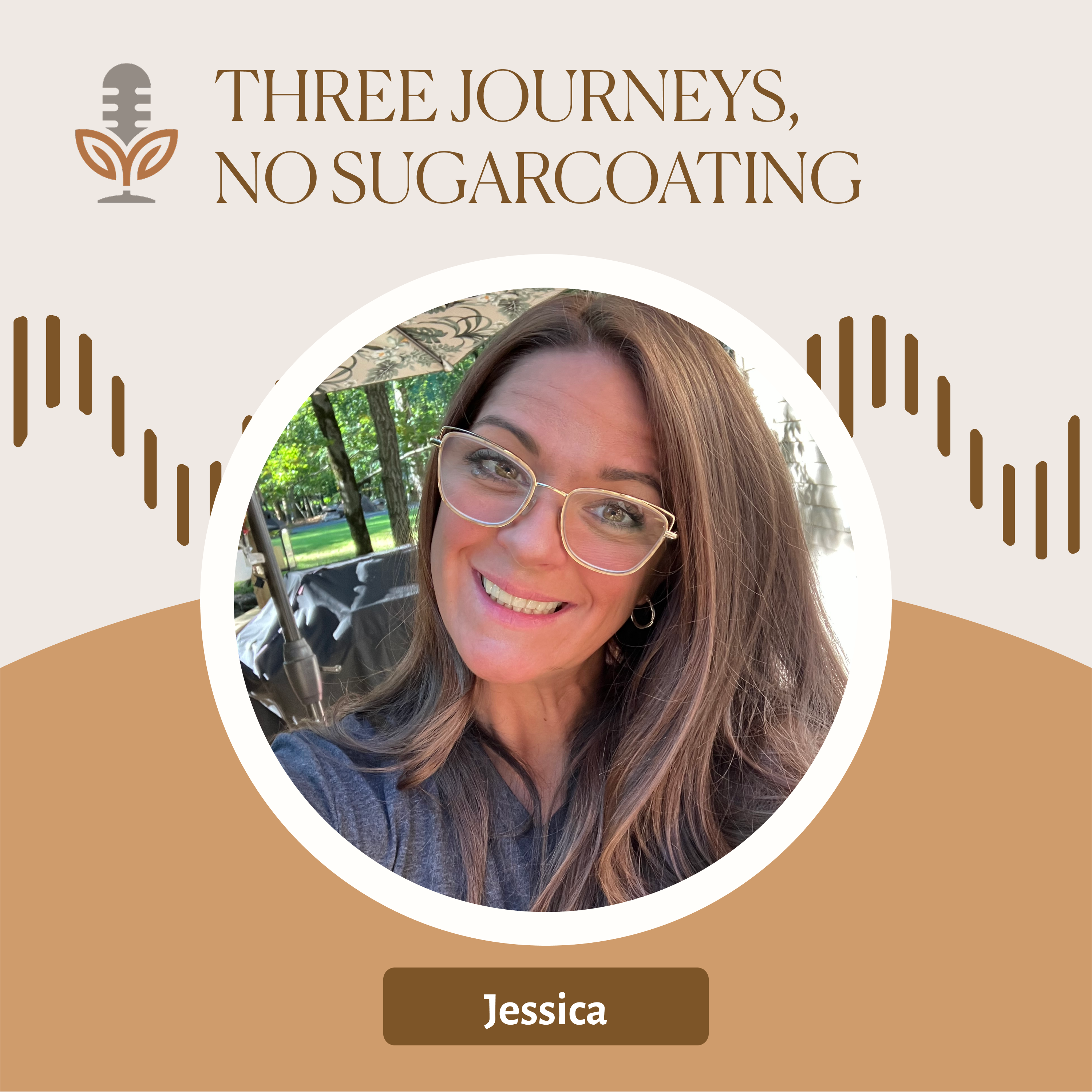
[00:00:00] Speaker A: Choosing to carry a child for someone else is one of the most generous things a woman can do. It asks for more than a year of her life and a kind of dedication and responsibility that's hard to put into words until you've lived it. When a woman does it more than once, when she comes back and does it again, she's not just carrying another pregnancy, she's carrying forward. What she learned, what she felt, what she's still working through from the last time. These are the stories of women who said yes to surrogacy more than once, and what those journeys taught them about themselves, about family, and about what it actually means to do this work. Hey. Welcome to the Surrogate series. I'm Eloise Drain. My guest today is Jessica. She's been married for 22 years and has four kids. She's also a three time surrogate. Over the last several years, she's carried three pregnancies for other families. Each one was different, each one shaped her in a different way. Welcome, Jessica. Thank you for joining me today.
[00:00:59] Speaker B: Thank you for having me. I'm excited.
[00:01:01] Speaker A: Well, good. So let's start first with your own pregnancies. Like, what were those like for you?
[00:01:09] Speaker B: Sure. So I had my first at 19, so that one, you know, I was very young, but I loved being pregnant. I think that it was, even though I was nervous, I, I had experience. I was the oldest of six children.
You know, it kind of just was like a natural thing that was, that was going to come to me. And it was a very easy pregnancy. I went into labor, got to the hospital, 8cm dilated and a couple hours later he was here. So it was a very super easy pregnancy for me. Then 23, I had my daughter once again a month to get pregnant. Super simple, super easy pregnancy. Then my third.
Yet again, it was going towards the summertime, so I was very anxious to like, let's go. I had him around 39 weeks. Super easy pregnancy. Once again, fourth baby, my little one, Noah, he was breached, a little stinker like his dad and unfortunately they had a C section him at 39 weeks.
Other than that, I would have had him.
I would prefer a vaginal delivery over a C section any day of the week.
So, yeah, they were very easy pregnancies for me. I, you know, kind of just went about it very easily.
[00:02:34] Speaker A: Yeah, yeah. So knowing what pregnancy was like for you, where did the idea of being a surrogate even come from?
[00:02:43] Speaker B: My half sister, she knew of an agency, right. Based out of Holly and Pa.
And you know, she kept saying you'd be amazing at it. You should consider it. And I was like, yeah, yeah, yeah, okay. Like, I don't even know what this is. Like, not realizing she was recruiting me at the time, I, you know, kind of was like, what is this? Let me think about it. Let me look into it. I don't really know.
Kind of. It kind of just like, hey, we have an intended parent that wants to meet you. Are you interested in doing this kind of thing? It was very like, rush, rush, rush. And I looked at and my husband was like, you know, I don't know anything about this. It's kind of odd. It's weird. And it is, you know, it's different.
You know, they were like, can you be here in 45 minutes to come meet these intended parents? And I was like. I said to my husband, I was like, listen, like, let's just go meet them. Let's see what this is about. We don't really know what we're getting into, but let's give it a shot. Like, it would help another family. It would help family. Like, this is a win, win situation in general. Let's just see. So we went and we met the intended parents. And after we met them, we were like, how do we say no? Like, you know what I mean? It came so easy for us.
Such good, deserving people.
We got along with them very well. The meeting was great. And that's kind of how that started.
[00:04:08] Speaker A: So wait, so did you, like, you signed on? Did you go through, like, you needed to, you know, complete your paperwork and get all your medical records and have an updated path? Like, did you do any of that stuff?
[00:04:24] Speaker B: So I did not. This is going back 10 years ago, and things were a little different. You know, there wasn't a lot of restrictions and laws on, on surrogacy like there is today.
So things were a little bit different. But I also didn't know what I was getting into. So you have to remember, I don't have. I didn't have any social media. I didn't know, like, surrogacy back then was not promoted the way it is today.
So I just knew that I would be carrying for another family.
It wasn't necessarily, you know, but I also knew my sister. Like, I knew the, like, the people that own the agency. I knew them, so they knew me too. Like, you know, so it was a little bit of a different situation for me. They knew that I was married. They knew that I had four healthy pregnancies. Like, it. It just wasn't a conventional way of going about surrogacy. No.
[00:05:15] Speaker A: So you told your husband and obviously I'm assuming you told your kids. Like, were they still young? Like, what was their reaction?
[00:05:24] Speaker B: Yeah, so they were young. They were pretty young. And they. I kind of just explained to them, like, hey, there's this family that really want to have, you know, babies of their own. And, you know, I'm thinking about kids carrying their baby and, you know, the baby doesn't come home to us. Basically, I just explained it in a kid version so that they understood, like, this is not our sibling. And yes, like my 6 year old at the time, he was a little confused. But I kind of just, you know, like, they adapt. Children are very resilient and they adapt very easily to those kind of things, Whether they kind of just put it away and don't really pay attention or. My kids never really ask too many questions.
They kind of just was like, okay, this is what mom's doing, you know, and then, you know, and then eventually they just, as I did more, they were like, okay, this is just the norm.
Of hormones all the time.
[00:06:23] Speaker A: I get that. Absolutely. What about your family, though? Like your extended family?
[00:06:28] Speaker B: Yeah, good question.
So it's a mixed a little bit. My mom's very protective.
She was always more concerned about my safety and my health. My dad a little bit as well, you know, he just didn't quite understand it and thought it was odd. Like any, you know, buddy would if they don't have any knowledge of the situation. You know what I mean? There's very. If you are not educated in the surrogacy culture, you are not. You're going to be very naive, not understand it like you should. So then you're going to make judgment, you're going to have things to say. And of course, I went through that with my first journey. After the first journey, obviously, it kind of, like I said, just became the norm, you know, like just, just does. And she enjoys doing it and she does it very well. And then my mom got like, to the point where she was like, okay, very proud and like bragged about it and stuff. But it took him a minute to warm up to like, what are you doing? Because my mom had six children and I'm like, those children never left her, you know, so it was different for her. Like, how could you do that? That's odd. Like, are you going to be okay?
You know, of course, the normal stuff, which rightfully so.
[00:07:40] Speaker A: And I think, you know, when we make the choice, like, we want to do it and we then we look into our family. Like, you just have to get on board. This is what I want to do. And everybody's like, no, wait, hold on. We have questions. Like. And you think, like, oh, why do you have questions? I already told you, it's good.
[00:08:00] Speaker B: It's.
[00:08:00] Speaker A: But, you know, you don't think from the aspect of what they're thinking about because they. You're who they care about, you know, So I totally get it. And why there's. There's a lot of hesitation from partners and family members and all of the things, because, I mean, I experience the same thing as well, so I definitely get that whole side of things. So then talk to us about your first journey.
[00:08:26] Speaker B: Okay, so you.
[00:08:27] Speaker A: You met your first set of intended parents. I'm assuming they clearly, they were local. Was the clinic local to you as well? And how did, like, the medical screening go? And, you know, leading up to, okay, now it's ready for transfer.
[00:08:48] Speaker B: So my first journey was quite the doozy, I have to say.
It was in my head, gonna be easier than I thought. So the how everything kind of got into play is that we met with them, we said yes, everything, you know, went really well. We wanted to move forward with them. So then we did have to go to the fruit. They were local. They were 45 minutes to an hour away. So they lived not far from me, which made it nice, because then I thought, well, I knew that we would have, you know, a little bit of a close relationship during the journey, and the mom would be with me and that kind of thing. So that made me feel secure, too, knowing that I had that support.
But we went. I went for the medical screening. The fertility clinic was about an hour and a half from my house. You know, everything went really well. They looked at everything. They said, everything looks perfect. You know, my C section scar, they were like, you can't even see it. Like, it looks great. You know, you're ready to go.
So it was a normal screening process, obviously, through the fertility clinic. And, you know, the mom would be. The mom was definitely more involved with me, obviously, throughout the beginning process and going with me to the fertility clinic and that kind of thing, which was really nice. We started to go out to lunch together. So we started to build a relationship at a bond.
I knew that they had two embryos that were not tested. And I know that she was going trying really hard to get pregnant for, like, nine years. And, like, her last time, trying to get her eggs, put her in the hospital. And it was very dangerous. They were a little bit on the overweight side.
And she just really struggled trying to get pregnant and keeping her weight down.
And with everything that was going on, it just. Something really bad happened. I forget what it was, but it definitely. She was like, I can't get anymore. Like, this is it. And so, yeah, of course, I felt like a super big weight on my shoulders because, you know that there's.
They had three embryos. I think they say two. I think it was three embryos. Three embryos left. So I was like, all right, you know what? Let's just see what happens and we'll go from there. First transfer I did, it was two embryos that they put in, didn't take.
Second transfer I did. Second. The second transfer I did also did not take. So that was. That was the end of the embryos that were their biological.
So then I waited a month because they wanted to get an egg donor.
So they went ahead and got the egg Don.
We went right back into cycle. Like, not. I think it was December. I did the last transfer. By February, I was already doing another transfer. So this is the third transfer.
Everything seemed to be going really well. I tested. I got a positive test.
My HCG levels were at a 12.
They tested me a day or two later, they dipped down to a nine.
So then they stated that it was in my fallopian tubes, that it wasn't a viable pregnancy. They immediately pulled me off medication. As soon as they pulled me off medication, they tested my hcg, and my HCG started going up, going up, going up, going up.
So they're like, oh, well, it was an ectopic. So they had to give me a shot to stop the pregnancy from continuing. So that pregnancy, I was pregnant. They just didn't know what was going on. Like, it was very odd to me.
So we.
We went in the doctor a couple months later to do another transfer. We were prepping me and everything. She does a sonogram. She saw something in my uterus. So she's like, well, we're going to have to do a DNC because we want to clear everything out. But they call it. Sometimes they'll call it a hysteroscopy also. So either or they go in there, they take whatever was in there, tested it. It was placenta tissue. I was pregnant. It was in my uterus. It was a viable pregnancy. So the parents were really angry and really.
Yeah, it was. It was this. This. There's more. Oh, there's more.
These are. I think, for surrogacy, I kind of have been through it. Should have been handled a lot better in a lot of us. Yeah, I'm kind of like, what surrogacy.
The precautions you should take for things not to happen to me, you know, and that's okay because it's a learning experience, not only for the people that are listening, but for people in the future, you know.
But so what happened was, is that they did. They cleared everything out. We went in for another transfer. They wanted two. They kept asking me do two embryos, and I was. I was okay with it. You know, I was a little nervous about carrying twins, but I knew that with my pregnancies, how good and how I had really like big babies. So I knew that usually twins are going to be born early and they're probably going to weigh about the same as one big baby. So I knew that my body can handle it. That wasn't an issue.
Went in for another transfer in July that did not take.
Then the mom begged me to put three embryos in. I agreed to, and the doctor agreed to do so as well.
So in August, we did another transfer.
[00:14:06] Speaker A: Now, remember, though, this was also 10 years ago, correct?
[00:14:10] Speaker B: Okay, yes, yes. They don't.
[00:14:12] Speaker A: Very different than how things are now, but.
[00:14:14] Speaker B: Yeah, they barely even put two embryos in nowadays. Yeah, they're very strict with only really putting one.
Well, sure enough, I got pregnant with all three, so.
[00:14:26] Speaker A: Oh, my God.
[00:14:28] Speaker B: Yeah. It was a year of being on hormones. I went through a lot during that journey. That was a lot, especially the beginning. It was a lot of ups and downs. It was a lot of hormones, stress. I felt like, yes. Usually in contract, you're either going to be doing two or three, and then you could decide if you want to move forward with that same surrogate and keep going? And I'm always the type of person I'm in it to win it. And they knew that. And I told them, like, listen, I'm not going to give up on you.
Don't give up on me. You know, we're. We'll work on this together. Because we felt like we were in it together. So. Yeah, I got pregnant with all three.
[00:15:05] Speaker A: Okay, hold on. Before we even get there, I'm gonna step back real quick because I know you had. Did this medical screening. Obviously you guys did contracts before you started medication and did any transfer.
[00:15:17] Speaker B: Of course. Yeah. So contracts were. Yes, we had each. We had our own lawyers.
Escrow was set up. We had everything all set up. Yes.
[00:15:26] Speaker A: So in your, in your contracts, though, did you say, like, I'm willing to try three times or I'm willing to try as many times. Like, did you have any of that in your contract?
[00:15:38] Speaker B: Sure. So it had up to three tries, three transfers. But then it also states that we're able to decide if we want to move forward or if we want to break the match after the three.
[00:15:48] Speaker A: Okay. So you continuing on is. Was just kind of like, you guys kind of agreed ahead of time that you were going to do that.
[00:15:56] Speaker B: I think that a lot of the discussions that we had in the beginning were like, I'm in it to win it. Like, we're going to keep. Because I knew that starting off with the. With the three embryos, that they weren't tested and that they weren't working for her and she never even had an attachment. I had a good inkling that it would probably go beyond three, because, you know, the first two transfers probably were not going to work. So. Yes. I mean, I think that it was brought up in discussions over the phone and stuff like that. Yeah.
[00:16:24] Speaker A: Okay, so now let's go back to this. These triplets.
So you're pregnant now with triplets?
How in the world.
Like, how in the world. What? First, what were you thinking? Like, oh, my God.
Were you freaking out?
[00:16:41] Speaker B: I was freaking out. I was very.
I was like, wow. Okay. Like, you know, I was a little scared. I'm not gonna lie. Like, three. Like, that's crazy. But like I said, I knew that I would be able to do it. Like, it wasn't like a fear of, like, my body was gonna be deformed or, you know, if something bad's gonna happen. None of those things were in my head. I was like, listen, if you guys want me to carry the three, I will carry three. It is okay. We will figure it out.
I'm comfortable with it. So I did have that conversation with the parents.
Unfortunately, they did not.
They only wanted two. And that was disappointing for me because I went through all of this.
You begged me to put these three in. Right. And I felt obligated because I'm a people pleaser. And I wanted, you know, I wanted to give them what they had never had, what they've always yearned for. And I felt like I was basically just kind of accommodating their feelings rather than thinking of my feelings or my husband's feelings or anybody else's feelings, because I felt like I was being compensated, that I felt like I had to. I was upset because they wanted to do a reduction. I didn't like the way that went. It was upsetting to me a little bit because I was comfortable carrying three. And the doctor did state that going from 2 to 3 pregnant, 2 to 3M or 2 to 3, carrying 2 to 3 babies is a big difference. Like going from 1 to 2, that's an easy pregnancy. But when there's a significantly higher risk, when you go from two to three, then they were kind of like giving the parents the risks, and they're giving me the risks, and I was comfortable with them. But then, you know, they.
I don't really know exactly what was going behind the scenes, but I feel like, you know, they weren't comfortable with three. And that's. It is essentially, you sign off on contracts. That's in contract. It's not something I want to do, but it's something that I signed up for. And guess what? It's something I need to do. Because it's their decision, too. This is their life. It's their babies.
[00:18:55] Speaker A: And it's not just on a surrogate side. I mean, you know, obviously, even if somebody is going through and having to make the decision on terminating a pregnancy for, you know, whatever reason, these are not easy processes to go through. And, you know, sometimes we get intended parents that. It's like, it's no big deal. Yeah. You know, I just want to terminate a pregnancy if it's whatever. And it's just like, you don't really understand the magnitude and the fullness of what it is that you're actually doing.
Yeah. Yeah. Especially, you know, on.
And everybody has different decisions. And obviously, you know, going from 2 to 3 is very risky and all of the things. And, you know, and I'm not sitting here judging anybody by any stretch of the imagination. And I would never want to be in that position, and I never want to make that call.
But it is, I'm sure, a very difficult decision to be.
To have to make. And then very difficult for, you know, you as the surrogate to have to be in that position to go through it. And I think people don't necessarily always realize when you decide that you want to be a surrogate, you truly are, you know, kind of giving up your autonomy, even though you still have autonomy over your body, but you are still giving up some autonomy over your body.
[00:20:40] Speaker B: You are. You definitely are. And you feel that way, too. You do feel it, in a sense, especially if you go through something like I went through.
You definitely feel like you in a sense, sometimes. Like, when I was going through it, I'm like, what am I doing? Like, what did I sign up for? Like, this is kind of crazy. Am I mentally going to be able to get through this. Luckily for me, I have a different way of looking at things, you know, and I'm able to just put it aside and move on with my life, you know, And I think it's, you know, even from when I was younger, with traumatic things maybe that happened to me, I've always been that kind of person. I'm just like, yeah, move on. You know, I'm not going to sit there and dwell in it. I'm not going to say, what if it just. It is what it is, and I am the kind of person, I jump into something, I do what I got to do, and I get on out, you know, And I think that helped me mentally kind of process the.
The. The part of it, because you have to realize it's different, because it would have been different if it was my own children. I think there's a little grieving process when it comes to your own children.
But when you sign up for something like this, you know that these are not your. Like, it's different, you know, that you're not, you know, these are not the year babies. You're not bringing them home. You're doing this, you're being compensated.
[00:21:58] Speaker A: It's.
[00:21:59] Speaker B: You kind of look at it as a job, too. And I know that sometimes people will be like, no, you're given the gift of life. And it's like, let's be real.
You're doing this. You are being compensated. And to me, I take my work very seriously, so I do what I have to do because this is what I signed up for, and I'm being compensated for it moving forward. You know, the risk of doing what we did with the. With the reduction, you know, to me, I thought that was more of a risk than carrying the extra child, honest, because that whole pregnancy could have just ended up not even working out. That's a very big risk to take. And, yeah, you know, what was the
[00:22:37] Speaker A: pregnancy after you went through all of that? How was it pregnancy? How did you feel physically, emotionally? And how did you handle everything moving forward after that?
[00:22:48] Speaker B: I kind of, like I said, I have that mentality of I just keep it moving. And the pregnancy was very easy.
You know, I built a relationship with the mom.
The dad was more of in the background. They owned a pizzeria, and he was very much like into his. Into his business kind of thing. And she kind of just ran ship, you know, Like I said, I built a relationship. They. She did get a little micromanaging because we are. We're getting pretty close. There's a couple of times I had to definitely put her in her place a little bit as far as, you know, her telling me I couldn't go two hours to Long island to go visit my family when I was 28 weeks old pregnant. And unfortunately to me, I had to say, listen, you know, I'm gonna go to my aunt's house.
You know, I understand and I appreciate your concerns and stuff, but I'm a grown woman and I know, you know, if something is to happen, what I need to do, I need to get back to PA because, you know, we have pre birth orders. Everything's all set in the state that you're in, you know, so if you do deliver in New York, which at that time New York was a little more stricter or not as surrogate friendly as it is today. So they always said, jess, you have to hop over to the border and get to your, you know, get to your delivery hospital because of all of that. It would just make things messy if you deliver out of state that your PBOs are at. But, yeah, I mean, other than a couple of little things that she, you know, kind of would try to insert, you know, we are who, you know, we are our own person and we can make our own decisions. They don't own me, you know, by contracts. Yes. Is there after a certain amount of weeks, you can't travel. Yes. There's reasons for that. Like I stated the PBO orders and stuff like that. So, you know, you abide by what you're given, but you also are your own person and you own yourself. So it's like you respect what they have to say, but then you also, you do what you have to do for your family and for yourself.
Yeah, I mean, the pregnancy was super easy, I think, you know, what about the delivery?
The delivery was easy too. So I'm a little. I'm a little outside of the box. But I went into labor and I drove myself to the hospital.
My husband had to stay with the kids because the kids were little at the time. And he's like, jess, are you sure? And I was. And I was in full blown labor. I was like, I'll be fine. I got this. We're good. So I stayed on the phone an hour and 20 minutes, drove myself to the hospital during, you know, had. Was having contractions. Got to the hospital.
I was a few centimeters dilated. But since I had a C section before with my last child and they were twins, they C sections of the boys out, and the mom was in the delivery room with Me, it was a really great experience. Experience.
During the delivery, the boys went to NICU because they were perfectly healthy, weight, everything was fine. But when they're pre. When they're a little bit early and because they're twins, they go into nicu.
So they were in there for a couple of days. The parents were in their own room. So Pennsylvania is a very surrogate, friendly state. And they tried to accommodate intended parents as best as possible. So like, they allowed the intended parents to stay at the hospital in their own room as long as there's space. And it was really a great experience for the intended parents and the hospital that we were at. You kind of do feel a sense of this is over.
[00:26:22] Speaker A: Was it relief?
[00:26:24] Speaker B: It's relief, but it also. There's a sense of like reality. Like this is different. Like, cuz you're by yourself. Like, at least I was.
I delivered them.
[00:26:34] Speaker A: You didn't have anybody in the delivery room with you? Not even the parents?
[00:26:37] Speaker B: No, the ma. The mom was in the C section room with me.
[00:26:40] Speaker A: Oh, okay.
[00:26:41] Speaker B: Yes, in the C section room with me dot but afterwards they kind of take their baby and they go do their own thing. Yeah.
[00:26:49] Speaker A: And you're by yourself.
[00:26:51] Speaker B: By yourself and you're in your room and you're just like, this is okay. I guess. And they sent me flowers and they visited me one time.
I can tell there was a shift. There was definitely a shift in the relationship, which is okay.
But in my head, I did feel a little sense of.
I think the one thing that hit me the most is I wanted to go see the boys in the nicu. And I realized that I had no control.
They were not my babies and they were allowed to make that decision.
And I think there was a couple times she said no.
And I was just like, wow, okay.
Because, you know, it was because she was getting acclimated, which is totally fine. They're her babies. I understand. Like, she wants to be, you know, make the decisions and that kind of thing. That's perfectly fine. No worries. Finally they let me come down to see the babies, but I wasn't allowed to hold them.
Yeah. So that was like, I don't know. But then her, like they were in incubators and they. The mom, but the mom was. Her mom was allowed to hold them. It was kind of like a smack in the face. I was like, lady, like, you're really gonna do that to me? I was like, wow, okay, that's fine.
I was a little bitter. So when I left the hospital room, I left the flowers right where they were on the side of the table and kind of just went about my life like, I'm not gonna sit here and say, you know, that I don't sugarcoat things. I just don't. It's not who I. I'm gonna.
You know, like, you made me feel a certain way, like, you know, and that wasn't fair to me because I did nothing but accommodate you the entire time. And, you know, I did what I had to do to make this happen, and I just felt a little bit of a smack in the face. But like I said, it was my first journey. I was younger. I was only 30, 32. You know, I wasn't. I may. I could have handled it a little bit better than I think I did, you know?
[00:28:57] Speaker A: Well, and everything is a learning experience, and, you know, and you do better when you know better, But. So I'm assuming, obviously, that after delivery, there was no relationship with the intended parents at all. After delivery. You got. Did you guys see each other anymore? Did you hear from them anymore?
[00:29:18] Speaker B: So I did message them a couple times just to see how the boys were doing and how they were adjusting, and I kind of was getting blown off, and I was like, okay. So finally I got on the phone with her, and we had the conversation. I said, listen, I was really sad. I felt like you guys kind of dismissed me.
I did everything that I could in my power to make sure that you guys were happy in this joyous moment for you. And I felt like you kind of disrespected me and didn't give you, you know, just didn't appreciate what I did and how much effort, time, and energy that I put into this, you know, because I felt.
I felt like I. I was building a relationship with these people, but people, you don't really know somebody until you get to know them.
And, you know, back then, I'm the kind. Like, I just.
You know, I was young, and I just was happy to do this for them, and I was kind of just really.
Like. I said, I'm a people pleaser, and I just wanted to make them happy, not realizing that I kind of was doing a disjustice to myself.
[00:30:21] Speaker A: Yeah. What was her response when you told her that?
[00:30:25] Speaker B: I'm really sorry, but I've been super busy and you think that I can answer the phone. She was just really nasty to me. Really nasty to me. And I said, you know what? Enjoy those babies. You know, it was nice to meet you. And that's it. I disconnected myself, so.
[00:30:42] Speaker A: And then you went on to do it again two more times.
[00:30:46] Speaker B: Hi.
[00:30:48] Speaker A: So tell me why, how did that happen?
[00:30:52] Speaker B: They just asked me again and I was like, let's revisit this, you know, kind of thing.
[00:30:58] Speaker A: So how long after you did this first journey do they. I'm assuming it's the agency that reached back out to you and asked you if you wanted to do it again?
[00:31:08] Speaker B: Yes.
[00:31:08] Speaker A: Yeah. And where were they in this whole process? Like, were they involved? Were they helping you through all of this?
[00:31:16] Speaker B: So I'm the kind of person, I run my own ship kind of thing. So it. They were in the background. If I had to request, you know, the checks from escrow, stuff like that, they would be kind of doing that and coordinating the PBOs and just doing the little things, like, you know, a little bit of coordinating. But I mean, I was on top of making, you know, on top of making sure I was at my appointments, I was doing my medication. Like nobody taught me anything. I just was on top of it.
Like I said to me, I'm being compensated. This is a job. I'm going to put all my effort into it. So that's kind of like how it went. The agency wasn't necessarily always super involved, but I also, like I said, they were kind of like intertwined with our family. So I know the lady that owns the agency. I've known her for years. So it's kind of. And she's my, so she's my half sister, sister's foster mom.
We were raised by. I had my mom luckily, but she didn't have a mom or dad. So, you know, she was fostered. And that's the lady who owned the agency. So I've always known her. So kind of like it was more of like a weird, dynamic relationship because of the intertwinedness, if that makes sense. But anyway, so it was about three years later when they reached out to me and said, hey, are you interested? And I was like, let me think this over. And then with the dramaticness of my first one, let me consider another one. Well, to me, in my eyes, I have four children and I want to be able to give them things that I'm not able to give them. And it's a self sacrifice that I took because I want to be able to get further for them and my family. But also I love helping another family. I really genuinely do. And, and I love being pregnant and it comes natural and easy.
So once I saw the profile for the intended parents, it was a hard yes for me. The mom had ms, she couldn't carry.
They were genuinely Looked like on paper that they were good people, but they were. My second journey was great. It was the best.
Mom was involved, dad was in the background, but mom wasn't over. They tried because I was an experienced surrogate. They were like, you got this like, we fully trust every decision that you make. We're not going to micromanage you. That's not what we're here for. We just want a happy, healthy child. At the end of the day, we want you to be happy and healthy and your family to be happy and healthy. And it was great. I got pregnant first transfer. It just was like the way a surrogacy journey should be. For sure. Yeah.
[00:33:58] Speaker A: And then I'm assuming the pregnancy was easy. You didn't have any complications? No problems with delivery? Obviously. I'm assuming you probably had to have another C section.
So nothing? No concerns?
[00:34:13] Speaker B: No, I did. My water broke.
I probably could have went back to a vaginal delivery. I really, really wanted to, but he was breached. So unfortunately, it was another C section.
That was another. I drove myself to the hospital once again. My husband was at work and my oldest was old enough to stay with the kids at that time.
So I just hopped in the car, got to the hospital, and I wasn't in full blown labor. My water just broke. So I knew that I wasn't in active labor, that I was fine to drive myself. Kind of just put the towel down on the seat and you get in the car, you just head to the hospital.
You know, a lot of single moms have to do that too, you know, so, you know, it's a. It's a part of life. You do what you have to do to get to where you gotta go.
[00:34:57] Speaker A: And so how was the relate. Do you still have a relationship with that family? Like after delivery, what. I'm assuming it was a completely different experience. Experience. Did you get to hold the baby and all. All of the things that you wanted to do in your first journey that you didn't.
[00:35:11] Speaker B: Didn't get to A hundred percent. I got. They stayed in the room. He was. He didn't have to go into NICU or anything. He was about almost 7 pounds. Very healthy baby.
And the parents stayed down the hall from me. I got to go back and forth and teach them how to change him because they were both only children and they both were never around other children.
So as I was a little nervous about it, I can tell that they, they got this. They were the kind of ones that I knew that would adapt quickly, like, you know, so. But it Was sweet because I got to go. They let me come down anytime I wanted.
I got to go in the nursery to see him anytime I wanted. So it was. It was really nice. It was a good experience. It was bittersweet. They made sure I was okay. They always bought me food, you know, and when I was in the room, they would check on me.
They were just a great.
It was nice going from my first journey to the second journey and having such a beautiful ending, in my opinion.
[00:36:09] Speaker A: So was that what made you decide to do a third journey?
[00:36:13] Speaker B: I didn't even think the third journey was even a possibility.
Oh, yeah, that one. That one.
We'll get there. But yes, the second one. Oh. So I do stay in contact with them. I.
It's just a text message and pictures, nothing crazy. I don't get on the phone with them. He may know who I am. He may not know who I am. I don't know. But the parents stay in contact with me enough to let me wish him happy birthday on the 1st of July. And they send me pictures of him growing, which is great. You know, that's all I could ask for.
It puts a smile on my face.
[00:36:48] Speaker A: Yeah.
[00:36:48] Speaker B: Yeah, for sure.
[00:36:50] Speaker A: I mean, you do all of that, you know, for someone, and, you know, you. It's still you, even though, you know it's different, but you still love that child. You can't. You don't turn it off.
It's not something that you can turn off.
[00:37:04] Speaker B: No. When the boys were around three, my sister had reached out to me because, like I said, I don't do social media. So she reached out. She's like, jess, is this your intended mom from Facebook? Like, I found this on Facebook. And I was like, yeah. She goes, that's her obituary.
And I'm like, oh, my God. Are you kidding? And she goes, no, she passed away. And I'm like, oh, my God. My heart sank to the floor.
I was like, are you joking? The boys were only three years old.
She had cancer and passed away from cancer. From colon cancer. Oh, my God. And I. I was.
I did cry because I was sad for the boys, and I was sad. I mean, she was a sweet. She really was a sweet woman during my journey. I mean, she was somebody that. He knew my life, you know, and. And it's sad, but my heart broke for the boys, you know, I just felt, like, all this, like, stress and struggle and, like, what they went through to even have their own family, you know, and for her to pass away with. The boys were three, and they didn't they won't even know her. It broke my heart. It really did break my heart.
[00:38:15] Speaker A: Wow.
[00:38:17] Speaker B: Yeah, it was hard.
[00:38:18] Speaker A: Yeah. Yeah, that's.
[00:38:20] Speaker B: Yeah. Yeah, it is. Because you strive so hard to do this for them and, like, for that to be the outcome. It's like, ugh. So I actually.
Six months ago, while we were bringing my son up to. He's in travel and basketball about an hour away where they're from. We're out to eat, and I'm sitting at a table, and my husband was sitting next to me. And he goes, that guy keeps looking at you. And I'm like, I know. He looks so familiar. So why does he keep looking at you? I was like, I don't know. Who is he?
He's questioning me. I'm like, well, go tell him to
[00:38:58] Speaker A: stop looking at me.
[00:38:59] Speaker B: You know, kind of thing. And we were, like, weirded out for a second. And I'm like, My husband goes. To me, he goes, I think that's the intended dad of the first. You know, your first journey. And I'm like, I thought so, too, because it's been such a long time. And he wasn't really that involved. We met him once or twice, you know, and it was long ago. Your memory kind of goes somewhere else.
And he was with another woman at, you know, at the table. Two other women, older woman, and then another lady that was sitting next to him. And he's like, I'm pretty sure that's him. And I'm like, I think that's him, too. And he's like. He's like, don't. Don't say anything to him. And I was like, no, I'm not going to. He's like, he should be getting up and saying hello to you. Because he kept.
So I think he knew, you know. So anyways, we just sat there, we ate our dinner. I got up to leave, and he. And I was pregnant with my third journey, so I was super pregnant. And he goes. He looks at me. He goes, jessica. And I said, yeah. He goes, oh, my gosh. I was like, I thought that was you, but, you know, I didn't realize until you stood up. Then I knew it was you because I was pregnant.
And I was like, I. You know, I felt the same way. And, you know, he takes my hand and he goes, I really want to tell you something. And I'm like, okay. And he goes, you know, Maria passed away, and of course I knew, but he didn't know that I knew, you know, So I just let it be. The moment and be like, oh, I'm so sorry. You know, that's awful.
You know, that kind of thing. He goes, this is my new girlfriend. I'm like, oh, hi. You know, this is her mother. I was like, hi. You know, I carry the boys, you know, kind of awkward situation. So I was like, how are the boys? He goes, well, I just, you know, I dropped them off at, you know, Maria's sisters, and it was a Saturday. He's like, yeah, I took them to go get their haircut, and then I dropped him back off. And I'm like, okay. He goes, yeah. You know, after Maria passed away, I had the pizzeria. It was just really hard for me with the two boys by myself.
So her sister has custody of the boys.
So not only do they not have a mom, they don't have their dad full time.
I'm just like, oh, my.
I was like, wow. Well, this is quite the.
The ride.
[00:41:17] Speaker A: Yeah.
Yeah.
That is definitely a story. Oh, my God.
[00:41:24] Speaker B: It is a very big story. And it.
I just was like, oh, man.
[00:41:29] Speaker A: And then while you're pregnant. With the third surrogacy.
[00:41:32] Speaker B: With the third surrogacy. But, you know, I. I think my guilt is, like, me and my husband have worked so hard in even our relationship to keep us together for our children, and it's hard. A marriage is not easy. Being in a relationship is very difficult. And you have a lot of kids, and it's. And it's like, I worked so hard, you know, to. For this family and to be able to give them these boys. And I couldn't imagine my own children maybe having to feel the way that they're going to be feeling. And so in my heart, it hurts my heart. It's not fair.
I don't know. They're. They're probably really happy kids that don't even really realize what's going on. You never. But as they get to adulthood and as they start to realize their emotions and their feelings and, like, why this? Why that? They start to question their own lives, where they come from. Not only are they born via surrogacy, they're not biologically their mother's children, who they thought they were biologically. Probably because they were taking that to the grave. I know that for a fact. Not her sister, not her mom. Nobody knew that those children were not biologically her children. They thought they were her, which is okay. They're her children, regardless. They're her babies.
But, like, these are the things I have to process. Like, are they gonna come to me and ask for answers. And I'm. I'm the most realist person. I'm gonna let you know.
I don't know. It's, it's, it's just a lot that goes through your brain because you don't know how this is gonna pan out in the future.
[00:43:02] Speaker A: Oh, my God.
[00:43:02] Speaker B: It could never come about to anything. And they could be successful and happy and have lived their life. And I did a really great thing in bringing them into this world. But it's, There's a lot of. There's a lot of things in surrogacy that you don't really realize until you get into it.
[00:43:15] Speaker A: Yeah.
[00:43:16] Speaker B: Oh, my God.
[00:43:16] Speaker A: 100%.
Yeah.
[00:43:18] Speaker B: It's not just carrying, not just carrying
[00:43:22] Speaker A: a pregnancy and thinking that it's just done.
[00:43:25] Speaker B: Correct? Yeah, correct.
[00:43:26] Speaker A: Yeah.
[00:43:27] Speaker B: You birth this baby, it comes out of you. There's going to be some kind of spiritualness or, I believe, very much in the universe. And, you know, though you hear those things, you. You feel those things. So of course I can't help but feel the way that I feel.
[00:43:45] Speaker A: Yeah. Yeah, 100%. Let's talk about your third journey. And again, like, why a third journey in. In all of this too? Like, what is your husband and your children saying
[00:44:03] Speaker B: at this point? My children don't really say, you know, have a lot to say. They just kind of go with the flow of things.
My husband is a little more dreadful, but I am a woman who will make my decisions, and he is very good with. He knows how passionate I feel and how much I love doing it. And he knows that it's just a blimp in our life.
You know, it's just something that's not going to last very long. And he's very adaptable at this point. At the third journey, he was very adaptable. He never told me no. You know, he'll tell me no with other things, but he won't tell me no when it comes to the journeys, you know, and like I said, it's helping our family as well. And so it's a self sacrifice that I make, but it's also a self sacrifice that my husband's making too, because it is not easy for the husbands at all.
It's, you know, they have to pick up a lot of slack.
Their emotions do matter. Even though as women, sometimes we feel like their emotions don't matter, which is horrible thing to say, but in the moment, we're like, only our feelings matter, especially when they're raging.
And, you know, I think that my husband, as a surrogate As a surrogate husband, he would be a very good advocate for other husbands out there because he's dealt with it and been through it all.
He still survived a marriage with me.
Yeah, I do. I commend him for. And I'm very proud of him because, you know, there's times that he could have been like, absolutely not like this is. But he just want to do that to me.
So. Third journey. I didn't even think the third journey was going to happen.
Um, I thought I was done with the last baby because I've already had three C sections. Um, this is something that probably wasn't going to happen.
It just came about.
Um, you know, I.
I think that we were meant to be matched together. I. The way that it did happen was a little different. I was looking for a position with work and somehow got sucked into being a surrogate. And. And this is the. The shady things that other agencies do. And this was a learning experience for me, this one, because it opened my eyes to a lot of different things.
I was very excited to get into the industry because I love what I do. I love. I was excited to be more involved in the industry, I should say, because I was already involved in the industry in a sense, but I wanted to be. I just wanted to progress in my career, in my life. And, like, I saw an opportunity and it looks so shiny and great and good.
Well, come to find out, I was trying to be used, you know, and that was a tough pill to swallow. But I didn't realize it at the time because I was just more of, like, wanting to be more. You know, I was getting older, I wanted to be more. So anyways, long story short, I met them.
They were from Canada, and there was just a lot of things that were going on before I went for medical screening that I wasn't comfortable with because of the agency.
Just not really.
[00:47:32] Speaker A: Was this a totally different agency now?
[00:47:35] Speaker B: Yeah, so this was a totally different agency because I was looking for a position to work with them. So, yeah, so I was looking like it was. It was more of like they were fishing me out through job interviews, if that makes sense.
Okay. So. And this is a common practice that a lot of sketchy agencies will do, but I didn't know this. You know, I kind of just was like, I didn't really do my research because I should do research, but I don't. So anyways, so we were. I agreed to maybe visit the idea of being a surrogate again, but in my eyes, I was like, I don't see how this is going to be possible. It's just not going to work out. I decided not to. I just was like, I can't. I don't want to move forward because things just weren't. It was different from what I was used to with my other agency and how things were, like how my escrow account was set up, how insurance was going to be put into place. There was just a bunch of factors that weren't aligning. And then also the ethicalness, because then they were telling me to lie about how many pregnancies I had and like all of this stuff and was just a long, drawn out, not ethical practice that I was willing to partake in. Right. So I candid. I was like, this isn't going to work for me. I got to go. So I already had a relationship with these people, though, so. Because you know how like, when you're. When you first start out, usually you don't have contact with the intended parents until after contracts are signed and you're like pregnant for the most part, unless there you want to be involved in the transfer part and all of that. But usually it's after contracts, right?
Well, that wasn't the case.
I already had, you know, kind of a relationship.
And I got on a call with them and me and my husband and I sat there and we were on a zoom call. And I said to them, I was like, I looked at my husband because my husband had no idea. And he. I was like, I can't do this. And he just looked at me and was like, so confused. Like, what are you mean? And they're looking at me and he's looking at me. I was like, I can't lie to them. Like, I, I said, guys, I just don't feel comfortable going through with this agency. It's not something there. It's not ethical. A lot of the things that they're doing, they want me to lie about pregnancy history. They want me, you know, to do this and that. And I said, it's just not going to work out. And I'm really sorry. I don't want to waste your time. I'm just not looking forward to move. Moving forward, right? So they all kind of just replaced looking at me like, oh, my gosh, are you crazy? Like, what are. He's like, what are you talking about? I was like, oh, gosh. Like, this is a conversation I got to have with my husband, like off camera, when people are not around, because he did it. He didn't know the extent of it, you know, because I didn't I don't know. I just. He didn't know all of it. So I got off the phone with them. I said, I'm really sorry. It was very nice to meet you guys, but I just am not doing this.
Five minutes later, they called me back and they go, we love you.
We want you to be our surrogate. What do we need to do in order to move forward with you? And I'm just like, I don't know. Like, what. What do we do? Like, I don't know. Like, I've never done this before. Like, I. Like, I've never, you know, had to figure it out and you know what I mean? Like, I had the other agency that helped to do a lot of the. You know, obviously I've worked in the industry. I know what to do if I wanted to do an independent journey. But I was comfortable not doing an independent journey. I was comfortable with somebody else handling all of that stuff. And whatever the case may be, I basically was like.
I was like, let me think about this. I. There's too much going on. I have to figure this out, but I'll get back to you.
So the mom kept texting me because they've been through. These people were.
Were crooked and conned quite a few times. They've lost a lot of money for people promising and putting match fees down when they're doing match calls in the whole nine yards. Like, there was a lot going on for them. And I felt really, really sad for them because this was another scenario for them. And I was thinking in my head, I was like, you know what? They're not going to get away with doing this again to these people. They're just not.
I called my old agency that I did my surrogacies through, and I said, can you help me? She said, absolutely. What do you need? I said, this is the situation. They want to move forward with me as their surrogate. I don't even know if this is, you know, going to happen, but they really, really want to try. And I'm willing to do this for them because, like I said, I'm a people pleaser. I feel sad, like I don't want them. The heartbreak that they must feel. It hurts me, you know, and to be so close and, like, people feel this, like, intended parents feel that way. Like they're like, so close and they have, like, it's dangling in front of their face and then to get it ripped away. And this is what agencies do, a lot of crooked agencies do, is they rip these people apart and take their Money and, and it's horrible, it's disgusting and I am not going to be about that. And you know, that's why I had to separate myself and you know, but you know, I just felt like I wanted to help them. You know, I wanted to try. That's it. So I tried to figure it out and I wanted to figure it out the best way that I could. Like I said, I called my old agency, I said denise, can you help me? And she said, what do you need for me to do? I said, she goes, you can coordinate this whole thing yourself. And I said yeah, I can. Like that's easy. Like I don't have an issue doing any of that, you know, but I, I feel comfortable having a buffer because I can tell you that people think that they can do an independent journey. But as a three time surrogate myself, I highly do not recommend that you do independent journ because it can be dangerous for your. For not only you, for the intended parents. It could be emotionally you don't have somebody there to be the in between and it. So that's one thing I always tell all the girls. I'm like listen, you think you can do an independent journey? I'm a three time surrogate, I probably could do an independent journey. I won't do an independent journey. It's just not in me didn't. I was like well they already paid for the matching fee for me apparently, even though I probably wouldn't. You know, with all my qualifications and stuff like that, what was going to end up happening is that the match would, they would have been out that money they would have been put to the back of the list and that was it. I was like, you know what, what would you want obviously? And she's like well they already paid the matching fee. I'm not going to make them pay the matching fee again. You know what I mean? And she's. So she did it for a very low, like a low, a low price and basically just set up the lawyers and set up escrow and that you know, was the buffer, the middle person which I wanted. I felt more comfortable that way. I knew that I would be taken care of and she would handle everything.
So I went up to Toronto in Canada to find out. Fertility clinics up there are very lax on requirements. There's. It's not regulated like it is regulated here in the state states. With that being said, the you know, they ex. It's basically like if you find a woman who wants to carry your baby, we'll screen her and let you know, there's no. It's not regulated in the. Like it is in the states.
So. Yeah, so there's a lot of requirements that you would be like, oh, that's a dislike. Age.
And this is just information, you know, that age weight under 300 pounds.
Their last. My last intended parents, last surrogate was 47 years old. They tried. This is the one that this. I. I'm telling you, they've got. They got robbed of so much money so many times. And I'm like thinking in my head, like, when were you guys gonna smarten up? Because you were right with me. You were right down that next path.
You know, like, what are you thinking? But anyways, so their last surrogate had diabetes.
She tried to get pregnant three times.
She was overweight. She was like 47 years old.
[00:55:25] Speaker A: It was.
[00:55:26] Speaker B: When they told me this, I was like, wait, what? Like, is this a good real life? Like, I don't understand. Like, you didn't even think that you thought that was okay. Like, it was just odd. It was very odd. But when I went to the fertility clinic, which was a great fertility clinic in my eyes, but it was definitely like a conveyor belt at that. It was very. Like a lot of people in and out in different sections, moving. It was all in one hub. So it was very weird to see. And you have this little old man with his glasses, and he comes in, he could hardly walk, and you're just like, am I in a movie? It was very different. It was very different. I have to say. It was very different.
But, yeah. So I went to Canada for the medical screening. They said your C sections, you can't even. You can see one line. He's like, I can't even see the other ones. He says, your uterus looks perfectly good. Your labs came back all perfect. You're 39 years. 38 years old. 39 years old, and everything looks great. You're approved. And I'm like, seriously?
Like, okay.
So like I said, very lacks of requirements.
They don't request medical records either.
So that was, you know, because I think that if they did see my medical records, not that I didn't.
You know, I just feel like they. It would have been like, okay, you know, she had this.
It just would have been put into more of a perspective, I think if they saw it on paper versus then hearing it from my mouth, you know, I don't know. That's just how I felt.
[00:57:07] Speaker A: How many attempts did you actually have?
[00:57:11] Speaker B: So I had. The first attempt. Did not work.
Because I know my Body. I know that estrogen makes me ovulate. They always say Esther, like, so estradiol usually throws me into early ovulation.
And so I. I had a feeling that I ovulated while I was. Before I got pedestrian. The injections before transfer.
So the next transfer they had one mosaic. So they are very big in Canada. Putting a mosaic embryo in with a non mosaic embryo, I don't understand it, but I know that that's a practice that they do do. So the first transfer they did, the two embryos, one was a mosaic, one was regular, you know, non mosaic and that. But there was a stipulation. A doctor said that if I do get pregnant with twins, he would prefer that I reduce because of how many pregnancies I've had in C sections and stuff like that.
And I agreed. I said, okay, well, if I do get pregnant with you, obviously I've done it before, that's fine. I was okay with that because he said for the safety of myself, he would feel more comfortable if I went on with just one.
So I said, okay.
So next cycle I started the estrogen injections probably not even 7 days later. My or 8 days later. When they did the baseline check, my estrogen or my lining was perfect. It was at, it was like almost at a 10. Usually between 10 and 12 is like optimal for implantation.
[00:58:48] Speaker A: So.
[00:58:49] Speaker B: But I also said to them, I was like, you need to monitor me more closely because I can tell you right now that I'm probably going to ovulate. And they're like, no, when you're on estrogen, you're not going to ovulate. It's not possible. I'm like, I'm telling you that I'm probably going to ovulate not even a day later. They looked at my follicles. They're like, you're going to ovulate tomorrow. We're going to send you for blood work. Sure enough, I ovulated. There was progesterone in my system.
So they immediately started me on progesterone injections that day. And I had to be up for transfer in Toronto, which is six hours away five days later.
So I literally jumped, got in the car, drove to Toronto, got to my transfer, and I ended up pregnant with two.
[00:59:28] Speaker A: So they transferred two. And you both took again?
[00:59:32] Speaker B: Both took again, yes.
[00:59:34] Speaker A: And did you carry both to. To term?
[00:59:37] Speaker B: I did, I did, I did, I did.
So, yeah, that. Okay. The intended parents were very great people.
I had a really nice relationship with them. They took me all over Toronto when I went up for the first transfer. We went out to restaurants and had fun and it was a good time. And they were just genuinely, really, really good people. They were first time parents once again.
But like I said, you don't really know people until you get stuck with people and you get to learn who people are, right? So they were young and I was older, whereas the other ones were older than me at that time. So I felt like. But this time I felt like more of a mentor and more of like I wanted to help, you know, teach them about the babies and what they need to do and how they need to do things and what they need to buy. And I was very, very involved with these intended parents. Like every day on the phone, face videoing.
They came to my home, we had dinner together, we went out. They came to tour around the area because they were going to be staying here for a little over a month. Because once babies are born, they have to stay for a little while, depending upon if their parents are international, whatever the case may be.
So, you know, we built a really great relationship. My husband was more involved with this one. The other ones, he wasn't really so involved, it was more me. But this one, I mean, he was super involved, coaching the dad along. Like, we bought them books.
They were so excited, so happy. The mom actually had leukemia when she was younger and wasn't able to carry because she had a heart from all the medications. When she was little, she had a heart problem, so she couldn't get off her heart meds.
But come to find out, it was two girls, which I never carried girls during a certain. The only girl I ever carried was my daughter. So it was very. It was different. It was like, wow, you know, I'm carrying two girls. And it was, it was cool. And I knew I had it. I knew that the pregnancy was going to be good.
I wasn't in fear of anything.
[01:01:47] Speaker A: Did you get any, like, sickness, any morning sickness with any of the pregnancy?
[01:01:51] Speaker B: This, this was the worst pregnancy. I.
It was the sickest I've ever been out of all my pregnancies. I think because of my age and because of how much hormones that this fertility clinic was pumping into me.
They kind of, they overdid it with the pedestrian for sure. I wasn't used to taking as much as they were giving me.
I always tell people that once you're off the hormones, a lot of the symptoms subside. I think because your body is producing all of those naturally, but then you're taking all of those medications too. It can really, really throw you for a loop of nausea and fatigue and just not feeling well.
But. So it was the worst pregnancy, sickness wise.
Other than that, it was. It was pretty. I mean, it was harder to get up the stairs. It was harder to do laundry. Like, my husband took on a lot, this one, because it was a twin pregnancy. I was 40, and I was uncomfortable in bed. Like, trying to sleep was, like, impossible. Almost going to the bathroom every five seconds. It was definitely. It was the hardest pregnancy I've had out of all my pregnancies, for sure. Yeah, it definitely was. But other than that, it was smooth. Like, I went to my doctor's visits. The babies were growing perfectly, everything. Blood pressure was good.
No diabetes. I did gain a lot of weight, but nothing out of the norm. Like, I was the highest I've ever been during pregnancy, but not by a lot. You know, maybe by like £5. But still, I could tell I was geriatric.
I definitely. I was like, girl, you need to slow your roll because this is not what it's. Yeah, no, it was.
Yeah. And I felt the geriatric, too. So, yeah, it was definitely harder on the kids, too, because my littlest.
My youngest is going to be 10, and he was more in. Tuned, more involved with the pregnancy that he's the baby. And I felt like, because he was the baby and he really doesn't want to be the baby. He wants a brother or sister. But me and dad, my tubes are tied, so there's no more having babies of our own.
It's just not in the cards. So he was a little, and it was girls, and I think that he was. He was very much like, coming and rubbing my belly, and, like, he was just more intuitive, you know, which kind of broke my heart a little bit, you know, but it's okay. So.
[01:04:24] Speaker A: So how was delivery? And when did you. Did you go into labor? Did you. Was it scheduled, planned?
[01:04:32] Speaker B: I was about 34 weeks, and my blood pressure was elevated, and it was. It was hypertension. So usually my blood pressure was good. I never had an issue with blood pressure ever.
But with this one, I mean, I'm 40.
It's twins. They literally. Your heart's gonna be pumping harder to get you, you know, to work. It's working harder. You got two babies that you're trying to, you know, grow. I went in for the doctor's visit. They said, your blood pressure is elevated. I said, okay, sounds good. It was like one.
It was like 130 over 90. So that was elevated for me because I usually was like, in the 70s or the 80s, the bottom number. So they're like, well, we want to monitor you. They monitored me. They're like, all right, you're fine. Go home. I'm like, okay, So I go home.
I go back the next day for another doctor's visit because they kind of wanted to watch me a little more. So they were doing nsts and all of that stuff. So, you know, the normal. They're like, well, your blood pressure is high. And I'm like, well, I mean, I just hiked a mile to get here. Like, what did you expect? Like, you know what I mean? Well, we want to monitor you. I'm like, okay, all right.
So I'm like, you could monitor me. So it was a little bit higher than usual, but I was, like, really stressed out that day. And I was like, I don't know what was going on, but I just, you know, I'm rushing all over. I got kids, I gotta get from school, I gotta do this, I gotta do that.
And I went in there and it was like 100 over 155, which is kind of high. It is a little bit high, you know, which is not normal. But I mean, like I said, I was running around, I'm getting things done, I'm stressed out, whatever.
So the doctor's like, well, I feel comfortable with you. He's like, I don't. He's like, I think that you may need to be delivered. And I'm not. I don't feel comfortable delivering you here because it didn't have a level, Nick. Three. Level three nicu.
So I'm like, okay, where are you sending me? He's like, well, you got to go an hour. You got to drive an hour and a half. And of course, I already had my bags packed because I learned my lesson the last couple of times not having my stuff packed. So I had my stuff in my car for, like, weeks.
And I'm like, all right. So I had to drive an hour and a half to go to another hospital I didn't think I was going to deliver at. Called the intended parents, told them that they were monitoring me.
Well, it didn't go down. It was still in the 90s, over the 140s. And they're like, well, listen, you know, you can have the parents come tonight because more than likely within a week you're going to be delivering anyways.
So I said, okay.
So they immediately jumped in the car from Toronto, got there at 9 o' clock in the morning the next day, and the doctor said to Me. The doctor comes in and he goes, listen, you could prolong this or you could say you have a headache and we'll deliver you.
Like, wait, what?
I was like, wait, so you're saying if I have a headache, you could put me on the C section list? And he goes, yeah, or you could sit here for about three to five days.
And you know, it's not going to make much of a difference because at that point the baby, like a four day span, five day span of sitting in the hospital. Basically that's what he was saying, you know, you have a headache, we'll deliver you. It's like, I got a headache.
Like, you know, because at that point the parents were already on their way. I was exhausted. I was like, am I just prolonging the inevitable?
So I technically did not have preeclampsia, but it probably would state that now that I had preeclampsia because of what I claimed, you know. So they delivered the girls. The parent, the mom was in the room with me. Everything was really good and they were healthy. They were about five pounds each.
They had to go into nicu.
They needed a little bit of help with like, you know, feeding and breathing. They still were little. They're 34 weeks, so technically, you know, they're still adjusting to like they're sucking and stuff like that.
But overall, like the hospital stay was fine. They had to put me on magnesium, so I couldn't walk for a day and I felt really, really sick on the magnesium.
That was not fun. I have to say that that was the worst part of the whole delivery part was the magnesium because you can't even bring yourself to the bathroom.
So it was. Yeah, it was really difficult. That part.
Not fun. But the parents.
Oh. So here's the other thing.
So they didn't have the paperwork at this hospital. So technically the babies were born mine.
Yeah. Yes. That was, that was a, that was tough for the parents at first to understand. Like they couldn't get into the NICU without me.
So that is something that definitely happened. They were under my name, which was odd.
I didn't agree with it, but you know, I had to roll with the punches of things.
[01:09:23] Speaker A: How quickly after they delivered were you guys able to get like the attorneys to get everything over to the new hospital?
[01:09:33] Speaker B: It was.
So we had a notary come in while before I went in for the C section, but because. Because the judge had to acknowledge everything. So like they. We had a notary in the hospital. Did the notary in the hospital next day. It Went to the judge and then the judge signed off on it, but they had to wait a couple of days. So it was a couple of days before their stuff got switched. Like I.
While I was in my stay at the hospital for four days, they were working on everything. So by the time I did leave, everything was switched over to them.
[01:10:05] Speaker A: So the parentage order wasn't done or wasn't worked on before you.
[01:10:10] Speaker B: It was worked on, it wasn't finished because we didn't think I was delivering at 34 weeks. We thought we had a little bit of time. And so, and then, so I believe what I remember is the. Something of the spelling of the names, the parents names were wrong. So we had to redo it and we had to resign things and things had to get redone by the lawyer because there was a mistake. Think that's what it was. And so we had to finish the process after I had already delivered, which is I. They're their babies. Like, I'm all for you take the brains with me. You know what I mean?
[01:10:42] Speaker A: Don't worry. I'm not taking them home. Don't worry.
[01:10:45] Speaker B: They're not coming home with me. Yeah. And as a surrogate, you do feel that way. And it's funny because I feel like.
I feel like most of the time surrogates are done having their own children and it's the best way to be a surrogate because you really get the feel for, like, I ain't taking that baby home. That baby is not waking me up in the middle of the night. Everything ended up working out. I. It was bittersweet. I left the hospital and then, you know, during the hospital stay, I kind of noticed a little bit of things that kind of made me a little uncomfortable with the intended parents a little bit. But you do have to separate your own emotions and your feelings and allow them to figure it out. It is their responsibility to figure it out. Just like at 19, I had to figure it out, you know. But I'm very big and I'm a big believer in making sure that you. They have education. I think that not only do surrogates need education, but intended parents should have an education also because essentially you're hand, you're handling, you're handing them over a loaded gun.
[01:11:49] Speaker A: So did you have a. Did you have a continued relationship with them after delivery?
[01:11:54] Speaker B: So after delivery, we. Yes, we maintained a relationship. I was calling them, checking on them, making sure the babies were good. They had little cameras that were attached to their cribs and I had access to it. So I got to see them when I came home. It was cute. Yeah, I got to stay. I'm very connected with the girls. This was, it was different for me because it was girls. I was closer with the intended parents than ever and I just had a special place in my heart for them, you know, and I didn't think I was going to be a surrogate again and it just happened to be that I was able to do it one last time. So I stay connected with them.
But like I said when I went, when I was in the NICU and I was visiting, like you can tell that there was a sense of disconnect a little bit more so from the mom than the dad. Like her concerns were not the concerns that I would be concerned with as a first time mom or, you know, just. And, and, but it's, I, it's hard to separate your feelings and emotions from that because if it was my baby, like I wouldn't be concerned about going and buying a bathing suit to go swim in the pool at the hotel. I'd be concerned about feeding my baby at 12 o' clock at night. But I think because NICU, your babies are pretty much babysat for you round clock.
So they're taking advantage of that in a sense that their babies are being fed and taken care of. So it's very different when they have NICU babies versus a baby that is like, okay, you can bring it home in two days. See?
[01:13:27] Speaker A: Oh yeah. Oh yeah. Definitely.
[01:13:29] Speaker B: Very, very different experience.
And so the 1B. So, you know, there's little things that I noticed that I was a little concerned about, but I was concerned about it during my journey because there was little things I saw during my journey that I was a little concerned about. That's why I took on such an initiative to help teach them and guide them and really do checklists with them. What do we need? What do we don't need? That kind of stuff. Bought them books. Baby B was the smaller one and she super didn't really need breathing, nothing. Like she was just a mighty feisty one. And she was the one that was always doing somersaults in my stomach. Like she was the most active baby I've ever carried. I was like, this girl does not stop right so. And then baby A was head down in my, in my cervix and she was very like chill, relaxed, didn't really move a lot. You could tell her sister was like definitely taking over the womb.
So baby A needed a little more assistance even though she was the bigger baby by like a pound. She was a chunker, so she just needed a little more breathing. She had it. She had a little jaundice. She had to go under the light. They both had feeding tubes for a little while because they had to learn how to, you know, eat and stuff like that and gain weight.
But I, you know, left there with confidence knowing that they were going to be great parents. Like they were doing skin to skin, you know, I had a little worry, but I, I can see that the dad took on a bigger role. I think that the, you have to realize we're carrying these babies.
We have a sense of protection regardless if they're our baby or not.
We're a woman that's growing this baby. We're going to have that motherly instinct of protecting the pregnancy and the child in general. It doesn't have to be my biological child. They still have that feeling regardless. You can't get rid of. You can't get rid of it.
So when it comes to intended parents, they have to learn this. They have to grow to love their baby and nurture their baby. Whereas maybe sometimes when you're pregnant and you go through it, it's a little different, you know, so why I said, it's like handing them a loaded gun in a sense that like, the ball could be dropped. And so, yeah, anyways, so Baby B went home.
They were staying in an Airbnb with her parents not far from my house.
The intention, the original plan, was that they were going to stay here for over a month, you know, get acclimated, have the babies because their house was under construction, full blown construction. Didn't even have walls on half the back of the house. Electric. You know, a lot was going on for them during that time and they say the plan was to stay close to me in an Airbnb because I was going to pump.
Never pumped before, never breastfed. My own children. Just something I never got into. I don't, it wasn't my thing, but I wanted to really, really help them. And I felt like it would keep the girls closer at that time so that I had a little bit of more help that I could help. I wanted to, and it wasn't my job to do that. I just was scared. I wanted those girls to be closer so I can have a little bit of like, help and say of what was going on, because these people really did need me.
But then in the hospital, I woke up twice to pump and I'm like, I don't split and not, not happening. I'm done. I Don't care. I don't care how much it is a week. I'm not doing it. Like, I thought I could do it. And then I was like, it's a chore.
You have to be in it to win it. And I don't like it. And I was like, okay. So the next day, I had to break to them that I wasn't going to be pumping.
And the dad got a little pissed off about it, and I'm like, it's not happening. Go buy formula. They'll be fine.
So that kind of was a shift in our relationship. I noticed a little bit because then there was no need for them to stay close to me.
So I did notice that.
So, anyways, so they decided to get a place, an Airbnb over in the opposite direction of me, closest to where the birth certificates were going to come out of when it was time.
So the plan was for them to stay a month after, but then one baby got out a week, and then the next baby got discharged a week the, you know, right after, like, a week later.
Well, I thought the birth certificates were going to take a little while. I didn't think they would take one day. And then. So the baby got out, discharged. They're supposed to bring the baby to a pediatrician before leaving the States within two days after. That's just protocol for the hospital.
Well, they decided to get the birth certificates on Friday instead of taking the baby to the pediatrician.
I was not feeling well, and I. They wanted me to come and say goodbye because they got the birth certificate. They were going to leave to go back up to Canada when they were advised not to.
Well, I can't stop them. Nobody else can stop them, you know, like, nobody's going to stop you to do whatever you want to do.
So.
But they really wanted to see me before I left because they promised Noah that he could hold the babies before that, before he, you know, they left to go back up to Canada.
But I told me and my husband were going away that weekend, and I told my husband and I told Noah. I was like, listen, I don't feel well. I don't think it's a good idea that we go see the babies, because I don't want to get the babies sick. They're preemies. It's not safe. And plus, the kids were all sick too, that week. So we decided to go on our little weekend thing.
And they called me Saturday and said, I don't think we're going to be able to wait till Monday for you. And no one to come see them. And I said, it's okay. Hey, I'm. I'm not feeling well. I don't feel comfortable seeing the girls. It's just not the right time. I said, if you feel like you really need to go, then just go. It's okay. We're six hours away. Not a big deal.
You know, they went into the. We were on a video call. They went into a room and they were like, we got to get out of here. Like, our parents are driving us crazy. And meanwhile, the parents have had four children themselves. They're sweet. They can't. The grandparents came to my house. We went out to dinner. Great people, amazing people. They paid for the whole journey for them.
But they probably were, you know, they probably were, you know, giving their input as grandparents and trying to do things. And they kind of were clashing. They were definitely clashing.
I was just laughing because I'm like, my mother did the same thing when I had my first baby. Because they all think that, you know, and you're like, no, I'm gonna do it myself. And you're throwing temper tantrums. Meanwhile, your parents have done it. They know better, you know, Anyways, so they basically were like, we're leaving. And I'm like, okay, well, I'm really. It really stinks that you weren't able to hold off until we were, you know, able to say goodbye. I'm really disappointed a little bit. But other than that, you gotta do what you have to do.
Well, so they left, got back home Sunday to Toronto on an eight hour trip with two preemies in the backseat of a car, stopping at rest stops, going wherever they need to go to, you know, get up back up to home. Monday came around.
I spoke to them Monday. Everything was good.
Baby did not go to a pediatrician. Still by Monday. Tuesday was St. Patty's Day. They had people in and out of their home for part. Like a little part. Get to get. Like everybody was coming to see the babies kind of thing. They were basking about it, posting pictures with other babies, holding the babies. And I'm like, oh, my God.
I was like, what are you doing? Shut my mouth. Didn't say anything.
Wednesday came around, still no pediatrician. And she went to go pick up her dogs, like two hours away. I don't know if the babies went for this fry to go pick up dogs. I have no clue. Thursday didn't hear anything. It was super quiet, which I thought was weird. I'm like, whatever. They have babies. Friday didn't hear from them from the morning. So I didn't hear from them from, like, Wednesday to Friday.
Friday afternoon, I get a phone call from the dad and he's like, it just was weird the way he said it. He's like, just, something's wrong with, with the baby. We had to bring her to the hospital. I'm like, what is wrong with her? Like, what are you talking about?
I don't know. It's not looking good.
And it was like completely, like, no emotion to it a little bit. It was kind of just. I was kind of like out of retoucher with reality of what was going on because of the way that he was saying it.
And I'm like, all right, is she like. Because she in the hospital when she was born, she was having a little bit of when they, like when they're in a deep sleep, they stop breathing for a second a little bit. So that's why she had to be on a little bit of oxygen a little bit. So I thought maybe like, her levels were dipping a little bit. Friday night, I'm laying in bed and I get a phone call. It was like 10 o' clock at night. And the dad was crying and I'm like, what is going on? Like, I don't understand. He goes, it's really bad.
Like, the baby's not going to make it. And I'm like, what are you talking? Like, I was like, what are you talking about?
He's like, she has bacterial meningitis and she has no brain matter left and they have to take her off the ventilator.
And I just lost it. I was like, I got to go and hung up the phone and just burst it into tears.
It was so sad.
So, so sad.
Yeah, that was. That was hard. That was really, really sad for me. I still am trying to process it a little bit because it wasn't that long ago. It's about four months ago. Yeah. So I texted the mom and I said, I'm so sorry. I said, please give her a kiss for me.
And the next morning, because they said they were going to take her off the ventilator, and I'm like, from this time to this time, she got on a ventilator. Like, I was so confused, confused because she. She left me perfectly happy and healthy, like, alert. Everything was great. And then now she's gone. I'm just confused. I was so confused.
And, you know, the next morning she texted me that she gave her a kiss for me. So I know that's when she passed. And it's really.
It's heart wrenching, but I'm. In a selfish way, I'm glad that I didn't have to see it.
I didn't have to be there when she took her last breath. And I think that that saves me a little bit of my sanity, you know, because I think that if I had to go through that, I'd probably be a lot more messed up about it, you know? So my husband said to me, you know, it's. It's gonna be okay. You're gonna be fine. He says, don't respond to them. Don't answer anything, don't say anything. Just let it sit for a while. And of course, for three days, I'm, like, stirring and stirring because my sadness then turned to anger. And that's a hard thing to control when you're very angry and you're, like, festering in it and you don't know how to handle it because, you know, I'm sitting here by myself trying to handle this situation, and I don't know how to handle it.
So it was a difficult time afterwards to know that that happened. And, like, it's just. It's surreal. I don't know. It's hard to explain how I feel. But, you know, the. When the dad was sitting at our dining room table and my husband was sitting with him, he was like, you know what? He's like, can you give me any advice? And he's like, the first year, you just gotta keep him alive. And the first thing my husband said to me is, like, he couldn't even keep him alive. And I'm just like.
So I felt a lot of guilt because I kind of saw it throughout my journey, and I hate. I'm not blaming them. I'm not. I'm not blaming them. Although I did feel like they blamed me.
Not blaming them, but I think that the ball was dropped, and I think there was a lot of negligence. I think that they were excited and they didn't protect her the way that I would have protected her or they didn't see the signs. They were advised to go to the pediatrician. You neglected to bring her. She probably was running a fever. She probably was showing signs of distress. She probably wasn't feeling good. But you ignored those because.
I don't know. I. I don't know. It's just. It's hard, you know, you gotta. You gotta kind of, like, put it into perspective. It's hard. It's a hard deal with.
It is.
But, you know, it could have came from anywhere. It could have came from her. Feeding tubes. They could have came from one of the NICU nurses. They tried to say it was in her gut flora, which is kind of assuming that it came from me, which is not that. First of all, the baby was 30 days out, number one. And number two, I tested negative for strep B, and she came out through C section. So the likelihood of it coming from me, I don't think that it came from me. But if that's what makes you sleep at night, then fine, because I had to do what I had to do in order to sleep at night.
And I let it go for three days. I didn't talk to them and I was crying and I was angry and oh, my gosh, it was. It was a. It threw me for a loop for a minute because I had my husband just saying, don't respond. Don't say anything. And I'm like, finally. I was like, I can't do it anymore. I have to say something.
So I wrote them. I wrote them a message and I said, listen, I'm really sorry, but my sadness has turned to anger and I. I'm really sad about the situation. I don't know how to handle it right this second. I think it's best for the both of us that we just separate at this time because I don't think it's going to be a healthy outcome for the both of us. So I kind of was taking the mature route of just saying, listen, I can't pretend. I can't pretend. I'm a realist and I'm not going to pretend. And I need to separate myself because I don't want it to be bad for you guys, you know?
So I decided to send that. And then she sent me a message saying, I hope you don't. Me and. Me and him are very devastated. I hope that you don't blame us. The doctor said that there was nothing that we could have done differently.
And I was like, wrong answer.
Like, to me, that was like, every doctor would say that to a parent that has their baby passing away.
I think that was a pop out for me personally. And she's like, we brought her to the number one best rated, you know, children's hospital in Toronto and blah, blah, blah. And I'm like, if I just lost my child, I would be laying in bed crying every day of what I could have done differently to keep that baby here and what I shouldn't have done and what I could do. You know what I mean? Like, as a parent, I just felt there, I don't know I just felt like something was off.
So I kind of, at that point, I did not handle it as well as I probably should have, and I let them know how I felt and I separated myself. That's it.
[01:28:46] Speaker A: Yeah. Wow.
[01:28:47] Speaker B: I had to. For my own. For my own well being, I had to separate.
[01:28:51] Speaker A: Yeah. No, definitely. Oh, my God, Jessica. What a journey.
[01:28:54] Speaker B: Yeah.
[01:28:54] Speaker A: What amount of journeys, like, wow, I
[01:28:59] Speaker B: told you it was gonna be quite.
[01:29:00] Speaker A: Yeah, yeah. My goodness gracious.
[01:29:04] Speaker B: So.
[01:29:05] Speaker A: Well, I. I mean, after all of that, like, that is. That is an experience to. To be had for sure.
I guess my final question for you, you know, if. If someone's listening and they're considering surrogacy and thinking about it, you know, is there anything that one you would do differently and is there anything that you would tell her to think about or what you want her to know?
[01:29:38] Speaker B: I think there's a lot of things that I could have done differently, for sure. I think that I could. Could have kind of not had blinders on and opened my eyes to a world of maybe I should have went down safer routes.
Maybe I should have handled things differently.
There's rules and regulations now for surrogacy for a reason, because there needed to be.
Because of things that can arise, because of things that can happen. And when you don't take the proper steps, things like what happened to me can happen to anybody. You know, you want to make sure that everybody's safe and happy and healthy in the end. And so in order to do that, you need to follow, you know, do your research. First of all, do research on agencies, do research on surrogacy in general, you know, because it's important. It's important. And then it's also important that you have support, that you have the right people supporting you.
And, you know, I think that in the end, it could all end up being a beautiful, happy thing and you go on with your life. You know, I just happen to have a little bit of a different, you know, a different outcome. But the. The fact, the fact that I can recover from it and be here today and sharing my story just means that it's, you know, it. It was meant to happen so that people can hear, you know, the real truth about surrogacy.
You know, because a lot of people sugarcoat surrogacy because of the money and because it's this lavish thing and you can get a hundred thousand dollars and all of this stuff. Like, no, there's a lot more to it, and you need to take the time to sit back, really think about it, talk about it, and hopefully you'll have really good outcomes.
[01:31:34] Speaker A: Yeah, definitely. Thank you, Jessica, so much for joining me. I really appreciate it. Thank you so much for listening to Fertility Cafe. If you've enjoyed this episode, be sure to subscribe so you never miss an interview. Leave us a review and connect with us on socials. We're ertilitycafe. You can also watch the full video version of today's conversation over on our YouTube channel. Until next time, remember, love has no limits. Neither should parenthood.