Episode Transcript
[00:00:00] Speaker A: Surrogacy involves a careful medical process designed to protect the surrogate and the baby she carries.
Before any transfer can happen, clinics complete a full evaluation to confirm the surrogate is healthy, her uterus is ready, and her body can support a pregnancy created through ivf.
Today, we're breaking down what that process looks like, what doctors check in each step, and why every test and medication matters.
Welcome to the Fertility Cafe, where we explore the beautiful complexity of modern family building. I'm your host, Eloise Drain, and this is a space for honest conversations about surrogacy, egg donation, and the journey to parenthood. With expert insights and real stories, we're here to guide you through the medical, legal, and emotional aspects of third party family building.
[00:00:52] Speaker B: We believe that love has no limits.
[00:00:55] Speaker A: And neither should parenthood.
Today, we're breaking down something every surrogate deserves to clearly, which is what the medical and IVF process actually looks like. From start to finish.
We're talking about the medications, the monitoring, the ultrasounds, the numbers the doctors look for, transfer day, all of it. A lot of this can feel overwhelming when you're new. And the goal today is to make it simple and easy to follow so you know what's coming and why each step matters.
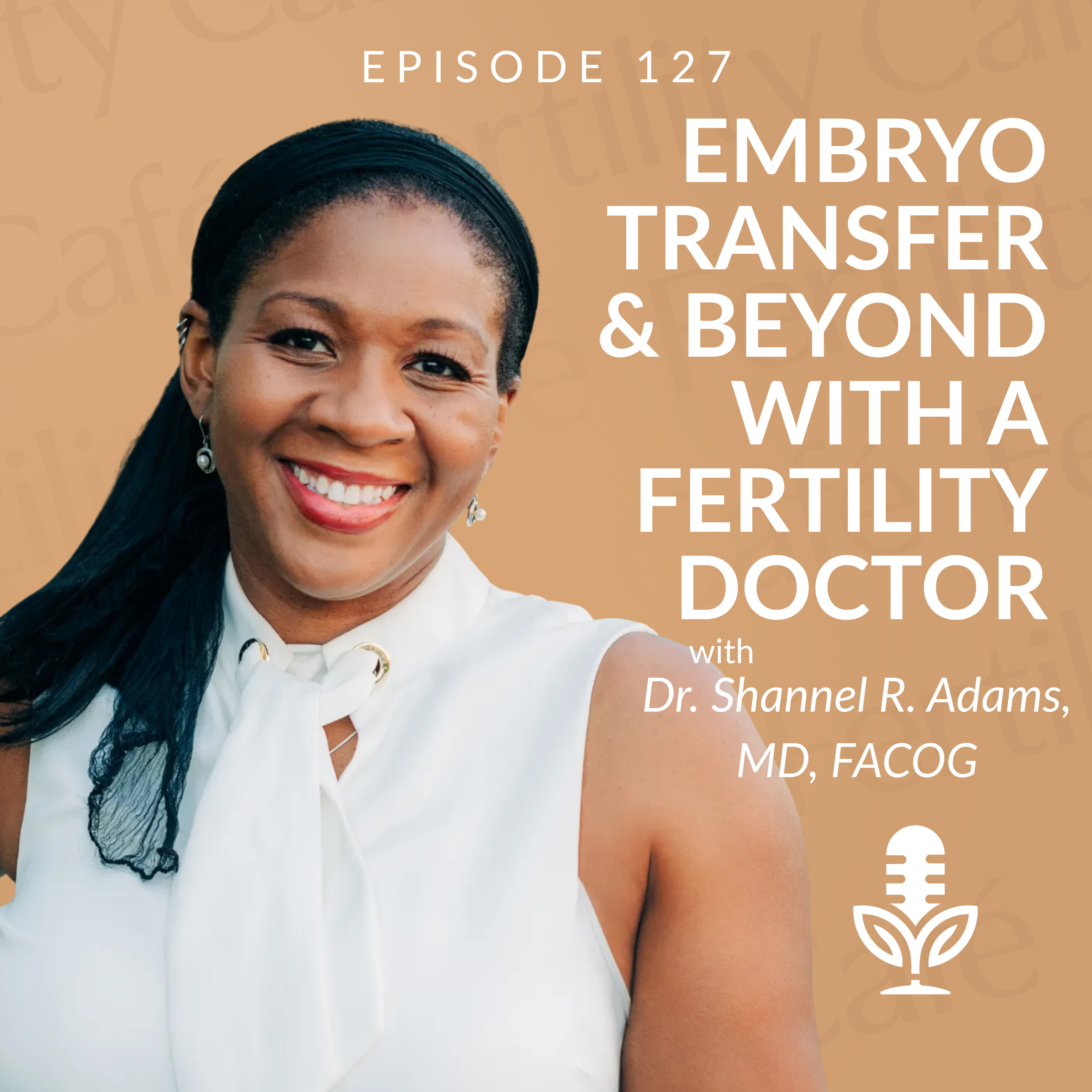
I'm sitting down with Dr. Chanel Adams from Pacific Northwest Fertility. She's a board certified reproductive endocrinologist and fertility specialist, and she works with a wide range of patients, including intended parents and surrogates. She has a strong background in third party reproduction on CO fertility, fertility preservation, male fertility, and she's really committed to caring for both the physical and emotional side of fertility treatment. Dr. Adams studied ethics at Duke, went to medical school at Oregon Health and Science University, completed her residency at the University of Hawaii, and finished her REI fellowship at the University of Cincinnati. She brings a thoughtful, balanced approach to this work, and she's great at explaining things in a way that actually makes sense.
[00:02:16] Speaker B: Dr. Adams, thank you for joining me today.
[00:02:19] Speaker A: I appreciate it.
[00:02:20] Speaker C: Yeah, I know. Good afternoon, good evening. Whatever time people want.
[00:02:24] Speaker B: I know. Exactly. So let's start by first sharing what drew you into reproductive endocrinology in the first place. Because I don't think that people know, like, there's a lot of steps that happen in order for you to even become an rei.
[00:02:41] Speaker C: That is. That's very true. Well, for me, I think the first draw in general was just to obgyn, which is because it was women's health. I come from a very big family. My mom's one of nine. I have like 39 first cousins. And so just being a young woman in a family which was predominantly women, I got very interested in women's health in terms of what could I do to be involved with women health and women taking care of women. So I was immediately drawn to ob gyn.
And then in med school, you know, four years, you are exposed to ob gyn, just the rotation, the physicians, what they do. And then throughout that, you do subspecialty rotations as well. So you're looking at fertility, oncology, urology, high risk, OB gyn, et cetera. And then initially in med school, I got to fertility, and I was like, well, this is an interesting thing of taking care of women, still having that continuity of care and really giving something that is precious that people always want. So that was my initial introduction to it, and I was like, maybe rei, but I don't know. I want to deliver babies. Then you go to OBGYN training, which is your residency after med school. Four years in my very first year, I knew it would be hard. Put your head down, work really hard, deliver as many babies as possible, and then at the end of the year, again, you get exposed to the subspecialties because you want to be a well rounded obgyn. And again, it just felt more normal to me to be with the rei because you had all the best of every part of the world. You had to do critical thinking and thought. You still got to do surgery, and you still had that continuity of care, like a more of, like, focused environment. You know, OB GYNs, you see people in the office and you deliver the babies. But here, you know, I could talk to my patients. I got to know them a little bit more. And you really, I think, at least for me, I felt like I developed a deeper relationship with them because, you know, from the first baby to the second baby or potentially miscarriages in between, I felt like I really got to know that individual and so, again, still got that continuity because people typically do come back.
So again, when I was in residency, I was like, okay, maybe I don't want to deliver babies every single day. Maybe I want to.
In this way, I'll help individuals to build their families.
And so after you finish residency, you do have to do a three year subspecialty fellowship where you learn all the things that are rei. So, you know, initially you learn about, like, a woman's cycle and ob GYN pregnancy itself, the complications, the delivery. But in the fellowship for rei, you learn about a little bit more deep into what really happens in a normal cycle. A woman's fecundity, her ability to conceive, things that impact her facility based on age. And you learn about, you know, male factor pcos. You learn all the little things that are important about building your family and how you can augment them, change them, et cetera. So again, it's the critical thinking part that I really liked as well, but I still got to use my hands because you still do egg retrievals and transfers and hysteroscopies, et cetera, after your three year fellowship, then you graduate. And people always don't realize that fertility doctors who were OBGYNs first and did fertility, not only did we train for seven years after med school, we had four set of boards. And so you have to take a written exam that tells you you have the complete knowledge for ob, gyn, generalist. Then you have to take another written exam. It's like three or four hours telling you have all the basic information for a fertility specialist. And then once you graduate, oral exams and they're three hours long, where you have to defend the fact that you can actually treat patients. What are the side effects for medications? What are the outcomes? How do you counsel them? And we all fly to Dallas and do that first as a generalist and then second as a fertility specialist. So I mean, it's seven years after med school, if you include med school, it's 11 years and you're doing four, four boards, two written and then two that are oral and then you're approved and they says you have the knowledge and then you go out and you're seeing patients as much as you can. So you also have to do a maintenance of certification every single year to be an OB GYN and an REI and an mfm. All things to do with gyn. Oh my.
[00:06:36] Speaker B: Okay. Yeah. Well, this is why God didn't call me to that field.
[00:06:42] Speaker C: Good God. Okay.
[00:06:44] Speaker B: So, yeah, that's a lot. That, that's a lot.
So obviously we are on this podcast to talk specifically to surrogates because, you know, obviously there's a lot of information out there for int parents, but I don't necessarily know if there is a lot of perspectives when it comes to educating the surrogates on what they need to know about what this entire process looks like for them. Right.
[00:07:14] Speaker A: So from your perspective, what tends to.
[00:07:17] Speaker B: Surprise the surrogates the most when they begin, like the medical process, we're going.
[00:07:25] Speaker C: Through it, that it can take the time, I think when you kind of get matched with a couple, I think people think it's going to happen immediately but there's so many things that need to be done, and oftentimes it can take longer than anticipated because that's one thing that you do need to get as a surrogate before you're able to go through the process, take hormones and have a transfer, you need to be cleared by your OB GYN saying that you can actually carry a pregnancy and there won't be, like, any significant issues for you. Because oftentimes, you know, when people are surrogates, which I think is a wonderful thing, they forget you're my patient, too. So I really do care about make sure that you're going to be safe in this journey.
And to do that, we need to make sure that we know about your past. So for OB clearance, we get all your records. So if you're a surrogate and you've had, you know, at least one delivery, which is typically what you need to have, but if you had more, the we have to have all of those where you delivered, how you delivered. Were there any complications to your pregnancy? Did you have to take any medications? Were you bedridden? You know, was it a C section? Was it a vaginal delivery? Was there, you know, a vacuum that was involved? Was there a shoulder dysocia? We want to know what your past was because that gives us more insight in terms of what would happen with a future pregnancy, a future delivery. If you're going to be a surrogate and it just be. And no one's perfect, I think everyone's like, I can only be a surrogate. I've had beautiful, uncomplicated deliveries. You know, people have diabetes, people have high blood pressure, migraines, and even people have, you know, depression and anxiety. That doesn't mean you can't be a surrogate. We just need to know how it impacted you in the past and other pregnancies to understand how it may potentially impact you in a surrogacy journey.
[00:09:02] Speaker B: So what do you wish every potential surrogate understood about the medical timeline itself before they start? So I know you said, you know, they come in and expecting like, it's a surrogate. She's already had a pregnancy before, so this should be easy breezy. But I don't think that people really, truly understand the magnitude of the screening and the process and all of the things that you have to go through ahead of time, especially the naysayers who are so dead set against surrogates or surrogacy in general, and that we're exploiting women. And we just, you know, take the women who are what they quote, poor and uneducated. And those are who are, you know, going to be surrogates. And it's like, well, that's the furthest from the truth.
[00:09:48] Speaker C: 100%. 100%. So usually, you know, with the OB clearance, getting all the records, it's much easier if obviously we're delivering an area like a hospital or clinics or if your OB GYN has a practice that's still open. Obviously people are in smaller towns or in areas that things have closed. It might take longer to get records, but usually we can get OB clearance in about a month or so, meaning that we can get all your records, they've been reviewed, etc.
The next part is just the genetics portion of it because oftentimes intended parents have genetically tested embryos. So there is a discussion for you to understand what those embryos, like, viability are the risk of with the potential embryos and if people like carrying disorders, et cetera. And then the third part is kind of like the psych, the mental health portion of it. You know, a lot of people again said, I finally got this place, I want to be a surrogate. I don't understand why they're questioning that. It's not questioning that. It is providing resources to understand how do you inform other individuals? Because when you get to the point where you're like, I want to be a surrogate, how do you tell your kids, how do you tell your family members? And also want to make sure that you feel supported and you have the right words, resources to explain those things to other people. Because sometimes individuals don't. And we. It's very important if you're in a relationship that your partner also is supporting this. You can't do this journey by yourself. And again, so make sure that everyone's aware of what will, what kind of like stresses you might be under and kind of like have a plan moving forward instead of like finding out in the middle that someone doesn't feel comfortable with this. You want to make sure that everyone is on the same page and kind of understands things.
[00:11:21] Speaker B: Mm.
So walk us through, like the core medical screening every surrogate completes and what this, I guess, stage is meant to determine.
[00:11:31] Speaker C: Yeah. So after you are cleared by an OB GYN and some people will need an MFM clearance or high risk OBGYN clearance, you have the Gen X discussion about the embryos and psychology and again, of course legal, but I won't get deep into the legal portion because that's not me. There's the screening to make sure that you can move forward to carry a pregnancy. And so it's usually just preconceptual testing things.
So we do basically verify people's blood type. Because there are individuals out there who have a negative blood type, like a negative O negative, doesn't mean that you can't have a pregnancy. But remember, if the pregnancy itself has a positive blood type, you have to take additional things like RHOGAM in pregnancy at 28 weeks and postpartum. And if you have any spotting or bleeding, your obgymes will want to know because you're going to get that RHOGAM early.
The second part would be to make sure that you're immune to certain things like rubella and varicella. Those are viruses that can cross the placenta and affect the pregnancy. So if you need boosters, you want to make sure you have them on board before you start to go through a frozen embryo transfer and carry a pregnancy. Then there's the cavity evaluation. You want to make sure that the inside of the uterus is normal, meaning that you don't have things like polyps, fibroids, or adhesions that would prevent implantation. And the way that we do a cavity evaluation is usually through something called an SIS or a saline sono histogram or infusion. Saline infusion, sona histogram. Typically, this is done when you're on either birth control pills or when you're not bleeding, meaning kind of like after days, five or six of your cycle, but before you're ovulating at, like, you know, 11 or 12, we put a very small catheter in the uterus, fill the uterus with water, and then do a transvaginal ultrasound to make sure that the inside of the uterus is nice and smooth and there's nothing in there that would prevent implantation. Now, if you have like a small fibroid or a polyp inside the uterus, again, doesn't mean that you can't be a surrogate that just needs to be surgically removed prior to going through the process of a frozen embryo transfer.
[00:13:22] Speaker B: So if somebody was, you know, had the same issue and they were going through and having their own child, this wouldn't necessarily be a problem. But because they are a surrogate, you know, let's say they had. They were going to be a surrogate and they had a blocked fallopian tube, would that need to be rectified before they went ahead and to become a surrogate? And why is that so important?
[00:13:50] Speaker C: Yeah, so looking at kind of the anatomy. So let's say Someone had tied tubes definitely can be a surrogate because you don't, you don't need tubes in order to carry a pregnancy. You just need to have a normal uterine cavity. If you're an individual who had lost one tube, again, same thing. Tube is not that important. The only thing in terms of structure when it comes to the tubes that may impact whether or not you could carry a pregnancy as a surrogate. But if you, if you had a known, what's called hydro salpinx. So that's when the fallopian tube is dilated and can have water in it. Typically individuals know this beforehand because they potentially had fertility issues themselves or potentially they had surgery or potentially they had pain and had an ultrasound or something and they were told that if you have a hydrosalpinx, which is when fluid has been kind of accumulating in the fallopian tube, a, it is linked to infertility and implantation issues. So that too, for the most part, needs to either be removed or occluded or clamped off prior to being a surrogate. Again, it doesn't preclude you for doing it, but it does need to be addressed prior to that.
[00:14:54] Speaker B: So I know we've been talking about saying that the surrogates need to have an OB clearance.
What does that actually mean and what I guess factors determine whether she's approved to move forward, you know, from this medical clearance.
[00:15:12] Speaker C: Perfect. Yeah. So in terms of like OB clearance, one, you need to have an OB GYN who is willing to take care of you. Right. Clearance is you have somebody who is committed to taking care of you during this pregnancy and has also looked at all of your kind of like background and saying we're not doing any undue stress or risk to yourself or the pregnancy of which you're going to carry.
So typically the OB GYN again will look at your records and look for any major red flags, meaning things that you, you shouldn't be carrying a pregnancy yourself. So for instance, you're an individual who has, let's say, a cardiac problem where you wouldn't have the ability to push a pregnancy out because your heart couldn't take the strain of it. It is a little bit of an extreme circumstance, but if you yourself couldn't carry your own pregnancy, you wouldn't be clear to cover carry someone else's pregnancy.
Likewise, if you've had, you know, like three or four C sections, the more C sections that you have, it's a higher risk of having a repeat C section where you potentially could either not get in. You could potentially have complications like cutting into the bowel or the bladder or other surrounding organs, which would make you such a high risk of a pregnancy that not only would your OBGYN tell you not to have a pregnancy, they would say it would be, you know, against their recommendations or you would need to do extra stuff and get your own personal mfm. So if you had things within your history where your OB GYN felt like it wouldn't be good for you to carry a pregnancy, that's what we kind of want to know.
Not that you have minor high risk things. Meaning that if someone, your OB GYN said, you know, I don't think you should carry a pregnancy at all, doesn't matter if it's someone else's embryo or your own child. Those are things that we need to know from the OBGYN for clearance. And again, clearances, being that they're saying, oh, it's okay, I will take care of this individual, I know I can take care of them. I'm not, I don't think they're going to have undue risk carrying a pregnancy.
[00:17:06] Speaker B: So what about blood work that you are running during screening and what is it actually testing for?
[00:17:13] Speaker C: So as I said before, blood type, you know, the, the other one is your preconceptual labs like the varicell, the rubella. The other one is kind of FDA testing or screening. So, you know, being a surrogate, you are under kind of the FDA realm of third party reproduction, where you're using other people's tissue, such as sperm, egg or embryos that are not from yourself or your sexually intimate partner. So therefore the FDA is in charge of that. So the FDA testing that's done is looking for the risk of communicable diseases. And so that would include things like hiv, hepatitis B, hepatitis C, syphilis, you know, even chlamydia and gonorrhea. Now, the sources of the gametes, like the egg, the sperm or even embryos are also tested. But then the surrogates also test as well for baseline to make sure that you don't have these things or you haven't been exposed to them prior to having the tissue be placed inside the body, which would be an embryo.
[00:18:10] Speaker B: So is also pap smear or a physical required as part of the medical clearance too?
[00:18:17] Speaker C: Yes, yes, yes. So your normal screening that you would have with your ob gyn, such as Pap smears and mammograms, age based screening, those things should be complete as well, meaning that you are up to date Again, your OBGYN would allow you to carry a pregnancy yourself or for someone else.
[00:18:32] Speaker B: So what if someone had an abnormal Pap though?
[00:18:35] Speaker C: So if you have an abnormal Pap smear, it's something that needs to be dealt with again prior to being, getting cleared or going through the process of being a surrogate. And the reason why is this is cancer screening. Whether it's the cervix or the uterus or the, or the breasts. You don't want to have to deal with unknown cancer while you're carrying someone else's child or even your own child. You don't want to be pregnant and have a cancer diagnosis because the treatment for cancer would ultimately affect the pregnancy or there may need to be a termination during that timeframe. So yes, it's very important to have your age based screening. Now, if you have an abnormal Pap, it does depend on the type of abnormality you would have. You know, some people can have low level abnormalities or high level abnormalities and typically your ob GYN does go by national guidelines in terms of what is the follow up. Do you just need a colposcopy? Do you need a repeat Pap smear? Do you need things like a leep, which is when they cut a little portion of the cervix to take the abnormal cells out. But basically, if you have an abnormal Pap smear, you need to go down national guidelines to say that this is a low risk and it likely won't transition to things like cancer.
[00:19:40] Speaker B: So you spoke earlier about partners also need to be involved, especially on the psych side, which we're not going to necessarily get into right now. But why, why are, are they part of the process and like, what is the tests that the partners also need to do? Because we've, we get surrogates often they're like, well, you know, he, my partner has nothing to do with this. So why do they have to be a part of anything? You know, they're fine with me being pregnant, but it's like, well, no, they have to be part of the whole screening as well.
[00:20:19] Speaker C: Correct. And again, the reason why is going back to what the FDA is trying to do, which is not to expose people to any infectious or communicable diseases. So if you have your own sexually intimate partner, everyone who's involved is tested again. The egg, the sperm, the embryo, the person who's carrying the embryo and their sexually intimate partner, though your partner's not carrying the pregnancy they are involved through, you do need to be screening them as well for infectious diseases. Or communicable diseases.
[00:20:46] Speaker A: What about drug screening?
[00:20:48] Speaker C: Drug screens are very important as well. I mean, egg donors along with surrogates are also screened for that because again, these are things that can be egg and the pregnancy itself.
So yes, it's very, very common that drug screens are done again to make sure that there's no again, risk to the pregnancy or creating the risk. A high risk pregnancy, you know, doing things like drugs have been shown and proven to have poor outcomes associated with pregnancy.
Yeah.
[00:21:16] Speaker B: What about since. And I know you're in one of the states that does allow it, marijuana.
[00:21:22] Speaker C: So yes, typically no. And the reason why is because, you know, we do have information that smoking in general is bad for pregnancy, can affect things, high blood pressure, placental abruptions, et cetera. But again, it's an exposure to a toxin that can impact the development of an embryo or a pregnancy. And I do live in a state where it is legal, but it's not something that is recommended during pregnancy. I mean, being over 21 and drinking is legal, but you're not supposed to drink in pregnancy.
[00:21:53] Speaker B: So what if it was someone was like, well, I'm using it now, but I'll stop, you know, when I start the process.
[00:22:02] Speaker C: Well, I mean, it takes a long time to stop doing something that's, you know, normal for your, you. That's the reason why a lot of people get drug screened because you can say, I'm going to start right before, but where's to say that you might not overlap or you might not forget. So you want to make sure that you are stable off of taking any kind of like thc, whether they're smoking edibles, et cetera, because then you won't need them or potentially slip up, if you will, because it can happen very easily in a pregnancy. And again, this is very important because it is contractual between yourself as a surrogate and the intended parents. Yeah. Yeah.
[00:22:33] Speaker B: Okay. So we have a surrogate. She's passed all of the medical screening, we have the legal contracts and now she's ready to get started with the process and in getting her cycle schedule and is going to start, you know, a medication protocol. What can you explain like in simple terms what the medications are, you know, estrogen, progesterone, all of the things.
[00:23:00] Speaker C: Yeah. At least at our clinic we have either one of the MDs or the apps, have a consult with a surrogate. Again, we consider them to be a patient of ours as well. Just to go again, go over their, their, their history and explain the medications a little bit more in depth. So for the most part, surrogates are going to do what are called program cycles, mean that we're kind of programming our timing when we would do a frozen embryo transfer. So oftentimes you are on birth control pills again because we don't want you to ovulate or grow your own egg during this process.
After the birth control pills, which puts people in kind of a hormonal baseline, if you will, you will take some form of estrogen, you know, in a normal or spontaneous cycle, typically a growing egg and the ovary makes estrogen. In a program cycle you take make external estrogen, help the uterine lining thicken up. And that can be in different forms depending on the clinic that you're at. It can either be through estrogen patches, oral or vaginal estrogen, or injections of estrogen called del estrogen. And again, depending on the type that you take, whether it's a patch, a pill or an injection, it could be potentially daily or it could be changing kind of like every other day or every two to three days.
Usually after about two weeks of some form of estrogen protocol, you have to come in for an ultrasound to make sure that the uterine lining has grown or developed to where it's thick enough for an embryo to get implant. And again, each clinic is a little bit different, but typically kind of the baseline is at least a lining of 7 or 8 millimeters also that you don't want to have anything else in the uterus like fluid or any again, polyps if they weren't diagnosed prior before saying that the lining looks good. There's no fluid that would potentially be in the way or any kind of structural things that would be in the way of implantation of an embryo.
The next part is to get the uterus from kind of a thick area to like, is it going to be receptive? The sticky part that we always say, and that's when people need to take progesterone. And again, typically the progesterone is progesterone in oil, a daily injection. And then some clinics do also involve vaginal progesterone or even oral. Again, it depends on, but I would say the most traditional progesterone is progesterone oil, because that's what we've used the longest and is associated with a higher likelihood of actually getting pregnant with that first transfer, if you will.
I always kind of tell my, my surrogates that when they're doing the progesterone oil, it's not the most comfortable thing, but there are little Actual tips and tricks, if you can. It is oil, so it can lead to some knots after the injection. So I always tell individuals to maybe use an ice pack to kind of chill the area, which is again in the bottom, as well as once you do the injection, kind of heating it up with like a warm packer of beans to kind of help it kind of dissolve into the muscle. So you're less likely to evolve those. Those little knots because again, after a couple of days of those injections, it's sometimes a little bit sore when you're sitting down. But again, there are ways to kind of get around that. Typically, after the prescribed amount of time on progesterone is then when somebody would come in for the transfer.
After the transfer, because the body or ovary isn't making any hormones, you do have to continue the estrogen and progesterone usually till about at least 10 weeks of pregnancy.
[00:26:05] Speaker B: So you were just mentioning about the progesterone. And I, Lord knows I have some stories of my own when I was doing the progesterone injections anyway. But as far as the side effects of medication, is there side effects to.
[00:26:22] Speaker A: Any of these medications that you have to take?
[00:26:25] Speaker C: Most definitely, because they are hormones. Everyone, again, is different in terms of how they respond to hormones.
I would say with estrogen, usually most women love estrogen. It's when we are at our happiest. I would say kind of mid cycle.
But that being said, you know, higher levels of estrogen, some people can be sensitive, and I always tell them they might get a little bit more sensitive about things. Constipation can sometimes happen with progesterone, which is very similar to the first trimester. As most people would know who have been. Have carried a pregnancy before in terms of, like, the different forms of estrogen, the patches are actually pretty nice. Most people don't have kind of any kind of a contact dermatitis, but there are some people with sensitive skin. So again, it's good to talk to your clinic about what their type of estrogen is.
But oral or vaginal estrogen typically don't have any side effects. But anything that you do put in the vagina, whether it's estrogen or progesterone, you will have discharge. So that's not so much a side effect, but something to be aware of, because having little panty liners are very helpful during that timeframe as well.
[00:27:22] Speaker B: So you mentioned earlier that they have to do a baseline ultrasound.
[00:27:27] Speaker C: Yep. So.
[00:27:29] Speaker B: And that's before they start meds.
[00:27:31] Speaker C: That is true. That's when they're usually on the birth control pills. The birth control pills again put them in a suppressed state. Their estrogen level is low, the progesterone level is low, the uterine lining is usually thin and there's usually no follicular development in their ovary, so no follicles or eggs developing.
[00:27:47] Speaker B: So do they need to be on birth control even if they have their tubes tied or their partner had a vasectomy?
[00:27:54] Speaker C: We usually say yes. And the reason why is that you never know. Nothing is 100%. If you have a partner who had a vasectomy, you know, I've had people who've gotten pregnant even though they had partners with vasectomies. So we have to again make sure because sometimes you have an alternative partner or maybe it didn't work all the way. And then again the same thing with getting your tubes timed. Typically we do do HSGs after tubal, your tubes are times, but you know, nothing is 100%. You can look at all forms of contraception from pills to condoms to vasectomies to getting your tubes dyed. And because this is so important, we typically just treat everyone the same and we prevent any kind of concern for pregnancy because there can't be any question between you and your pregnancy or the intended parents in their pregnancy.
[00:28:41] Speaker B: I'm sorry.
[00:28:42] Speaker C: Annoying.
[00:28:42] Speaker B: But yeah, no, yeah, yeah. Well, we've, we've had some situations. So. Yeah.
So when she does her baseline, gets on meds and then they typically have to do another follow up or another like lining check or midline.
[00:28:59] Speaker C: Yeah, it's about two weeks after the initial baseline. But some individuals may not be ready according to the clinic's preference for how thick the lining is. So you may have to have a second follow up. But most people have a sufficient lining within one to two follow up visits.
[00:29:14] Speaker B: So I know you had mentioned like thickness and overall look and you know, general example of numbers, but why is that so important?
[00:29:24] Speaker C: Because it's been linked to either being successful with an embryo transfer or having a failure. So the thickness of the uterine lining is definitely important for actual implantation of the embryo. There's been lots of data that's done been done on it with just typical IVF cycles at a whole. Again, each clinic has their own criteria, but I would say in general most clinics want your line to be greater than 7 millimeters or greater than 8 millimeters. And then when we look at the uterine lining, you know, you'll notice when you have your first ultrasound, you know, when you're on your period, the lining is kind of gray and what we call homogeneous. But in the middle of the cycle, when there's good estrogen around, it has an appearance that's called trilaminar. It's actually these three lines are very important that says that it's kind of developed to a point where it would be receptive and an embryo potentially could stick.
If for some reason you have a thick lining but it's not trilaminar or there's fluid in them, they are not associated with good implantation. So you potentially may have a canceled cycle and they need to start again, or potentially may need more evaluation of the uterus.
[00:30:26] Speaker B: So if that was the case and they didn't have it wasn't quite ready yet, what are things that can be done, if anything, or would they have to cancel the cycle altogether?
[00:30:38] Speaker C: Well, if the lining looks, you know, trilaminar, again, like I said, the look we wanted to look about, but it's just a little bit thin. Like six or, you know, in our clinic we like eight, but if. Or seven. Typically what we do is continue the medications because we also, at the time of the lining, check, check your hormone levels to make sure the body's absorbing the estrogen appropriately. So if need be, sometimes we add additional estrogen or increase estrogen, and then we usually just have people come back a week later. And usually the body is ready at that time. I wouldn't say 100% of the time, but probably about 90% of the time.
[00:31:09] Speaker B: So once they're good to go, you're like, okay, we have transfer day.
So what does that actually look like? How long does it take? You know, like, how can you describe, like, what the whole setup is?
[00:31:25] Speaker C: Sure, sure, sure. So transfer days, very just a slid. Just a little difference between each clinic, but it's about the same. Typically what happens is we would have you come into the office transfer typically happen the afternoon. Most people have you come in kind of like 30 or 45 minutes before the actual transfer timeline. One important thing is that, you know, people have to be for. Is that we do like people to have a partially full bladder on the day of the embryo transfer. And the reason why is because your bladder is in front of your uterus, and when it's full, it tilts the uterus back so it's easier for us to get catheters into the uterus to transfer the embryo. So most people will come in with like a partial or full bladder. So please don't pee before you come to a transfer because Then we'll just have to wait until your bladder fills up.
They usually take you back to the transfer room, which is a little bit different for each clinic. Sometimes it's in the operating room, sometimes it's in an ultrasound room, sometimes it's sometimes in a specific transfer room.
Typically again, you get undressed from just the waist down. And then what will happen is usually an ultrasonographer or another MD or a nurse practitioner will check the uterus, meaning that they'll do an abdominal ultrasound, so an ultrasound on the tummy to see kind of what angle is the uterus. And we prefer it to be kind of like at a kind of a 45 degree angle or a little bit flatter, ideally because it's a little bit easier. If the uterus looks appropriate and it's ready, you know, there is the time that we have you follow up with the embryology team. So they usually come in, identify that this is the embryo that's being placed, talk about it's great, et cetera. And then again, it depends on the intended parent for the surrogate as well. The reason why is because sometimes intended parents will be in the room with you and you should discuss that beforehand. Or sometimes you may be in a different area. So they may want to FaceTime in or they may not be involved at all on the transfer day. But oftentimes clinics do allow you to have some form of support, support person if you want them to be with you as well. But again, that's something I think you should discuss because each clinic is a little bit different about who's going to be actually in the room because there's not a lot of room in a transfer room. So it can't be like eight people once we're ready for the transfer. You've talked to embryology, Intended parents have signed everything, consents have been signed. The doctor who's going to do the transfer places a speculum and it's just a normal speculum like if you were having a pap smear. Usually the cervix is kind of prepped or cleaned off with soft swabs. Some people use kind of media, et cetera, depending on their protocol. And then we use little small catheters to get in the uterus. And these catheters are teeny like the size of like an angel hair pasta noodle. And usually they are kind of thread through the cervix and they come to just before we would enter the uterus. When you're ready. We know as a physician, we usually tell the lab or the embryologist that we're ready. In my clinic, you can actually see the embryo being pulled up on the screen behind you during the transfer.
Then the embryologist brings it in. The catheter is thread through the outer catheter through the cervix up to the top of the uterus. And then we kind of push a plunger to release the embryo at the top of the, of the uterus. Now, this procedure should not be painful. The catheter is very, very small and we're putting in the smallest amount of fluid at the top of the uterus.
Bladder is perfect. I would say that most transfers take anywhere between like five and ten minutes.
[00:34:32] Speaker B: Okay. I was going to ask how long that whole process takes.
[00:34:35] Speaker C: Weeks. Most of the time it's, it's quite straightforward. A lot of it's just talking in prep before you actually do the transfer, after the transfer is done. Again, each clinic can be a little bit different. Some people may have you lay flat for about five or 10 minutes before you're able to go. And then some clinics will allow you just to get up, empty out your bladder and leave. I mean, they have done studies. There really is actually no difference between laying flat for, you know, 5, 10, 15, 30 minutes and getting right up. However, clinics are very particular if we will and we don't, if our rates are beautiful, we don't want to, we're not going to change the protocol. So if it's not. So you may have a different protocol in terms of what you do after your embryo transfer. Depending on the clinic.
[00:35:14] Speaker B: So yeah, I was going to say depending on the clinic. I mean, we've had, including myself, I've, you know, laid there for five, ten minutes or whatever. And you can get up and go about your day. I'm just taking it easy, obviously for the day. And then some clinics require you to be on full bed rest for, you know, the day or sometimes even two days. So.
And obviously you said that that is a clinic based. But do. Why is that so different though?
[00:35:41] Speaker C: I mean. Well, if you think about the history of IVF in general, you know, the first IVF pregnancy, I believe she laid flat for like two weeks.
And so no one's gonna do that. So we've gotten better in the lab, better in terms of creating embryos, culture embryos from day three today, now five, six and seven.
So for the most part, the thought is that could it potentially disrupt the embryo. But again, they have actually looked at numbers and studies and there's really no difference. And I have to Be completely honest, as a clinic, it's really hard to change something if you're doing really well. So this difference is just based on the clinic's preference.
Again, I don't think it's going to hurt you whether you lay flat for 10 or 10 or 15 minutes or get up right afterwards. But again, the taking it easy part as well, they look in studies and there wasn't really a big difference. And it's just the clinic's preference because again, everyone has their own data internally, so they just don't want to change it, unfortunately. So you need to be very clear as to like, what are my requirements? And just so again, hopefully follow them because that just makes everyone feel comfortable.
Main thing on the day of the transfers, I think that's the most important day, is just to take it easy. And people are like, what does that entail? I said taking it easy is like if you were off one day, kind of go home, watch tv, but you can get up, you can cook, you can clean. I mean, I don't want you to be lifting weights or going out for an eight hour bike ride or in that day just taking it easy. Like when you had a nice relaxing day off, do that, right? Yeah, we'll do. Or some clinics do require you to do that for the second day. And again it's bed rest. But when people say bed rest, they don't anticipate you're going to be laying in the bed all the time. You are allowed to get up and go to the bathroom, you're allowed to get up and take a shower. But usually most clients who say bed rest kind of wants you to be laying flat for the most part. Heart, either the day of the transfer or the day of the transfer and after.
[00:37:27] Speaker B: So do. Is blood work required too for like the day of the transfer or depends on the clinic.
[00:37:33] Speaker C: Some clinics do like to get a progesterone level again just to verify that you've been taking or you've been absorbing enough progesterone.
If you had other medications like thyroid, because you were on levothyroxine, because you had hypothyroidism, they might require that on the day of. But again, it's usually specific, specific to the clinic.
[00:37:51] Speaker B: What about, okay, you've done this transfer, you've done all of the things and now is that that dreaded two week waiting period of you just have to kind of wait to get this blood test done.
And you know, as many times as clinics say don't do the blood test, you know, I mean Blood test. Don't do the pregnancy test at home or, you know, whatever. Wait until the blood test. That is when, you know, we'll really know. But what is that process like?
[00:38:20] Speaker C: Yeah. So, you know, again, yes, I completely agree. Please don't cheat.
Because when you're taking urine pregnancy tests at home, they actually have a very high false positive and negative rate. They're not really trustable. But blood doesn't lie. So for the most part, don't take those things because, you know, people have made mistakes where they took it and they thought it was negative and again, have stopped meds and found out that it was positive and that could affect the outcome. So don't track.
The doctors will check. We will call you and tell you with next steps. Typically, you're coming in like nine, 10 or 11 days. You know, they say two weeks, but now we have better tests after your transfer for a beta hcg, which is the pregnancy, the level. Usually every clinic has kind of a cutoff of what's considered to be positive. And then we repeat that usually two more times, oftentimes two days apart or on even days, if you will, because we're looking for the blood test. Once we know that there's positive implantation, a positive beta HCG to go up, specifically a certain amount every other day, if you will.
[00:39:22] Speaker B: So what is the levels, though? So if somebody comes in for a blood test, like, what is like a. A normal range for. Yeah, for you to have to be.
[00:39:33] Speaker C: Positive would be probably at least 50 or so. But most I would see for their first beta HCG would probably be over 100.
And then again when it goes up every two days, everyone always hears about the doubling period. It doesn't technically double to be normal, it has to go up about 53%.
But again, we follow people very closely because there are people who are outliers that are a little bit different.
Likewise, if you're getting your blood drawn at different places, the clinic or LabCorp, their machines are not the same. So sometimes there can be some inaccuracy between them. So again, we try to fall based on people's symptoms, blood work. And again, we are very obviously, I think we are like the biggest optimist. We're not going to do anything that would stop the pregnancy from growing. So we're going to watch people very closely.
Even if you have kind of some things that are not rising appropriately, we still may monitor you and say, continue your meds. And oftentimes we may change when you come in for your first ultrasound. So whether it's with the actual fertility clinic or with like your general OB GYN or a local ultrasonography place or radiology place. You usually have your first OB ultrasound after positive test around six, six and a half weeks. If these are not as normal, we might have you come in for early ultrasounds at like 5 and a half ish weeks and then monitor closely after that. But typically, hopefully everything's positive, goes up appropriate two times with the blood work. Your first ultrasound is at six and a half weeks. If everything looks normal, then your second one is about eight and a half weeks and then the hope is in about two weeks later you would just transition onto your normal OB GYN for treatment care, et cetera.
[00:41:08] Speaker B: So when you say six and a half weeks, so is that six and a half weeks gestation or six and a half weeks, like you've had the transfer and now you're literally waiting six and a half weeks in order to go get the blood ultrasound.
[00:41:21] Speaker C: Well, so unfortunately we have to give you a period, if you will. So, you know, if you remember back in terms of how we, you know, do the gestational age for a woman for a pregnancy, we base it on their period. But you're not pregnant the first three and a half weeks. You have to kind of grow an egg. You release that egg and it will be fertilized in the fallopian tube and implanted. So for the most part you're about three and a half weeks. Three and a half weeks. Weeks when you have the transfer of a five day embryo.
So we calculate your period and the due date based on the transfer date. So usually after your transfer, six and a half weeks would be about three weeks later.
[00:42:00] Speaker B: Okay.
And that's what I wanted to make sure it was clarified because I think sometimes when people hear six and a half weeks, they're literally like, oh gosh, I have to have the transfer and then I have to literally wait six weeks in order to be able to come and do this ultrasound.
[00:42:15] Speaker C: Ultrasound, yeah, yeah, six weeks. You're almost going to your obgyn, you're almost done with all your meds, which.
[00:42:23] Speaker B: Is a blessing in disguise.
[00:42:24] Speaker C: Yes.
[00:42:29] Speaker B: So when a surrogate is being, okay, so she's done the blood work, the levels are increasing and we have had kind of going back to what you had said about you want to see at least a minimum of 50 and, and you know, don't always assume that nothing is working because we have had surrogates that have had blood work. Their levels came back at 53 and they come back to two days later for their blood test and it's like now 700 or something crazy like it literally just off the charts.
[00:43:02] Speaker C: That's correct. That is correct.
[00:43:03] Speaker B: But why, why does that happen though?
[00:43:06] Speaker C: Well, I mean, everyone's a little bit different. It's a hormone level, so we actually do ranges of it. So if you look at, at the beta HCG level, it's supposed to go up, but it's not always linear for each individual and you impact that as well. And again, where you got your blood drawn, because we run these analytes for your blood on different types of machines. Like just if you went to like a lab corps, a quest or a clinic and they all have different machines that have different ranges that process the blood. So again, sometimes if you get it done at a lab course versus if you got it done at the clinic, the lab, the clinic would say you have a slightly higher level, but the LabCorp may save slightly less just the way that the blood is processed. It's always annoying to us as the providers, especially because we have our own in house machine. Those machines are calibrated every single day. And again, actually there is an okay amount of being off, if you will, percentage of being off, range of what's normal.
So if you go to maybe a smaller place, maybe they're not calibrating the machine as well. And that's why sometimes we'll be like, okay, you got it done there, how about you get it done over here? So always work with your clinic because they may say, well, let's have you run it again, because that number doesn't make any sense.
[00:44:19] Speaker B: So once we have the blood work, it's good to go. We have the ultrasound. How many ultrasounds do they normally have to have?
[00:44:27] Speaker C: Typically two after the transfer.
[00:44:30] Speaker B: Okay. And then they'll have the ultrasounds and that.
Do they have to go back to.
[00:44:37] Speaker C: The clinic or not local to the clinic. It may be with your obgyn or it may be at a radiology place, but sometimes other things happens and your provider or the doctor may want to watch you closer. So you might have more ultrasounds. It just depends on if you're meeting all the criteria. We want because again, we want to be very conservative and we want to watch people very closely to make sure that everything's going to be normal.
[00:44:59] Speaker B: What happens if during this whole process and someone starts bleeding? Does that automatically mean that it's a miscarriage?
[00:45:07] Speaker C: All and actually, to be completely honest, about 25% of normal pregnancies outside of IVF have some form of bleeding or spotting. Never stop your medications unless you talk to the provider or the team that's here that we verify that you should stop them. If there is bleeding, there's always an on call individual, whether it's a doctor or a nurse practitioner overnight. So you would just call the on call physician or provider, tell them what your symptoms are. If you're bleeding, how much bleeding is it still happening, if there's any cramping, et cetera. And oftentimes they may say, say, oh, you've having, you know, like you had bleeding just when you went to the bathroom, but nothing. Yes, you're not cramping, put a pad on, we'll see you tomorrow. Or we'll have someone see you tomorrow. Or if you're like, I'm actively bleeding, I have a lot of cramping. They may also tell you to go to the emergency room again, just so you would have more urgent care, an ultrasound and blood work, et cetera. But again, just because there is some bleeding in the early part of pregnancy, it does not equate to a miscarriage right away. Just means that you need to talk to someone and need to have some form of evaluation whether it's that night or the next couple of weeks, days.
[00:46:07] Speaker B: So is it normal to have bleeding? Even going into like you're getting ready to your 10th, 11th week, everything looks great and then all of a sudden you start having bleeding and now you, obviously everybody is panicked because, you know, they say once you get 12, 13 weeks, everything should be smooth and, you know, you can let everybody know that.
[00:46:32] Speaker A: You'Re pregnant now and blah, blah, blah.
[00:46:34] Speaker B: But, and for whatever reason, I think it was last year or maybe the year before, we had a lot of surrogates that had.
Why did I just forget the word of the.
[00:46:47] Speaker C: The kimora? Yes, yes. So that's the most common reason why people actually have bleeding where maybe potentially a part of the placenta lifted up a little bit, there's lots of bleeding, usually painless, and then it stops.
So you can have it earlier on in pregnancy or later if you do. It's something that we just monitor.
I usually recommend pelvic rest. So no intercourse, obviously nothing inside the vagina.
But bleeding come from a lot of different places. Subcurring hemorrhages most definitely can happen and we monitor them with ultrasound and symptoms. But sometimes people don't realize that the cervix itself can be irritated. And so if there's a part in your cervix because you were using suppositories and people use the applicators oftentimes to push them up. They could scratch the side of the vagina or kind of nick the cervix. So it's like having some irritability. So you'll be like, every time I walk, wipe, I see bleeding, I see bleeding, but it's coming from the vagina and not the uterus. So, again, tell the provider or whoever you talk to, how often are you having the bleeding? Is there anything that makes it better or worse? And oftentimes we do ultrasounds to see if things are okay. Or sometimes we may just do a gentle speculum exam to kind of look and be like, oh, actually that's coming from the side of the vaginal wall. It's not hurting anything. But maybe don't use the applicators because, you know, it's more irritating to use. Maybe just use your finger, moisten the tablet to put it inside the vagina. There are other reasons and other places you can bleed. And I must say, also, I. I've had a surrogate before where it actually wasn't vag. She had a hemorrhoid and didn't realize it until someone actually looked.
[00:48:08] Speaker B: Hmm.
So, and to go back real quickly, you mentioned, you know, obviously, no not being sexually active. But why is it. Is it also important not to be sexually active?
Obviously, before transfer, clearly, but during that time period, too, in which you've had the transfer and now you're kind of waiting for that blood to test?
[00:48:33] Speaker C: Well, yes. I mean, in general, no. We don't want any sperm in the area when we're going to do things with a transfer. But in that early part of pregnancy, oftentimes it is in the legal contract to not have intercourse, because intercourse can cause, like, natural trauma to the uterus, bleeding. And also, you know, you can have actually cramping due to different things, like. Like intercourse.
[00:48:55] Speaker B: So I know we've kind of just talked like, a whole lot in, like, this. It seems like it's a long time, but it's so much information.
But what. I guess as somebody is considering becoming a surrogate or going down this process or, you know, starting this process.
Is there anything that we didn't talk about that you like? They absolutely need to know this.
[00:49:23] Speaker C: I mean, it's just a small thing, I think, for me. And it's. When you're doing the mental health consult, if you have your children of your own, you know, sometimes getting them involved in making sure that they truly understand that this is just not going to be a new Brother or sister. This is going to be. You're having an. You're having a child for someone through surrogacy. And they have actually a lot of wonderful children books that explain this, that can actually break it down for children. Partner will understand, but your four year old may not understand because a new playmate for me be like, no, no, no. You know, we're doing this and for these reasons. So it's really funny because I think people don't think that a child that young may be able to comprehend that. But oftentimes if you explain it to them at the level, like I said, using some of these books, they're like, oh, yeah, of course Ami is having a baby for someone else. She's a surrogate. She's a superhero. That's totally true.
[00:50:11] Speaker B: And you know what? I just remembered one last question. Sorry, I'm going to jump back real fast. What about once you are released to your ob, is it like a normal pregnancy or is it high risk or. You hear so many different people say different things.
[00:50:27] Speaker C: Oh. So I would say kind of twofold. It is truly just another normal pregnancy because you've gotten through the first trimester with your, you're with your OB GYN now. That being said, you're going through the normal screening that you would have with a pregnancy. So there are things that can happen. You know, people do sometimes develop high blood pressure in pregnancy, means you have to have more additional monitoring that would be considered to be high risk diabetes in pregnancy. You would need to have insulin and glucose monitoring that would be considered to be high risk risk. And there are some data that says that people who have pregnancies through ivf, that the pregnancy itself potentially could have some cardiac things.
So there are some pediatric cardiologists and some maternal fetal medicines that at baseline, because it's their policy, may have IVF pregnancy, have an echocardiogram. It's not universal, but it is something that I bring up because they're like, well, why do I have to do that? And it's because of certain clinics have a different policy. Policy. Okay.
[00:51:22] Speaker B: Well, thank you so much, Dr. Adams, for taking the time to walk through this with us.
So for anyone listening who wants to kind of learn more, connect with you, where can they find you and follow your work at Pacific Northwest Fertility?
[00:51:38] Speaker C: Well, yeah, I'm at Pacific Northwest Fertility. We have two centers, one in Bellevue and Seattle, Washington. They can find me on Instagram at chaneladamsmd or they can look at our PNWF website. Pacific Northwest Fertility we have a lot of other providers that are also on social media, YouTube, et cetera, like Dr. Laura Shaheen. And then, you know, any questions, concerns, they can always come through our clinic. We don't have our own surrogacy agency, but we work with a lot of reputable clinics. So all you have to do really when you're getting matched with someone is just kind of see who is the clinic that's going to take care of you. And so you can see who your doctor of record is. And again, if you want to meet them, I don't mind when people are like, I just want to meet the doctor that's going to take care of me. I'm happy to talk to you at any time or having a quick or brief consult to talk about about the process, our clinic, et cetera. But for the most part, most clinics have a third party reproduction team and they're going to do their best to explain any questions or concerns you might have or how the clinic functions, who's your point of reference and who can you contact if there's any issues or problems. And also to be completely honest, your agency is going to take great care of you because that is their job. They are going to be first advocate advocate, which will be your agency to make sure that you're not going to a clinic that's going to take advantage of you or not going to explain things to you because it's, you know, you're a part of the process as well. As I said before, my surrogates are my patients as well. So I want them to be informed, to understand and feel comfortable to ask any questions. But again, the agency itself is going to take great care of you, make sure you're going to the right clinic, all that, you know, you have the right context of that clinic and you don't feel like you don't know what you're doing or why you're doing these different things.
[00:53:17] Speaker A: Right?
[00:53:17] Speaker B: Yeah. And you definitely want to know. And I mean, and obviously the surrogate doesn't necessarily get to pick the clinic or pick the doctors, but you do get to pick your intended parents and you do get to speak up for yourself and advocate for yourself and ask the questions that you need to be asking.
[00:53:34] Speaker C: Right. Find out who on the team is again, your go to. There's always somebody or should be somebody on that team. If you have a problem or concern, you can be like, hey, I need to talk to this individual. And usually it can be either phone or a lot of people just given a specific email the one thing we didn't cover, we didn't talk about what's the right number of embryos to transfer.
[00:53:52] Speaker B: Oh, yes. Oh my gosh, how did we forget that?
[00:53:55] Speaker C: Yes.
So for the most part, I would say that most clinics now and most insurances now are promoting single embryo transfers. And the reason why is that we most individuals do genetic testing on their embryos, which is called PGT or pre implantation genetic testing. We're specifically looking for things like aneuploidy, which is chromosomal problems, which is the most common reason. That's why people would have not a viable pregnancy or would have a miscarriage. But there are some individuals that may be looking for certain genes, so that's pgtm. So potentially an intended parent or both of them might carry sickle cell, meaning that they're going to transfer an embryo that either carries or does not have sickle cell, you know, for again, more healthy pregnancies. And there are individuals also that have structural rearrangements or translocations and that's pgt.
So when you do that genetic discussion about the embryo being transferred, a lot of that stuff is brought up. But again, we typically put in one because we have gotten very good at creating embryos, getting them to be growing out today, 5, 6 and 7. And when you have pre implantation genetic testing telling you that embryo is normal, putting in more than one does not increase the likelihood of pregnancy, increases the risk of multiples. And any embryo we can put in the uterus, it actually can split to identical to twins. So if you agree to put in two, you could have three or four pregnancies and those are most definitely to consider to be high risk. Twins are also very cute. But it's not our goal to put in two babies because that is most definitely at baseline, considered to be a high risk pregnancy, where potentially your ob GYN won't want to take care of you and they'll have you be seen by an MFM or maternal fetal medicine, which may impact like your life, potentially bed rest, preeclampsia, diabetes and disrupting your family situation along with carrying this pregnancy. So most clinics and most agencies too promote support. One genetically tested normal embryo.
[00:55:50] Speaker B: So if somebody does transfer one embryo and they have tested embryos, and obviously these are proven women that have carried a pregnancy before because that's required in order for you to become a surrogate and it doesn't work, they've attempted several times. Again, again, it's tested embryos.
No pregnancy or chemical pregnancy or failed pregnancy. Is that Going to cause her to have issues where she, if she decides she wants to have more children or I mean like why does that actually happen?
[00:56:24] Speaker C: Well, it doesn't, it's rare to happen. For the most part surrogates have had a pregnancy, at least one pregnancy before. So we know that the uterus can carry a pregnancy and get pregnant. But sometimes the hormones we use just I unfortunately feel don't work for that individual. The hormones we use, they never build a beautiful lining but yet they can get pregnant on their own without their own internal hormones. So they may not be a good candidate for being a surrogate. Now if you have I would say three transfers of a euploid or a normal embryo that don't implant again, that's something that just says that this journey of frozen embryo transfer program cycle, cycle is not working.
There are other things that we do for patients who have recurrent implantation failure but it just doesn't mean that it's, it's not the most positive thing to be a surrogate. Oftentimes if you have a three failed transfers, most intended parents will try or select a new surrogate Just because it's not working with you. Again, it doesn't bode to that you can't get pregnant on your own because you obviously have done it once.
It just means that you might be not being an individual that responds, responds well to these internal hormones or these external hormones for the surrogacy journey.
[00:57:34] Speaker B: And it doesn't necessarily mean too that you're broken or there's anything wrong with you or anything like that. It's just, it just is not working.
[00:57:44] Speaker C: Which is very similar to when we have egg donors who don't technically meet criteria to be an egg donor. Meaning that their follicle count is not high enough or their AMH is not high enough doesn't mean that they're not going to get pregnant on their own. They're just not a good candidate for being an egg donor. It does not mean, mean anything about you as an individual. Just that this is not something that you are a good candidate for.
[00:58:02] Speaker B: Yep, yeah, definitely. Well, thank you so much. I really do appreciate it and I know I, I, if we stay on, I'm going to continue coming up with things.
So I appreciate all your time. Thank you.
[00:58:17] Speaker C: You're welcome. You're welcome. I hope everyone learned something today.
[00:58:20] Speaker B: Yes, absolutely.
[00:58:22] Speaker A: Thanks so much for listening to Fertility Cafe.
If you've enjoyed this episode, be sure to subscribe so you never miss an interview. Leave us a review and connect with us on socials. We're fertilitycafe. You can also watch the full video version of today's conversation over on our YouTube channel.
Until next time, remember, love has no limits.
[00:58:44] Speaker B: Neither should parenthood.
[00:58:50] Speaker C: It.