Episode Transcript
[00:00:00] Speaker A: Most of us were never really taught how to understand our reproductive health.
You go to the OB gyn, get your checkup, maybe a few labs, but no one really explains what any of it means or how it connects to your overall well being.
And when it comes to pregnancy, it gets even more serious. More people are starting to realize how many gaps there are in maternal care, how easy it is for concerns to be brushed off, how often people are left trying to figure things out on their own.
Reproductive care shouldn't be confusing or dismissive. It should be clear, supportive, and focused on you as a whole person.
[00:00:53] Speaker A: Welcome to Fertility Cafe. I'm your host, Eloise Drain. Reproductive health isn't just about fertility or pregnancy. It's the foundation of how our bodies function day to day.
But too often people leave the doctor's office with more questions than answers. And when it comes to pregnancy, warning signs can be missed and concerns can go unheard. Good care starts with good information and with providers who take the time to explain what's really going on.
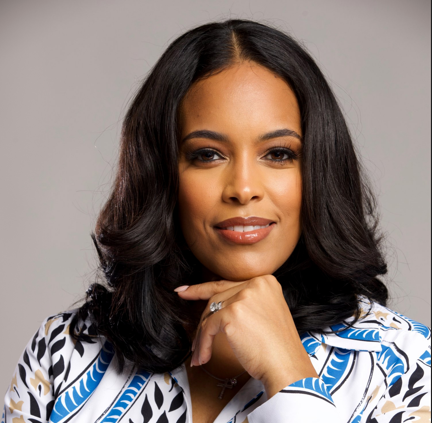
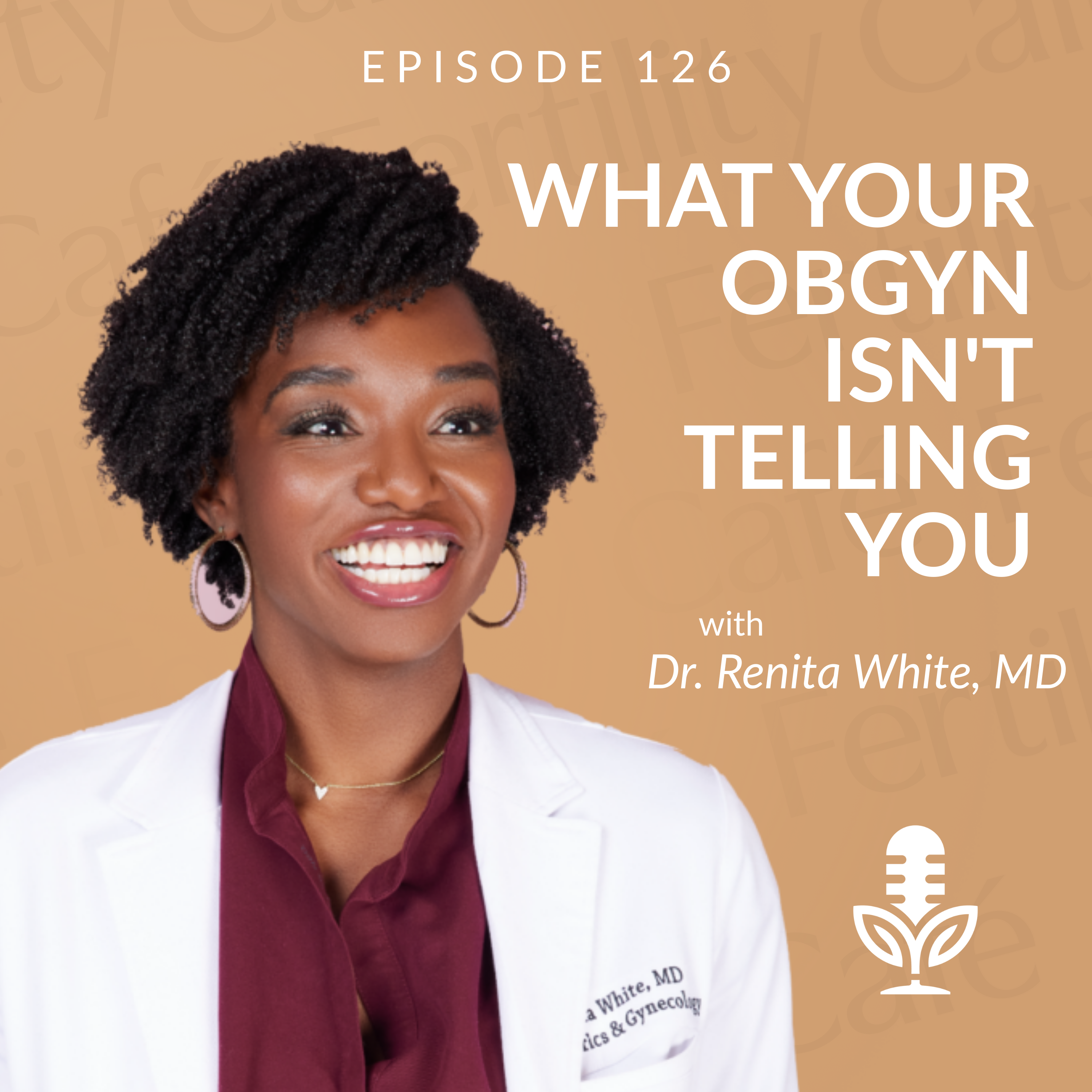
Dr. Renita White is a board certified obstetrician and gynecologist with a focus on education, wellness and long term health. She received her undergraduate degree from Duke University and her medical degree from the Ohio State University and completed her obgyn residency at Emory University in Atlanta. She currently practices at Georgia obgyn, co hosts the podcast Cradle in All and serves as a medical advisor for the Honeypot company, the Flow Health, and other major health platforms including verywell Health, Parent magazine and Ellie. Renita, thank you for joining me. I appreciate it.
[00:02:03] Speaker B: Thank you so much for having me. I am very excited about our talk today. Yes.
[00:02:08] Speaker A: So, well, let's start first with what brought you into this work and what made you choose ob GYN as like your path.
[00:02:15] Speaker B: Yeah, no, you know, it's very funny because I don't remember a time where I wanted to do anything different.
I went to my high school reunion. I'm not gonna say what year, what decade we were at, but older than.
[00:02:29] Speaker A: You, so you know it's okay.
[00:02:31] Speaker B: But yeah, so I went back to this high school reunion and everyone was like, you were the only one who knew what they wanted to do and are doing it. Like you've just always said it. But I think I was always just very driven to be a part of women's health. It may have been because as a young girl, I connected with adults who helped support me understand my own self, my own body.
But you my, at the time I knew, okay, delivering babies sounds really cool, but getting into the Career itself, there's so many components of it, and just being in a vulnerable space with women in different parts of their lives, whether it's trying to get pregnant, being pregnant, menopause periods. But as far as I can remember, I've just loved to be a part of that journey to help empower women understand what's going on with their bodies.
[00:03:18] Speaker A: So what. What stood out to you, though, about how patients were being cared for? I guess when, like, when you were in residency. I mean, I knew you KN from the time that you were young, but as you know, like you just said, majority of people, that changes. But then you get into residency, it obviously, I'm assuming that it was confirmed.
[00:03:40] Speaker A: That OB GYN was specifically what you wanted to get into.
[00:03:44] Speaker B: Yeah.
You know, it's interesting because, you know, you get into medical school and you have to go on these rotations and learn about other things. And a lot of my experience was people telling me, you don't want to go into that field. You don't want to do that, like the hours are bad, or you don't want to deal with, you know, cranky women, or you're going to not like this. And so I really did try to find something else.
But then I realized it's very interesting because there is a lot of stigma about going into a field that's for. About women. There's this thought that it's going to be negative or the value is not there. And then for people who are not in that field, it's. It's very brushed off. Like, oh, we don't know anything about that. That's not our business. And so there's a space where people don't understand, and they're actually in the medical field.
They don't even understand some aspect of their own patients. And so it made me realize that this is a very important space because women are over 50% of the population, and many of the things that we experience, some very similar to men, but there's this whole component of things that are not similar.
A lot of the research that we do in medicine and science excludes either women, women of color, many times pregnant women. And so it's just a very needed area because if other people in medicine, doctors, nurses, staff, don't understand part of what's going on with women, then our patients, women themselves, don't understand a lot too. And they're not thinking all the time like, I know exactly who to go to. They just go to whoever they have access to. So that was a very big thing for me.
[00:05:24] Speaker A: And so. And because of that, how do you see people show up for their care? Because. But to your point, the majority of them, they just go to whoever's there. They don't necessarily look for someone who has a specialty or someone who can relate to their issues or whatever. They just, just show up. Is there a pattern that you see or.
[00:05:47] Speaker B: Yes, it is such a confusing system that we have. So access is an issue for everybody, but definitely more for some than others. And so if you need to take off work, you're missing pay at that time to then find a doctor. There's probably a long wait list. By the time you go through all the challenges to get to a doctor, you probably are unloading a lot of things that were already on your list. And then on top of that, there are some inherent fears that people have. And I've seen that more and more in the last few years.
People really fearful about, is anyone going to listen to me? Are they going to care? Is it about money?
Is, you know, am I going to lose my life? In some situations, especially for me working in a space of maternal care.
And because of that, people are turning to other places to get information to learn about the body, which is great. Like TikTok, social media, I think is a really important space, but it's not always the correct space for majority of things. And so people lack access whether you think you do or not sometimes. And so I think as a provider myself, people who work in the health space, figuring out opportunities to educate on all aspects and working to build a place of trust is going to be key. And I think for me, working with women in a space that tends to be a vulnerable time, like people get nervous about pap smears. They don't talk about everything that they talk about with me to their even friends and family. That's a great opportunity to start building those trust opportunities.
[00:07:22] Speaker A: But then how do you do that though? Because the problem is.
[00:07:27] Speaker A: Especially as physicians, and I know it's definitely out of you guys's control with how health care has become commoditized, quite frankly. And you it is more about how many patients you can see through the door.
And you know the bottom line now that health care is a big business and no longer just taking care of patients. And this is definitely not on the physicians because the physicians are the ones who are dealing with the brunt of it on both sides. Like you deal from the, the patient side and then you deal with, you know, the up above in the insurance companies who are making all of the money and all of the things, how do you handle that when patients are coming in and they have so many issues or so many questions that you can't figure out, get give to them in a 10 minute span it is.
[00:08:21] Speaker B: That could not be more true. But I think the two things that I try to take away from every encounter I have with somebody is that one, medicine is a team sport and you are the key player of this team.
So like I back in the day and maybe for some people still, but I feel like medicine used to be very patriarchal where it's like you come in, I tell you what to do, you do it. If you don't, it's your fault because you didn't do it.
[00:08:46] Speaker A: Yep.
[00:08:47] Speaker B: Luckily we're in a space where a lot of providers are not really thinking that way and we need to be more collaborative and we each have things to bring to the table. I have a lot of medical expertise. The patient has expertise because they know their body. So how can we work together there? So coming into a perspective of like, we're a team, let me figure out how I can help you. And then two, we're limited on time and this is the system we're set where we have insurance, we have to think about this and that. So this is not going to be our first and last interaction working to build a relationship where we know that there's going to be follow ups. How are we going to communicate after this? How do you prefer to get your questions answered? Do you like Portal? Do you like phone calls?
I think setting those kinds of expectations for our patients helps to know, okay, I'm not just going to leave here and never hear from this person again. I know what to expect when I leave and I know we have a plan for the next visit. And because there should be a next visit usually if we're coming in for a problem and it might take two or three visits. So I think starting those kind of conversations early on also helps to build trust. So, you know, for somebody like me who usually sees women yearly for their annual visit, when you actually have a problem, you know, okay, I know she's going to listen to me because of these experiences I had before. So I think that's really important.
[00:10:08] Speaker A: For someone who obviously, and I used, I've spoken at different colleges or whatever and trying to educate women about reproductive health early on. Not, not just because they're, you know, now dealing with the issues with infertility or whatever, but early on and just trying to educate because quite honestly, schools taught you about sex education they didn't teach you about reproductive health, Right?
[00:10:33] Speaker B: Barely taught you about it, but okay.
[00:10:35] Speaker A: Yes, there's that too. Like just, just don't do it.
[00:10:40] Speaker A: When somebody goes to the OB gyn, obviously the obvious, you know, OB is for obstetrics and that's for a pregnancy. But for gynocare, clearly it's not about pregnancy, it's about your overall women's health. What are things that at your doctor's office, should you be checking, looking for, asking questions about, you know, and going in there prepared because again, like we already said, you have a very short time window to kind of get down the important pieces that you need to know.
[00:11:16] Speaker B: Yeah, no, absolutely. So from a patient perspective, I usually tell people, come in there with questions. You may not think you have any questions. You may think all is well, but that's a good opportunity to be that. That things that's in the back of your mind that you've been always like, yeah, that's kind of weird that I do that. I'm not sure if that's normal.
Perfect time to ask may not require any follow up. It may be something little. But when you have that face to face opportunity to see if something that's bothering you or like worries you is normal or that you have questions about, that's the time to do it. So come to appointments with questions. This thing I usually recommend for other providers, especially people who are on the front lines of preventive care. Family practitioners, OB GYNs, internal medicine.
Think about where a person is in their life and how to prevent things for the future. So many times people come to these visits and we're talking about cancer prevention, Pap smears to screen for cervical cancer, mammograms for breast cancer, which are very important things. But like somebody reproductively age, for example, if somebody walks in, they're 30, they may be single, they may be not in a relationship, but like that's the time to start saying like, hey, have you thought about if you ever want biological kids or people who are like, yeah, my patient, my period's normal. Well, what's. Tell me a little bit about what's normal. Get some extra details. Because what if they're normal is like soaking through pads three days out of the month.
[00:12:40] Speaker A: I can't go to school or work.
[00:12:41] Speaker B: Exactly. So kind of thinking advance for my perimenopausal patients, I'll start asking like patients who are 40s and like, hey, do you get any hot flashes or sweats? How's that concentration?
Even a quick, like asking it and they're like, oh yeah, it's fine, perfect. But then you might simulate that patient who's like, you know what, I really haven't slept for like the last two or three weeks. That may begin the conversation about something that can address that patient's needs. So I think on both ends, coming in with questions as a patient for the providers, just thinking about what could be coming, the next stage of life and how to prepare that patient for it.
[00:13:16] Speaker A: So you and I love that you said that because one of the things about like the, the preventive care. I had a conversation with an OB GYN a couple years ago and we just had a conversation about the whole again, preventive care because we kept getting family or women that would say, you know, I'm 42 now and nobody told me that, you know, whatever. No one told me about my eggs. And that after 35 it begins to diminish and all of these other things or no, told me that I could have just done an AMH test, a blood test that can even give me a baseline of where I was in my early 30s, my late 20s. And I had a conversation with OB GYN and I said the same thing. And she was like, well, you know, it's really not our place because we don't have the time to explain to someone if a result comes back. We don't really have the time to explain to them what does that mean and how is that going to affect you and blah, blah, blah. And I'm like, I get it. But then where are they supposed to get this information? Where are they supposed to get this baseline that start. You don't want to send them to a reproductive endocrinologist. The majority of them can't afford it, so where do they go?
[00:14:34] Speaker B: But you know, it is a very frustrating system because I understand that feeling if there's not enough time. But there are so many resources to our disposal these days, which is a wonderful thing. So for example, we might need follow up appointments, but if we don't have time, maybe we're not the provider to kind of delve into those particular topics.
Have like a quick list of resources. Hey, how about we get you here, here and here. If I notice this is the issue, or for me, I'm a very visual person, even as a patient myself, I need somebody to hand me things. Let me read it when I get home. So I'm somebody who's quick to say, hey, check out this app and they'll have more information here. You've been diagnosed with this endometriosis interstitial cystitis. Check out these societies, they can answer questions and there's forums. So just being able to provide resources because we are only one person ourselves as healthcare providers in a busy time crunch, that could be useful too.
[00:15:29] Speaker A: So can they go to their, their gyno and say, hey, I'm not interested in having kids, but I do want to have a baseline. Can you run my blood work for my AMH or my FSH or my LH or can you do that?
[00:15:43] Speaker B: Yes, but I will. First of all, I did three to four of those today already, but which is great. But I think that education is key part of that. And so for healthcare providers, knowing if you trying to be educated on it and if you're not the right person, don't order tests that you don't feel comfortable doing. Most ob GYN should hopefully know this information.
But also educating our patients to understand what that means, like, hey, we're going to do these fertility tests. But like, let's talk about fertility, let's talk about optimizing it. Let's talk about the fact that this is one component of a bigger picture. So this is not the kind of detailed conversation you're going to have at an annual wellness visit. But hey, let's get you back in. Let's have a preconception consultation or talk about infertility if you actually are meeting criteria for that. So that we now can sit down, have this conversation, talk about tests. You're probably going to have a ton of questions and have that kind of opportunity.
[00:16:40] Speaker A: And can we have that conversation with your gyno before you go to a reproductive endocrinologist? Like, you're not having to jump from, I, okay, I'm thinking about a baby and I tried for 30 days and I didn't get pregnant. So I'm automatically going to go see a fertility specialist.
[00:16:58] Speaker B: Exactly. And you know, I usually encourage people like if you are have the resources and you just want to go straight to reproductive endocrinologist, please go for it. But most OB GYNs should have the skillset to begin that initial evaluation. That's part of our training to know how to escalate things to a certain level before saying it's time to move on and to also not waste anybody's time. Like you. By the time people come talking to you about trying to be pregnant, they wanted to be pregnant yesterday. So we don't want to waste anyone's time. So let's start to expedite these conversations, this testing to get you to the place that you need to go. Hopefully either pregnant or if you need some treatment.
[00:17:37] Speaker A: Yeah.
Now, okay, so let's talk about pregnancy because obviously that is a significant thing right now with maternal fetal health. And I don't know if it's because we now have social media and we have more ways to hear about issues or if it actually is. No, there really truly is a significant issue in this country with maternal fetal health, with women who are dying in pregnancies, that normally you hear these things more so from like third world countries, not something from the US Why do you think that is?
[00:18:19] Speaker B: You know, it's very multi layered. Layered because you've talked on some of those things.
The reality is maternal mortality in the US is bad. In the south, where we are right now is bad compared to other states, we're at the bottom, we get an F.
And it's been that way, which is horrible.
The other thing is that we have access to information in a way that we did not before.
So I don't believe that suddenly care for patients or suddenly these rates are bad. I think that we're in conversation, more things are being publicized and that's a great thing. It helps us as a country, as people in the healthcare field really reflect on what needs to be done, what changes need to be made.
When you look at the different reasons that this could be happening, racism, systemic racism cannot be ignored, the way that training is done, the things we learn, some of the information that we have from the onset of care of Western medicine to now, that's really ingrained in there, Distrust between providers and patients is probably a huge issue. Access and socioeconomic status and all these things play a big role and it's hard to really untangle. But I think it's an interesting conversation because it's beginning to help us to put a spotlight on it and hopefully make some changes. I also think it's really important to realize that it's not just maternal health. It's a very important topic. And especially when thinking about two people, babies, women, two vulnerable populations. But you can see some of these same disparities when you look at who's coming to the er, who's listening to pain of one group of people versus another, how we manage things like kidney disease and what those rates look like. So I think it's really pervasive in many aspects of medicine and it's something that we all need to look at. So for somebody like me, who is a mom, who has been pregnant, who is a caretaker for pregnant people, who has family Members who are cared for and have witnessed it on all sides. I always think about what can I do differently? What can we all do? And I think some of the basics that I mentioned before are just the beginning because it can feel very overwhelming, like how can we solve this crisis?
I think working to build communication amongst all parties. So how we communicate with our patients, making sure we're encouraging advocacy and a multidisciplinary approach where we encourage doulas, we encourage working with high risk physicians if needed, talk to patients on how to let us know if there's any alarming signs and taking those signs seriously.
Those are some little things that we can do individually.
But there's going to have to be some really massive changes in maybe how healthcare as a whole is done when it comes to taking care of pregnant women, monitoring for the places that we fall through the cracks. And that is super overwhelming to think of.
[00:21:24] Speaker A: Well, yeah, and I mean, and it can't just be done with one person. It literally, as you said, is this is all systemic and it has to be.
[00:21:35] Speaker A: An issue that quite honestly literally starts at the top and works its way down.
You know, I had read a study.
[00:21:44] Speaker A: A couple years ago, can't remember how many counties in the state of Georgia. The state of Georgia has. I want to say it was like 100 and something counties or something.
And out of those counties, and I hope I'm not quoting this incorrectly, I'll have to put it in the show notes to make sure that if I do the get these numbers wrong. But it was something like 40 or 50 or 60 of those counties didn't even have a OB GYN.
[00:22:11] Speaker B: Oh my gosh. There are huge deserts where there are no providers.
[00:22:16] Speaker A: Yes. No providers. And then those. And then in some counties, like 15 counties didn't even have a pediatrician.
[00:22:23] Speaker B: Yes. Or not every hospital has a labor and delivery has a nicu.
[00:22:28] Speaker A: Yes.
[00:22:29] Speaker B: These are real life situations. So we oftentimes know about where we live. Yep. And you know, as somebody who's only lived in a metropolitan area, you have access to basically everything but a quick drive an hour, hour and a half from here. You may be in a space where you live there, but you don't know how who's going to be at the hospital. Is there a blood bank there? Are there anesthesiologists in house if you needed an emergency C section, let alone an epidural.
And that's, that's real.
And it is scary to know that our patients are in fear because of this. And I have absolutely seen A rise in the women who come in who are like, I'm scared to be pregnant. I'm not looking forward to this. And the anxiety levels are so high.
But I also try to encourage people to know that, like, pregnancy is very beautiful. It's a very exciting time because it's usually a place of something coming, a place of hope. And majority of the time it's going to be a positive experience. And so trying to reframe it for people to know, hey, we need to be prepared and look out for this and that to make sure that you're safe and healthy. But I hate to see that this is making people fearful to be pregnant. People don't want to be pregnant at all. If that was a choice they may have wanted in the past, now they may change their mind because they think they may die. And it is, it's something to be aware of. But there are so many beautiful experiences that people are going through and not everyone is going to be in that particular situation.
[00:24:03] Speaker A: And that, I think too is so important because a lot of people, kind of what you said earlier, they look at TikTok or they look at, you know, social media and then they see this one thing, this one piece, and they, they automatically assume that this is what it is because it was on social media.
And it's just. It used to be social media is now what I used to talk about. Dr. Google. Everybody used to go to Dr. Google to get all of their medical advice. Now everybody goes to social media to get all of their medical advice.
It's like, oh God, please no.
[00:24:37] Speaker B: Oh my goodness. It's like it's a gift and a curse. I really do think there's a space to have access to more information, but it is, there's some things that just are not true and not accurate. And so it's a matter of teasing out what that is and how do you know, have the time. You could read something about everyday news, things. You're like, what's real, what's not?
[00:24:56] Speaker A: Well, but. And even if you do use social media to get that information, but everybody's situation is so unique that that person who's sharing that information doesn't know your full situation. You could have a piece of a puzzle that they don't have that could completely change the outcome of, of your situation. So it's like you can't, you can't hold on to that just because that's what you heard, or you did a Google search, or you did a search and that came up. And then all of a Sudden I was like, nope, that's what I'm gonna follow now. Because, you know, so and so, you know, that has a million followers. That's what they said.
[00:25:34] Speaker B: Yeah. And you know, I always think about with pregnancy, part of why I really enjoy the field of ob GYN is that it's usually a joyful field. Most people are excited pregnant or you know, not everybody, but you know, you might be excited about it, looking forward to it. You expect at the end there's going to be a baby.
The things that are difficult are usually unexpected and can be tragic. So though miscarriage is common, we tend to be less likely to talk to others about even trying to get pregnant. And then we go through either infertility or miscarriages alone. And then when we talk about miscarriages, we often talk about first trimester, second trimester. Miscarriages are a thing, stillborns are a thing. And they are very tragic because everything when you have a loss is tragic, but it's a thing that our community doesn't talk about as much. And so it can be quite devastating to undergo something like a loss or an unexpected change. And that's already there. And then when you add on top of it some of the complexes, the complex nature of maternal mortality and what that means, it's sometimes in this context of there's somebody to blame and maybe there are times that that could be. But there's a lot of things that happen that are not the case. And it just has made it a very complex space to navigate.
[00:26:59] Speaker A: Have you seen changes like pre Covid, post Covid with pregnancies and.
[00:27:07] Speaker A: Issues during pregnancies more so than pre Covid or is it about the same? Because, you know, obviously there's this big thing about you should, you should get the vaccination, you shouldn't get the vaccination now.
Whatever his name is, Robert Kennedy, you know, came out talking about pregnant women and children don't need to get vaccinated anymore.
And in this decide now, now we're physique, now we're a doctor and you know, know more about physician, what the physicians are talking about just because.
So what is your thoughts?
[00:27:42] Speaker B: You know, I think Covid in itself probably did not change what I had seen before with when it came to vaccinations. There's always kind of been a group of people who are pro vaccine and anti vaccine and that got amplified, amplified vocally during the pandemic. But most people already kind of fell into a different camp. And interestingly, people have views about certain vaccines Like, I will go through the whole. A whole pregnancy in flu season, Covid season. And everyone's like, I'll get the whooping cough sh. But not flu. Or I'll get the flu and not.
Not Covid.
And so I think that that has kind of probably been the same. And you do your best to counsel and then you decide. People decide what they're going to do. And I would say it's through your body, you decide what's the right thing. As long as we give you that information.
What I will say is that with administration changes, politically thing, you know, that has really changed care, obviously, with the Dobbs decision, that has changed a lot for reproductive care as providers. And so maybe some of that has played a role more than the pandemic. But I think at the end of the day, we as doctors, as healthcare providers try our best to navigate to do what's in the best interest of the patients. And it's an interesting space to have to figure out if you're allowed to or if you're not. And like, how can you navigate these barriers? But putting patients first is always going to be, I think, my job. I think any other provider would say the same thing. And so we navigate it together because if we have to navigate it, the patient's got to navigate it too.
[00:29:16] Speaker A: Yeah, well, and I was actually going to ask that next question with the whole Dobbs situation and how do you navigate that?
You know, there's a case going on right now in the state of Georgia where a woman is in the hospital.
[00:29:32] Speaker B: Is.
[00:29:35] Speaker A: Pretty much on life support until the baby gets to a certain gestation in order for them to deliver. She is literally on life support, that she's brain dead. Her family cannot take her off of life support. They're keeping them her on specifically because of the fetus and to make sure that, you know, it gets to a certain gestation before they do the delivery, not knowing all of the ramifications that can happen after the fact that. And not that I'm asking for any, you know, thoughts one way or the other of your. Your views, but how, as a physician, can you truly care for your patient and allow the patient to also be able to have autonomy over their life and over their body when it's being dictated by somebody who has absolutely no idea what the medical condition of this person is?
[00:30:30] Speaker B: Yeah, you know, we are in unchartered territories for sure.
And I think that having gone through some personal experiences with patients and hearing things that are on the news, working with patients and just saying hey, we're in this together. And coming from a place of compassion and also resources.
So I can think of several instances from whether it's unintended pregnancies with an IUD in place, and how am I pregnant? What am I going to do? Where we have to sit down together and look at websites and figure, hey, these are our options. And my job is to help facilitate what you do in this unexpected two situations where you have second trimester.
[00:31:15] Speaker B: Broken water and patients who just have to sit there and wait till they have an infection and are begging you every day to say, why you, you know, why is this the case? Why can't I do xyz? And having compassion in that. It's a confusing time for not just patients, but healthcare providers. And how can we, what can we do to support that? Compassion may just be holding hands and crying together. It may be bringing on an ethics committee.
It's just a very new environment that we're in. And so at the end of the day, the people who have to pay are our patients and the babies and all of those things that are in the middle. And so it's just a challenging time. But I think compassion goes a long way for those who are the person who's dealing with it at the forefront, who is the patient, unfortunately. And I also think that applies to before Dobbs, the Dobbs decision.
The reality is we live in a country where people have strong opinions about access to birth control, access to abortion care, not understanding how that's intertwined with just general reproductive rights and how it's intertwined with fertility treatment. And so even wherever you land on any side of the spectrum, if you are a healthcare provider, you still have to put the family first, you had the patient first. And so compassion is always going to be there. And it's still our jobs to provide as much information as possible.
And that's where we start.
[00:32:46] Speaker A: Yeah. Oh, no, for sure, for sure.
You mentioned birth control and I know that.
[00:32:54] Speaker A: It'S a whole gamut of how people feel about birth control.
Has there been any studies, like long term studies to see if birth control is safe and which one's better than the other or. I mean, like, how do patients really sort through the right options? Because quite honestly, I don't think that it's a one size fits all thing.
[00:33:21] Speaker B: Yeah. Okay. So I think that like any other medication that's out there, treatment for diabetes, treatment for high blood pressure, everything has its place and purpose.
And the same goes for birth control. It is provided so many opportunities for people to Prevent unplanned pregnancies, to manage painful heavy cycles, to treat acne.
But sometimes it gets a bad rap for many reasons. And I think it just goes with the stigma of women's health and how it's tied to reproductive health and the views on it in our society.
There are so many short term, long term studies about safety side effect profile, the indications of use for birth control there. Obviously the administration has changed and a lot of things are removed from the CDC site. However, there is an annual publication by the CDC that's usually put out called the USMEC that that gives us reasons that somebody who is safe to take it, who's not the risk benefit profile.
And so for providers like myself, who may have a more complicated patient, I can have that easy resource typically to say, okay, I have a patient who's diabetic on insulin, what's the risk factor for this and that and be able to go there.
Long term studies that have been done regard risk of certain cancers, protect birth control may be protective against this. Does it increase the risk of that? So it's definitely there. And, and many times I think that there's two camps of people, generally speaking, who are either like pro or anti birth control.
And I tell people it's all about what's the right thing for you knowing the information and you deciding what's the right thing for your body.
[00:34:59] Speaker A: So now on the flip side, we talk about birth control and reproductive health. Let's hop to the menopause because it is now finally starting to be a conversation that everybody is having. It's becoming a big thing.
And obviously, obviously it definitely was not for when, you know, our parents were coming up and going through that experience. But is a gyno the right person to go to when you're starting to deal with perimenopause or even menopause, Is it somebody else that we should go to and then what are the things that we need to consider?
[00:35:37] Speaker B: Yeah, I love that it's becoming a topic for people to talk about and it's probably a reflection of how social media has aged. Like when it first started, the groups that were there now getting to the point that they're like, we need to talk about this thing similar to how we are with women's health. I don't know what it is, but we just don't talk about our bodies enough and we're at a place that we're starting to. So as I said, with infertility, with miscarriages, understanding your period and sex, people are confused and the same goes for menopause. So luckily we're in a place that people are verbalizing. I'm experiencing this, that, and the other. Is this normal?
I think we need to learn more as a community.
So understanding that it's not a bad thing. This is just a transition. No. Our options on how to address those symptoms and starting with a trusted healthcare provider who you have access to. So probably somebody who's in the women's health space may have more information, like your OB GYN or something of that nature. But if you have a primary care doctor, start that conversation and if they don't feel comfortable, help them get you to pivot.
I will say that like many other aspects of women's health, sometimes there's just not a lot of education, even in residency. So there's some little bits of women's health that you just don't get a lot of training in. I personally believe, and I think that you'll hear others say that endometriosis, menopause.
[00:37:03] Speaker B: Pelvic pain type conditions. And so there you may stumble across providers who may brush you off or may say it's nothing but continuing to dive deep and find the right person for you.
I also say that it's never too early to begin those kind of conversations because usually if you're approaching your 40s, into the 40s, it's probably going to start sometime. So when in doubt, to start asking the questions about, is this something I'm going through? Could this be normal?
Things of that nature?
[00:37:32] Speaker A: And talking about periods, can we actually talk about what is a normal period and what is not? Real quick?
[00:37:39] Speaker B: Yes. So normal. I love the word normal. But sometimes I always say, remember, normal is. Could be different for everybody. But what is typical?
[00:37:48] Speaker A: Okay.
[00:37:48] Speaker B: And what is abnormal could be things that impact your quality of life. So when we talk about a menstrual cycle, we like things to be regular, predictable. Because predictability is your body working like a machine. So it should be something that you can probably know it's coming at a certain day or time. You, you can look at a calendar, say, it's probably coming here. So that's your body doing what it needs to do, like a clock. When it's not predictable, you never know what day of the week it's coming. Or like, generally speaking, or you can go a whole month and it doesn't show up. That's not typical. Not normal when it comes to flow, how heavy it is.
Most people have a period that's less than a week.
If you are bleeding more Than a week, that's too long.
If you're somebody who's like, but I only ever bleed two days, and it's always two days, that's probably your normal. But if it's more than a week, not normal episodes where you are soiling your clothes, you're passing large clots, you are soaking through, like overnight super pads, that may be something you experience all the time, but that's too much bleeding. It should not impact your quality of life.
Same goes for pain.
If you are somebody who's like, yeah, I get cramps, but like, I can go to work and school and this and that, okay, it's manageable. But if you have to call off sick, you're vomiting, you can't function, I would not call that normal. So I'd say predictability and it not impacting your quality of life are the two cues to know if you probably should get something evaluated.
[00:39:22] Speaker A: And, and I mean, obviously you can go to, you know, your doctor's appointment and all of that, but what if you did and the doctor's like, yeah, you know, it's, it's, it's okay. It's really, it's really just your body just telling you, or just, that's just how your body is. Or let's just put you on birth control and help regulate it.
[00:39:41] Speaker B: Yeah. So I always say, if you're not sure the why, like, why is this happening to me, then ask, I need an explanation for why. And sometimes we don't know why. So sometimes people will say, like, I was told my bleeding's always gonna be heavy. Well, like, is it? Because we usually can begin to have some options in medicine. We call that a differential diagnosis. So we have a few options of like, well, it could be fibroids, it could be a polyp, it could be that you just had a baby, blah, blah, blah. So if somebody can't kind of give you the potential options of what's going on with you, it's time to find another person to figure it out. Or if we, we did all these tests, we ruled this, this is this out, and we still don'.
Okay, so we don't know the know the why. What are we going to do about it? There usually should be a few options.
And then, and sometimes there's not, but many times there can be a few options. And if they're only presenting you with one option that you don't like, make sure that you understand. Maybe that option is birth control. Make sure you understand what the other options may be. And then when you've seen the plethora of options. You can determine, is this one of the ones that work for me? And if not, I need to move on to something else else. When in doubt, get a second opinion.
If you've been recommended something that you don't like, start talking. I would say use that as an opportunity to talk about why you're nervous about it. Sometimes it may be that you are afraid of something that may not apply or that you may think is true and it may not be.
And so kind of talking it through might give you the information to make you feel more comfortable. But when in doubt, getting second opinions, I think can be useful even for me as a patient. I do that all the time because sometimes I just need to hear it from somebody else. I need to make sure that like this information's correct.
So like, when in doubt, just talk to somebody else if need be.
[00:41:26] Speaker A: Yep, absolutely. So wrapping up what would be kind of like the final thing or what you would actually want people to know when they are going to an OB GYN and how to prepare and what to consider.
[00:41:43] Speaker B: Yeah. So I think that coming to your appointments, this is a time that you took that's all about you.
We are usually pretty busy people, regardless what your job is, what your life is going on. You paid money for a copay, probably you took off work like this, you waited in the waiting room for like who knows how long.
So utilize this opportunity by putting yourself first. You probably picked this person either because they were some convenience to you, a review, they had the first appointment or what have you. Doesn't mean you have to stay with them, but you are, they are responsible for your time at that moment. So come in with questions to expedite the little bit of time that you have to kind of jump to the chase of what you want to work on and then don't leave that office without a follow up plan if there's something that needs to be followed up on.
So for example, if you have gotten a Pap smear that visit, you have no problems. You just showed up at this visit. You're just there for your annual. You got a pap smear. How are you going to get those results? Is it a. Should you have signed up for a portal? Is somebody going to call you, make sure you know what follow up it is? Or if you had a list of questions that could not be addressed that day, make sure you know, okay, am I making an appointment when I follow up, are we going to do a virtual or something of that nature?
And finally make sure you know how to contact this person if additional questions come up later.
So you guys may have talked about something with your period and you were like, I don't know. I'm gonna think about what you just said. Well, two or three weeks later, when you've thought about it, is your doctor easy to contact by a phone? Is there a nurse line? Is there a portal?
Those are the things that I usually say coming in to make it easier for you to access them, to make sure your questions get answered and to make sure that they can reach out to you, too.
[00:43:33] Speaker A: Awesome. Well, Renita, I thank you so much for taking the time to talk to me and share and educate, because that's the whole point. I mean, there's just certain things that I think for the longest time haven't been talked about. And it's high time that we start.
[00:43:49] Speaker B: Yes. I'm so glad to be on here with you today. Thank you so much for having me.
[00:43:53] Speaker A: You're welcome. Thank you. Thanks so much for listening to Fertility Cafe.
If you've enjoyed this episode, be sure to subscribe so you never miss an interview. Leave us a review and connect with us on all socials. We're fertilitycafe. You can also watch the full video version of today's conversation over on our YouTube channel.
Until then, remember, love has no limits. Neither should parenthood.
[00:44:23] Speaker A: Sam.