Episode Transcript
[00:00:00] Speaker A: If you're considering surrogacy or you're already on this journey, you probably realize that understanding the legal side can feel like navigating a maze.
Laws not only vary from state to state, but they're also constantly evolving, especially now as we see shifts influenced by recent elections, changes in international regulations, and new societal dynamics.
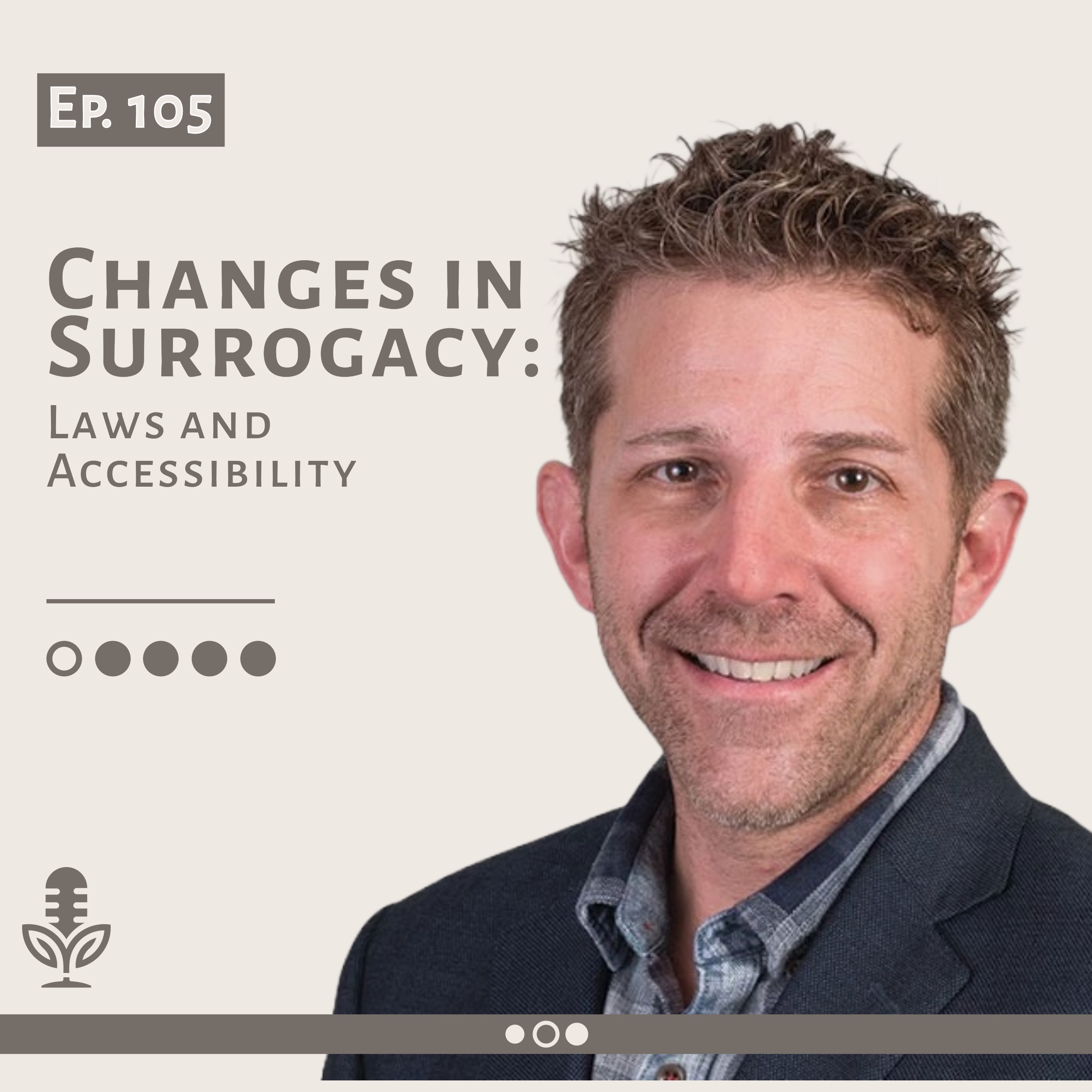
What's legal in one place might be restricted, some somewhere else. And keeping up with all the changes is no small task. That's why I'm so excited to have Rich Geisler joining us today.
Rich is the principal and founder of Fertility Surrogacy Legal Group. With over a decade of experience in fertility and third party reproduction law, he's been instrumental in helping families navigate these complexities. Rich is a fellow in the Academy of Adoption and Assisted Reproduction Attorneys and an active member of the American Bar Association's Family Law and Assisted Reproduction Legal section.
His passion for this work has made him a trusted resource for families across the globe.
In this episode, we're diving into the changes happening right now in surrogacy law, what they mean for intended parents and surrogates, and how to approach this journey with confidence.
Whether you're just starting to explore surrogacy or are already in the process, there's so much to take away from today's conversation.
Welcome to the Fertility Cafe where we explore the beautiful complexity of modern family building.
I'm your host, Eloise Drain, and this is a space for honest conversations about surrogacy, egg donation and the journey to parenthood. With expert insights and real stories, we're here to guide you through the medical, legal and emotional aspect of third party family building.
We believe that love has no limits and neither should parenthood.
I'm your host, Eloise Drain, and today we're tackling a topic that's as important as it is complicated surrogacy laws and accessibility.
Hey, Rich, welcome to Fertility Cafe. Thanks for joining me.
[00:02:20] Speaker B: Thanks for having me. I appreciate it.
[00:02:22] Speaker A: So let's just start with what inspired you to get into this legal career on fertility and third party reproduction.
[00:02:32] Speaker B: It definitely wasn't a straight line to get here. I had been working for a lobbying firm as the vice president of a lobbying firm for a number of years and got kind of uninterested in that and started my own law firm.
And initially I started the firm, it was called the Indie Law Group. And the idea of the Indie Law Group was I was going to help non profits and I was going to try and help want to be musicians, do I guess? Law in the Entertainment field and then basically help nonprofits for them. About one month into starting the firm in 2012, a surrogacy contract came across my desk.
I got connected with an agency to basically start representing surrogates.
I hand in hot about whether I was going to do that or not as a as make that the career. And then I just really enjoyed it. I really enjoyed helping the folks out get the contracts done. It was, it's a non adversarial type of work. It's very rewarding and it's kind of what I always wanted to do with my, my career, my law degree was to do something that like helps folks. I know that sounds cheesy, but it's true.
So then I just focused on this.
[00:03:41] Speaker A: Well, I mean, you've been doing this for a while. What are some of the biggest ways the legal side of surrogacy has changed since you started?
[00:03:51] Speaker B: Well, it's interesting. I remember in 2012 when I got into it, I was kind of a newbie on the block and now that's not the case anymore. I feel like I'm kind of a made man in the industry now. Haven't been around, seen it change a lot from, you know, on the medical side from when you used to do two embryos. Every time they used to transfer two or three embryos, a lot more twin pregnancies. That's changed over time.
Just from the medical standpoint, I think the technology's gotten a lot better.
So they're just using one surrogate at a time typically because the success rates are higher.
Covid was a big change. Obviously before COVID as you I'm sure aware, our business was probably 70% international clients.
And Covid changed that quite a bit. So I would say now it's definitely probably more 50, 50 where domestic clients make up a large percentage of what the industry is, which wasn't the case back then.
[00:04:58] Speaker A: Which I do find interesting though because I remember pre Covid. I know you have to talk about pre Covid post Covid life. Right. But pre Covid, there was this influx of international clients and so many people in the US were complaining, honestly that here in the US we can't barely find surrogates. And we know there's so much international intended parents. And I think at one point, if I'm correct, I think like international was like 50% of the population that was doing surrogacy in the US alone.
[00:05:44] Speaker B: I believe so, yeah.
[00:05:47] Speaker A: And there was a shortage of surrogates, you know, and now we're still saying there's a shortage of surrogates, even though the international community is not nearly, not as much or nowhere near close to what it was pre Covid. And we're still dealing with the shortage of surrogates. And I would just be curious as to like what you're seeing, you know, especially on the attorney side. And I know you're not as an agency and you don't necessarily deal with that side, but as you talk to so many other agencies and work with so many other agencies, what do you hear people talk about and say as to why.
[00:06:28] Speaker B: Why is why it's still so difficult to find surrogates?
Well, one thing the international market did was it changed the pricing a lot. And that was a complaint. Back to what you were mentioning earlier is that the prices were much higher because international folks from China or wherever were willing to pay more. And so the domestic folks didn't like that, which rightly so, just the supply demand change. So now so many agencies have gotten into the game that the finding the surrogate is still the key point.
Their demands are higher, whether you want to link that back to when it was international or not. So it's just, it's a game of who can pay the most, who can get them screened the quickest, who can get a match the quickest. Um, and you, you just have so many more people trying to find circuits now all over the country. That's another thing that's changed quite a bit is when I first started the firm, we were just working in California and that was plenty. And then, you know, as our agencies grew, they started not just looking in California, they were looking all over the country because of that same issue. You're stating where California's got 30 million people, but you still couldn't find enough surrogates. So now they're looking all over the the country. So I just think it's the supply demand thing really. And it takes, I think it takes a unique, caring character inside of a woman to want to be a surrogate. It's not, it's definitely not for everybody, whether that's the concept or pregnancy itself or what have you. So.
[00:07:58] Speaker A: Well, and it's, it's a big ask, you know, it is a huge undertaking to decide to become a surrogate and then carry a pregnancy for sometimes a total stranger and all the things that come along with the pregnancy.
So it's a huge ask, but on the same spectrum for the intended parents, it's a big deal because you are like literally relinquishing the one human being, hopefully in your entire life that is going to be the most precious person to you in your entire life. Also to a total stranger to grow and nurture and care and give back to you. So on both spectrums, you know, it really has an impact.
[00:08:42] Speaker B: It's a trust game for sure. And it's, it's definitely not for everybody. And I'm sure you've dealt with it just like we have. There are some intended parents we have that I've just told them, I don't know if this is for you, because they want to control every little thing that the surrogate's doing there. They have so much anxiety about every move she makes, where she lives, where she drives and, and you can only write so much into a contract and you can force so much and you can only expect so much from these women.
[00:09:10] Speaker A: Well, and you also have to remember these are human beings with lives and with their own families, with their own children, with their own things that they are also dealing with. And this is not a process that you can control and manage and, you know, and check every single box. Doesn't exist.
[00:09:30] Speaker B: Right, right. With. With unsure outcomes.
[00:09:34] Speaker A: Yes.
[00:09:34] Speaker B: Yeah. You know, you don't know the success of embryo transfers. We, we have clients that they're the unicorns where. Well, they're not really unicorns. This is actually more frequent than you would think. But they make the embryos quickly, they match quickly. One transfer, they got a baby. And all that happens in a year, year and a half. And you have some clients, they go through one or two, even three, you know, surrogates before they. Or multiple transfers.
Again, the technology is getting better, but that's not the, the norm per se. But it's just, it's. You can't control much of the process. Yeah, legally you can. Yeah, legally you can.
[00:10:10] Speaker A: Yeah. Thank God that, that is an option. So I know there's been a lot of talk about how the recent election could impact surrogacy laws.
What are some of the biggest changes people should face. Know about or not just necessarily know about, but even think about.
[00:10:31] Speaker B: Yeah, I don't, I don't really take the sky's following approach much on, on the federal election and how it's going to affect surrogacy. As you know, surrogacy is dictated at the state level across the board. Each state has their own laws. All the states that we work in are very surrogate friendly. And I would say most states across the country are. You have probably two Louisiana and Michigan right now that are not. And Michigan just changed their Law. So starting March this year, they are too.
So it's such a state level issue. Of course you could pull a thread to get to somewhere that the federal government could step in and do something with a new, more conservative administration or conservative court. But I just don't think we've really seen that. And I don't, I, I don't think that they're going to be able to do much to really affect surrogacy itself. If you think about, if you go back to even the Dobbs decision, you know, the Supreme Court in Dobbs had an opportunity to basically call embryos people. They, they could have gone down the personhood path with that decision and they didn't. They left that off the table, didn't even really address it. That should give some people some comfort at the Supreme Court level of how they, that didn't take that opportunity to do that again at the state level. That's different. As we've seen in Alabama, some of the things.
[00:11:54] Speaker A: Let's talk about the states. Can you break down some of the key differences in surrogacy laws between the states? And we just talked about Louisiana or Michigan or whatever. Obviously we have all these states and literally the majority of them have different requirements and all of that. So can you break down some of those and what people need to consider?
[00:12:20] Speaker B: I would say in most states that agencies are working in and in most states across the country, you can have a surrogate, pay a surrogate, get a birth certificate with your name on it. At the end of the day the result will be that and pretty much almost every state but you know, like we said Louisiana, you know, New York's got some nuances to its law with, you know, international clients or not and things like that. But generally most states, whether they have codified surrogacy statutes or not, will give the birth certificate in the name of the parents. Now there's just different ways in which you have to do that. Some states require a pre birth order, which as you know, is where you go to the court before the baby's born, get the order, the state will, then the hospital and the state vital records will take care of you as if you're the parent without any, any further ado, no more legal documentation is needed. Then you have some states that require a post birth order where they, you have to go back to the court right after the baby's born to get a post birth order in order to then have the, the birth certificate done in your name. Some of those states amend a birth certificate where they issue the first birth certificate in the surrogate's name, which puts people's hair on fire sometimes. But as soon as that post birth order comes through, within usually a week, two weeks, three weeks maybe maximum, they discard that initial birth certificate and no one can ever really see it. And then the parents are on it. Like I said, each state does it their own way. Some require hearings, most don't.
The hearings are usually very perfunctory 10 minute hearings on Zoom where you show up and the judge says you did agree to this, you do want this, this is in the best interest of the child. Of course, everybody agrees. Judges are usually really happy to do it. So it just kind of varies on the process.
[00:14:15] Speaker A: Yeah. For those type of agreements to the tenant parents and the surrogates or whatever, do they have to be on the video as well or is that just attorneys?
[00:14:25] Speaker B: Most of the time it's just attorneys. You do have a couple of states where they want them on there, Tennessee perhaps, they usually require someone to the parents and the folks to be there in person.
But most states don't. It's usually just, sometimes it's just one attorney. It's just the attorney that filed the petition that shows up.
[00:14:43] Speaker A: And I know we're talking about pre birth orders and post birth orders, but before we even get there, obviously the most important piece before a surrogate should even consider taking her first shot in getting the process ready for embryo transfer is that gestational surrogacy agreement that everybody should have in place before again she starts anything.
What should be included in the surrogacy agreement?
[00:15:13] Speaker B: All states and most agencies and clinics will require there's a surrogacy agreement between the two parties and then a legal clearance memo after that agreement's been signed, signed and sent off that says she can proceed.
So folks should always want to work with an agency and clinic that wants that. So in the agreement itself or of the agreement itself, you have legal counsel on both sides is really important to have so that the surrogate's represented and the parents represented independently. Just you don't want any conflicts or anybody alleging that there was conflicts then within the agreement. I like to tell our clients it does three things really. Number one, it outlines the parental rights that will be shifting per the court order. I always have to remind a lot of our clients that the surrogacy contract itself does not give you parental rights. The surrogacy contract is an exhibit that's used by the court to grant you the parental rights. The contract must outline that those are shifting, that parents and parties cannot change their mind once there's a embryo transfer in a pregnancy. And then it goes into the do's and don'ts for the surrogate and the do's and don'ts of the parents and the duties and rights and obligations of the surrogate and that of the parents. Parents. So it would be, you know, what the parents want her to do and not to do throughout the contract, whether she'll terminate the pregnancy for their request and under what circumstances, what her health insurance is going to be, how those medical bills are going to be paid for by the parents and using what method, what she's going to get paid. And those are all really milestone driven within the contract. When she has a number of transfers, she gets this much. When she signs a contract, she gets that much.
So that's always an attachment to the agreement that outlines or payments and I
[00:16:53] Speaker A: think to the other piece that I think is important for also for the, that goes into the contracts is communication styles and what is going to be and how people should be communicating. You would think that given the importance of what both sides are doing, that that shouldn't be something that people actually have to even have having a contract.
But I tend to differ on that one and feel like the communication should. And what, how the communication is going to happen should definitely be included in a contract.
[00:17:31] Speaker B: Yeah, we, we add that into our contracts. We call it a direct contact provision that does exactly what you said. It, it outlines how often there could be conversations, text messages in person and you know, make it reasonable.
You know, like you can't fall off
[00:17:47] Speaker A: the earth and disappear and yes, on both sides. Yeah, it's.
[00:17:51] Speaker B: Right. And you can't have the parents harassing them at midnight.
[00:17:54] Speaker A: Right.
[00:17:54] Speaker B: You know, every night.
[00:17:55] Speaker A: Exactly, exactly.
[00:17:56] Speaker B: What you would expect is reasonable.
[00:17:58] Speaker A: Yes, yes, you, you would expect it. But then again, like I said, on
[00:18:02] Speaker B: both sides don't always get it.
[00:18:03] Speaker A: No, not at all.
[00:18:05] Speaker B: We have a couple agencies that, you know, they, they like to kind of control that communication even because, you know, you keep it.
[00:18:13] Speaker A: Yes.
[00:18:13] Speaker B: Out of the hands of letting it go a little bit wonky on you. So they'll create like group chats where they're sort of a part of it.
And then parents sometimes will be like, well, why does the agency need to be involved? Well, they don't really. They're just there to try and assist to make sure that it doesn't, like you said, go sideways with one party or the other.
[00:18:32] Speaker A: Right. Yeah.
And that can easily occur. So that's the thing. So I actually want to go back to talk about the, the parentage orders again in the pre birth and the post birth and ask the question about, I know everybody wants to obviously the most easiest, the most simple way to do this. Get your parentage, go home with your baby. Often we get parents that say, well I only want to work in a state that's, you know, that's going to have a pre birth order. But can you talk about post birth order states are not bad.
And you know, even if you are in a post birth order state, you can still bring your baby home. Nobody is going to stop you at the door and say this, you can't take this baby because whatever.
[00:19:17] Speaker B: Absolutely. Yeah. And that's, that's a misconception I think folks have is they don't want to wait for the post birth order. They're concerned that the surrogate could change her mind some, some time between birth and the post birth order and it's just not the case. As you mentioned, you have the contract in place securing those rights for post birth order states, let's say Florida for instance, post birth order, we do a pre birth order there too. Just because the state requires a post birth order doesn't mean you have to just do a post birth order.
That's the means in which the birth certificate's ordered or issued. So you can do a pre birth order ahead of time so establishing those parental rights. And then get the post birth order after you can do a power of attorney which, which happens in a lot of states.
Missouri for instance, they do a power of attorney before the post birth order is issued. The state and the hospitals recognize the power of attorney. Let the baby go home with the parents.
Parents can travel domestically without a birth certificate.
Most airlines do not require the baby to show their papers to get on the plane. So we let folks know you can go home, take your baby home. Post birth order is being processed or it has been processed and now vital records is doing their thing and you'll have your birth certificate in two weeks. People agree that people should not have grave concerns about post birth order state.
[00:20:40] Speaker A: Well, from a legal perspective, how might these orders impact the surrogate and surrogate's roles and rights during the process?
[00:20:50] Speaker B: Her rights are going to be secured by the contract.
So she already knows that she doesn't have any parental rights or obligations per the contract in the agreement. And so then when you have a power of attorney or pre birth order in place while you're waiting for the post birth, she can rely on the Contract in that power of attorney form that she doesn't have any obligations.
All the obligations of the parents remain the same for medical bills, care of the child.
All of that remains in place even if the order or the birth certificate is not done yet, because that's what the purpose of the surrogacy contract is for.
[00:21:24] Speaker A: On either side, then is, should any surrogate parent, whatever, be concerned about what type of order they're getting, or is this something that's typically managed by their legal team is not necessarily a factor that they need to be concerned about?
[00:21:42] Speaker B: That's the truth. Yes. So they don't really need to be concerned about pre or post birth order.
They have a good legal team in place that they've been down the road. They're going to know how to protect the parties until the orders are done, until the birth certificate's there. This might, like blow your head off here, but I always say too, for folks that if your baby's born and your order is not ready yet, not an ideal situation, but not the end of the world, we can take care of that too. That's, you know, parents really can freak out if there's an order not ready, the baby comes early, or perhaps the court was slow, or perhaps the attorneys were slow getting things processed in time and the baby's coming and, you know, hospitals freaking out, everybody's freaking out.
Relax.
Because we can take care of that too. And we don't ideally want to, but we can with power of attorneys, get on the phone with the hospital, talk to the social worker, talk to their risk management.
As long as everybody's coordinated, you can handle that situation.
Protect all the parties.
They can see the baby as you're getting the order in place appropriately.
[00:22:46] Speaker A: Yeah, yeah. Yes. And unfortunately, that has happened and that happens often. I mean, it happens, but it does happen often. You never know.
A baby can be born early and no one was expecting it or, you know, whatever the case might be, so.
[00:23:01] Speaker B: Right.
[00:23:02] Speaker A: Especially during COVID Good Lord, I never want to live through that.
[00:23:06] Speaker B: We can do a whole podcast on Covid and what we all dealt with
[00:23:09] Speaker A: there of that whole experience.
Never want to live through that again.
So I know we're. And then we're talking about, you know, obviously the orders and all of that, but for international families, their process is. Well, it, I guess it really just depends on the country where they're coming from, you know. As you know, you recently spoke at our family blueprint event in London where you shared how each state has unique variations of policies that affect parents and surrogates, especially those who live abroad.
How does US surrogacy laws interact with international parents home country regulations?
[00:23:52] Speaker B: So they're kind of independent of each other for the most part.
So you're going to come to the US or the parents will come to the US and go through their process, get their order, get their birth certificate.
The key for them is then how to get back home and to get a passport to go back home.
That's something I talked about at your lovely event in London, which was awesome. And you get back home with the passport and you're kind of done on the US side for the most part. Now some home countries, they want you to do a couple additional things for when the parents get back home to. Your question is how do they get citizenship for their baby, how do they enroll their baby in school, things of that nature, you know, health insurance, approve all that back home. So usually an order is fine to have the order we're talking about in hand. Many countries want a post birth order in order to see that because the post birth order has the baby's actual name in it, the actual birth date, the birth location, where the pre birth order has estimated due dates, and baby doe for now until the baby's named at birth. So you have some countries, France for instance, they want a post birth order with the baby's name in it. So you have to get that done. They'll want things apostilled so you want the order apostilled by the, by the state in order to get that citizenship back home. So there's just some steps like that you, you want to do for international folks so they can one, get home passport wise and then two, get the citizenship correct for their baby once they get back home.
[00:25:24] Speaker A: What's some of the common challenges international parents face when doing surrogacy in the
[00:25:29] Speaker B: U.S.
it's usually time frames on when they can get the birth certificate and when they can get the passport in order for travel. There's a number of folks that help get passports expedited so you get them quicker so they can get back home.
You have some states that are just a little slower with issuing birth certificates. I'll pick on Missouri again. Missouri for instance, is a slower one so you have to let the parents know there's going to be a potential delay in getting back home. Make sure you have the time off or one of you has the time off or you have a power of attorney here in place to help you take care of the baby and, or take the baby home. A lot of folks frown on power of attorneys and the parents not showing up to the hospital.
Granted, that is not an ideal situation, but it happens if folks are international and baby comes early and they can't get here for a week. And that sounds absurd that they can't show up for their own baby for a week, but there's realities with travel, work, family, home things. So in those situations, we will assist them with a power of attorney to help them until they can get here. They're all unique and they're all kind of the same on what issues they run into.
[00:26:42] Speaker A: Yeah, well, and the thing about it too is making sure that you're actually working with attorneys, agencies, experts in the field that actually know and have had different scenarios that they know how to like, help your situation.
[00:27:01] Speaker B: Yeah, like we, we have single male intended parents that their home countries don't allow just a male on the birth certificate. They're, they don't understand that. They don't dig on that. So we'll have to do, you know, an initial version of it with the surrogate named on it and then you remove her afterwards. And obviously the surrogate needs to agree to that. And that should be written into the contract as well, that that's going to happen. So having been through the ringer on a few of them, you learn how to do those things.
[00:27:27] Speaker A: Yes, definitely.
I want to kind of go back to what we had talked about earlier of we have a new president.
Everybody is kind of, we don't know what's going to happen to surrogacy, is it going to change, is it not going to change what's going to happen, blah, blah, blah. One of the biggest things that I feel is for people that if this is such a concern for them, your voice matters. I mean, you've been a lobbyist, so you know how this all works. Right. So advocacy, I think, is, is significant and being able to be mindful and watching and not just like considering just for yourself. And this is my journey. And after my journey is done, that's that. Because if other people didn't pave the way before you, you wouldn't have had the opportunity for surrogacy. If you are one that's doing surrogacy now and you're, you know, you're done with your journey, it's still where we need to make sure that there's opportunities for people that are coming behind you. How can people get involved in advocacy for more accessible and clearer surrogacy laws?
[00:28:40] Speaker B: I think it's, it's Just having open conversations a lot about it with those in your circles.
You don't always have to go to Sacramento or, you know, whatever capital to talk to somebody that's influential or is a legislator.
It's sometimes it's just conversation. So, for instance, in the Alabama case, when that's, that Alabama Supreme Court ruling came around, which.
[00:29:05] Speaker A: Can you actually talk about that a little bit if you, if you can and just actually talk about what happened?
[00:29:12] Speaker B: Yeah. So Alabama had a really unique set of laws in place in their constitution and in their wrongful death statute that was very, that very clearly stated that embryos are people and that. And then in their wrongful death statute, if you kill a person, then you, you know, that's illegal.
So when you read the, when, when the Supreme Court there read the law, whether you agree ideologically with what they determined or how they wrote it, right. They wrote some somewhat inflammatory language in their opinion, but the opinion was pretty correct because they were just reading what the law stated. So what happens in those exact circumstances is you need the legislature to then step in and fix that, which is what happened in Alabama. They very quickly, after that ruling, protected IVF from any sort of determination of that, of that sort. Now, they could have gone farther, farther with that, and they likely will at some point. So when that happened, you had a lot of conversations that people were just having because it's so ubiquitous now, the idea of folks doing, creating embryos, doing ivf, having surrogates, that people are just communicating about that, you know, normally out of baseball games, what have you. So Senator Britt, who's a conservative senator from the state, she was inundated with people hearing that at her at one of the baseball games for her kid. And she's, well, I didn't realize this was such an issue. And so it's just those conversations at that level that then her and Senator Cruz from Texas, both conservative Republicans at the federal level, tried to pass some sort of IVF protection. You can pick it apart and say whether you like all of it or some of it or not, but it just goes to show that on that side of the aisle as well, you just, you have people that have fertility issues and they respect that and want to protect it. The Trump administration, I mean, before the election, he was clear verbally that he said that he was going to protect IVF as well. Whether you believe him or not, that's another discussion. But that was stated as well. So I think just back to your point of advocacy, it's just have conversations with people and and then if you really want to get involved. Yes. Then you. You find a group like a Resolve or somebody like that that advocates directly to legislatures or legislators and fund them.
[00:31:40] Speaker A: Tell your story and remember that. That really, infertility doesn't discriminate. It doesn't care who you are. It doesn't care what political party you follow. It doesn't care your color, it doesn't care your gender. It doesn't care your sexual orientation. It does not care. It. It's the benefit of.
I now have this opportunity. How do you move forward so that others behind me can also have that opportunity? And knowing that there are so many people who don't understand this space, they don't understand how it works. They don't understand why someone would need to do ivf. It's. You know, this is not a. Oh, I. One day I just decided that I'm going to do IVF or do surrogacy because I. I just didn't want to carry your pregnancy. That's not necessarily how this works.
[00:32:28] Speaker B: Yeah, it doesn't work that way. Yeah. And I think it's like you said, it's those conversations that people have that just make it normal. You normalize it.
[00:32:36] Speaker A: Yeah.
[00:32:36] Speaker B: Back to your initial question is what changes I've seen over time. You know, when we started this again, it wasn't very domestically oriented, and that was because there was a stigma around it at that point in time as well. That has definitely been erased, in my opinion, over the past decade. There's not really the stigma attached to IVF and especially surrogacy that used to be out there. And whether that's because so many people have dealt with it or because celebrities do it or. I'm not sure the reason overall, but I would say that it's much more widely accepted.
[00:33:07] Speaker A: Yeah, for sure.
[00:33:09] Speaker B: Which will help politically.
[00:33:10] Speaker A: Yeah, yeah, yeah. And I mean, and with all the changes that have happened, what changes would you like to see in the surrogacy legislation in the coming years, if any at all?
[00:33:23] Speaker B: It's. Sometimes it's a care for what you wish for kind of thing. Like, it'd be great if. Yeah, it'd be great if all the states that don't have surrogacy statutes put something in place to codify it. But then be careful what you wish for, because then you get, like, in New York, where hats off to the people that have worked their tails off to get something approved there. And I know some of them well, and. And they've done great work, but you can only Control politicians so much through your advocacy and through your education.
I think if you could get states to do it and do it right and put it into the code, that's great. Obviously, opening it up to all the different shapes, sizes and structures of families that need it is ideal.
We don't want anybody not being able to use surrogacy because of their sexual orientation or their family structure or what have you. You have some states that say folks need to be married and order to use surrogacy. Again, you know, for instance, that's in Texas. The Texas statute is states that there it says a married couple may. Well, it doesn't say an unmarried couple can't, and it doesn't say a single person can't. But a judge could read it that way. But we as the attorneys know how far we can push that.
And all the determinations made by judges are discretionary. If you go forward on the surrogacy statute and you're compliant with every provision within it except for, and, but for the fact that you're not married, is a judge really going to kick that order and not sign it? Unlikely. So I, I sometimes tell people that too is don't be super swayed or dissuade, if that's the word, dissuade, from a certain state by the statute. Because you can still manage that.
[00:35:07] Speaker A: Yeah.
[00:35:07] Speaker B: And get your order.
[00:35:08] Speaker A: Yeah, definitely.
What's your top advice for intended parents just starting their surrogacy journey?
[00:35:16] Speaker B: It's to do some reading online. But don't, don't get too much in the weeds. It's like, you know, don't go on WebMD and diagnose yourself too much.
Do some reading and educate yourself, but then talk to people that actually know what they're doing.
[00:35:28] Speaker A: Yeah. Well, what about for surrogates?
[00:35:30] Speaker B: Same thing. I would caution folks to not get too down the rabbit hole on the social message social media sites and the message boards. And I know message board is an old term, so shows my age, I don't use social media. So. But yeah, people get on the social media and they freak each other out about this and they, oh, you should be getting this, you should be getting that. And granted that's advocacy on their own behalf and I think that's fantastic. But don't let people that have on a site kind of dictate where you should go, where you should do surrogacy, what you should ask for. Just listen to the people around you to make sure it gets done right.
[00:36:08] Speaker A: Yeah.
What's the biggest misconception about surrogacy laws, do you think?
[00:36:13] Speaker B: Misconception? I think one of the question we get almost, not every time as much anymore, but we would get frequently is what if she wants to keep the baby? What if she changes her mind? And there's just really not an opportunity for that to happen. And not just from a legal standpoint because of the contract, but from the screening that happens. And the industry wouldn't survive if that was happening. The industry would go away in a heartbeat if five out of 10 surrogates were changing their mind.
Like, no one would do that. So it's in the industry's own best interest to screen the surrogates to make sure that they know what they're getting into, that they have adequate good representation. That explains to them on the contract side, hey, you're giving up these parental rights as well as agencies on the front side that screening and having the psych reviews done to say that they know what they're doing and getting into.
[00:37:06] Speaker A: Yeah, well, and to take that step further and not to be insensitive to anyone, but women who are becoming surrogates, they've had children, they can have children.
[00:37:17] Speaker B: Yes.
[00:37:18] Speaker A: And why in the world would they want to keep your child and go through all of the legalities and all of the things that you would have to endure in trying to keep somebody else's child when you could have had your own?
[00:37:34] Speaker B: Yeah, exactly. Yeah. And people, they should understand that too, you know, and it's also self regulating in that the parents that are coming through, they're spending so much money to make this baby and have this family, they're not doing it for any other reason than that.
[00:37:53] Speaker A: Exactly. Yeah.
[00:37:54] Speaker B: You know, there's, there's, there's no ulterior motives for, you know, creating babies. Then people want to have families.
[00:38:00] Speaker A: Yeah, yeah, for sure, for sure. So. Well, Rich, I know where we have come to time, so I want to just thank you for being here, helping our listeners better understand the legal side of surrogacy.
You know, obviously the information you're sharing is helpful for anyone navigating this process. But before we wrap up, where can listeners go to learn more about your practice and services?
[00:38:26] Speaker B: Yeah, so thanks for having me. I love having these conversations and it's always so nice to chat with you. We are a fertility and surrogacy legal group.
Again, we've been doing this for 13 years, work in all the states across the country mostly, and just are committed to what we do. We have a solid team, paralegals, attorneys, all just working to get these parents taken care of, protect everybody, get the parental rights, get get you home with your babies. So happy to answer questions all the time and love working with you.
[00:39:01] Speaker A: Awesome. Well for everyone listening, we know the legal aspects of surrogacy can seem complicated but with the right information and support it's manageable. Thank goodness.
So whether you're an intended parent or a surrogate, understanding your rights and responsibilities is an important step in ensuring a smooth process. So we'll be back soon with more conversations to guide you on your family building journey.
[00:39:25] Speaker B: Great. Thanks Eloise.
[00:39:27] Speaker A: Thanks Rich for joining me. I appreciate it.
[00:39:30] Speaker B: My pleasure. Anytime.
[00:39:32] Speaker A: Thank you for joining us at the Fertility Cafe. If you found value in today's episode, please subscribe, leave a review and share with someone who might benefit from this information.
You can find show notes and recommendations resources from this episode in the description or visit the fertilitycafe.com for more information.