Episode Transcript
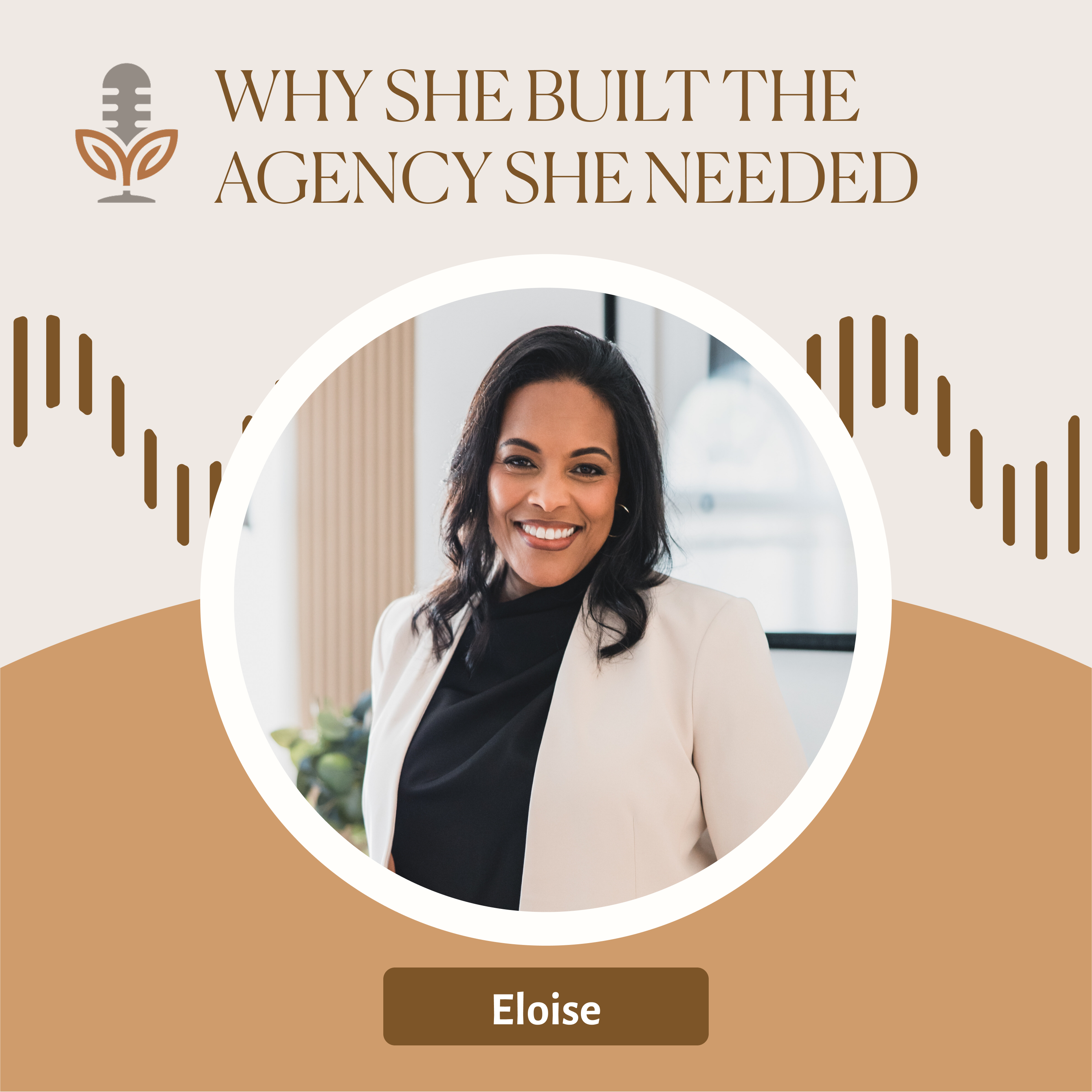
[00:00:00] Speaker A: In this series, the questions have all run in one direction. A woman who carried for someone else sits down and the conversation belongs to her story. This time, the seat is the same, but the person answering is the one who usually asks, she carried too. And today, the questions come to her. Hey, welcome to the surrogate series. I'm Eloise Drain. I'm excited for you to be here with me today. This one is a little different. In this series, I'm usually the one asking the questions and listening to other women tell their stories.
Today I'm the one telling mine. And since it felt strange to interview myself, I asked someone I trust to sit in and lead the conversation.
So I want to introduce you to Ashley. Ashley is a two time surrogate with Family Inceptions and she already sat down with me for this series to share her own story. Today she's turning the tables and asking the questions and I'm going to do my best to answer them as honestly as I can. Okay, Ashley, I'm all yours.
[00:00:58] Speaker B: Okay. Awesome.
Well, welcome to the Fertility Cafe podcast. I am someone that was fortunate enough to be a surrogate through Eloise's agency. And so I now have the opportunity to interview Eloise on her surrogacy journey.
[00:01:18] Speaker A: Well, I'm excited. I am very excited. I've never done this before.
[00:01:22] Speaker B: I was about to ask. That was going to be one of my first questions. If you had ever done kind of a switcheroo like this.
[00:01:26] Speaker A: No. I mean, I've been on other people's podcasts, but I've never, like had someone be on my podcast and then interview me. So this is going to be an experience.
[00:01:36] Speaker B: Cool. Very cool. Well, I think it'll be a perfect contribution to the surrogate stories season.
All right, so I know that the listeners probably know who you are, but if this is like the first time tuning in, can you share a little bit about yourself?
[00:01:52] Speaker A: Yeah. So obviously I'm Eloise Drain. I'm the owner of Family Inceptions, and I started family inceptions 18 years ago in 2008.
April 1, 2008. And I purposely picked that date because I was like, this must be a joke. God, this really, you know, like really want me to start this. But I did.
And it really started from my own personal experience and wanting to start this agency.
And I'm sure you'll ask all of the questions, so maybe I'll stop here. That way you can ask all the questions. But it definitely started from personal experiences that I had while, you know, my experience in being a six time egg donor as well as a three time surrogate.
[00:02:47] Speaker B: Very cool.
So I'm curious. I know that for myself and probably a lot of the younger generation, everyone learns about surrogacy differently. I learned, I remember, I think the first time I was introduced to it was when I was watching Friends and Phoebe was a surrogate on Friends and I've seen it on a couple of TV shows. I don't know how accurately I feel like it it's been portrayed. But I'm curious, what is it? What was your introduction to what surrogacy is? How did you learn about it and discover it?
[00:03:18] Speaker A: Yeah, so I kind of want to call myself like the auntie of Surrogacy because I'm much older, I'm in my 50s now and I'm a grandmother now. And you know, this world started for me in 1998. So actually in 1998 I gave my cousin a kidney.
And after I did the kidney donation, I went to go visit him in California. And while there I in the mall and I know this is dating me, but at the time there was like magazines that you can just sit and look through and, and I was flipping through the magazine and I remember seeing an ad for egg donation. And I was like, oh, that's interesting.
I've never heard of that before. Probably something I could do.
And my cousin at the time, his, my cousin whose sister was with me, I asked her if she would ever donate and she's like, oh my go. I could never do that.
But I already had my three kids at the time. And I was like, you know, that's something I could do one day. And then kind of just put it to the back of my mind.
Fast forward a year later. Now it's the end of 99. I remember the name of the agency and I reached out to them and I said, hey, you know, I'm interested in becoming an egg donor. And I thought they were going to tell me that I couldn't be an egg donor because I didn't live in California.
But they told me that I, I couldn't, that I would be a good candidate. But I probably would never get matched because black women didn't have infertility issues.
So I was like, oh, okay, I didn't know any different. Again, Dr. Google isn't what Dr. Google is today. And now it's not Dr. Google. Now it's Dr. AI.
And so I didn't know any different. I had three kids young, so I'm like, okay, well if somebody ever, you know, is interested, call me and they did. About 10 months later, they reached out to me, told me that there was a family that was interested in my profile. Would I still be interested? I said yes. And I went on and did my first egg donation journey. And it was not the greatest experience at all.
And I just assumed that I was never going to do it again. And then fast forward two years. You know, they say you plans and God laughs.
So I came across a website called task.org and doesn't even exist anymore. And this is where people would put their information out if they were looking for a surrogate or donor or what have you.
And somehow I came across this website and I decided to put my information on there.
A couple hours later, I ended up, I was at work and I checked my email a couple hours later and I had like 25 emails of different black women who were all looking for black donors.
[00:06:17] Speaker B: Oh, wow. And
[00:06:18] Speaker A: I was like, wait a minute. Clearly these people don't know what they were talking about because now it was a whole different experience.
So I went on then to choose the family that I donated for. And then it was a completely different experience. And I was like, oh my God, this is definitely not what I was expecting, not what I was told, not anything. And I ended up doing a total of six donations twice for the same family.
And then in 2005, I was like, you know, I really feel like I want to start an agency for women of color. Because I've spoken to so many of them at this point over these years, now that I started, you know, when I first started doing my egg donation journey, and everybody keeps telling me the same thing, they can't find black donors. And so I was like, maybe I should start an agency for women of color, helping them to find black donors. And then I found out that at that time I was pregnant with my youngest son, I was working a full time job, I was trying to finish my mba. I was married, I already had three kids. I was like, maybe right now is not the best time to start an agency.
But then I. But it was something in me that I just knew, I knew I needed to be in this space.
So I started looking for an agency that I can be in work in their egg donor program and couldn't find one.
But I did find a surrogacy agency that was looking to add an egg donor program to their surrogacy program.
So I was. So I started working with them. And then when I started working with them, I started learning about surrogacy and I was fascinated. I Was like, oh my God, I could so do this. I had easy breezy pregnancies with all four of my pregnancies.
I didn't even have morning sickness with any four of my pregnancies.
[00:08:28] Speaker B: So jealous.
[00:08:30] Speaker A: Nothing. Like nothing.
And so I was like, yeah, I could so do this. And, and, and at the time, that particular agency, they were on the west coast and they only worked with surrogates on the west coast. So I was out. I was, you know, living in Georgia. So that was not going to be an option for me.
So I started thinking like, okay, you know, if I decide that I wanted to be a surrogate, then I'm sure there's other agencies across the country that I can just start applying to to these agencies and I can become a surrogate. Like I said, I had four healthy pregnancies. I had no complications, I had no problems. I mean, my biggest complication was that my children didn't want to come out.
My first three, they, I had to be induced at 42 weeks with all three of them because nobody wanted to come out.
And then my youngest son, the only reason why he, he came out before like 40 weeks, was it 38 or whatever it was, he was breached and we did an aversion. So they flipped him so that I could avoid having a C section.
And the doctor was getting ready to help me, have me go home so I can go rest and, you know, wait for him to come. And they checked me one more time and he looked like he was flipping back. And I was like, get him out right now.
So they went ahead and just induced me and took him out. But literally that was it. That, that was the extent of my pregnancies.
[00:10:06] Speaker B: Wow. Okay, so it was something that, it just ended up making perfect sense for you too. Did you have success then when you were looking for another agency that would, that would accept people outside of just being on the west coast?
[00:10:22] Speaker A: No.
So I applied at several, well, still known agencies to this day.
And when I'm saying applying, things are obviously a drastically different from when I started this whole process. Surrogacy was not a thing, you know, it wasn't common. It wasn't, you know, in the mainstream. It wasn't a conversation. It was still very hidden. It was still very hush hush. And again now at this point, this is 2007, so.
But there were still agencies out there and I applied at those agencies and I never heard from a single one of them ever.
[00:11:06] Speaker B: Wow.
[00:11:07] Speaker A: Yep. Nope.
[00:11:08] Speaker B: What do you think the reasoning was,
[00:11:12] Speaker A: to be truthful, was a black Woman in the South.
[00:11:17] Speaker B: I gotcha. That's hard.
[00:11:19] Speaker A: Yeah.
[00:11:20] Speaker B: So fast forward to what. What got you to the point that you did have the opportunity then to become a surrogate? Was it you starting the agency?
[00:11:32] Speaker A: No. So.
And at that point, too, I wasn't even thinking about, you know, starting an agency or doing anything.
When I started thinking about I wanted to be a surrogate, the first thing I needed to do was get my husband on board.
And that. That took a year.
That's why it really started for me in 2007, because in 2006, when I started working for that particular surrogacy agency, their donor program, and learned about surrogacy, and I knew that it was something I wanted to do.
When I went and told my husband, he was like, absolutely effing not. There is no way in hell.
We actually got into an argument. We were. We was driving in the car, and I was driving. He was in the passenger side. And I kept pushing that I wanted to do this, and he was pissed off that I wanted to do this, and why would I want to do that for somebody else? And why would I want to carry another man's baby? And I was like, it's another woman's baby, too. It's not just another man's baby.
And so he was mad or whatever, and he was so pissed that he was like, pull over. And he had me pull over, and he got out the car, and I just kept on driving.
So I drove home, and he had to figure out a way to get home. And this. This is not the time where there was Uber, you know, so he actually ended up calling a friend of his who came and picked him up. He was like, wow, she really left you on the side of the road. And he like, oh, you don't know my wife. So, needless to say, it took a year for me to really educate him and for him to understand why I wanted to do it. And, you know, at first, he was like, we don't need the money, you know, where we're fine. We own our own home. And I was like, this is not about the money for me. Because quite honestly, in 2007, 2008, what people are getting compensated now is nowhere close to what compensation was back then.
But for me, I had donated a kidney to my cousin.
And at the hospital while, you know, I'm recovering, obviously, he was able to move around much faster than I could.
He came into the room, and he kind of took me by the hand, which was weird, because he's. He was. He Was so goofy, and he was just not that type of person.
And he took me by the hand, and he said, guess what? And I was like. And I thought he was getting ready to, like, give me another goofy joke as he normally does. And he was like, I got to pee. Like, I got to pee like a man for the first time.
I was like, okay.
And he was like, and you did that for me?
And I'm like, okay.
And then I sat back after he left the room because I'm still like, okay, so what? You got to pee. Like, what? Big deal. You got to pee.
But I sat back after that, and it just started thinking about it. And then six weeks after the surgery, he actually died of E. Coli poisoning from the hospital.
So I then had a.
You know, obviously, I have a cross on my neck. I'm.
I'm a believer. And I. Faith is everything to me. And I.
I was pissed off at God. Like, how in the world could you have me do this and have me give a kidney and risk my life and all of the things that I had to go through in order to be a kidney donor, only for him to die six weeks later?
And, you know, and I would have these screaming fits with God. Like, I literally was screaming at God. And, you know, one day, it was just like. All of a sudden, it was just. I heard something of this was the trajectory of what it was to learn to be selfless for somebody else.
And that conversation of him telling me, I got to pee like a man for the first time, and you did that for me, all of a sudden, it clicked of the ability that what one person has to be able to change the life of somebody else.
And so for me, that's what surrogacy meant for me.
The ability to literally change the trajectory of somebody else's life.
And so for me, it wasn't about money or all of the other things, because that feeling that I had with my cousin and him, you know, even though, unfortunately, yes, he passed away, but even for that six weeks that he lived being that egg donor. And when I decided that I wanted to be an egg donor and change somebody's life and then do surrogacy and change somebody's life, that's what it was for me. It was never about, you know, oh, I can hurry up and make money, because this is not a hurry up and make money kind of thing.
And quite honestly, as a kidney donor, it's illegal to get paid to be a kidney donor or to give away your organs. So for me, it was never about, you know, a dollar sign. It was about what my calling and my purposes in what God put me here on this earth to do.
[00:17:46] Speaker B: That's amazing. I think back to kind of my surrogacy journey when, you know, the mom had. Had thanked me so.
So sweetly. And it just. In my mind, I was like, I mean, I was just. I was just doing this for you. And it's almost like, I don't know that take for granted is the right phrase, but we just don't think about the. The gravity of what our actions that feel very normal and kind of like, oh, well, of course. Why wouldn't I do this thing for you?
What they actually feel like on the other side. So that's. That's really amazing.
What. Now fast forward to you find an agency to be a surrogate with. No. Did you do an independent journey?
[00:18:31] Speaker A: I had to do an independent journey because no one contacted me. So when I finally. My husband finally said yes, I reached out to these agencies and no one reached out to me. So I was like, fine, I'll just go back to that website that I had went to to be an egg donor and started looking for people there. And I found a local family, and she had. Was dealing with breast cancer and had to have a double mastectomy and couldn't carry a pregnancy and was hoping to find a surrogate. And so we met, we connected, and I was like, all right, this is. This is it. I'm going to be a surrogate. Like, I'm really doing this. And so went to my husband and told him. He was like, oh, God, like, she's really going with. Through with this. And
[00:19:32] Speaker B: she found
[00:19:33] Speaker A: someone. Yeah. And, you know, and my kids at the time, they were. I mean, they weren't that young, although my youngest one was, I think, three at the time.
And so
[00:19:48] Speaker B: an age where they really understand.
[00:19:50] Speaker A: Yes. But my older ones were. I mean, I have a big age gap in my children. So my oldest one was 13 and then 12 and 9. So they understood and they were just like, as long as these babies aren't coming here, we don't care.
So we started the process and worked with a local clinic here in Georgia.
And, you know, obviously I'm now doing this by myself and having to figure out all the details because, again, we're talking about 2000 at this point. Now it's 2007 going into 2008.
So there's. You're not. There wasn't a whole bunch of stuff, even if you Google it, even if you. Whatever. And so you know, you're figuring it out as you go.
And I just reached out to an attorney that was here, a reproductive law attorney, told them that we wanted to do this. So she kind of guided me a little bit.
And, you know, and then the fertility clinic and went in for doing all of the screening, had to do the psych screening.
Obviously, my husband had to also do psych screening and do.
Yeah, blood work and all of that. But for the psych screening, it wasn't really something that it was so off putting to me, because when I decided to be a kidney donor, no one could believe that I wanted to be a kidney donor at such a young age. I was 23 when I decided to be a kidney donor. And so they were like, you're being coerced. Somebody is paying you something, somebody. And I'm like, no, I know that I'm supposed to do this. And so they had me see a psychologist and a psychiatrist and every counselor and therapist and everything under the sun, because they just felt like, there's no way that you're making this decision rationally. And I'm like, but I am. I am moving, eyes wide open, knowing fully well what I want to do.
And so, you know, doing the psych screening for the surrogacy journey and even the egg donation journey, too, because you also had to do psych screening for. Then it was just like, okay, yes, this is no big deal.
[00:22:25] Speaker B: I gotcha. So okay for you. That I can't imagine. I mean, an independent agency in general would be so scary to me. Having surrogacy advocate was so big, but to do that for your first journey is quite a lot. Did you do that for all of your surrogacy journeys? Were they all independent?
[00:22:44] Speaker A: They were all independent, yes. Yeah, all independent. But by.
So it was actually my first couple that I carried for. They were the ones who encouraged me to actually start an agency.
[00:22:59] Speaker B: That is so cool. Do you feel like it's because you handled things so well and just showed that you. You. You obviously could do the research and figure it out for yourself?
[00:23:09] Speaker A: Yeah, that. And also at the time, there was no agency in the state of Georgia at all.
And also prior to that, the state of Georgia or during that period, the state of Georgia was trying to pass a personhood bill where, you know, ultimately an embryo would be considered a human being.
At the time of sperm meeting egg, it would be considered a human being. And so there was a lot of people trying to stop that from happening, because if that was the case, then how fertility care was being held or handled in the state of Georgia would have looked very differently. And so.
So when I started thinking about the agency and when they started helping me talk about it and think through it, there was a lobbyist, actually, that was in the state, and he had told me, don't start anything because of this person who had bill, and if it went through, it would kind of hinder the whole process. And so I'm like, okay, well, I guess I'm just going to continue on doing my surrogacy journey, and I'm not going to do the agency.
And then a year or the following January or whatever it was in 2008, at that point, I reached back out to him and said, hey, you know, is this bill passing? Or whatever? And he was like, no, it's not passing. You move forward with the agency.
And that's when. That's why I said April 1, 2008, because I was just like, this must be a joke.
I started the agency.
[00:24:58] Speaker B: That's awesome. Okay, so fast forward on your.
Your. On your surrogacy journey, and you. You're actively pregnant during your first journey. Was that when you had twins, you had multiple that you were carrying?
[00:25:15] Speaker A: I had twins. Again, you have to remember, times are drastically different than they were or than they are now. So the first transfer that we did, they transferred three embryos. One took, and at about 10, 11 weeks, I ended up having a miscarriage. Now, mind you, none of these embryos were tested. They really. And it was kind of like rush to hurry up and get her to create embryos.
And then the third transfer, they used donor eggs, and they transferred two embryos, and they didn't think that, you know, the donor egg program at the time was still fairly new, so they didn't think that they were going to both work, but they did. They transferred to. And I got pregnant with twins.
Now, remember when I said I never had any sickness during any of my own pregnancies?
Well, this pregnancy, I couldn't even smell boiling water.
I was sick from probably week 9, 10 gestation through about week 20. I was also on Zofran, so they had to put me on Zofran. They put me on something else. Whatever it was, it didn't work. Then they put me on Zofran, and Zofran definitely helped the nausea. But then the other thing that Zofran caused was like, oh, my God. Now, I know TMI people, but we're on a surrogacy series, and we're just being real about here. It caused a lot of constipation. I was freaking miserable.
So.
And the thing about it is, is that I was dealing with all this stuff, but I had to tell myself, like, I can't complain because I'm the one who kind of made all of these choices and made these decisions to want to do this. So I can't complain to my husband, I can't complain to my family. I just got suck it up and deal with it. And I didn't want to complain to my intended parents either because I knew that she was already feeling a loss because she couldn't carry her own pregnancy and she had to kind of live a pregnancy through me. So I had to kind of keep it all contained, even though I wanted to be like some days, like, why am I doing this to myself? Like, what? You know, but it was just like, all right, I'll deal with it.
And then after week 20, it started passing, subsiding, and.
The pregnancy really after that was fine. I mean, I was around people. I was six months pregnant and people didn't even know I was pregnant.
[00:28:13] Speaker B: Yeah, that's awesome. It got to a point where you could kind of manage what you were saying. Just kind of led me into what I was going to ask next was if there was a point in your surrogacy journey where you really felt alone.
[00:28:32] Speaker A: Yeah, I would say yeah, because again, doing it independently and again, surrogacy was not a common thing. You know, people weren't really talking about it. This was still back in the days too, where in which I know of intended mothers who were like putting on fake bellies so that people would never know that they weren't carrying their own children. It was lonely because there wasn't a significant community out there. I mean, there was communities out there where, you know, you can go and you can find the person that's going to carry or, you know, find intended parents, but a community to just kind of keep talking about your experiences and what you're feeling and all of the things. No, there really wasn't. It was just me trying to figure it all out on my own and then trying to process everything on my own.
What I realized too at the time was, you know, because of course I would always get asked, oh, you're, you know, you're not gonna get attached to these babies, you're pregnant. And, and the craziest thing was I had more of a close relationship with their parents than I did with the girls.
Like, I love them, I cared for them, I cared for their well being. But it was definitely Very different pregnancy than I had with my own children.
And I look forward to having calls with their parents and, you know, having a going out to lunch after doctor's appointments or, you know, whatever. I. I enjoyed all of that. And that is what I realized that I would miss more so than missing of that child, even though I love that child. And I think about them and I think about them, you know, on their birthdays and how they're doing and all of that. But it was the relationship with the parents that I had more of a connection with.
[00:30:35] Speaker B: That's so cool that you developed, like, such a good relationship with them.
So I know you had talked about what the kidney donation kind of taught you about yourself and what you felt like you were supposed to do in life and a journey you were supposed to take. What do you feel like surrogacy taught you about yourself?
[00:30:56] Speaker A: I think for me, surrogacy taught me really the true meaning of being selfless.
It taught me that I'm a strong woman who can handle a lot.
It taught me that I have resilience. It taught me that I have a big heart. It taught me that I care for others. And it's not just about coming into this world and everything just being about me, me, me, me, me.
I feel like in this world, we're all born and have a life for a reason, and it's to help others. It's not just to be selfish. Selfish. It is, you know, however you decide that you want to help somebody. And it doesn't have to be as extreme as being a surrogate or being a kidney donor. It could be you opened the door for somebody, you was, you know, nice to another person, you was whatever it is. But we all have a purpose in this life, and it's all interconnected somehow some way. We are all interconnected in this world. And it just seems like the humanness of what we all were created to be like, that's gone. Like, people don't. No one cares about anybody anymore. Everybody is just about, you know, it's about myself, it's about me. It's about what I want. It's about who I, you know, and it's just like I don't feel like that was what the creator created all of us for
[00:32:37] Speaker B: now. Did being a surrogate afterwards, did it change your view on motherhood or what it means to be a mom at all?
[00:32:46] Speaker A: It made me appreciate that I was able to have children with no problem.
It made me appreciate the fact that my children are healthy, they're whole.
It Made me appreciate that I don't have medical issues. I don't have medical problems. It made me appreciate the fact that, you know, something that people may think take for granted, such as their fertility and having those abilities and how many people actually don't have those abilities and how much we just take it for granted.
And it just made me.
And now, you know, it's just not just motherhood, it's also grandma of two. And my children will probably say that I love my grandchildren more than I love them. I probably do.
But I just realizing the, you know, because when you're in life and your children are younger and you're just trying to raise them and trying to work and trying to do all of the things and raising your children and all of that, you don't really sit back and appreciate the small things, the times you have with them, the little experiences they're having along the way in them becoming, you know, adults.
And now that I get to kind of relive it through my grandchildren, it's even more so now that I appreciate it, you know, I mean, surrogacy helped me too, but I think even becoming a grandmother made me even see it more, more widely, like, oh, yeah, this is definitely amazing. And this is definitely something that so many people take for granted.
[00:34:39] Speaker B: No, that makes perfect sense. Okay, so you going back to your surrogacy journey, you are finally not sick anymore. You couldn't live your life a little bit more? Fast forward to.
I mean, this is twins. So typically delivery comes earlier than just a singleton pregnancy. So I'm curious, was it like your pregnancies before, where it was inducing or were they just ready to come at a certain time?
[00:35:12] Speaker A: Yeah. So I was having to see an OB GYN as well as a mfm. So literally, I was having appointments like every other week.
And I went in for my almost 35th week checkup, which was on a Wednesday.
And the MFM doctor said, you know, today I'm going to check you.
I was like, okay. And he did. And he was like, huh? You're 2 cm dilated. And he. So he told the antenna parents, she's 2 cm dilated, she is almost 35 weeks.
And baby. Both babies are head down, and if she goes into labor, I'm not going to stop it. The intended father jokingly smacked the doctor on the back, and he was like, oh, Doc, we got plenty of time. Because the doctor had asked him, are you guys ready?
They were still hadn't even put the nursery room together.
We're just like, okay, well, you know, go home. And Friday, around midnight, I wake up to go pee, and I feel like I'm just peeing forever.
And then I realized, like, oh, shit, my water just broke.
Mind you, with my own four children, my water had never broke.
Now I don't have any contractions. I'm not feeling anything. Nothing.
I got up, I went to my bedroom, and I told my husband. I was like. I woke him up. I was like, babe, my water just broke.
This man jumps out the bed and he's running around frantic. And I was like, what are you doing? He was like, I'm running downstairs to boil water and get towels.
Like, what?
What? This is not the movies. Like, what are you talking about?
So he. He was like, oh, I don't need to go boil water. I'm like, no, I just need to take me to the hospital.
He's like, are you having contractions? Are you. I was like, no, I'm not having any of those things. I'm. I'm not in pain. You just need to, like, calm down.
Go wake up our oldest son, tell him that you're going to take me to the hospital.
And, you know, and then we're. And at that time, my oldest, I think, was 14.
So I was like, take me to the hospital and then just come back and, you know, because they have to go to school in the morning.
So.
So he took me to the hospital, and I had called the intended parents, and their phone kept going straight to voicemail. Both of their.
So I am like, okay, obviously I will send a text. So I sent a text. Nothing. So he brings me to the hospital, I check in, and I am telling them, you know, pregnant with twins, it's a surrogacy pregnancy. My water just broke. And the nurse was like, well, you know, sweetie, we'll just have to check that to see if your water broke. And if it's not, you know, we'll probably send you home since you're not having any contractions and blah, blah, blah. And obviously, I've already had four children. I've already know well how this process works. And I turned around to her, I was like, well, sweetie, I'm telling you, my water broke and I'm not going anywhere, so do whatever you need to do and get me a bet.
So she, like, shuffled off or whatever, and she was like, well, we'll need to check you to see if your water broke. And she swabbed me, and like 10 minutes later, she was like, oh, yeah, I guess your water broke. I was like, so yes.
So took me.
They obviously checked me into labor and delivery. In the meantime, I am. My husband had to leave to go with my kids by myself. And I am now blowing up my intended parents phone.
Neither one of them are answering their mobile phones or the house phone.
So I'm like, okay, all right.
And obviously there's no one for me to call. I can't call my husband to tell him any of this. I can't. There's no one for me to call.
So.
So I'm sitting there and obviously because my water broke, then I started having contractions. The doctor came in and he was like, they're both head down. We're just going to allow you to have both babies vaginally. No big deal. I'm like, okay, fine, I don't want to have a C section. Totally good.
And at that point, it is now about 9:30, 10:00 clock in the morning. I'm still having her from the intended parents. Remember, my water broke at midnight, so I'm texting, I'm calling, nothing.
And then about 12:30, I finally get a phone call from the intended mother. Like, oh, we had turned our phones off.
We just wanted to rest and we were both tired and we just wanted to rest and not be interrupted.
Well, I'm sorry to interrupt you, but your babies are coming and you need to head to the hospital.
So they got to the hospital, I don't know, hour and a half later or whatever.
And I now I'm full on having contractions or whatever. Both parents are in the room.
Intended mom is down by my leg, intended dad is up by my head.
And you know, I'm having contractions. They gave me Pitocin to help regulate the contractions. And so it's coming faster. And I, of course, I'm like, I want an epidural. And they, the intended father was like, well, is that. I turned around and I was like, excuse me.
And he was like, I will leave the room. I was like, yeah, you do that. So they came, gave me an epidural, and within 40 minutes of me having an epidural, they were like, okay, time to push. Baby A is coming.
Great. Had baby A pushed a couple of times.
Mom cut the cord. I'm sitting there and I noticed like, the doctor is starting to get a little bit frantic and the midwife is starting to get a little bit frantic. And I'm looking around and they were like, baby B has flipped. And we're trying to flip her back to do a vaginal birth, but we've Lost her heartbeat. We have to go in for an emergency C section.
[00:42:06] Speaker B: Oh, my gosh.
[00:42:08] Speaker A: So I had baby A vaginally, and then within probably not even 40 minutes later, I was wheeled into the OR by myself at that point, because the intended parents were now with baby A and didn't have time to go scrubbing and all of that and get ready.
They rushed me into the or, and I was by myself having my C section for the very first time.
And then baby B came out, and she was fine. And I heard her cr. And I remember asking the doctor, is she okay? Is everything okay? And she was like, yeah, she's perfect. Everything is fine, you know, whatever.
And I just felt such relief, like, oh, my God, because, you know, you go from. You're delivering vaginally and all of the things. And I knew what to expect. And I knew, you know, when everybody is there and all the excitement of, you know, baby A and all of the things, and then going from one extreme to the next extreme, having to have a C section that I've never had before, being by myself. There was no spouse. There was no intended parent. There was nobody. It was just me and the nurse and the anesthesiologist and the doctors.
And the nurse was amazing.
[00:43:32] Speaker B: Huh? Did anyone call your spouse to, like, let him know
[00:43:36] Speaker A: they did? Yeah. The intended parents called, and of course, he asked, you know, do I need to come? And I'm like, no, you don't need to come. He does not like hospitals.
And it would be more of me worried about him being in a hospital setting than it would be about me kind of just focusing on myself. And so I'm just like, no, I'm fine. You don't need to come. Whatever. You know, they'll. And they, of course, were like, we'll just keep you posted if you know how she's doing. Blah, blah, blah. So.
So they. Baby B came out, and they.
Both babies had to go into NICU. They were fine, almost both, each £5, but they had to learn how to feed.
So they were brought into nicu, and they put me in a room, and then I get a phone call from the billing department, and they, no, sorry, before then, they're putting the baby bands on my hand, and I'm like, no, these are not my babies. This is a surrogacy pregnancy. These are their babies. This is not my babies. And they were like, but we have no legal paperwork.
Excuse me. Yes, you do, because I signed my paperwork months ago, and I sent it to the attorney.
They were like, no, we don't have anything in our legal department, nor does the labor and delivery have anything that. These are not your babies.
So of course I'm like, you need to go call the intended parents right now.
And they came in the room and come to find out they had not completed their side of the parentage order.
[00:45:31] Speaker B: Oh, my goodness.
[00:45:34] Speaker A: So I'm like, what do you mean you didn't complete your side of the parentage order? Like, this paperwork was done months ago.
Yeah, we didn't finish.
So now they're scrambling with the reproductive attorney for her to get in front of a judge. But it now it's like five, six o' clock on a Friday night.
So they're like, yeah, there's no way that we're going to be able to get an emergency hearing or anything like that. So. So the babies, I had to have the bands on my wrist and the babies.
And in order for the parents to go see their babies, they had to call downstairs to me to ask me permission if their parents can go see them. And of course, obviously, I would say yes in all of the things. And then I got a phone call from Billing who said, Mrs. Drainage, you know, we understand that you want to use your insurance for the babies, but the only way you can be able to do that is, you know, if the babies keep your name. And I'm like, what are you talking about? And she said, yeah, the intended parent, the intended father mentioned that you were going to keep the babies on your insurance.
I was like, the.
No, I never said any such thing.
And I have no idea what you're talking about. And she was like, like, oh.
And then she, like, dawned on her, like, I'm, like, oblivious to anything that she's saying. And I was like, I am going to re. Reiterate to you. These are not my babies.
I was a surrogate. They're not genetically related to me. I was a gestational surrogate. These are not my babies. They are not going to be billed on my insurance, and the parents need to have them on their insurance, and they are not my babies.
So she was like, I got it, I got it. And so, you know, we let that go. But while I'm there, I'm pumping for them.
And I. I mean, as much as I even tried to, like, breastfeed my own children, and it just.
I have these big things really for no purpose because I can't produce milk.
So I was still pumping, though. I was like, at least I can try to give them some colostrum. You know, I wanted Them to be healthy and all of that. So I would pump and then I would be able to go to NICU and slowly, of course, but you know, they would make me move. So I'm like, well, if I'm going to have to move, then I'm going to go see them and nicu. So I would go up to NICU and I remember the first day that I went there, showed the bands and the, the nurse looked at my band and then looked back at my band again and she looked three times at my band. And the reason being is because the couple that I carried for was a white couple.
And here I am with these bands of these babies that I am going to go and see.
And she's like, okay. And then I had to like, I had to pour, poor heart. I was like, I was a surrogate. She was like, oh, that makes so much more sense.
But then I started thinking, I was like, so what? I, I can't be a black woman and have light skinned babies. Like, so whatever. But anyway, very judgmental at that point. But anyhow, so I went, I would see them, they were doing good, all of the things.
I was in the hospital for three days and I went home, I'm home.
And the next day I get a phone call from the hospital. And by that point, the three days they, by that Monday or Tuesday or whatever it was, they were able to get the order, they were able to change the baby's names, all of the things. But so I think we're good. So I get a hospital the next day, get a call from the hospital the next day. They were like, Mrs. Drain? And I'm like, yes.
They said, we're calling because baby A and B is ready to go home. I was like, that's great.
We can't get a hold of their parents.
I was like, come again?
They were like, yeah, we can't get a hold of their parents.
I said, well, I don't know what to tell you, but I'm not coming back to get them. They're not my babies.
And I said, you know, they may, they, maybe they're at work or, you know, or maybe their phone is off, they're resting, I don't know. I said, what? Keep calling. You'll get ahold of them eventually.
And then eventually. And then I called like later on that night and they, they got ahold of them and they were like.
I said, okay, you were able to get a hold of them. Everything is great. And they were like, yeah, but we're gonna probably have to Keep them, you know, for another day.
Another day? Why?
Oh, the parents, they're not ready yet. They said if we can hold them for one more day because they're not ready.
Okay.
So I was like, okay, well, I mean, hey, they're good. They're going home.
They'll get them the next day, whatever.
And now, mind you, we've had, you know, we've been conversing and I've been checking on them. They go home, I've been checking on them.
I'm still pumping. And I brought over breast milk one day over to the. To their house, and, you know, I went to visit the baby and I also brought a stack of. Of medical bills that had not been paid for, you know, like, visits and so on and so forth. And because at the time, we didn't use an escrow company, they were like sending me a check every single month.
So I had sent them a message like, hey, I have all of these medical bills. And oh, by the way, you know, there's still some out outstanding payments that I haven't received.
So when I went over, dropped the breast milk off, I brought a stack of medical bills that had not been paid again. And once again, I'm still asking for, like, my couple of payments that I had not been received.
They were like, yeah, yeah, no, we'll take care of everything, blah, blah, blah, whatever, whatever.
Okay. And then communication. Done. Didn't hear anything from them. Complete ghosted me.
And now the medical bills are starting to go into collections in my name, and I still had not received final payments, like a couple of payments.
So I was like, okay, I'm going to have to sue my intended parents.
So I turned around and had to sue my set of. My first set of intended parents.
And we ended up working with the mediator. I had to hire an attorney, ended up working with the mediator, and they countersued me for the breast pump that I was using to pump breast milk for their babies.
Huh.
[00:53:30] Speaker B: Did they pay for it?
[00:53:32] Speaker A: Yes, they had bought the. They had bought the breast pump because they wanted me to pump for their babies.
[00:53:37] Speaker B: Okay, did they want you to return it to them when you were done?
[00:53:41] Speaker A: I mean, the whole thing was, I wasn't. Wasn't done.
You ghosted me.
So of course, how am I going to get anything back to you if you are not communicating with me? At the mediation, the mediator was sitting there talking about, here, there's all the medical bills that need to be paid, blah, blah, blah. Mind you, my insurance was so good at the time that it paid for.
Even at the fertility clinic. It paid for my medications. It paid for my monitoring appointments. It paid for all of my pregnancy.
Literally. I think I had maybe a $2,500 deductible.
Not even that. I think maybe it was like $1200 deductible for the whole pregnancy. They, of course, and there was other bills from, like, the MFM and all the other stuff they didn't pay. And then, of course, you know, the amounts of still payments for the surrogacy that.
Here I am, Carrie, twins, and I pumped for you, and I had a C section and all of the things, half of which nothing. I even asked for compensation for. The only thing I had asked for compensation for was obviously the pregnancy, because back then, it wasn't this. You get, you know, a fee for C section and you get a fee for pumping, and you get a fee for. It wasn't like that, so. Or you get a fee for multiples. No, wasn't anything like that. So.
So they.
The mediator was going down the list, and he's looking at them, and he was like, so she did this and she carried twins for you, and you're countersuing her for breast pump?
And I was like, oh, yeah, hold on one second.
So I went back outside into my car.
I had the breast pump, because obviously the attorney had told me what they were doing. I had it in a garbage bag, and I went to my car, came back in, grabbed the breast pump and dumped it on top of the table.
I was like, here you go. Here's your breast pump. Now give me my effing money.
That was over 16 years ago, and I've never spoken to them again.
[00:56:09] Speaker B: So you carried their kids for them.
And did they ever give a reason as to why they didn't pay? Could they not afford to? Oh,
[00:56:19] Speaker A: no, they could afford to, I promise you.
[00:56:21] Speaker B: So what do you think the reason was for them choosing not to?
[00:56:26] Speaker A: I.
I don't know.
I don't know. I know that while we were going through the surrogacy journey, they were doing a renovation to their house. They had went on vacations. There was a lot of things that was going on.
And quite honestly, I just feel like I was the afterthought after that experience. Obviously, my husband was pissed because he's just like, they used you. I sh. I told you never. You shouldn't have done this, blah, blah, blah.
But I never regretted it because I just knew, like, no, this. I knew that I was supposed to do this. I was supposed to bring those Girls into the world. And I think about them on their birthday every single year.
This year they'll be 16. And I, you know, even this year I started thinking about, oh my God, they're 16. You know, they might be getting ready for, you know, junior or senior year or, you know, whatever.
I wonder if they went to prom and what, you know, what? Like, all of the things that you, you know, would think about. Of course I think about them all the time.
And then, you know, after that, I was like, all right, I'm done. I was doing my agency and I just figured I was like, all right, I'm never going to do that again.
And then I got a phone call from a friend of mine.
She was a past surrogate, and she said, hey, I have a family that reached out to me and they're looking for a surrogate and I can't be their surrogate, but I think you would be amazing for them. And I was like, girl, don't. You know, I have this thing called Anthony at home. He will kill me. He is. This is not going to happen.
She's like, please just talk to the intended mom and you'll see what I'm talking about.
And I was like, I'm telling you, this is gonna be pointless. There's no point in doing this.
But then myself and the intended mom got on a call and what was supposed to be a 20 minute conversation ended up being a four hour conversation.
So needless to say, I was like, okay, I'm going to see how I can get my husband to be on board.
And so of course I went to him and I was like, I want to do this again. And he was like, why do you want to torture yourself? Why do you want to do this to yourself again? And blah, blah, blah.
Because obviously too, having a C section, I never had one before and trying to recover from, like, having abdominal surgery is no joke.
So
[00:59:15] Speaker B: recovering from both.
[00:59:17] Speaker A: Yes. Literally. Literally.
[00:59:20] Speaker B: Which is insane.
[00:59:21] Speaker A: It was. It was a lot. It was a lot. So I say, okay, I'm.
I'm gonna just see.
Like, I want us to just meet this couple. Let's just meet them. And if you don't like them, I will drop it, I will not pursue this anymore, or whatever. And so we went and met at a restaurant. And I mean, as we're literally walking in the restaurant the whole time, he's like, I'm telling you now, I'm not gonna like them. I'm not going for this. I'm, you know, all.
And I'm just like, oh, My God, he's gonna walk in there with an attitude and all the things.
But we got in there, he sat down, he's all frumpy. And.
And the intended father started, you know, they started conversing and I don't know. However, he. They started on a conversation and the next thing I know, the two of them that. Just the chatting and just. I was like, and me and intended mama looking at each other and was just like, whoa, wait, we didn't see this coming.
And after that, he was like, okay, fine, you can carry for them.
So.
And went on to do my second journey. Again, we had to do three attempts.
First attempt wasn't successful. Second attempt, it was a chemical pregnancy. Third attempt.
And each time they transfer, they're transferring two embryos. Both times.
All three times.
But again, none of these embryos are tested.
And then the third time, though, the embryos were tested and they transferred two and both took.
But then one stopped developing at about 11 weeks. And then I went on to have a healthy baby boy and 10 of parents and I, as well as him, he. He calls me Auntie L. We still are in touch with each other.
I. For my birthday, I get a phone call. For Mother's Day, I get a phone call, call him on his birthday randomly. We'll just chat. I mean, they know about my grandchildren. They, you know, ask for pictures for my, like, he calls me Auntie L.
And, and he's just. He's my heart.
And then my third journey was a couple that came in on the surrogacy side and, you know, were looking for a surrogate and they left. And I followed up with them to say, hey, you know, obviously if there's anything I can help you with, you know, finding you a surrogate. And they were like, well, actually, we think you're going to be our surrogate.
Yeah, no, that ain't happening.
They were like, yeah, no, we, we. We don't want you to find us a surrogate. You're going to be our surrogate. We're not hiring you as an agency. I was like, okay, but I cannot be your surrogate. And they were like, no, we just know you're going to be our surrogate. And I'm just like, yeah, I. I don't know who told you that, but this, that's not gonna happen.
And they. I was like, I, again, I have this thing called Anthony at home. I like, I, I've.
This is. This is not happening. They were like, we're just going to pray about it and we're Just going to believe that he's going to change his mind.
Like, maybe you have a better relationship with God than I do. I don't know. But whatever. So every month they would call me. Has he changed his mind yet? No, next month. Has he? Nine months.
They waited nine months.
And I was at the office and they called me again. They were like, can you just go ask him one more time? And I'm like, okay. So I was dreading going home that day, but I drove home. He was sitting out on the front porch, and I, like, parked the car, went out to the front porch, and I sat down by him and he was like, what is it? What is it? What do you want? What do you want? Because normally I am. I go home, go straight into the house. First thing I do when I'm taking off my bra. So my mo Is not you leaving out of the car and then going to the porch to go have a seat with you, to have a conversation. So he's like, what do you want? So I was like, babe, can I please want to be able to do this for them? And blah, blah, blah.
And he was just like, what in the hell is wrong with you?
I was like, what do you mean? He's like, what is wrong with you? Why would you want to torture yourself like that? Why would you want to put yourself through that again? Like, why in the world? He was like, what is it with you? And I was like, I just love being pregnant. I love feeling the movement of a baby moving inside my body. And I was like. And I.
You know, you had asked about the thing about motherhood and all of that earlier. Those are the things that I don't take for granted because there's so many women who don't get a chance to that.
And I'm like, I. I love it. Like, it is just something that just.
It just gives me just complete fullness.
So he was like, fine. You only have to tell me one time. He said, fine. And I was out, ran, called him. I was like. He said, fine, if you want to hurry up and do this before you change this mind. We got. Hurry up and move this and get this going. And we did and transferred one single embryo. Took on the first time, ended up a little girl, full term, no complications. But after I delivered her, I wouldn't stop bleeding. She was born in July and in November. I'm still bleeding.
Never one time was there a stop. So I had ended up having to have an endometrial ablation done, which we thought was going to solve the problem.
And by January, the bleeding stopped. And then come February, the bleeding came back. But this time there's nowhere for the bleed to come out of, you know, because I did an ablation. So it then started causing more problems, and now I started bleeding internally and it just caused so many problems. And with me bleeding internally now, everything single month, my doctor made the emergency call and I had to have an emergency hysterectomy. I was told on a Friday, I had pre op on Monday, and I had my emergency hysterectomy on Tuesday.
And again, back in those days, I had to pay for everything out of pocket because at this point, baby was born in July. I had my hysterectomy in June.
So it was, you know, well over the period of time, even though it was all a continuing issue all along.
But again, so many drastic things were different, you know. And that last journey, I was 39, and this was in my. I did my last journey and delivered my last sorrow baby in 2014.
[01:07:06] Speaker B: Wow.
[01:07:08] Speaker A: Yeah. So that's my story.
[01:07:10] Speaker B: Yeah.
Looking back, do you feel like there's anything you wish you had done different across your journeys?
[01:07:19] Speaker A: No.
The reason being is because I feel like all things happen on purpose, for a purpose.
I feel like if I didn't have the experiences that I had with my own journeys, the agency that we are now and how we do things, how thorough we are, my desire to make sure that surrogates are protected, the intended parents are protected, and the babies are protected, and my OCD about getting everything done on time when it's supposed to be, people getting their money when it's supposed to be, and no one having to be stuck with a medical bill, no one having to be worried about, oh, my God, what if I can't get a hold of the intended parents? Or what if they don't pay me? Or what if I, you know, my bill goes to collections because they're not paying the bill.
I don't want anybody to experience any of those things. And at the same time, you know, women who have their own medical issues or whatever and thinking like surrogacy is just no big deal, and even though you had issues with your own pregnancies that you're going to come in and be a surrogate, like, I'm not willing to put your life at risk so that you can match with somebody for me to make a dollar, I'm not going to do that.
And I'm going to tell you no. Now, if you go and work with somebody else, that's on You. But I can't have that on my conscience because, truth be told, every pregnancy, whether it's for you or somebody else, you put your life at risk. Every pregnancy is a risk.
And people don't realize there have been surrogates who have died during being a surrogate, during delivery, during the pregnancy.
And it's just like. Like, I look at all of those things. I take all of those things into consideration because it's not just about a bottom line for me. You know, I feel like this is my calling. This was something that I was put. Put in this world to be able to do and to. And I have the responsibility to take care of people and watch out for them, even if they're not watching out for themselves. Themselves.
[01:09:49] Speaker B: Yeah, I. I think it speaks a lot that. I mean, you've been there. You understand some of the things that can go wrong, some of the. The scary things and some of the inconvenient things that. That can take place, and that you want to do everything you can to take the preventative measures to remove some of those things if you can, for. For other women.
[01:10:11] Speaker A: Yeah, absolutely. I mean, I. Even during one of the surrogacy pregnancies, a very close family member passed away. I couldn't go to their funeral. It was out of state.
I had where, you know, I'm in the hospital while, you know, my kids are doing certain things that I couldn't do or, you know, and it's just like, there's also sacrifices that surrogates have to make for the benefit of somebody else's child. And it's just like, those are real things that you have to grasp and understand before you make this choice. Because it's not just about, oh, I can hurry up and make $80,000 or $100,000, because when you break it down for the amount of time, effort, energy, and what you're putting your body through, and all of the things is like, yeah, no, the money is not worth it.
[01:11:24] Speaker B: Well, thank you so much for sharing all of your story.
It really was a roller coaster.
I love that you did have some great experiences, but also somewhere where you learned a lot on the not so great side. So if it's okay with you to wrap up, I thought it would be fun to do a little bit of a surrogacy lightning round of questions.
[01:11:46] Speaker A: Sure.
[01:11:48] Speaker B: So for these, it's completely up to you if you think quickly through, you know, kind of all of your surrogacy pregnancies, but we're focusing specifically on the surrogacy ones. So here we go. Favorite pregnancy craving.
[01:12:04] Speaker A: Cantaloupes.
[01:12:06] Speaker B: Most annoying pregnancy symptom.
[01:12:08] Speaker A: Constipation.
[01:12:10] Speaker B: Morning person or night person? During zero pregnancies,
[01:12:14] Speaker A: I was in between. I didn't like mornings. I didn't like nights because I couldn't get comfortable. So I was like. Like during the day.
[01:12:23] Speaker B: First thing you wanted to do after deliveries?
[01:12:25] Speaker A: Sleep on my stomach.
[01:12:27] Speaker B: Oh, yes.
One word that describes surrogacy.
[01:12:33] Speaker A: Selfless.
[01:12:35] Speaker B: Hardest medication.
[01:12:37] Speaker A: Progesterone.
[01:12:39] Speaker B: Most embarrassing pregnancy moment.
[01:12:41] Speaker A: Well, it wasn't, I guess, with the surrogacy pregnancies. It was probably with my very first pregnancy when I was pushing and didn't know that when you push, just FYI TMI people, but when you're pushing a baby out of your vagina, you can also be shitting on yourself. And I did. And I had no idea that that was even a possibility, but here it is.
[01:13:03] Speaker B: Very rude of people to not have prepared you for that.
[01:13:07] Speaker A: And no clue. No clue. That was my very first experience. I was like, oh, my God. Yeah.
[01:13:13] Speaker B: Weirdest thing someone said to you while you were pregnant with a surrogate baby.
[01:13:18] Speaker A: Weirdest thing.
You know, I don't know if somebody ever said anything. Weird thing. Of course they would ask me, like, how am I. How can I give up the baby? Or something like that. And I'm just like, it's not my baby. So. Right. Whatever.
[01:13:30] Speaker B: Okay. Coffee or no coffee?
[01:13:33] Speaker A: Coffee.
[01:13:35] Speaker B: One thing every surrogate should pack for the hospital.
[01:13:38] Speaker A: Oh. A really nice feeling bathrobe.
Because after you're done and you get to get in the shower and you just get to, like, just be knowing, like, you're done and you're showering in this hot shower and you're wanting to come out and it's kind of chilly and just putting on this really nice bathrobe just, like, does something to you. I don't know.
[01:14:01] Speaker B: Yeah, for sure.
All right. One thing every intended parent should do for their surrogate.
[01:14:07] Speaker A: Be grateful.
[01:14:11] Speaker B: Yes.
And last one. Would you do it all over again?
[01:14:16] Speaker A: Absolutely.
[01:14:17] Speaker B: All three of them.
[01:14:19] Speaker A: All three of them. Even with the outcomes? All three of them. Yes. Yes. Because again, like I said, I don't feel like anything is done without a purpose.
[01:14:31] Speaker B: Very cool. Well, thank you so much for letting me interview you.
It's always so interesting as someone that when I chose to do surrogacy, I didn't know any other surrogates. I didn't. And I still haven't met an enormous amount of surrogates. So learning the different stories about how people got into it how you got into starting your own agency and what your crazy journeys looked like.
It's so interesting and educational.
[01:15:00] Speaker A: Well, thank you and I really appreciate it because like I said, never done this before, but this is, this is pretty cool. I like being interviewed.
[01:15:08] Speaker B: You have enough stuff with how many journeys you went through and all the things that you've done that there could always be a part two at some point.
[01:15:16] Speaker A: Yeah, there's some stuff that I left out, but yeah,
[01:15:19] Speaker B: sure.
[01:15:19] Speaker A: Well, thanks for.
Thanks for joining me. I appreciate it.
[01:15:24] Speaker B: Of course, of course.
[01:15:25] Speaker A: Thanks so much for listening to Fertility Cafe. If you've enjoyed this episode, be sure to subscribe so you never miss an interview. Leave us a review and connect with us on socials. We're fertilitycafe. You can also watch the full video version of today's conversation over on our YouTube channel. Until next time, remember, remember, love has no limits. Neither should parenthood.