Episode Transcript
[00:00:00] Speaker A: You know, when we talk about surrogacy, we often focus on the surrogate's journey.
[00:00:04] Speaker B: But here's the thing. It's never just about one person. It's about entire families coming together to help create life.
And at the heart of it all is the partner who's there for every.
[00:00:15] Speaker A: Up and down along the way.
[00:00:17] Speaker B: This topic is especially close to my heart. If you caught episode 12, you heard my own surrogacy story, and let me.
[00:00:24] Speaker A: Tell you, I couldn't have done it without my husband by my side.
[00:00:28] Speaker B: Through three surrogate pregnancies, we learned to navigate everything together, from the emotional boundaries to the daily logistics of appointments and self care.
Having that steady support system made all the difference in my journey. It really opened my eyes to just how important having the right partner can be.
I've been on both sides of this journey as a surrogate myself, and now running a surrogacy agency.
And let me tell you something I've learned. Behind every successful surrogacy story, there's usually a partner who's been the unsung hero keeping things together behind the scenes.
Welcome to the Fertility Cafe, where we explore the beautiful complexity of modern family building.
I'm your host, Eloise Drain, and this is a space for honest conversations about surrogacy, egg donation, and the journey to parenthood. With expert insights and real stories, we're here to guide you through medical, legal, and emotional aspects of third party family building.
We believe that love has no limits, and neither should parenthood.
I'm your host, Eloise Drain, and today we're pulling back the curtain on something we don't talk about nearly enough. What it's really like to be the.
[00:01:49] Speaker A: Partner of a surrogate.
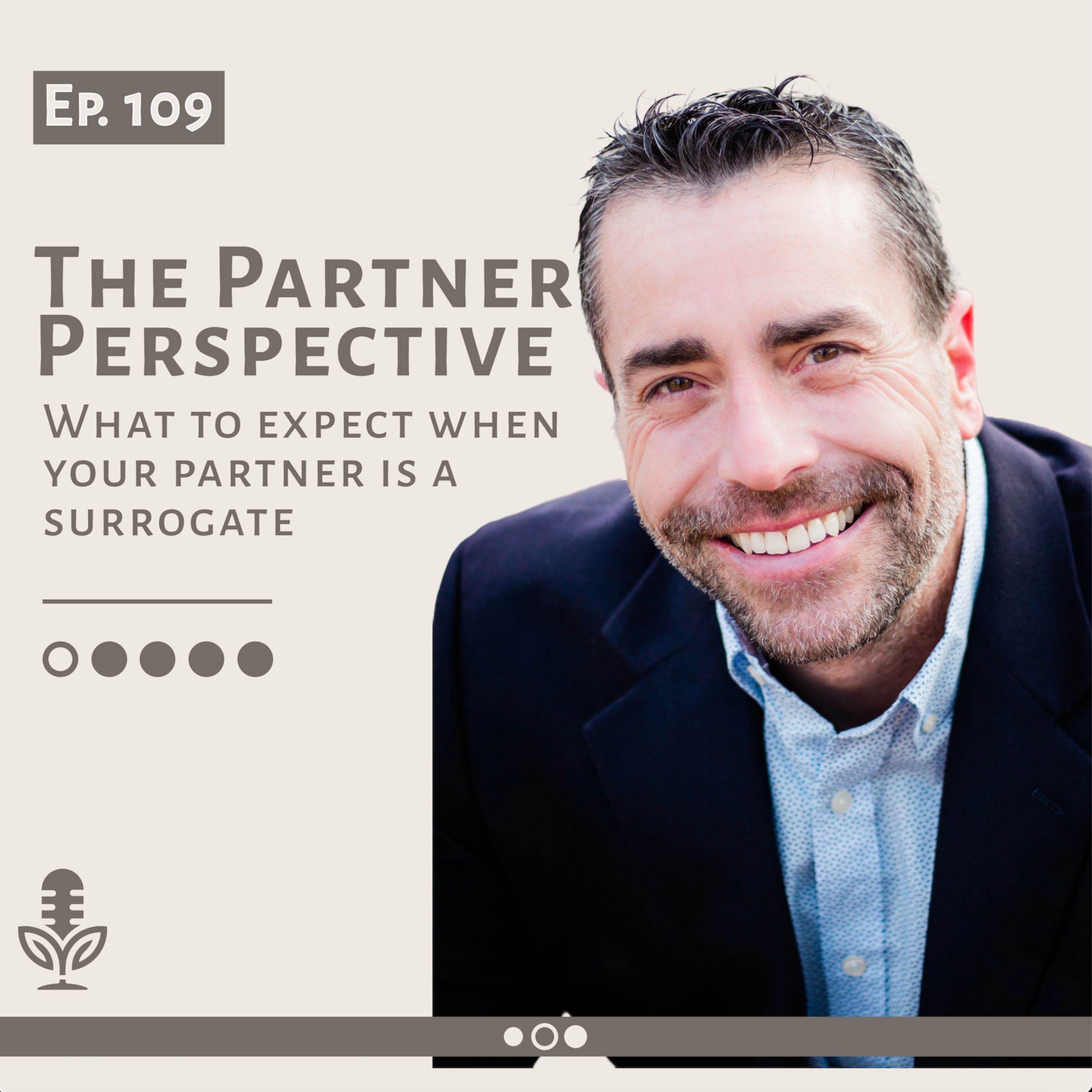
[00:01:51] Speaker B: I'm so excited to welcome Ed Sims to the show today. His wife, Janelle joined us earlier this season. And now we get to chat with Ed about his take on the surrogacy journey. What I love about having him here is how real and honest our conversation is about the whole experience.
Whether you're a partner trying to figure out what you're getting into or you're just curious about how families make this whole surrogacy thing work. Ed's got some pretty amazing insights to share.
[00:02:19] Speaker A: So let's get into it.
[00:02:20] Speaker B: Thank you, Ed, for being on the show with me.
[00:02:22] Speaker A: I appreciate it.
[00:02:24] Speaker C: Of course.
[00:02:26] Speaker A: So let's just start. Take me back to that first conversation that you had with Janelle about surrogacy and what went through your mind.
[00:02:38] Speaker C: Sure. It was. Actually, I remember the night very distinctly. Because we were sitting on the couch in our home.
We had signed up to be foster parents in Minnesota when we lived there for a brief period of time, went through the process. It was quite the training process to be able to be approved to be foster parents. But then shortly after that, unbeknownst to us, I ended up. Or we ended up moving back to Colorado. And so if you want to do the foster process, you have to go through the whole thing again, which we would. We didn't mind doing. But she talked about that and she talked about having another child.
And I said, well, based on my age, I always said I'm not going to have a child if I can't throw a baseball with my kid.
And the fact that we have seven between the two of us, I don't know that we need any more children in our life.
And then she said, well, what about surrogacy? And I said, what?
Come again? And she said, well, you know, it's something I could do and I enjoy being pregnant. I never had an issue with it. And I said, I've only known one other person that has done that. I said, but I don't know. She goes, well, can I just look into it? And if you know my wife Janelle, just look into it. Means she sold and she. And it's going to happen.
And so it wasn't long after that that she had done all her research about the process and what it takes to be a surrogate. And truly, I didn't even know it paid. I'm not sure she knew it paid.
She wanted to do it because she just loves giving back. She loves doing things for others. She truly is that kind of person.
And so before we, we knew the research, we did the research in terms of what it takes. And then we said, okay, let's. Let's do this. I think it would be a great treat for somebody or treat to be able to do this for somebody.
So that's how it happened.
[00:04:44] Speaker A: You know, there's so much to learn about surrogacy from the partner's perspective. And again, that's why I told you.
[00:04:51] Speaker C: Sure.
[00:04:51] Speaker A: Awesome that you were willing to come on.
Was there anything that surprised you most during those early research days?
[00:05:01] Speaker C: I knew somebody that went through it. I kind of knew the process. I think probably what was most surprising is the intricate background that happens behind the scenes to make it happen. I didn't know it was so incredibly intense in terms of finding the right surrogate and finding the right intended parents.
I think in my mind, I thought okay, you sign up, and then, boom, you know, you end up pregnant with somebody's embryo. And I didn't really understand the matching process and how important that was. And that was probably the most surprising is that matching process and making sure that there's a connection between the two couples.
[00:05:49] Speaker A: For instance, my husband, when I first shared it with him that I wanted to be a surrogate, he used explicit words and said, heck no.
Then he was like, well, how is this going to work? And I, you're going to carry another man's baby, and, you know, how is it going to affect your health? And what it. What about you and all of the things. Did you have any of those type of emotions?
[00:06:18] Speaker C: Yes. I mean, I went through a litany of emotions when we first started talking about it. I understood the process and. Which is. A lot of people don't understand the process. A lot of people think it's, you know, the female's egg that is a part of it, the surrogate's egg.
And how I describe it is, you know, especially after we went through the process, I'm able to describe it as, somebody made a pie at home, and they walked over to your house and they said, can I borrow your oven? That's all I need to do is borrow your oven.
And we didn't. We didn't put the pie together.
We didn't, you know, make it. Make it and put it in a pan. We just put it in our oven and hand it right back to somebody. And so that's how I describe it to people. And so I think I went through a lot of that. The biggest question that came up, especially to Janelle, but they asked me, too, is that separation from that baby.
How are you going to give that baby up?
And it was like, I understood the question before we went through the process, during the process, and after the process, I was like, that's nothing.
Once you go through. When you are pregnant from your own baby, you're getting a room ready, you're getting a nursery, you're buying bottles, you're buying diapers, you're doing a baby shower, that sort of thing.
When you are a surrogate, you're not doing any of those things. So in your mind, you're not prepping for anything. And so by the time it comes to delivery, you go, that is their child. We have no connection to the child itself.
That is their baby. And so that. I think a lot of people ask that question, how are you going to let go? And I have to tell you, for Janelle and I can. I think I can speak on her behalf and myself. It was probably one of the easiest things in the world because we said, hey, parents, here's your child. Which is. I mean, it makes me tear up just thinking about it. It is the most amazing process. It's very cool.
[00:08:22] Speaker A: Yeah, it is. And that's why I, you know, I always say too, when people ask me or whatever, because that's the most common, I think, question that everybody asks or everybody gets asked. And, you know, and I used to say to people, I'm like, for me, it was never the connection with the child.
[00:08:41] Speaker B: What actually made me sad after everything.
[00:08:43] Speaker A: Was that I wasn't going to be able to have the relationship and the closeness with the family that I did during the process because it was such an intimate relationship and being at the appointments and you're talking all of the time. And, you know, and it's not because you don't want to. It's just they have a newborn baby. You don't really have a whole lot.
[00:09:05] Speaker B: Of time to just be sitting there.
[00:09:07] Speaker A: And chatting on the phone and texting back and forth and all of the things. So, you know, and that's what I miss the most of. You know, I was happy to. Once the pregnancy was over, I was like, here you go, have your baby.
[00:09:19] Speaker C: Yeah. Well, I have to tell you that the. So Janelle is pregnant with the second surrogacy with a different family from the first. The first one that we did the surrogacy for, they were done after this one. And so that's why she didn't do it again for them, although she begged and wanted to do it for this family and said, are you sure you don't want more?
And to your point, what I'm fascinated by is we did develop that close relationship. It is a very intimate relationship with them. It's kind of a forced friendship, but then it becomes a genuine friendship.
And amazingly, with this couple, for the first surrogacy, I can genuinely say we are about as best friends as some of the best friends I've had for my whole life.
They. We are constantly talking to them. We FaceTime, it's videos back and forth. We actually went to their house for. His name is Jackson. That's the. The child's name. We went to Jackson's first. Not his first birthday party, but when he turned one, we. We went to Washington to go visit them and stayed with them at their house. That's how close we are.
[00:10:29] Speaker A: Yeah. Yeah. And that's amazing. Like, that is truly amazing.
Talk about, like, the medical side of surrogacy, because I think there's. Everybody has questions, especially the partners have their own questions. And, you know, clearly the medical side is not just the surrogate. It's also the partner as well.
Did you have any questions going into it about what was required of you on the medical side and what, you know, you needed to do or not do or where you needed to go and not go and how that was all going to affect you personally?
[00:11:11] Speaker C: You know, it's funny. I joke about it all the time. I tell, you know, you know, of course, you know, she had to do all the things on the medical side, but I. I joke that I had to do a blood test and like, like, I, I juice that one as much as I can. I said, but I had to take a blood test. And she's like, in the psych.
[00:11:29] Speaker A: And the psych.
[00:11:30] Speaker C: Yes, yes, we had to do psych, eval the blood does it, all that stuff on my side, on the medical side, it wasn't that. There was a background check. There was a psych evaluation that we did jointly.
Really, I was not put out whatsoever. I mean, it was. I have to admit, it was very, very, very easy on my side. Her side, not so much, but my side, it was. It was very easy. So in terms of my role, yes, I'm in a supportive role, but it is 100% Janelle and what she has to go through or what she did go through to make this happen now twice.
[00:12:07] Speaker A: And I know when we had spoke, she had shared that it was your idea about telling the kids about creating this pie and then putting the pie in the oven and, you know, and explain it, which I, you know, that was such an amazing analogy to use that. I'm like, oh, we need to use that with everybody. We need to just tell everybody that that's how they really need to explain it, because it's so simple for them to understand, regardless of the age.
[00:12:37] Speaker C: Yeah.
[00:12:37] Speaker B: Even if you don't just say pie.
[00:12:39] Speaker A: You know, you say a cake or whatever.
It's so easy to explain to, you know, your kids about that.
But what impact do you think it had on their understanding of helping others?
[00:12:55] Speaker C: That is a great question. I don't. I don't know that I have a great answer for it.
They.
I'm trying to think of when they interact with others and tell them about it, they have such a great understanding of it. Even though our. Our three. Our three little ones.
Now, remember I said we have seven together, but the three little ones were the ones that we're most concerned about because my. The other four are older.
The three little ones are now 10, 8 and 10, 9 and 7.
And so it's a couple years ago, so they're even younger. So trying to explain that to little ones is very, very tough.
You have to use different language that you. That you and I would wouldn't use.
When you talk about embryo and that sort of thing and an egg and a sperm and, you know, that sort of thing, that's not something that you necessarily bring up with them.
And so, you know, you bring. Bring it up in terms of when two people are together and they're married and they have a child, it's this way. And then when we do surrogacy, it's actually their baby and they're just giving it to. Going to put it in mommy's tummy and she's just going to cook it for them. It's going to sit in there for nine months. But it is their baby, not our baby. And so they had a really good understanding of it. And to this day, when they talk to people at friends, at school and that sort of thing, they're able to do it in such a way that is not medically, you know, maybe accurate. But from a child's standpoint, it is accurate to the point of they understand that it's not mommy.
They call me Scooby, Scooby's baby.
[00:14:32] Speaker A: And the crazy thing, too, is they normalize it. They normalize it more than adults can normalize it, probably because when I was a surrogate many, many years ago, my youngest son at the time, we went to a grocery store and, you know, I'm obviously big belly and walking around, and a lady stopped and she was like, oh, you know, what are you having? And I was like, oh, it's a boy.
[00:15:04] Speaker B: And she started asking me questions. And before I could even open my mouth to speak, my son was like, but it's not our baby.
[00:15:12] Speaker A: It's so and so's baby. Her belly is broken, and mommy's belly is not broken. So mommy is just holding the baby.
[00:15:17] Speaker B: And carrying the baby for her.
[00:15:19] Speaker A: But this baby's not coming to our house because it's not our baby. And I'm still gonna stay the baby because that was what he was worried about. He was worried about that he was always going to be the baby and that there was nothing else.
[00:15:31] Speaker C: That is great. You know what? I have to share a similar story, and I don't know if Janelle shared it on her podcast. But Janelle and Audrey, our 10 year old, were at Under Armour buying something, some shoes, I think. And they went to check out and the lady, the cashier says, are you a first responder, a teacher? And Janelle goes, no, we're not. And Audrey goes, but my mom's pregnant. Does she get a discount for that?
And the cashier says, oh, no, there's no discount, but congratulations, you're going to be a big sister. And she goes, we're not keeping it.
[00:16:06] Speaker A: Yeah.
[00:16:07] Speaker C: And the cashier just went.
And Janelle goes, let me explain.
[00:16:12] Speaker A: Yeah, yeah, yeah. Because I had to kind of say like, yes, I'm a surrogate and all of that. Then that all opened up all kinds of other questions.
With kids, sometimes when you normalize it.
[00:16:26] Speaker B: For them, that's it's just like, yeah.
[00:16:29] Speaker A: It'S no big deal, you know, it's whatever.
[00:16:31] Speaker C: And they're going to grow up and having, they're going to have that memory and be like, yeah, my mom did. That was a really cool thing that she did.
[00:16:36] Speaker A: Yeah, absolutely. Absolutely.
So I'm curious because I know surrogacy can bring changes to any relationship.
What was different or maybe even unexpected for you and Janelle's relationship?
[00:16:52] Speaker C: Well, when, when we first started talking about this, I said, you know, and again, reminder, I have four kids and then she has three kids. We're a blended family. And so I've never seen Janelle pregnant, which is really odd. I mean, we've been married for six years, but I've never seen her pregnant because that was from a previous marriage.
And I went, I've never seen you pregnant and I don't know how you are pregnant and I don't know if everything is going to change. And then, you know, I need to hide in the, in the bedroom. Well, you know, and she goes, she goes, I promise you. And I'm the same person.
Pregnant and not pregnant. I'm the same person. I said, we'll see about that.
And what was amazing is she was right. She has, she's a very blessed person in terms of being pregnant.
She has an easy pregnancy. She has, you know, you know, a craving or, you know, maybe some non once in a while, but otherwise she has a pretty easy pregnancy and her emotions don't change. And she is pretty level, pretty even keeled. And I'm like, okay, you were right. It is a. You, you do this pretty well. And so there are days that she goes, oh yeah, I forgot I was pregnant. And I go, oh yeah, I forgot you were pregnant. Except that you know, it's got a big belly, but, you know, they forgot you were pregnant. It is. She's very, very, like, lucky in that way that she's able to do that.
[00:18:19] Speaker A: Yeah. Because when I first saw this woman pregnant and she was like going into her third trimester, I'm like, where, where, where is this baby? Because clearly we're missing something here or something.
So.
So yeah, she definitely is blessed to, to have very good genes when it comes to carrying pregnancies, for sure.
What types of emotional and practical support do you think is important to provide, you know, to your partner during a surrogacy process?
[00:18:54] Speaker C: Again, she's so even keeled. It's been fairly easy on our side.
But I think the biggest thing is that, you know, I'll be honest, there are a lot of doctor's appointments and a lot of disruption to your day in order to make sure that that baby is safe, that that baby is growing properly.
And so that kind of.
It's probably less emotional support for her than just general support with the kids, with the house, you know, that sort of thing. Making sure that we can coordinate. It's hard enough to have three little kids with activities add on top of that doctor's appointments and that sort of thing and everything else she has to do with the surrogacy.
So it's more of moral support and maybe physical support for her that she needed most.
The emotional support. She is, she's been strong through this. She's done this once before.
She's not concerned, I'm not concerned. And so it's been, it's been.
I don't, I don't want to position it that it's all rosy. Of course it's not. And I'm sure there are different situations for different surrogates, but for us, for her, it's been a pretty smooth ride.
[00:20:07] Speaker A: And that is definitely a blessing because I wish, you know, everybody's journey could be smooth. And we know that it's not always realistic that that is the case. But, you know, it's also great to be able to know that the majority of surrogacy cases are smooth.
But I mean, it's like anything in life. There's not going to be a single thing that's going to be perfect every single time.
[00:20:36] Speaker C: No.
[00:20:38] Speaker A: So let's talk about delivery day, because I know obviously it's a unique experience.
Can you walk us through what that was like from your perspective, you know, on that day?
[00:20:55] Speaker C: Sure.
First, you know, went into the hospital for a normal, normal check and they said, well, things are progressing and.
But, you know, we think that he's probably pretty close. And the intended parents had. Weren't here yet. They were in Washington, we were in Colorado. And so I called them and I said, you might want to come a little bit early. So he came a couple days early, but we ended up going right to the day, the induction date.
And we're sitting there in the.
In her room in an induction, I think was going to happen at midnight.
And now it's about 1 o' clock in the morning. And they said, you know, we don't really want to induce right now.
The baby's fine, we think, but, you know, heart rate's a little bit slower than what we want, and we don't know what's going on.
So hold on a minute.
So now it's one o' clock in the morning, and her doctor, who is her ob, who is the one on call, so coincidentally walks in the room.
And I went, it's one o' clock in the morning.
Normal. You know, doctors who have normal office hours aren't walking in the hospital at one o' clock in the morning.
And she went to Janelle, held her hand and said, I don't know what's happening, but I want to make sure everything is going to be okay.
And what I recommend is a C section. And Janelle's never had one before.
And Janelle broke down a little bit and went, okay, and brought in the intended parents.
Doctor said the same thing to them. And they were like, janelle, this is your body.
We want number one priority is you.
These guys were fantastic. They said, what do you want to do? And Janelle looks at the doctor who she trusts implicitly has delivered a couple of her children.
And the doctor said, I do recommend C section. She said, okay, let's do it. When in she. Janelle went in. And luckily, even though their policy was that only one crew person can go in the surgery room with the.
With Janelle, we just all looked at each other like, what? There's two dads here and there's me who goes in the room. And so we were just, you know, battling back and forth. Not battling, but we're like, my goodness, nobody wants to make this decision. I want to be there for my wife, but I want one of the dads to go, and that's their child.
Like, it is a. It was a very difficult, cool thing.
As we're discussing, a nurse walks in the room after Janelle's been taken away and says, I got. I got permission to have all three of you in the room.
[00:23:53] Speaker A: Oh, my God.
[00:23:55] Speaker C: Thank goodness.
So we all got scrubbed up, put our scrubs on, went in the room. You know, obviously, dads are over here in this corner. Janelle and I are over here, here while they perform the C section.
And I'm telling you, I get emotional thinking about it, because it's just such a cool thing.
That baby was delivered, happy, healthy, handed to the dads, and Janelle was fine during the whole process.
It was an incredible experience. It was pretty cool.
[00:24:31] Speaker A: That is so awesome. Like I said, it's. Majority of them are. Have these, like, such amazing stories. And it's funny because I. For my own journey, my own pregnancies, I've never had a C section. And I ended up having to have a C section with the surrogacy pregnancy, and I was pregnant with twins, and baby A came out at vaginally normal delivery, and then baby B flipped, and they lost her heartbeat and had to get rushed to have an emergency C section. I didn't even have, like, an opportunity for them to say, well, do you. It was just like, we're on to go. And I'm like, wait a minute. C section? Wait, I've had four kids. I don't. I've never had a C section before. Like, so.
Yeah. Yeah. And I totally get where she's coming from, where.
[00:25:22] Speaker B: And then it's just like, okay, you.
[00:25:24] Speaker A: You know, you. It's a shock. And then it's like, okay, you can do this.
[00:25:27] Speaker C: So, yeah.
Yes. We were given the option, and the doctor was great about the option, but her. She was highly recommending doing it, and it was an emergency, so were they able to take their time and that sort of thing?
[00:25:43] Speaker A: Yeah.
[00:25:43] Speaker C: And so, yeah. But Janelle, no regret whatsoever that baby is happy and healthy walking around now.
[00:25:50] Speaker A: Yep. Yep. Absolutely. Same, same, same, same. So what's something about being a surrogate's partner that might surprise people?
[00:25:59] Speaker C: Probably. Well, you can just see the emotional aspect.
It's.
I was joking with, not joking with her, but we were laughing about it this morning when I was talking to Janelle, and he said, even with my own children, you know, somebody gets pregnant, you go, that's gonna be forever from now. I mean, that baby's not coming for a long time. Right.
And so I kind of felt that way with this. The first journey that Janelle went through, even the second one that she's in the middle of going through, I'm like, that's so far away.
And then the day comes that there's A baby. There's a baby that comes out.
And so I would say just the emotional aspect of when I first said, yes, let's do this.
I never in a million years connected like, what is happening for another couple and the joy that they get from it.
And it isn't. It wasn't until close to delivery that I'm like, my goodness, this is actually happening. There's a human being that Janelle is helping a family with, and that baby comes out and go. And now, you know, like I said, we went to their house and we watched him almost walk. It was like a week later after he left that he walked, and now he's walking around. I just. It blows my mind that that can happen.
The miracle of life is a miracle on its own.
Helping another family who can't. It doesn't have the ability to. To make that happen and having the chance to be able to help them.
It's hard to describe how amazing that is and how cool, cool that is. So I would say that's the biggest, biggest surprise when it comes to being a partner. And again, I'm the. Of the four of us, I'm the furthest away from being involved in this thing, and yet I feel so close when it actually does happen.
[00:28:00] Speaker A: But I have to stop you there and give you a little bit more of kudos because it definitely also takes a strong partner to be able to agree to allow, you know, his wife, his partner, her for her partner. What. What have you to say, yes, I'm willing to be side by side with.
[00:28:23] Speaker B: You and take on this huge responsibility.
[00:28:27] Speaker A: To be willing to do this for somebody else. Because, no, you didn't necessarily do all of the heavy lifting as far as the pregnancy.
[00:28:37] Speaker C: But.
[00:28:37] Speaker A: But there was heavy lifting as far as having to take on more responsibility to be able to do other things in the house so that she could.
[00:28:46] Speaker B: Take care of herself in order to.
[00:28:49] Speaker A: Be able to make sure that this baby is healthy and whole and all of the things. So I have to give you props as I give every partner of somebody who is going through surrogacy, you know, and I even really learned this from my husband because as I was doing it, you know, you. You really sometimes just think, oh, this is just. It's me doing it. But no, no, it's not just me doing it. Is. It was also him helping me along the journey. And, you know, I shoot, my water broke at 12:30 in the morning, and I'm waking him up in the middle of the night and like, babe, let's go it's time. And his first thing was like, do I need to go boil water and get thousand.
Like, this is not the movie, sir. This is not the movies and you will not be delivering these babies. So, no.
[00:29:48] Speaker C: Well, thank you for giving me those kudos. I. I don't know that I deserve them. I really do feel like, yes, I am, I'm a supportive partner, I hope.
But she deserves, you deserve all the women that deserve all that credit for being a surrogate.
[00:30:05] Speaker A: Yeah, no, but I mean, it's. It again, it is one of the most amazing things you could ever do in your entire life. So, you know, I know a lot of people have interesting reactions when they learn about surrogacy. Did you have any kind of conversations with people that may have your, you know, maybe your. The reaction or the response was not perhaps what you would have expected?
[00:30:32] Speaker C: Sure. First of all, whenever we meet somebody as a couple or when she meets somebody and tells them that.
I can't tell you how many times this has been said. I've never met a real life surrogate, which, I don't know if it's like a superhero or it's somebody that has three arms, I don't know. But. So that's the biggest reaction.
But yes, there were a couple encounters that for either ethical, religious, moral purposes, didn't necessarily agree with the surrogacy.
One was a misunderstanding in terms of what I said before, egg versus, you know, whose egg is it? Type of thing. But on the other side, some may question whether or not we should be doing this.
Are we playing God? Are we artificially creating life?
To them, I would say no, it is the husband, in most cases, the husband's sperm and the wife's egg. It is an embryo that just somebody else cooks for you.
So we did not create life. We helped grow it. We put a little, you know, one of those greenhouse lights on it and let it grow and watered it appropriately, but we did not create it. And I think everybody's entitled to their thoughts and I respect everybody's opinion. I don't judge them for having that opinion.
And hopefully they don't judge us. Even if they disagree, they don't judge us for doing this.
But I would say that is a small, small group of people versus the unbelievably supportive people that go, my goodness, what you are doing for somebody is amazing. So, yeah, you will run across that once in a while.
[00:32:32] Speaker A: Yep, definitely.
For someone just learning their partner is interested in surrogacy, what would you want them to know?
[00:32:40] Speaker C: Be patient, it does take some time.
It takes time, and it takes true patience to go through the process.
Like I said, when I thought. When Janelle first brought this up, I thought she'd be pregnant in three weeks. You know, I didn't understand the intricacy of the process and how important that process is.
I would say be very, very, you know, selective.
Whether you are an intended parent and you're looking at surrogates or you're a surrogate looking at intended parents, be very careful on who you get matched with. And it's okay to go, I don't feel right.
And there, you know, there are situations, I'm sure that surrogates and intended parents meet one or, you know, the other side of it and go, it. It just doesn't feel right.
So be selective. You want to make sure you're doing it for the right person because you're going to spend the next 10 months with them as your or longer as your best friends.
And I put that in quotes. And best friends, because you do have to have that intimate relationship with them, and you want to make sure that, you know, you're cooking that baby for the right couple that's going to be loving and caring to them.
And luckily, now that we are on our second journey, I can honestly say that we are very, very blessed with the people that we got connected with.
And I couldn't be happier with the selections we have made, because that is our choice, too, and the selections they have made to choose us.
So I would say be patient and be selective in making sure that you have the right couple on the other end.
[00:34:36] Speaker A: Ed, thank you so much for opening up, sharing your story with us today.
I mean, this has been amazing. It really has. And I really appreciate you, and I appreciate, again, you just being an awesome partner, because obviously, I know Janelle and we talk about you and we know that you're an awesome partner. So there's that.
[00:35:00] Speaker C: Thank you.
[00:35:00] Speaker A: But any last words of wisdom for partners out there?
[00:35:08] Speaker C: Who.
For partners, meaning folks in my position?
[00:35:12] Speaker A: Yes.
[00:35:14] Speaker C: Yeah, it's a cool experience.
Be supportive of your wife.
Yes. I walked into it very hesitant, like I said at the beginning of this, where she said, let me just look into it. And I knew that it was baked right there, but be supportive. And it is, aside from your own children's birth, I don't know, a cooler experience to go through. And I've gotten to do a lot of really great things in my life and accomplish good things in my life.
I have never had a cooler experience, a better experience than this. Aside from my own children.
That's what I would say, so.
[00:35:57] Speaker A: Well, thank you. I really appreciate your time and, you know, and just your sharing your story.
[00:36:04] Speaker C: You got it. Thank you. I appreciate you having me on.
[00:36:07] Speaker A: All right. Have a great day, Ed. Thanks.
[00:36:09] Speaker C: You, too. Bye. Bye.
[00:36:11] Speaker B: You know, if there's one thing I.
[00:36:12] Speaker A: Hope everyone takes away from today's conversation, it's this.
[00:36:17] Speaker B: Surrogacy isn't just a journey for one person. It takes a family affair that takes understanding, patience, and a whole lot of love.
Whether you're just starting to explore this path or you're supporting someone who is, remember that open conversations and a solid support system can make all the difference.
Thank you for joining us at the Fertility Cafe. If you found value in today's episode, please subscribe, leave a review and share with someone who might benefit from this information.
You can find, show notes and resources from this episode in the description or visit the fertilitycafe.com for more information.