[00:00:00] Speaker A: The fertility journey can often feel overwhelming, isolating, and frankly, sometimes like you're navigating through a maze without a map. Many intended parents find themselves wondering if their experiences are normal, if they're asking the right questions, or if there's something more they should be doing to advocate for themselves.
Information is power and the family planning journey is no different.
Social media can be riddled with misinformation and incorrectly informing intended parents about what the next steps are for their journey. Who you should talk to, where you should find your information, who you can trust.
Today's guest is here to help you answer those questions. Welcome to the Fertility Cafe where we explore the beautiful complexity of modern family building.
I'm your host, Eloise Drain, and this is a space for honest conversations about surrogacy, egg donation and the journey to parenthood. With expert insights and stories, we're here to guide you through the medical, legal and emotional aspects of third party family building.
We believe that love has no limits and neither should parenthood.
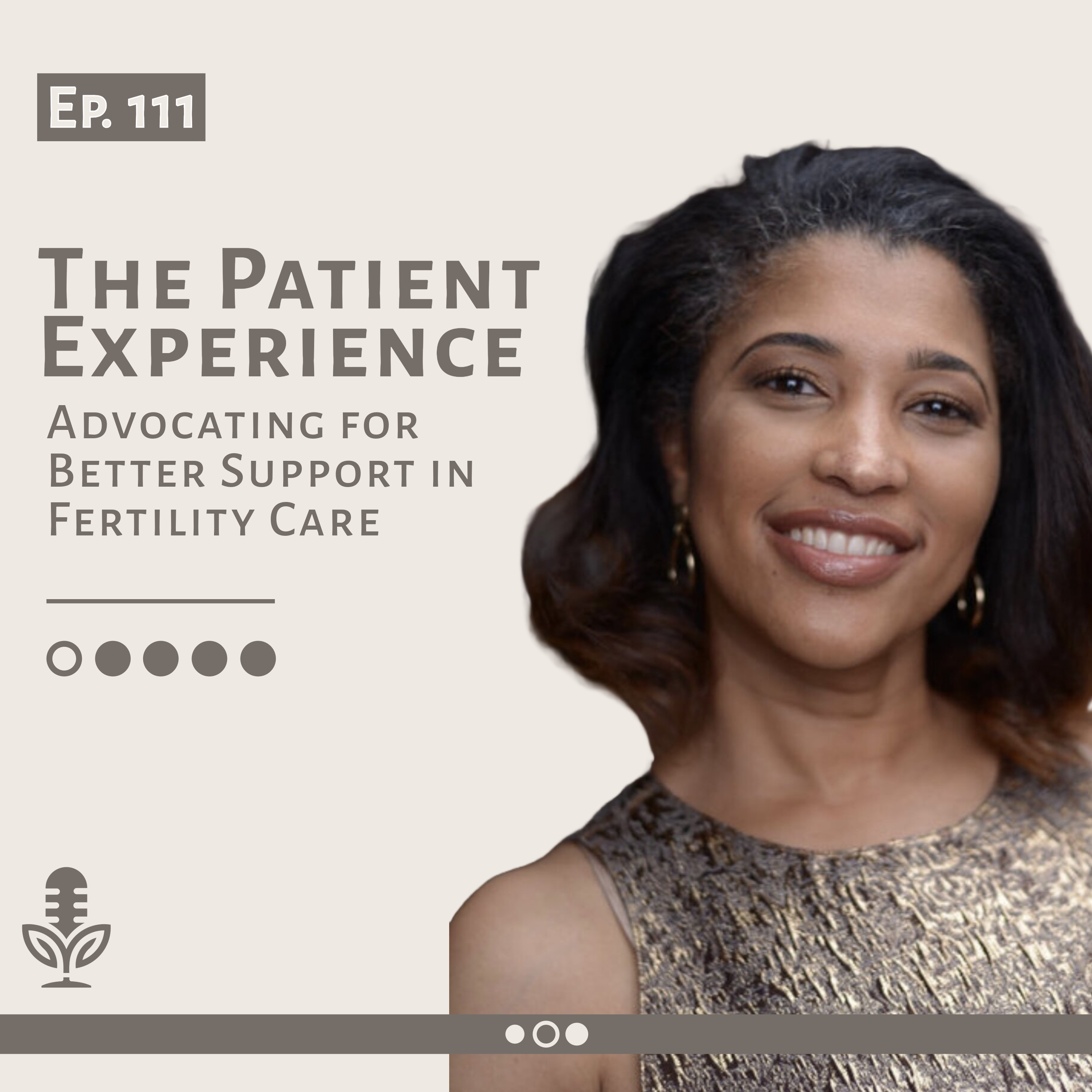
Welcome to Fertility Cafe. I'm your host, Eloise Drain. Today's episode, the Patient Experience and Fertility Care Advocating for better support.
We'll explore how patients can better navigate their fertility journey, advocate for themselves and find the support they need. We'll discuss practical strategies, common challenges and ways to build a strong support system throughout your fertility journey. I'm thrilled to welcome Dr. Camille Hammond, a national expert in reproductive health and adoption, education, support, advocacy and philanthropy.
Dr. Hammond, after experiencing fertility issues alongside her husband, is now a mother of triplets after undergoing the surrogacy process.
Now she is the co founder and CEO of the Tanina Q Cade foundation and owner of Good Books. Her work has been featured in peer reviewed journals and major publications across the United States and she brings both professional expertise and and personal insight to our conversation today. For decades, Dr. Hammond has led the Tanina Q Cade foundation, which supports families experiencing infertility with grants, education and support, now helping over 200 families.
Thank you, Camille, for joining me. I appreciate it.
[00:02:39] Speaker B: My pleasure. Thank you for inviting me. It's good.
We're going to have a good conversation.
[00:02:43] Speaker A: We're going to have a good conversation. That is absolutely correct. This is not the first time you've been on the podcast.
Last time you were here, you shared your incredible journey from your own experience with surrogacy where your mother carried your triplets at age 55, to founding the Cade foundation, which has now helped so many families.
And today I'd love to hear about some of the fascinating myths and unconventional fertility advice you encounter in your work with families? What are some of the most surprising ones you've heard recently?
[00:03:18] Speaker B: I think that unfortunately, a lot of these myths, they circulate and they. They come back kind of repackaged, but it's still the same thing. One of the things that you do really well is get into communities that are less likely to have access to information about infertility, whether it be because they're less likely to know people who have gone through fertility treatment or because they are less likely to know about providers who are able to provide care. I think, you know, giving words to things is really important. So you know what to call something, because when you know what to call something, then you can. Then you can seek help for something specific as opposed to just kind of a nebulous complaint. Myths that infertility is a female issue as opposed to a family issue.
We know that one third of cases are male factor, one third are female factor, one third are combined or unknown. That doesn't mean that there's not a cause. It just means that we don't. Our technology has not yet caught up with the ability to diagnose. But, you know, technology is improving at an exponential clip, and things that we didn't understand 25 years ago are understood and able to be treated today. Infertility being a female issue is definitely a bad one. There's a lot of grifting going on on social media and, you know, with. Again, I'll get back to the whole issue of having words. When you have people who are on social and their intention is to sell something to profit off of the desperation and the hurt that families are experiencing because of infertility. So people who are. Whose goal is to educate really for the purpose of their own financial gain are often come on and they give a little bit of information, but it's incomplete. So they may say, if you have heavy periods, your belly is distended, you may have a fibroid. Okay, so that may be accurate. I don't know. It may be. But then they say, but you know what? I have the treatment, I have the cure for fibroid. And your doctor's been hoarding this. They don't want you to know about it. And all you have to do is take this little bottle of whatever and that will treat it. You'll get better. So there's a kernel of, you know, truth there. But it's for the purpose of me selling something that I make money off of.
And that's what a grifter does.
They sell you half Truth kind of paired with a whole lie for the purpose of getting you to open up your pockets. And so there's a lot of that that goes on on social media. So a lot. You know, there are myths that I encounter every day.
Whether people are talking about different types of tests that can be used to help diagnose your infertility, whether it be different types of treatment that are standard, that have been studied and that have been shown to be effective. Where people say, well, no, that's not good for you. Well, no, that's gonna do harm to you. But it's really so that they can sell you something else, sell you an alternative that they would claim is healthy.
Not to get too deep into an example, but there was a lot on a couple years ago about vaccines being harmful. COVID vaccine is harmful. You shouldn't take it, it's gonna harm your fertility. Quote, unquote. Cures and treatments these grifters came up with, none of which did anything other than drain your bank account. But a lot of these same people are quick to go to the doctor when it comes to these GLPs. You know, this weight loss. They were afraid of vaccines, but they are not scared of taking a shot to lose some weight. They're not as scared of taking a shot to get rid of some wrinkles, you know, to deal with that skin. So really you can see you had, you didn't have a problem with science, which you had a problem with was an area where you thought you could, you could get in there, mislead people and profit. So it wasn't really a principled objection, it was a profit focused objection. I mean, those are a couple of examples. But I think that it's just important if you're watching this to look at your source before you take someone's advice, and this includes me. Check their credentials. Do they have any experience? Are they trained? Did they get educated about this? And I don't mean me spending an hour on Facebook. That's not education, that's entertainment. What are their credentials? If they don't have any and they're telling you something that nobody knows, nine times out of ten, they're just making that up. And nine and a half times out of ten, they're selling you something. So just be careful and it's okay to be entertained. But before you take that to the bank, make sure that you've checked them. And I'm going to talk one more, just very briefly, about something else that's really harmful. There are a lot of people that sell things that they say will give your, rejuvenate your eggs, take this product, go on this cleanse so your egg quality can improve.
Now let's think that through for just a second.
A woman's eggs have been with her since she was in her mother's womb.
So if you're 25 years old and your mom had a nine month pregnancy, those eggs are 25 years and nine months old.
There is no reversing age. The only thing that you are doing when you take time off is getting older.
And getting older in the reproductive health world does have consequences.
Okay? So the nine months or three years that you take off to take these supplements or to do this cleanse or whatever, whatever it is they're selling today, you may feel better, you know, because you're also pairing it with a healthy lifestyle. But your eggs are now three years older. And the things that were possible at that younger age may not be possible now because there's another three years of age on those eggs. And just like eggs that you buy from the grocery store that you leave in the refrigerator for a long time, okay, they, they are going to continue to degrade.
It's just once you've reached a certain point, they're going to degrade a lot quicker. Just try this as a test for yourself. Buy some eggs from the grocery store, leave them in the refrigerator for a year, okay? And then do some of that stuff to them that they're telling you to do to your own self and see what happens when you try and eat that. Eat that egg.
[00:10:12] Speaker A: And right now it is expensive as eggs are. I don't know if you really want to just be sitting there on, sitting on them eggs for no reason.
[00:10:19] Speaker B: Nobody is going to do that. And please don't do that. I just say that to suggest you wouldn't put that egg in your body. You wouldn't say that egg that's been sitting in the fridge for a year is a good quality. And I, and I bathed it in whatever and I hummed to the egg. I do whatever it is they want you to do. No, because you understand that egg is going to continue to degrade to the point where it's inedible.
That same thing is happening in your body. We weren't made to be able to have kids until we're 100 years old. Men, on the other hand, can continue to produce sperm, although it's not the same quality. As men get older, their sperm quality degrades as well.
[00:11:01] Speaker A: If you're in the process of figuring out how to build your family Whether you're just starting IVF or already looking into options like egg donation, sperm donation, or surrogacy, there's an event I want to make sure is on your radar.
It's called the Family Blueprint and it's happening June 7th in Atlanta. It's a one day in person event hosted by fertility360 and is designed to support intended parents at every stage of the journey.
The day is thoughtfully curated. You'll hear from fertility doctors, legal experts, mental health professionals, and parents who've been through this themselves.
Every session is about breaking things down clearly and practically, so you leave with real answers, next steps, and a stronger sense of what's possible for your family.
If you've been trying to figure out what's next or even where to start, this is a space where you can get the clarity and support you need. You can learn more and grab your
[email protected] Atlanta Hearing about all these fertility myths really highlights how desperate people can feel for solutions. When you're working with families through the Cade foundation and they're trying different treatments and approaches, how do you help them balance hope with realistic expectations?
[00:12:26] Speaker B: Balance so social media can be a scary place if you are struggling with infertility. Both because there's a lot of information, some of which is accurate, some of which is false.
But there are often people present either the best version of themselves on social media or the worst version. So it's always rainbows and unicorns or the sky is falling. And that's not how most of us experience life. Sometimes we have highs, sometimes we have lows, but most of the time we're pretty meh, we're okay, we're fine, we're moving forward. If you see people and it's always, you know, I'm a pregnant, I'm pregnant. So it's a pregnancy announcement. It's, oh, I had this great experience.
Oh, you know, this worked well. My husband looked at me and I, you know, got pregnant. If it's, if all you're saying is other people's good news and you're kind of living life and not always experiencing those things that you want, you can start to feel there's something wrong with you or like you're being punished, I'd like to just affirm that there's nothing wrong with you. You're not being punished. You haven't done something to earn infertility.
It is medical and it happens very commonly. And you're not alone. So I would definitely encourage people to get connected with a Community of people who they can relate to for whatever reason, who they can share with. So there are great support groups, and I think that mental health is a huge part of family building.
Get in with a therapist. Find someone. If you can't find a therapist or you're not comfortable for whatever reason, find a support group. Find a community where you can share your truth in ways that are not just all good on, like, social media or all bad.
Where you can say, I had a crappy day, I had a hard day. This thing happened, and I still had to go and put on a happy face because I was at work and it didn't feel good, but I got through it. And let those people affirm you to say, you know what? I been there. And I. I applaud the fact that you were able to. To go through it. Or where you can say, I had a. I couldn't handle it today. I kind of fell apart and have somebody say, been there. You're not alone. Can we pray together? Can we get on the phone and have a glass of something together so that we can laugh a little bit and you can feel less alone? So get connected with a community that you can support and be supported by.
[00:15:06] Speaker A: Yeah, definitely. That's the thing that luckily, over all of these years, luckily, the community has gotten more outspoken and more willing to share and more willing to, you know, really just kind of lend a hand to somebody else who's also experiencing it. Unfortunately, infertility rates are increasing substantially, which means that the population is only getting bigger. And there's so many reasons and factors as to why that we don't have time to get into.
[00:15:39] Speaker B: But.
[00:15:39] Speaker A: But at least there is the ability to have communities out there that literally you can probably find a community that's specifically with someone that's going through exactly, or almost exactly what you're going through, and that looks like you. That has the same beliefs as you, that has the same, you know, experience all of the things.
[00:16:01] Speaker B: So, yeah, even though I'm not a huge Facebook person, Kate is on Facebook, but I don't actually. I'm not involved in that. That activity. But Facebook is a great place for group, and there's. There's a group for everything. And, you know, worst case, get involved with the Facebook group. LinkedIn is another place more professional focused. But there are kind of groups for different issues that people struggle with. Personally, I know that also Fertility for Colored Girls has groups that meet in person and online families that struggle with infertility. The Broken Brown Egg has. Is an amazing resource and they have their own platform where people connect virtually. There are a lot of organizations that are doing this and find one. It may be that your fertility clinic even has a group that meets locally right inside the clinic or at a local library or, you know, a local community place, community resource. If there's a group, if that's something that's available to you, take advantage of it. We are so much stronger together. They say if you do it alone, you can go fast, but if you do it in community, you can go far. And our goal for you, and I know, Eloise, I'm saying r. I'm speaking on behalf of you and me and so many else in this infertility world is for you to overcome whatever that means for you. And it's hard to do that if you're keeping everything inside and you don't have a community that you can lean on for support.
[00:17:33] Speaker A: Yep, definitely. You've hosted hundreds of educational conferences for families over all these years. What are the most common communication barriers you see between patients and their care teams?
[00:17:46] Speaker B: So I know I've talked a lot about social media, but it's a really important part of the community, the reproductive health community.
Patients, on average, spend many, many hours on TikTok, on Instagram, on Facebook, on Blue Sky. You know, pick a. Pick a platform. They spend lots and lots of hours learning about infertility and reproductive health before they get to the doctor's office.
And the information that they learn may or may not be accurate. Right. So If I spend 10 hours learning that all I have to do is take an apple a day and my infertility is going to be cured when I actually go to the doctor, and the doctor said, well, you know, the apple is good, but that's not actually going to treat your infertility.
This is the first time I've heard that an apple is not going to treat or cure my disease. But I've had 10 hours of exposure to the apple theory. And so I may actually think that the doctor doesn't know what they're talking about, because what they're saying doesn't align with what I've already been kind of ingesting. I've been seeing. Because the algorithm will show you what you want. They're not necessarily going to show you what's accurate, but if all you searches, apples and infertility, you're going to just get a lot of apple infertility content.
So I think part of the problem is when people go in and they are seeing someone who's credentialed who's experienced.
They don't always understand how to weigh the information that they have seen online that does not align with what that healthcare provider is saying. And they may say, well, I didn't get along with my doctor. I didn't like them. But those may be ways of saying, the information that the doctor shared didn't align with the information that I came in with. And therefore, I don't trust them. They're not a credible source. And so, you know, I think it's really, really important that when doctors and patients are talking to each other, that they come at it with respect and appreciation. So that also means doctors don't talk down to your patients. Don't talk to them and say things like, you don't know what you're talking about. That's not gonna make somebody feel good, and it's definitely not gonna make them wanna hear what you say. But patients don't go into your physician's office saying, well, I heard this on TikTok. TikTok doesn't have an MD it doesn't have any kind of medical training. It's not seeing patients. And the grifters are strong.
The grift game is strong.
On social media, don't miss out on people who actually can help you because you're listening to the wrong.
Your sources are wrong. You don't have credible sources. I think that it's good for doctors to learn how to use social media to better communicate with patients, because if the only people out here sharing information are people who don't have that background, that clinical expertise, then you can't get mad when patients are coming in and they don't have any of the information that you want them to have. You haven't been a part of the community that's out here actively sharing. So I think it's really good for doctors to get active and engaged in social media so that they can have that information that's also a part of everything that patients are getting exposed to. And I say doctor, I mean, everybody who's a part of this world. Doctors, embryologists, nurses, physical therapists, mental health providers, people who were actually credentialed, trained, who have a commitment to being a part of this community and they've done the work so that they're actually. They know what they're talking about.
[00:21:19] Speaker A: And I also think it's important too, that. And I understand, obviously there's not enough time in the day, and you're trying to see a lot of patients, whether it's, you know, an re or mental health or whatever. But we have to take the, the time and stop and take the time to educate the patients because if they keep, they keep going to the TikToks or the social medias or whatever, because they're looking to be educated.
[00:21:45] Speaker B: Yes.
[00:21:46] Speaker A: And the people that are in this field, as the experts, need to take time to educate. You can't just jump right into it and say, okay, here's your problem. This is how much it's going to cost, and this is what we need to do, and that's that people need to be educated so that they have a comfortability level of, well, what is it that I'm getting myself into?
[00:22:08] Speaker B: That's correct. I completely agree. And I think sometimes that means healthcare providers learning new words. There are trends that happen naturally on social media, and if you don't understand the trends or you, you just say, I'm going to abstain. I'm not going to be a part of this. I'm not going to do any of that. When you, when you go into a patient room, if you're not speaking in language that they understand, they're not going to get what you say. So you could spend five minutes. And if the words that you're using, if the patient can't understand it, it's almost like you're speaking another language, even if you're not speaking another language. And let's talk about speaking another language, because everybody is not a native English speaker. And if our goal is to really provide support to everyone, then it's important that we be willing to, to learn the words that are gonna make sense to that person. And I'm speaking about people who are native, you know, Spanish speakers or native Portuguese speakers or native speakers of just different languages. I think it's kind and I think it is thoughtful, but I think it is actually in alignment with giving good care to have at least someone on staff who can help or, you know, have a relationship with an agency or with an organization that can accurately translate. But I think it's, it's important that doctors be able to communicate effectively with patients in using words that they understand.
[00:23:37] Speaker A: Yeah, absolutely. Which goes back to not just using the words, but when the patients go into the fertility clinics. What are some questions patients often forget to ask their fertility care team? Again, especially sometimes. You're in, you're rushed, they have 15 minutes to sit down with you to discuss the issues, what they found, what they didn't find, what's the problem, and then go. And you, you're not prepared, which a patient before they Go to any doctor of fertility or otherwise needs to be prepared with questions that they're going in to that medical person and having those conversations. But what are some questions patients often forget to ask before we get to
[00:24:18] Speaker B: the questions is if that is your medical information, you should walk out of that clinic with a printout of whatever was discussed. Okay? So if there were labs that were discussed, if there were imaging tests that were reviewed, you need to walk out with that information so that you can go back and look at it. Because even if the doctor is using the words or the nurse or whoever the health team member is using words that you understand, you may not mentally be in a place where you can receive what they're saying. You may be, you know, maybe something was not what you expected and you're stuck on that, you know, like your ovary, you're not ovulating. Okay. I didn't hear anything that you said after that because I thought nothing was wrong. And now I've gotten hit with some new information that really rocks, perhaps my esteem, my sense of who I am.
If I have all of the information, I can go back at a later point to look at the lab work so that I can see, okay, this is why the doctor said that.
And what's the next step? So that's very important. You should have your own file that includes all the information from your doctor visits.
So we talked a little bit about myths in the beginning, the myth that infertility is a female issue and not a family issue. I think that it's important that before, if you are in a two person relationship and it's a man and a woman, there's no reason for the doctor to start expensive, invasive testing on the female partner before the man submits a semen specimen for an analysis. It's cheap. I mean, I mean, you might spend 100 bucks out of pocket to get his semen tested. And if that is the issue, the treatment is a lot cheaper and definitely less invasive than if it's a female issue. And you may also need to get both. The male testing should be done at the beginning, not after. You've already, you know, had 11 blood draws, five imaging exams, and that's out of order.
It happens at the same time at the beginning. Other questions? Well, I think that it's important that you look at family history. You be prepared to talk about family history, and that may mean that you have to actually ask your parents some questions. And if you come from a family where people don't talk about health, that may be hard but going into this, I think it's important that you just prepare yourself that regardless to whether you talk about it or don't talk about it, it's going to be hard. So you might as well ask the questions. And for those things that are inherited, you may find that a conversation with the family member will give you a lot of information that may inform what is happening with you. You may be that much farther along. You know, those are hallmarks of polycystic ovary syndrome. You know, and everybody has irregular periods. It's not unusual for you to have a period that comes once every six months. And for that period to last 30 days and for it to feel like you have a crime scene when you have a period, well, those are all symptoms of polycystic ovary syndrome. And if that's what your mama had and your grandma had and your auntie had, it might be what you have also.
And so what you want to do is start to have those conversations before you get to the doctor's office so that when you have that 10 minutes with the healthcare provider and they're asking you questions, it's not, I don't know. I don't know. I don't know. You've already done what you had to do so that. That could, you know, put you that much farther along.
[00:28:05] Speaker A: Yeah. How can patients effectively communicate their concerns when they feel rushed or overwhelmed during appointments, especially given with, you know, asking questions and so on and so forth? And we know that pcos you were just sharing is one of the most misdiagnosed issues out there. How can someone communicate, you know, when they are feeling rushed and need to have this. Understand this understanding given that, yes, actually, I did go and ask my mom and come to find out it was my mom, it was my. My aunties, my cousins have these issues, and I just thought it was only me this whole time.
[00:28:43] Speaker B: One thing you can do is write your questions down ahead of time, and that will help keep you focused. So instead of talking about the weather and the fact that the Eagles won the football game, you get right to business.
And you're saying, I have these five questions. I know you don't have a lot of time, but I'd like to go through my lab work, and I'd like to talk about these five things so that the doctor has a natural place to start with you.
But also, you don't walk out of the room after 15 minutes. And you guys have talked about things that, quite frankly, are not related to your.
What you came there to talk with them. About you've wasted six minutes talking about these other things, and then, doggone it, you get to the car and you think, I really wanted to know about X, Y and Z. So write the questions down.
Talk with your partner before you go into the room.
So often couples don't talk. It's one person who's kind of leading the effort and another person that's going along, but that other person who's gone along may have questions. They may actually feel more comfortable speaking up. They may have needs that go unaddressed. So talk with your partner about your questions, your concerns, your fears. Write everything down and then take that in so that you can have a really meaningful conversation with your healthcare provider.
[00:30:10] Speaker A: What do you recommend for patients to keep track of their treatment plans and make informed decisions? And I know one thing you had, you already stated was making sure that every test, everything that is done, that you have a copy of your own records that you.
You're taking with you. And that way you can take that with you wherever you go, whatever doctor you see. You don't have to start from the beginning every single time. Is there anything that you would recommend?
[00:30:37] Speaker B: What else can they do? There are apps, you know, that you can load your information. And some of these apps, I'm sure, use AI, where they will talk back to you and let you know, well, this was abnormal, or, you know, that's something that should be flagged. I think for some people, it's helpful to have almost like a quarterback that helps you keep all the information.
And these people are called fertility coaches. For some people, it may be helpful to have someone who is not you, is not your partner who can help you keep track of everything and provide recommendations about where to go further.
You know, usually there is one person, if you're having fertility treatment, there's one manager, case manager who's been assigned to you from the care team, who would serve in that role as well. I would just say you are your best advocate and remember that nobody is as invested in your family building as you. And if for whatever reason, something doesn't feel right, don't be afraid to pivot and to say, you know what? This isn't, this is no longer serving me. I'm going to go there. I'm going to go someplace else. You deserve to be treated with respect.
Your dignity should be honored. No one should make you feel bad. No one should make jokes at your expense. I mean, you know, these are things hopefully that most people don't experience. But I, I know that there have been times where people would stay at a place where they did not feel like they were being treated well out of a sense of loyalty. There's no loyalty here. This is getting a car. If the car doesn't work, we get a new one. If the doctor or the care team is not giving you what you need, you get a new one. That said, remember, your fertility doctor is not your friend.
They are your care provider. And that may mean they make a decision to say, you know what? I feel like I'm getting excellent care. I don't like their bedside manner. So I've got to make a decision.
Do I want to stay here where I feel like my care is excellent, but the words that they use are not excellent.
And I've been in that position myself. And my.
My decision was to stay where I felt like I was being given excellent care because I decided I'm not going to be here forever. This is not my internist. This is not my obgyn, who I'm going to see every year for the rest of my life. This is hopefully someone who I'm going to see while I have a need. And then when I'm done, I can go on and we don't have to talk to each other anymore. Anymore. You are in control of those choices, and you need to be intentional about where you go and where you put your money and your time.
[00:33:20] Speaker A: That's right. And know that it's okay to get a second opinion, switch providers, whatever you need to do. Because ultimately, like you said, you're your only biggest, and quite frankly, only advocate. I mean, there are people that can come alongside you, but at the end of the day, you still have to
[00:33:38] Speaker B: advocate for yourself and your family.
[00:33:40] Speaker A: Yes, yes.
[00:33:42] Speaker B: And your family. So, you know, CAKE foundation does a lot of education in communities.
Sometimes the people that are at our education events are not the people who need the information, but they're connected with people who may need the information. So I'm gonna use an example. We do these reproductive and maternal health summits all over the country in states generally that have bad reproductive and maternal health outcomes.
And we always try and have at least one watch party for each state. Be at an undergrad institution, a college. And you say, well, these are not people who are thinking about having babies. You're right.
But so often the knowledge that they have about reproductive health is incomplete because they got most of their knowledge about reproductive health from sex ed. And sex ed in a lot of states is focusing focused on scaring you into not having sex.
It's not having sex early so that you don't get pregnant. It's not focused on educating you about anatomy, about pathophysiology. So when things are not, quote, unquote normal. So fibroids, endometriosis, polycystic ovary syndrome, those are not part of the traditional sex ed curriculum because again, those, those have nothing to do with making babies. They have everything to do with just understanding what's going on in your body, knowing what's normal, what's not normal. We talk to college students just as part of our, our summit, so that they understand biology, reproductive health, biology, they understand anatomy, they understand what's normal and not normal, so that when they get older and they are at a point where they're ready to build their families, or they start communication with a family member, a friend, someone else who's part of their village about reproductive health and they share something that's not right, they can say, wait a second, that's not right. You shouldn't be bleeding for 30 days. I understand that that's something that happens in our family, but I learned that that's not normal because you may be actually experiencing something abnormal, but because of the mythology and your family around it always being this way, you think that it's normal. You think that it's normal. So, yeah, it's important that at least for Cade foundation, we try and have a good cross section of people, both who can use the knowledge that is shared as well as share the knowledge that is shared.
[00:36:13] Speaker A: I couldn't agree more. And I think that that is one of our biggest issues. I mean, for so many years, I would have conversations with, you know, potential parents that come to us and where they might need to now work with the egg donor or a surrogate or whatever. And I can tell you how many times someone would say, I wish somebody told me this beforehand. I wish somebody, you know, had just told me. I wish, you know, I knew this information a long time ago so that I could have pre planned ahead of time. No one has shared any of this information with me before. And it's why we have the most technology we've ever had in lifetimes.
And you know, we're on social media half the time for nonsense.
And it's just like the real significant things that we need to be talking about and that we need to be educating people about so that they know. One in six people are currently having infertility treatment issues right now. Not to mention we are at a decline in fertility care right now and having infertility rates at a rapid rate it's just like, no one is discussing it. It's just disregarded. And it's just like, let's wake up. Because eventually this is. It's not just about our generation or my children's generation. Now it's going to be about my grandson's generation or his children's generation unless we start actually taking action right now to make sure that we're informing. Like, this is what you need to know. This is the things that they're not educating you in school about that you need to be aware of right now. Because it's not just about you getting pregnant right now or not getting pregnant right now. It's about later on when you're 30 years old or, you know, 20, 30, 40, whatever, when you do start thinking about getting pregnant and already knowing what you need to be doing and have done previous to that.
[00:38:18] Speaker B: Amen. And, and I will just also add, it's bigger than babies.
[00:38:23] Speaker A: Yeah. Oh, God, yeah.
[00:38:25] Speaker B: So your reproductive health is your reproductive health.
Even if you never want to have a child, fibroids are still causing harm. Even if you don't want to have a baby independent of your ability to get pregnant and stay pregnant, nobody wants to, you know, the symptoms and they can be treated.
So pay attention.
Get the support.
Plug in for care, Plug in for support. But when you have opportunities to learn, take those opportunities. Because the. The person who benefits the most, maybe you right now, maybe future you, but it may also be a person that you care about.
[00:39:12] Speaker A: That's right.
So just switching gears real quick. Cade foundation obviously provides grants to families, and there's so many people who need assistance financially to be able to complete their families, and there's just not enough assistance out there via insurance or whatever the case might be. What resources do you recommend for staying informed about fertility treatment, financing, or options that people can. Can have that so that they can go and seek treatment?
[00:39:46] Speaker B: I think that the biggest resource that anybody can have access to is a state mandate requiring insurance companies cover the cost of fertility diagnosis and treatment. And I can tell you right now, Eloise, I know that you're based in Georgia. There are three bills that have been proposed for this cycle that would impact reproductive health insurance coverage. And if you live in a state where there is no mandate in place, you need to figure out who it is that represents you and talk with them about the fact that that is a gap and that is an area where they can create a law that would ensure families with infertility don't have to come out of pocket for the money. For fertility treatment diagnosis. Even if you decide I'm not going to have fertility care, if that's your business, but you should still know what's going on with your body. You should still understand at least what the issues are.
So legislation and policy, number one. Number two, there are a lot of organizations, well, not enough, but there are some organizations like Cade foundation that do offer grants for fertility treatment and adoption and. Or adoption. I know that for Cade foundation. If you go to cadefoundation.org you can learn about our three grants that we have. And if you go to cadefoundation.org resources, you can learn about another 40 or 50 that are offered by other organizations that provide grants for fertility treatment or adoption. You can always Google fertility treatment grants, adoption grants, and the resources change. This is a hard, hard economy, not just for people who are working in government or working in the private sector, working in the nonprofit sector. There's less money that's going around and unfortunately, a lot of charities are going under, and I hate to say that. So go to credible sources to look up the resources that are available because they may change from year to year. Another thing that's important is your clinic, if you decide to have fertility treatment, may have a sliding scale based on income. They also may have some grants that they support that are, that are really specifically for that clinic. And if you talk to your financial counselor to say, do you guys have any grants or can you share about grants? They may have a website. They may have a page on their website where they can direct you to these 18 grants. I know some clinics have a matching program where if you get a grant, you will automatically get a percentage off of the cost of care. So if you get a grant for $10,000 and they give you another 25% off if it's a $20,000 treatment, well, that's $12,500 off the top that has been deducted because of the grant and the matching. Some have money set aside or grants for military, active duty and veteran.
So, yeah, I would have a really good direct conversation with my financial services person to say, what money or what resources do you have available that may be able to benefit me? I am an EMS worker. Public service grants and discounts that are available. I'm an EMS worker, I'm a veteran. I live in the state of Ohio. There may be money set aside for someone just like you. And if you don't ask, they may not think to tell because they're seeing a thousand people every day and you've got five minutes in that chair.
And, you know, we talked about writing down these questions ahead of time. Use that time effectively. If you've got your five minutes and you've got your five questions, you don't get out of that chair until you've asked your five questions and got responses for them and got responses. And you may have to say, you know what? I'm not even worried about the Super Bowl. Let's talk about these questions so that the time can be used most effectively.
[00:43:40] Speaker A: That's right. What do you think is the most overlooked aspect of self advocacy and fertility care?
[00:43:46] Speaker B: Shame. Fear.
We stop talking because we're embarrassed of what somebody else is going to think.
And I encourage you to don't do that.
So don't stop talking.
Keep talking. Ask the question.
Worst case, they judge you. Who cares? Please answer my question.
Because you can't do anything with conjecture. You can't do anything with incomplete information.
If you have the, the answer, then you can make a decision. And it may be, okay, I'm going to do something else. I'm going to go down a different path. But without that knowledge, there's nothing that you can do. So just decide, okay?
I have fear. Fear. Fear is a part of what I'm dealing with. The shame is not going away, but shame and fear, I can't, I can't deal with you right now. I know that you're here, but I need you to just take a step back. I'm going to have to have this conversation and we'll, we'll get together another time, okay? But right now, you, you can't take the front. You don't get to sit in the driver's seat. I need to take the driver's seat after I leave this clinic. I'll deal with you later. But right now I have this sheet of paper. I have five questions. And I don't have the capacity to deal with the shame and the fear and the questions at the same time
[00:45:09] Speaker A: and know that the shame and fear is just a feeling that will come and go.
[00:45:14] Speaker B: It will come and go.
And if it doesn't, there's mental health. Let's get back to that. Mental health is health. And infertility is a, a contributor to increased rates of anxiety and depression. And don't just shake it off and think, anybody that was going through what I'm going through would feel the way that I do. That doesn't mean you can't get support. That doesn't mean that resources aren't available to help you make the appointment. You know, bring Shame and fear to that appointment. And then, then you can have someone who is trained, who can help you work through and overcome.
[00:45:52] Speaker A: Yep. Before we wrap up, where can listeners learn more about your work with the cade Foundation?
[00:45:58] Speaker B: Kate foundation.org and we are on all social media platforms at Cade foundation, so pick one. We're there. Unless it's X. We are not there.
[00:46:12] Speaker A: Okay.
Neither are we.
[00:46:17] Speaker B: Yeah.
[00:46:18] Speaker A: Well, Camille, thank you so much for your time. I appreciate it. I appreciate your expertise. I appreciate all that you do. I know we've known each other for years, and I know you've done a lot of work trying to help families, but also educate the masses as well.
[00:46:37] Speaker B: So.
[00:46:38] Speaker A: Well, thank you.
[00:46:39] Speaker B: It has been my pleasure. And I really respect and appreciate all that you do. Eloise, you have been in this forever, and, you know, you're doing the hard work. You're asking the hard questions, both at the local level and at the national level. You know, Eloise looks gentle and kind, but I'm gonna tell you what, she plays no games.
She speaks truth to power, and she's not afraid to say, that's not right. That's not accurate, and you need to do better. And I appreciate you for being willing to do that. So thank you.
[00:47:10] Speaker A: Thank you, thank you. I appreciate it. It was great having you.
[00:47:14] Speaker B: Yes, yes, yes. Igual. Igual. I'm speaking Spanish.
[00:47:17] Speaker A: There you go.
[00:47:18] Speaker B: Look at that. Look at me.
All right, take care. Thank you so much, Eloise. And I'll talk to you. Okay, bye.
[00:47:26] Speaker A: To our listeners, remember that you are your own best advocate on this fertility journey. If you would like to learn more about patient advocacy or connect with Camille, visit their website at Cade foundation or visit our
[email protected] where we'll have links to all of the resources mentioned in today's episode. You can also watch the full video version of this interview on our YouTube channel. Remember, love has no limits. Neither should parenthood. Thank you for joining us at the Fertility Cafe. If you found value in today's episode, please subscribe, leave a review, and share with someone who might benefit from this information.
You can find, show notes and resources from this episode in the description or visit thefertilitycafe.com for more information.

 / @fertilitycafepodcast